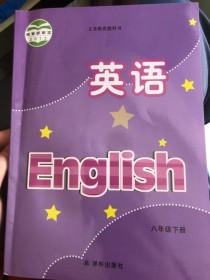
仁爱英语八上知识点有哪些重点难点?
校园之窗 2025年12月14日 05:24:07 99ANYc3cd6
巩固七年级知识,学习并掌握一般将来时、过去进行时、情态动词can/may/must的用法,以及比较级和最高级等核心语法,并围绕“健康生活”、“兴趣爱好”、“旅行”、“节日”等话题展开更深入的听说读写训练。
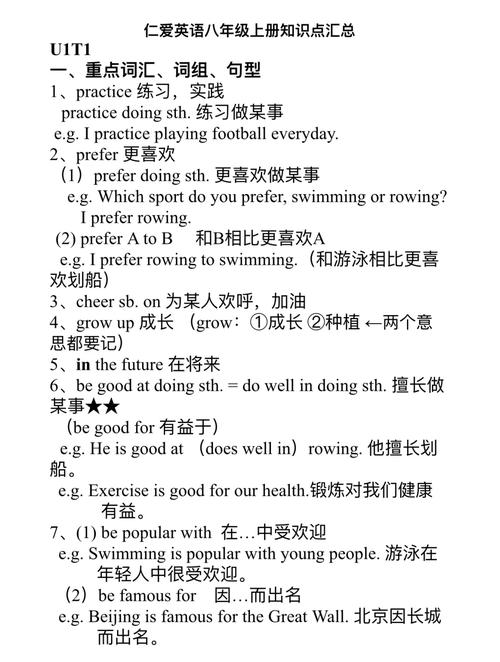
Unit 1 Playing Sports
核心话题: 谈论体育运动、爱好及未来计划。
核心语法: 一般将来时 (will / be going to)

(图片来源网络,侵删)
核心词汇
- 名词: sport, basketball, volleyball, tennis, ping-pong, game, match, team, player, fan, hobby, idea, plan, weekend, Olympics
- 动词: play, join, cheer, win, lose, hope, relax, exercise
- 形容词: healthy, strong, famous, popular, bored, relaxed, exciting
- 副词: hard, together, happily
- 短语:
play basketball/volleyball打篮球/排球join a sports club加入一个运动俱乐部be going to do sth.将要做某事make a plan制定计划cheer for...为...加油on the weekend在周末of course当然
核心句型
- 谈论喜好:
- —What's your favorite sport? 你最喜欢的运动是什么?
- —My favorite sport is basketball. 我最喜欢的运动是篮球。
- —Do you like playing basketball? 你喜欢打篮球吗?
- —Yes, I do. / No, I don't. 是的,我喜欢。/ 不,我不喜欢。
- 谈论未来计划 (一般将来时):
- —What are you going to do this weekend? 你这周末打算做什么?
- —I'm going to play basketball with my friends. 我打算和朋友们去打篮球。
- —Will you join us? 你会加入我们吗?
- —Yes, I will. / No, I won't. 是的,我会。/ 不,我不会。
- 提出建议:
- Let's play tennis. 我们去打网球吧。
- How about playing volleyball? 打排球怎么样?
- Why not join a sports club? 为什么不加入一个运动俱乐部呢?
重点语法
一般将来时
- 用法: 表示将来某个时间要发生的动作或存在的状态。
- 结构1:
will + 动词原形- 特点: 常表示临时决定、预测或意愿。
- 例句: I feel tired. I will go to bed early. (我感觉累了,我打算早点睡。)
- 句型:
- 肯定句:主语 + will + 动词原形 + ...
- 否定句:主语 + won't + 动词原形 + ...
- 一般疑问句:Will + 主语 + 动词原形 + ...? 肯定回答:Yes, 主语 will. 否定回答:No, 主语 won't.
- 结构2:
be going to + 动词原形- 特点: 常指已计划好的事或根据现有迹象推断某事很可能发生。
- 例句: I am going to study for the test tonight. (我今晚要为考试学习。)
- 句型:
- 肯定句:主语 + am/is/are + going to + 动词原形 + ...
- 否定句:主语 + am/is/are + not + going to + 动词原形 + ...
- 一般疑问句:Am/Is/Are + 主语 + going to + 动词原形 + ...?
Unit 2 Keeping Healthy
核心话题: 讨论健康问题、生活习惯和建议。
核心语法: 情态动词 can, may, must 的用法
核心词汇
- 名词: health, habit, sleep, tooth, head, stomach, medicine, advice, fever, cold, cough, rest
- 动词: have, exercise, eat, sleep, brush, lie, feel, take, give
- 形容词: healthy, unhealthy, sweet, sour, hot, cold, important, necessary, tired
- 副词: often, sometimes, usually, enough
- 短语:
keep healthy保持健康have a cold/fever/cough感冒/发烧/咳嗽brush teeth刷牙go to bed early早睡eat less meat少吃肉do more exercise多做运动drink enough water喝足够的水see a doctor看医生
核心句型
- 谈论健康问题:
- —What's the matter (with you)? / What's wrong (with you)? 你怎么了?
- —I have a headache/sore throat/stomachache. 我头疼/喉咙痛/肚子疼。
- 提出建议 (情态动词):
- —You should see a doctor. 你应该去看医生。
- —You must drink more water. 你必须多喝水。
- —You can take some medicine. 你可以吃点药。
- —It may be a fever. 这可能是发烧。
- 询问和建议:
- —What should I do? 我应该做什么?
- —You'd better lie down and rest. 你最好躺下休息。
重点语法
情态动词
can(能,可以)- 能力: I can swim. (我会游泳。)
- 许可: Can I borrow your pen? (我可以借你的笔吗?)
- 可能性: It can be true. (这可能是真的。)
may(可以,可能)- 许可(比
can更正式): You may go now. (你现在可以走了。) - 可能性(较小): It may rain tomorrow. (明天可能会下雨。)
- 许可(比
must(必须,一定)- 必须(主观义务): You must finish your homework. (你必须完成作业。)
- 肯定推测(一定): He must be at home. The light is on. (他一定在家,灯亮着。)
- 否定形式:
mustn't表示“禁止”,绝对不可以做某事。 You mustn't play on the road. (你禁止在马路上玩耍。)
should(应该)- 建议: You should eat more vegetables. (你应该多吃蔬菜。)
- 否定形式:
shouldn'tYou shouldn't eat too much candy. (你不应该吃太多糖果。)
Unit 3 Our Hobbies
核心话题: 谈论兴趣爱好及原因。 核心语法: 动词不定式作宾语、宾语补足语和目的状语。

(图片来源网络,侵删)
核心词汇
- 名词: hobby, interest, music, piano, violin, guitar, dance, drawing, reading, swimming, skating, collection, stamp, coin, book, model, friend, reason
- 动词: enjoy, love, like, hate, practice, learn, join, show, collect, share, make, become
- 形容词: interesting, boring, exciting, wonderful, popular, happy, famous
- 短语:
collect stamps/coins集邮/集币practice the piano练钢琴make friends交朋友be interested in...对...感兴趣share sth. with sb.和某人分享某物so... that.....以至于...because of...因为...
核心句型
- 谈论爱好:
- —What's your hobby? 你的爱好是什么?
- —My hobby is collecting stamps. 我的爱好是集邮。
- —Do you enjoy dancing? 你喜欢跳舞吗?
- —Yes, very much. 是的,非常喜欢。
- 表达原因:
- —Why do you like reading? 你为什么喜欢阅读?
- —Because it's interesting. 因为它很有趣。
- —I like music because it makes me happy. 我喜欢音乐因为它使我快乐。
- 表达影响:
- —Playing basketball makes me strong. 打篮球使我强壮。
- —She is so happy that she sings loudly. 她如此高兴,以至于大声唱歌。
重点语法
动词不定式
- 定义:
to + 动词原形 - 用法1:作宾语 (跟在
like, love, enjoy, hate, want, hope, begin, start等动词后面)- I like to read books. (我喜欢读书。)
- She wants to learn English. (她想学英语。)
- 用法2:作宾语补足语 (跟在
tell, ask, want, teach, invite等动词后面,说明宾语要做什么)- My mother tells me to clean my room. (我妈妈让我打扫我的房间。)
- The teacher asks us to be quiet. (老师让我们安静。)
- 用法3:作目的状语 (回答
Why,表示“为了...”)- He gets up early to catch the bus. (他早起是为了赶公交车。)
- I study hard to get good grades. (我努力学习是为了取得好成绩。)
Unit 4 Our World
核心话题: 描述自然景观和地理特征。 核心语法: 形容词和副词的比较级与最高级
核心词汇
- 名词: world, nature, mountain, river, lake, sea, ocean, desert, forest, animal, plant, pollution, environment, protection, sign, symbol
- 动词: climb, cross, walk, protect, pollute, build, see, enjoy
- 形容词: high, deep, long, wide, big, small, beautiful, famous, important, dangerous, clean, dirty
- 副词: quickly, slowly, carefully, loudly
- 短语:
the highest mountain最高的山the longest river最长的河protect the environment保护环境cut down trees砍伐树木make a difference有所作为,产生影响throw litter乱扔垃圾
核心句型
- 描述地理特征:
- —Which is the highest mountain in the world? 世界上最高的山是哪座?
- —It's Mount Qomolangma. 它是珠穆朗玛峰。
- —The Nile is the longest river in the world. 尼罗河是世界上最长的河流。
- 进行比较:
- —The Yellow River is longer than the Yangtze River? 黄河比长江长吗?(错误,长江更长)
- —No, it isn't. The Yangtze River is longer. 不,不是,长江更长。
- 表达最高级:
- —What's the biggest animal on land? 陆地上最大的动物是什么?
- —The elephant is the biggest animal on land. 大象是陆地上最大的动物。
重点语法
形容词和副词的比较级与最高级
- 规则变化:
- 一般情况: 直接加
-er/-est(tall -> taller -> tallest) - 以e结尾: 加
-r/-st(nice -> nicer -> nicest) - 以“辅音+y” 变y为i,再加
-er/-est(happy -> happier -> happiest) - 重读闭音节: 双写末尾辅音,再加
-er/-est(big -> bigger -> biggest; thin -> thinner -> thinnest) - 多音节词: 在前面加
more/most(beautiful -> more beautiful -> most beautiful)
- 一般情况: 直接加
- 不规则变化:
- good/well -> better -> best
- bad/ill -> worse -> worst
- many/much -> more -> most
- little -> less -> least
- far -> farther/further -> farthest/furthest
- 句型:
- 比较级:
- A +
be+ 形容词比较级 +than+ B. (A比B...) - A + 动词副词比较级 +
than+ B. (A比B...)
- A +
- 最高级:
- A +
be+ the + 形容词最高级 +in/of...(A在...中最...) - A + 动词副词最高级 +
in/of...(A在...中最...)
- A +
- 比较级:
学习建议
- 词汇为王: 每个单元的词汇是基础,务必做到“四会”(听、说、读、写)。
- 语法为纲: 将每个单元的核心语法点理解透彻,并通过造句来巩固。
- 话题为线: 围绕每个单元的话题,进行口头对话和书面写作练习,将词汇和语法融会贯通。
- 错题为本: 准备一个错题本,记录做错的题目,分析错误原因,定期复习,避免重复犯错。
希望这份详细的知识点总结对您的学习有帮助!祝您学习进步!
(图片来源网络,侵删)