仁爱英语七下核心知识点有哪些?
校园之窗 2025年12月14日 07:29:18 99ANYc3cd6
七年级下册核心知识点总览
七年级下册的重点在于时态的深化(尤其是一般过去时和现在进行时)、情态动词的初步学习以及更丰富的日常话题。
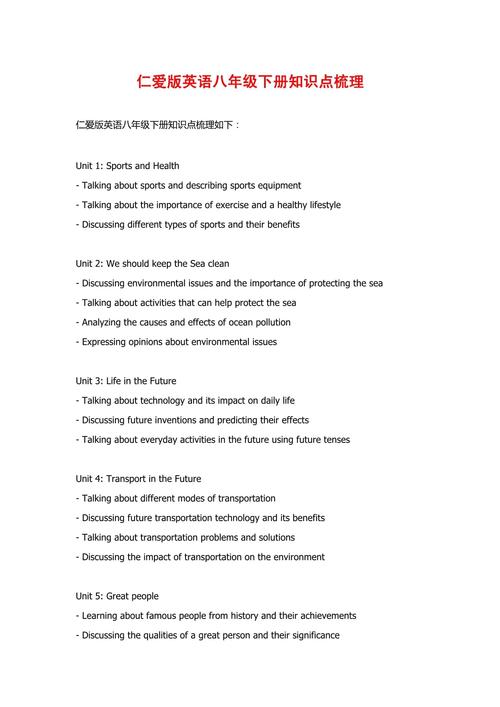
Unit 5 Our School Life
核心话题: 描述日常的学校生活,包括课程、课外活动、时间安排等。
(图片来源网络,侵删)
重点词汇
-
名词:
subject(学科) -math,Chinese,English,history,geography,music,art,P.E. (Physical Education)activity(活动) -game,match,meeting,speech contesttime(时间) -o'clock,half past,quarter past/toschool(学校) -hall,library,lab,playground,dormitory(宿舍)day(天) -Monday,Tuesday,Wednesday,Thursday,Friday,Saturday,Sunday,weekday,weekendclass(班级/课) -classmate,classroom
-
动词:
have(有,上) -have classes,have lessons,have breakfast/lunch/supperdo(做) -do homework,do housework,do morning exercisesget(得到,到达) -get up,get to schoolgo(去) -go to school,go home,go to bedstart(开始),finish(结束)play(玩,打) -play basketball/football,play the piano/violinjoin(参加),watch(观看),listen to(听)
-
其他:
favorite(最喜欢的)busy(忙碌的),free(空闲的)often(经常),usually(,sometimes(有时),seldom(很少),never(从不) - (频率副词)interesting(有趣的),boring(无聊的),difficult(困难的),easy(容易的)
核心句型
-
谈论课程:
 (图片来源网络,侵删)
- — What day is it today? — It's Monday.
- — What do you have on Monday? — We have Chinese, math, and English.
- — What's your favorite subject? — My favorite subject is P.E.
- — Why do you like it? — Because it's interesting.
-
谈论时间:
- — What time is it? — It's eight o'clock. / It's half past seven.
- — When do you get up? — I get up at 6:30 a.m.
-
谈论日常活动:
- I go to school at 7:00 a.m.
- We have four classes in the morning and two classes in the afternoon.
- They often play games on the playground.
重点语法
-
一般现在时
- 用法: 描述经常性、习惯性的动作或客观事实。
- 结构:
- 肯定句:
主语 + 动词原形 + 其他.(主语是第三人称单数时,动词+s/es) - 否定句:
主语 + don't/doesn't + 动词原形 + 其他. - 一般疑问句:
Do/Does + 主语 + 动词原形 + 其他? - 特殊疑问句:
What/When/Where + do/does + 主语 + 动词原形?
- 肯定句:
- 例句:
- I get up at 6:30. (I 是第一人称,动词用原形)
- He gets up at 6:30. (He 是第三人称单数,动词+s)
- She doesn't like math. (第三人称单数,用 doesn't)
- Does he like English? (Does 提问,动词用原形)
-
频度副词
 (图片来源网络,侵删)
- 位置: 通常放在实义动词之前,be动词、助动词、情态动词之后。
- 排序:
never(0%) →seldom(20%) →sometimes(50%) →often(70%) →usually(90%) →always(100%) - 例句:
- I always go to school by bike.
- She usually does her homework in the evening.
- They often play basketball after class.
- He sometimes watches TV on weekends.
- I never eat junk food.
Unit 6 Our Local Area
核心话题: 描述居住地周围的场所、方位、问路和指路。
重点词汇
-
场所名词:
post office(邮局),library(图书馆),hospital(医院),bank(银行),supermarket(超市),bookstore(书店),restaurant(饭店),park(公园),zoo(动物园),farm(农场),school(学校),market(市场)
-
方位介词:
in(在...里面) -in the boxon(在...上面) -on the deskunder(在...下面) -under the chairnear(在...附近) -near the hospitalnext to(紧挨着) -next to the post officebehind(在...后面) -behind the treein front of(在...前面) -in front of the buildingbetween...and...(在...和...之间) -between the bank and the supermarket
-
动词:
ask(问),answer(回答),show(展示)walk(走),go along(沿着...走)turn left(向左转),turn right(向右转),go straight(直走)
-
其他:
far from(离...远),close to(离...近)crossing(十字路口)
核心句型
-
问路与指路:
- — Excuse me, is there a ... near here? (打扰一下,这附近有...吗?)
- — Where is the ...? (...在哪里?)
- — How can I get to the ...? / Can you tell me the way to the ...? (我怎么去...?/你能告诉我去...的路吗?)
- — Go along this street and turn left/right at the first/second crossing. (沿着这条街走,在第一个/第二个十字路口向左/右转。)
- — It's next to/near/behind... (它在...的旁边/附近/后面。)
- — It's about ... kilometers away from here. (它离这里大约...公里远。)
- — You can't miss it. (你一定能找到的。)
-
描述位置关系:
- The library is next to the park.
- My home is close to the school.
- The supermarket is between the bank and the restaurant.
重点语法
- There be 句型
- 用法: 表示“某个地方存在某人或某物”。
- 结构:
There is/are + 某物/某人 + 地点. - be动词选择:
is+ 单数名词/不可数名词;are+ 复数名词。 - 否定句:
There isn't/aren't + ... - 一般疑问句:
Is/Are there + ...? - 答语:
Yes, there is./No, there isn't./Yes, there are./No, there aren't. - 例句:
- There is a book on the desk.
- There are some students in the classroom.
- — Is there a hospital near here? — Yes, there is.
- — Are there any parks in your city? — No, there aren't.
Unit 7 The Birthday Party
核心话题: 谈论日期、生日派对、礼物和祝福。
重点词汇
-
名词:
date(日期),month(月),year(年),birthday(生日)present(礼物),card(卡片),cake(蛋糕),candle(蜡烛)party(派对),game(游戏),song(歌曲)friend(朋友),family(家人)
-
动词:
have(举办,有),celebrate(庆祝)make(制作),buy(买),give(给予),get(收到)sing(唱),blow out(吹灭),cut(切)invite(邀请),eat(吃),drink(喝)
-
其他:
first,second,third... (序数词)January,February... (月份)happy(开心的),lucky(幸运的),beautiful(漂亮的)
核心句型
-
谈论日期:
- — When is your birthday? — It's on May 2nd.
- — What's the date today? — It's May 1st.
- My birthday is on the fifth of May.
-
谈论生日派对:
- — What would you like for your birthday? — I'd like a new book.
- — Happy Birthday to you! — Thank you very much.
- Let's sing the birthday song.
- He is making a birthday cake.
重点语法
-
日期表达法
- 结构:
月份 + (the) + 序数词 - 读法: 序数词前通常加
the。 - 例句:
- 5月2日 → May 2nd (May the second)
- 10月20日 → October 20th (October the twentieth)
- 结构:
-
名词所有格
- 用法: 表示“...的”。
- 构成:
- 有生命的人或动物:
Tom's book(汤姆的书),my mother's car(我妈妈的车) - 无生命的物:
of结构the door of the classroom(教室的门)
- 有生命的人或动物:
- 例句:
- This is Lily's doll. (这是莉莉的娃娃。)
- Today is my friend's birthday. (今天是我朋友的生日。)
-
would like 用法
- 用法: 表示“想要”,比
want语气更委婉。 - 结构:
would like + 名词- I'd like some tea. (我想要些茶。)would like to do sth.- I'd like to go to the movies. (我想去看电影。)
- 缩写:
would like = 'd like(I would like = I'd like)
- 用法: 表示“想要”,比
Unit 8 The Seasons and the Weather
核心话题: 描述四季、天气状况和人们的活动。
重点词汇
-
名词:
season(季节),weather(天气),climate(气候)spring(春天),summer(夏天),autumn/fall(秋天),winter(冬天)rain(雨),snow(雪),wind(风),sun(太阳)flower(花),tree(树),leaf(叶子),grass(草)swim(游泳),skate(滑冰),make a snowman(堆雪人),fly a kite(放风筝),climb mountains(爬山),go hiking(远足)
-
形容词:
warm(温暖的),hot(炎热的),cool(凉爽的),cold(寒冷的)rainy(下雨的),sunny(晴朗的),cloudy(多云的),windy(多风的),snowy(下雪的)beautiful(美丽的),colorful(色彩斑斓的)
-
动词:
like,love,hate(喜欢,热爱,讨厌)plant(种植),go swimming(去游泳)
核心句型
-
谈论天气:
- — How's the weather? / What's the weather like? — It's sunny/rainy/cloudy.
- It's a sunny/snowy/rainy day.
- There is some rain/snow. / It rains/snows.
-
谈论季节和活动:
- — Which season do you like best? — I like spring best.
- — Why? — Because it's beautiful and I can fly kites.
- In summer, it's hot. We often go swimming.
- I love spring, because it's warm and everything comes back to life.
重点语法
-
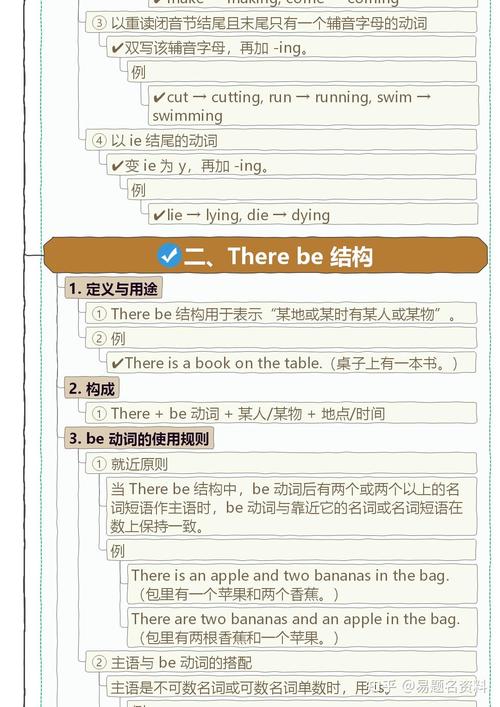
现在进行时
- 用法: 描述说话时正在进行的动作,或当前一段时间内的活动。
- 结构:
am/is/are + 动词ing形式 - 动词ing形式构成规则:
- 一般直接加-ing:
work → working - 不发音的e结尾,去e加-ing:
make → making,write → writing - 重读闭音节结尾,双写末尾辅音字母再加-ing:
run → running,swim → swimming - 以ie结尾,变y再加-ing:
lie → lying,die → dying
- 一般直接加-ing:
- 例句:
- Look! It is raining. (看!正在下雨。)
- They are having an English class. (他们正在上英语课。)
- — What are you doing? — I am reading a book. (你正在做什么?我正在看书。)
-
表达喜好
- 结构:
like/love/hate + (to) do sth. / doing sth. - 例句:
- I like to play basketball. / I like playing basketball.
- She loves to sing. / She loves singing.
- They hate to get up early. / They hate getting up early.
- 结构:
Unit 9 Fun Festivals
核心话题: 谈论不同国家的节日及其习俗。
重点词汇
-
名词:
festival(节日),holiday(假期),celebration(庆祝活动)Spring Festival(春节),Mid-Autumn Festival(中秋节),Dragon Boat Festival(端午节)Christmas(圣诞节),Thanksgiving(感恩节)tradition(传统),custom(习俗)food(食物),dumpling(饺子),mooncake(月饼),zongzi(粽子),turkey(火鸡)relative(亲戚),get-together(聚会)
-
动词:
celebrate(庆祝),decorate(装饰)eat(吃),have(吃,举办)watch(观看),enjoy(享受)give(给予),receive(收到)tell(讲),share(分享)
-
其他:
special(特别的),happy(开心的),lucky(幸运的)at night(在晚上),on that day(在那天)
核心句型
- 谈论节日:
- — What do you do on the Spring Festival? — We have a big dinner with our family.
- — What's your favorite festival? — My favorite festival is the Mid-Autumn Festival.
- People celebrate it by eating mooncakes and enjoying the full moon.
- We get together with our family and share happiness.
重点语法
-
情态动词
can的用法- 用法: 表示能力(能,会)或请求许可(可以)。
- 结构:
can + 动词原形 - 否定式:
can't / cannot + 动词原形 - 疑问句:
Can + 主语 + 动词原形? - 答语:
Yes, ... can./No, ... can't. - 例句:
- I can speak a little English. (能力)
- — Can you help me, please? — Yes, I can. (请求许可)
- He can't swim. (否定)
-
介词
by的用法- 用法1: 表示“通过...方式(交通、手段)”。
by bus(乘公交车),by bike(骑自行车),by train(乘火车),by plane/air(乘飞机),by car(乘小汽车)by doing sth.(通过做某事)
- 用法2: 表示“在...旁边”(比
next to更正式)。stand by the window(站在窗边)
- 例句:
- I go to school by bus.
- You can learn English by listening to tapes.
- 用法1: 表示“通过...方式(交通、手段)”。
学习建议
- 词汇为王: 坚持每天背单词,结合课文和例句来记忆,而不是孤立地背单词表。
- 语境中学: 将单词和句型放到具体的对话或课文中去理解和运用,效果会更好。
- 语法梳理: 对于每个语法点,要理解其核心概念(是什么,为什么,怎么用),并通过造句来巩固。
- 听说领先: 多听课本录音,模仿语音语调,尝试用学过的句型进行简单的口头对话,这是检验学习成果最好的方式。
- 勤于总结: 定期整理自己的笔记,将零散的知识点串联成知识网络,形成自己的知识体系。
希望这份详细的总结能帮助你更好地掌握仁爱版七年级下册的英语知识!祝你学习进步!