人教版八年级英语上册教案如何高效设计?
校园之窗 2025年12月14日 11:41:42 99ANYc3cd6
人教版八年级英语上册教案总体框架
教学指导思想
本教案以《义务教育英语课程标准》为指导,遵循“学生为中心,教师为主导”的教学理念,通过任务型教学法、情景交际法、合作学习法等多种教学方法,激发学生学习英语的兴趣,培养学生的综合语言运用能力,特别是听、说、读、写四项基本技能,注重培养学生的跨文化交际意识和自主学习能力。
学情分析
- 认知特点: 八年级学生已经具备一定的英语基础,掌握了基本的词汇和语法结构,他们的抽象逻辑思维能力正在发展,对新知识有好奇心和探索欲。
- 学习现状: 学生两极分化现象开始出现,部分学生对英语兴趣浓厚,基础扎实;另一部分学生则可能因词汇量不足或语法薄弱而产生畏难情绪。
- 心理特点: 学生渴望得到老师和同学的认可,有较强的表现欲和合作精神,他们乐于参与课堂互动,但对枯燥的语法讲解容易感到厌倦。
教学目标
-
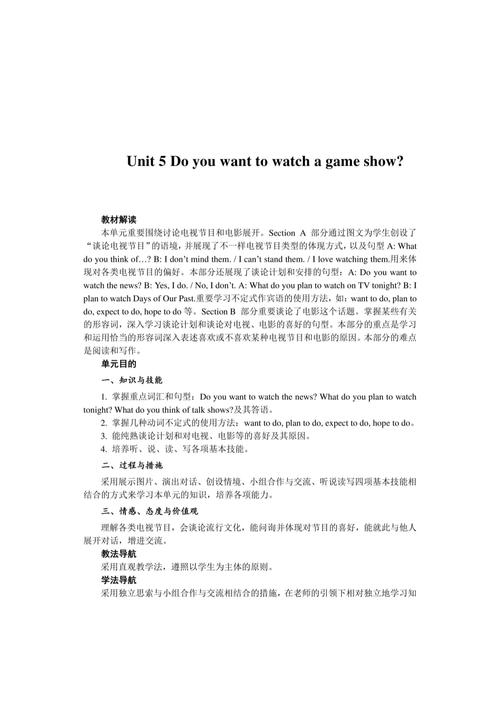
知识与技能目标:
 (图片来源网络,侵删)
- 词汇: 掌握并运用本册核心词汇(约400-450个),特别是与各单元话题相关的词汇。
- 句型: 熟练掌握并运用本册核心功能句型和语法结构。
- 听: 能听懂接近正常语速、关于熟悉话题的简短对话和故事,理解主要意思。
- 说: 能就熟悉的个人和家庭情况、学校生活、兴趣爱好等话题进行简短交流,能表达简单的观点和情感。
- 读: 能读懂不同体裁的简短语篇,如故事、书信、广告等,理解主要信息并进行简单的推断。
- **写: 能根据提示或图片,写出简单的句子和短文,如邮件、日记、调查报告等,做到语法基本正确、意思连贯。
-
过程与方法目标:
- 通过小组合作、角色扮演、项目式学习等方式,培养合作探究精神和解决问题的能力。
- 学会使用思维导图、关键词等策略来帮助理解和记忆。
- 初步形成有效的学习策略,如预习、复习、记笔记等。
-
情感态度与价值观目标:
- 培养学习英语的积极态度和自信心。
- 了解中西方文化差异,培养跨文化交际意识。
- 形成健康的生活态度和价值观,如热爱生活、乐于助人、保护环境等。
教学重难点
-
教学重点:
- 核心词汇和短语的掌握与运用。
- 一般过去时、一般将来时、情态动词
can/may/must、比较级和最高级等核心语法的理解和运用。 - 听、说、读、写四项技能的综合训练。
- 围绕各单元话题进行有效的交际活动。
-
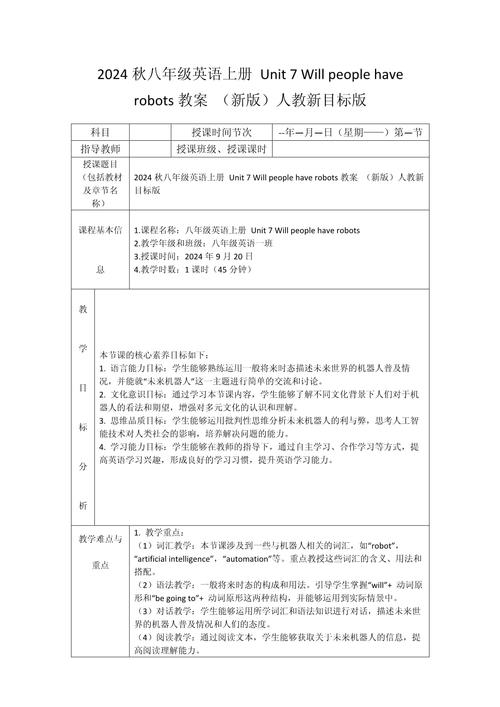
教学难点:
 (图片来源网络,侵删)
- 时态的正确选择与运用(特别是过去式和将来时的区分)。
- 比较级和最高级的不规则变化及用法。
- 阅读理解中的深层含义推断。
- 书作中语言的连贯性和准确性。
教学方法与手段
- 主要方法: 任务型教学法、情景交际法、合作学习法、全身反应法。
- 辅助手段: 多媒体课件、图片、音频、视频、实物、黑板、单词卡片等。
教学进度安排
- Unit 1: Where did you go on vacation? (假期活动,一般过去时)
- Unit 2: How often do you exercise? (日常活动,频率副词,一般现在时)
- Unit 3: I'm more outgoing than my sister. (人物比较,比较级和最高级)
- Unit 4: What's the best movie theater? (谈论喜好,最高级)
- Unit 5: Do you want to watch a game show? (谈论喜好,提出建议)
- Unit 6: I'm watching TV. (现在进行时)
- Unit 7: It's raining! (谈论天气,现在进行时)
- Unit 8: Is there a post office near here? (问路与指路,There be句型)
- Unit 9: What does he look like? (描述外貌)
- Unit 10: I'm watching TV. (复习现在进行时,引出一般现在时)
- 期末复习与检测
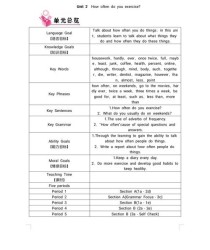
Unit 2: How often do you exercise? 单元教案示例
第一部分:单元整体分析
- 单元主题: Daily Routines and Hobbies (日常活动与爱好)
- 功能意念: 谈论日常活动频率。
- 核心词汇:
exercise, skateboarding, junk food, coffee, dentist, habit, health, sleep, help, for, maybe, less, than, about, together, forget - 核心句型:
—How often do you...? —I... + 频率副词.What do you usually do on weekends?—How many hours do you sleep every night? —I sleep for... hours.
- 核心语法:
- 频率副词:
always, usually, often, sometimes, hardly ever, never的用法和位置。 How often和How many引导的特殊疑问句。help sb. (to) do sth.和help sb. with sth.的用法。
- 频率副词:
- 课时安排: 共6课时 (1a-2d, 3a-3c, Grammar Focus, 4a-4c, Reading, Self Check)
第二部分:分课时教案
课题: Unit 2 How often do you exercise? (Section A 1a-2d) 课型: 新授课 课时: 第1课时
教学目标
-
知识与技能:
- 能听、说、读、写并运用以下词汇:
exercise, skateboarding, junk food, coffee, dentist, habit。 - 能熟练运用句型
—How often do you...? —I... + 频率副词.来谈论日常活动及其频率。 - 能听懂并理解关于日常活动的简短对话。
- 能听、说、读、写并运用以下词汇:
-
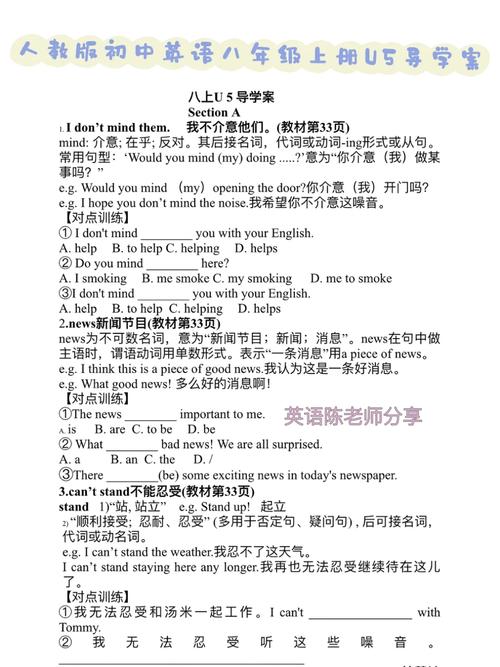
过程与方法:
 (图片来源网络,侵删)
- 通过图片和情景导入,激发学习兴趣。
- 通过结对练习和小组活动,在实践中运用目标语言。
- 学习使用频率副词来量化描述生活。
-
情感态度与价值观:
- 引导学生反思自己的生活习惯,认识到健康生活方式的重要性。
- 培养学生积极、健康的生活态度。
教学重难点
- 教学重点: 掌握并运用
—How often do you...? —I... + 频率副词.句型。 - 教学难点: 理解并正确使用频率副词 (
always, usually, often, sometimes, hardly ever, never) 的含义和位置。
教学准备
- 多媒体课件,包含图片、音频、视频。
- 单词卡片。
- 调查表格。
教学过程
| 教学环节 | 教师活动 | 学生活动 | 设计意图 |
|---|---|---|---|
| Step 1: Lead-in (5 mins) | Greet the class and ask: "What do you usually do on weekends?" Show pictures of different activities (e.g., playing basketball, reading books, watching TV). Ask: "Do you exercise? How often do you exercise?" (板书标题:Unit 2 How often do you exercise?) |
Answer the teacher's question. Look at the pictures and say the activities in English. Try to answer the new question. |
激活学生已有的知识,通过谈论周末活动自然地引入本单元话题,激发学习兴趣。 |
| Step 2: Presentation (15 mins) | Vocabulary: Present new words using pictures and realia (e.g., show a skateboard for skateboarding). Read the words and have students repeat chorally and individually.Frequency Adverbs: Draw a timeline on the blackboard. Write always (100%), usually (80%), often (60%), sometimes (30%), hardly ever (10%), never (0%). Explain the meaning of each adverb with examples.Emphasize that they are usually placed before the main verb (e.g., I always exercise.).Key Sentence Pattern: Present the pattern: —How often do you...? —I... + 频率副词.* Give examples: —How often do you watch TV? —I watch TV every day. / —How often do you go to the dentist? —I hardly ever go to the dentist. |
Learn the new words and repeat them. Look at the timeline and understand the degree of frequency. Listen to the teacher's explanation and take notes. Understand the structure of the target sentence pattern. |
直观呈现新词汇,降低学习难度,通过时间轴形象展示频率副词的差别,帮助学生理解和记忆,聚焦核心句型,为后续操练做铺垫。 |
| Step 3: Practice (10 mins) | 1a: Ask students to match the activities with the pictures. 1b: Play the recording. Ask students to listen and check the activities they hear in 1a. Pair Work (1c): Ask two students to read the example conversation in the book. Have students work in pairs. One student asks "How often do you...?" and the other answers using the activities from 1a. * Walk around the classroom to offer help and monitor the practice. |
Complete 1a individually. Listen to the tape and complete 1b. Work in pairs to practice the conversation. Try to use different activities and frequency words. |
从听、读的输入,过渡到说的输出,结对练习为学生提供了安全、轻松的语言实践环境,鼓励开口说英语。 |
| Step 4: Listening & Practice (10 mins) | 2a: Play the recording for the first time. Ask students to listen and check the activities they hear. 2b: Play the recording again. Ask students to fill in the blanks with the frequency words they hear. Check answers with the class. *Pair Work (2c): Ask students to make conversations based on the information in 2a and 2b. * Invite several pairs to present their conversations to the class. |
Listen and complete 2a. Listen again and complete 2b. Check answers. Work in pairs to create and practice new conversations. |
通过听力训练,进一步巩固目标词汇和句型,让学生基于听力内容进行创编,培养其语言组织能力和运用能力。 |
| Step 5: Summary & Homework (5 mins) | Summary: Ask students: "What have we learned today?" Guide them to summarize the key words and sentence pattern. Homework: Copy the new words and key sentences three times. Interview at least three classmates about their weekend activities and make a list. (e.g., Li Hua: I usually play basketball on weekends.) |
Recall and summarize what they have learned. Write down the homework. |
梳理本课知识点,加深记忆,作业设计兼顾巩固性(抄写)和拓展性(采访),将课堂学习延伸到课外。 |
板书设计
                      Unit 2 How often do you exercise?
---------------------------------------------------------
Key Vocabulary:
exercise, skateboarding, junk food, coffee, dentist, habit
Frequency Adverbs (频率副词):
always (总是)   usually (   often (经常)
sometimes (有时)   hardly ever (几乎不)   never (从不)
Key Pattern:
— How often do you...?
— I ... + 频率副词.
(e.g., I always exercise.)
使用建议
- 灵活性: 这份教案是一个通用模板,在实际教学中,您需要根据学生的反应、课堂氛围和具体学情随时调整教学内容和节奏。
- 分层教学: 对于基础较好的学生,可以增加一些拓展活动,如让他们用英语写一篇关于自己理想周末的小短文,对于基础薄弱的学生,可以给予更多的词汇和句型支持,降低任务难度。
- 评价方式: 采用多元化的评价方式,不仅关注学生的最终答案,更要关注他们在学习过程中的参与度、合作精神和进步。
- 资源利用: 充分利用课本配套的音频、视频资源,也可以从网上寻找一些相关的英文歌曲、短视频等,使课堂更加生动有趣。
希望这份详细的教案框架和示例能对您的教学工作有所帮助!