
仁爱版九上英语课文讲了啥?
校园之窗 2025年12月14日 04:54:30 99ANYc3cd6
整体结构概览
仁爱版九年级上册通常包含 四个单元,每个单元又分为 三个话题,每个话题对应一课,全书共 12课。
-
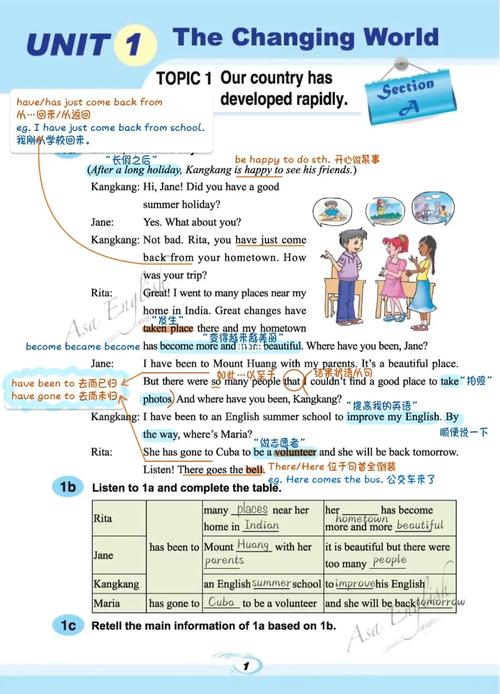
Unit 1: The Changing World (变化的世界)
 (图片来源网络,侵删)
- Topic 1: Our country has developed rapidly. (我们的国家发展迅速。)
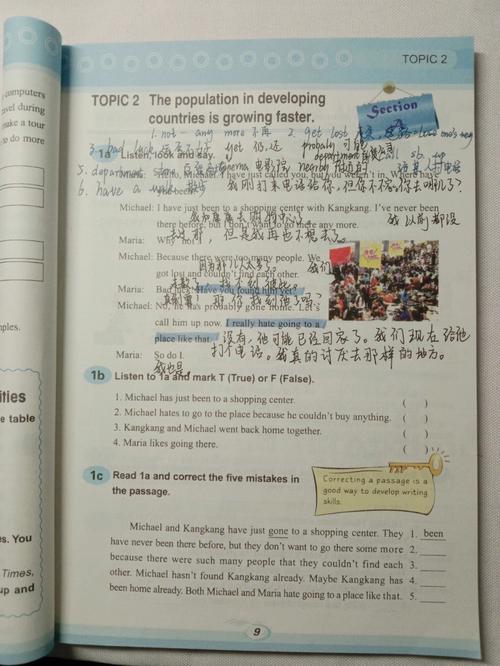
- Topic 2: The population in developing countries is growing faster. (发展中国家的人口增长更快。)
- Topic 3: The world has changed for the better. (世界向好的方向变化了。)
-
Unit 2: Saving the Earth (拯救地球)
- Topic 1: Pollution has caused too many problems. (污染造成了太多问题。)
- Topic 2: How to protect the environment? (如何保护环境?)
- Topic 3: Many things can be recycled. (很多东西可以被回收利用。)
-
Unit 3: English Around the World (世界各地的英语)
- Topic 1: English is widely spoken throughout the world. (英语在全世界被广泛使用。)
- Topic 2: Can you tell me the way to the hospital? (你能告诉我去医院的路吗?)
- Topic 3: Could you please tell me where the restrooms are? (请问您能告诉我洗手间在哪里吗?)
-
Unit 4: Scientific Achievements (科学成就)
- Topic 1: When was it invented? (它是什么时候发明的?)
- Topic 2: I'm excited about the things that will be invented. (我对将要被发明的东西感到兴奋。)
- Topic 3: China is a great country with a long history. (中国是一个有着悠久历史的伟大国家。)
分单元核心内容详解
Unit 1: The Changing World
Topic 1: Our country has developed rapidly.
- 核心句型 (Key Structures):
- 现在完成时:
have/has + 过去分词- 例:
Great changes have taken place in China.(中国发生了巨大的变化。) - 例:
Many modern buildings have been built in our city.(我们城市建了许多现代化的高楼。)
- 例:
- 比较级和最高级:
more... than...,the most...- 例:
Life is much better than before.(生活比以前好多了。) - 例:
Shanghai is one of the biggest cities in China.(上海是中国最大的城市之一。)
- 例:
- 现在完成时:
- 重点词汇 (Key Vocabulary):
- develop (v.) 发展
- development (n.) 发展
- rapidly (adv.) 迅速地
- change (n./v.) 变化
- take place 发生
- modern (adj.) 现代的
- building (n.) 建筑物
- improve (v.) 改善
- standard (n.) 标准
- 课文大意 (Main Idea): 本课通过对话和短文,对比了中国过去和现在在经济发展、城市建设、人民生活等方面的巨大变化,重点运用现在完成时来描述已经发生的、对现在有影响的动作或状态。
Topic 2: The population in developing countries is growing faster.
- 核心句型 (Key Structures):
It's + adj. + for sb. to do sth.(对某人来说做某事是...)- 例:
It's important for us to control the population.(控制人口很重要。)
- 例:
too many + 可数名词复数(太多的...)- 例:
There are too many people in the city.(城市里人太多了。)
- 例:
too much + 不可数名词(太多的...)- 例:
We have too much homework to do.(我们有太多的家庭作业要做。)
- 例:
- 重点词汇 (Key Vocabulary):
- population (n.) 人口
- develop (v.) 发展
- develop (adj.) 发展中的
- grow (v.) 生长;增长
- problem (n.) 问题
- control (v./n.) 控制
- resource (n.) 资源
- limit (v./n.) 限制
- 课文大意 (Main Idea): 本课聚焦于人口问题,特别是发展中国家快速增长的人口所带来的挑战,如资源短缺、就业压力、环境问题等,课文讨论了控制人口的必要性和方法。
Topic 3: The world has changed for the better.
- 核心句型 (Key Structures):
...change for the better/worse.(向好的/坏的方向变化。)be proud of...(为...感到自豪。)have a chance to do sth.(有机会做某事。)
- 重点词汇 (Key Vocabulary):
- proud (adj.) 自豪的
- chance (n.) 机会
- achieve (v.) 实现;达到
- dream (n.) 梦想
- success (n.) 成功
- believe (v.) 相信
- 课文大意 (Main Idea): 本课是对整个单元的总结和升华,课文谈论了世界在科技、医疗、教育等方面取得的进步,世界正朝着更好的方向发展,鼓励学生为国家的成就感到自豪,并为自己的未来和梦想而努力。
Unit 2: Saving the Earth
Topic 1: Pollution has caused too many problems.
- 核心句型 (Key Structures):
- 现在完成时的被动语态:
have/has been + 过去分词- 例:
Many rivers have been polluted by factories.(许多河流被工厂污染了。) - 例:
Lots of fish have been killed.(许多鱼被杀死了。)
- 例:
stop/prevent sb. from doing sth.(阻止某人做某事)- 例:
We must stop people from throwing litter everywhere.(我们必须阻止人们到处乱扔垃圾。)
- 例:
- 现在完成时的被动语态:
- 重点词汇 (Key Vocabulary):
- pollution (n.) 污染
- pollute (v.) 污染
- environment (n.) 环境
- cause (v.) 引起;导致
- problem (n.) 问题
- factory (n.) 工厂
- litter (n.) 乱扔的杂物
- harm (v./n.) 伤害;危害
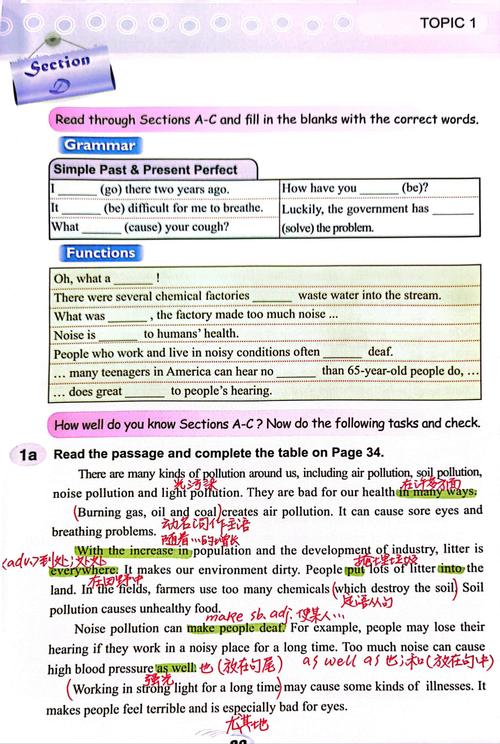
- 课文大意 (Main Idea): 本课介绍了各种污染问题,如水污染、空气污染、噪音污染等,并分析了污染的来源(工厂、汽车、垃圾等)及其对人类和自然造成的危害。
Topic 2: How to protect the environment?
- 核心句型 (Key Structures):
We should/shouldn't do sth.(我们应该/不应该做某事。)It's our duty to do sth.(做某事是我们的责任。)We can do sth. to help...(我们可以做某事来帮助...)
- 重点词汇 (Key Vocabulary):
- protect (v.) 保护
- environment (n.) 环境
- duty (n.) 责任
- plant (v.) 种植
- save (v.) 节约;拯救
- energy (n.) 能源
- reuse (v.) 重复使用
- 课文大意 (Main Idea): 本课从积极的角度出发,提出保护环境的具体措施和建议,植树造林、节约用水用电、使用公共交通工具、不使用一次性产品等,强调保护环境是每个人的责任。
Topic 3: Many things can be recycled.
- 核心句型 (Key Structures):
- 情态动词的被动语态:
can/may/should be + 过去分词- 例:
Plastic bags can be reused.(塑料袋可以被重复使用。) - 例:
Glass bottles should be collected and recycled.(玻璃瓶应该被收集和回收。)
- 例:
It's time for us to do sth.(是我们做某事的时候了。)
- 情态动词的被动语态:
- 重点词汇 (Key Vocabulary):
- recycle (v.) 回收利用
- reusable (adj.) 可重复使用的
- bin (n.) 垃圾箱
- plastic (n./adj.) 塑料(的)
- paper (n.) 纸
- glass (n.) 玻璃
- waste (n.) 废物
- 课文大意 (Main Idea): 本课重点介绍垃圾分类和回收利用,课文说明了哪些材料可以被回收,如纸、塑料、玻璃、金属等,并倡导大家积极参与垃圾分类,变废为宝,以减少对环境的压力。
Unit 3: English Around the World
Topic 1: English is widely spoken throughout the world.
- 核心句型 (Key Structures):
- 一般现在时的被动语态:
am/is/are + 过去分词- 例:
English is spoken as a foreign language in many countries.(在许多国家,英语被作为一门外语来使用。) - 例:
It is used by travelers and business people around the world.(它被全世界的旅行者和商人们使用。)
- 例:
not only... but also...(不仅.....)
- 一般现在时的被动语态:
- 重点词汇 (Key Vocabulary):
- international (adj.) 国际的
- communication (n.) 交流;沟通
- foreign (adj.) 外国的
- widely (adv.) 广泛地
- throughout (prep.) 遍及
- business (n.) 商业;生意
- important (adj.) 重要的
- 课文大意 (Main Idea): 本课介绍了英语作为世界通用语言的重要性及其在国际交流、商业、科技、旅游等领域的广泛应用,说明了学习英语的必要性和好处。
Topic 2: Can you tell me the way to the hospital?
- 核心句型 (Key Structures):
- 宾语从句 (由
that,if,whether,wh-引导)- 例:
Could you tell me where the post office is?(注意:从句用陈述语序) - 例:
I want to know how I can get to the station. - 例:
He asked if/whether the bus stop was far from here.
- 例:
- 宾语从句 (由
- 重点词汇 (Key Vocabulary):
- direction (n.) 方向
- excuse (v.) 原谅
- straight (adv.) 直地
- turn (v.) 转弯
- corner (n.) 拐角
- block (n.) 街区
- distance (n.) 距离
- 课文大意 (Main Idea):
本课的核心功能是“问路”和“指路”,课文通过对话展示了如何礼貌地询问路线,以及如何清晰地指明方向,使用
Go straight along...,Turn left/right at...,It's about... meters away from...等常用表达。
Topic 3: Could you please tell me where the restrooms are?
- 核心句型 (Key Structures):
- 更礼貌的宾语从句和请求句式
- 例:
Could you please tell me...?(请问你能告诉我...吗?) - 例:
I wonder if you could help me.(我在想你是否能帮我。) - 例:
Pardon? / Sorry?(没听清,请求重复)
- 例:
- 更礼貌的宾语从句和请求句式
- 重点词汇 (Key Vocabulary):
- restroom (n.) (美)洗手间
- bookstore (n.) 书店
- supermarket (n.) 超市
- across from (prep.) 在...对面
- next to (prep.) 紧挨着
- between (prep.) 在...之间
- menu (n.) 菜单
- 课文大意 (Main Idea): 本课继续深化“问路”主题,并扩展到询问公共场所的位置,如洗手间、餐厅、商店等,重点学习如何使用更委婉、礼貌的语言进行提问和请求,以及如何听懂他人的指路并表示感谢。
Unit 4: Scientific Achievements
Topic 1: When was it invented?
- 核心句型 (Key Structures):
- 一般过去时的被动语态:
was/were + 过去分词- 例:
The telephone was invented in 1876.(电话是在1876年发明的。) - 例:
When was the computer invented?
- 例:
- 一般过去时的被动语态:
- 重点词汇 (Key Vocabulary):
- invent (v.) 发明
- invention (n.) 发明;发明物
- scientist (n.) 科学家
- century (n.) 世纪
- ago (adv.) 以前
- discover (v.) 发现
- key (n.) 钥匙;关键
- 课文大意 (Main Idea): 本课围绕“发明”这一主题,介绍了一些重大发明(如电话、电视、电脑、飞机等)的发明者和发明时间,重点学习被动语态的一般过去时形式,用来询问和描述某物被发明的时间。
Topic 2: I'm excited about the things that will be invented.
- 核心句型 (Key Structures):
- 一般将来时的被动语态:
will be + 过去分词- 例:
New things will be invented in the future.(将来会有新的事物被发明出来。)
- 例:
be excited about...(对...感到兴奋)make it possible to do sth.(使做某事成为可能)
- 一般将来时的被动语态:
- 重点词汇 (Key Vocabulary):
- future (n.) 未来
- excited (adj.) 兴奋的
- possible (adj.) 可能的
- space (n.) 太空
- robot (n.) 机器人
- life (n.) 生活
- change (v.) 改变
- 课文大意 (Main Idea): 本课着眼于未来,畅想未来可能出现的科技发明(如机器人、太空旅行等),学习用一般将来时的被动语态来预测未来的事物,并表达自己对未来的期待和兴奋之情。
Topic 3: China is a great country with a long history.
- 核心句型 (Key Structures):
with + 名词作定语- 例:
China is a country with a long history.(中国是一个拥有悠久历史的国家。)
- 例:
be famous for...(因...而闻名)It's said that...(据说...)
- 重点词汇 (Key Vocabulary):
- ancient (adj.) 古代的
- history (n.) 历史
- culture (n.) 文化
- invention (n.) 发明
- famous (adj.) 著名的
- pride (n.) 骄傲;自豪
- 课文大意 (Main Idea): 本课是对整个单元的总结,并回归到中国的伟大成就,课文不仅介绍了古代中国的四大发明,也提到了现代中国在科技领域(如航天、高铁)的辉煌成就,激发学生的民族自豪感。