冀教版英语七上教案如何高效设计?
校园之窗 2025年12月14日 01:40:25 99ANYc3cd6
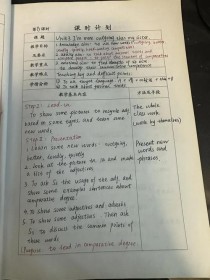
较多,我将为您提供一个完整的教案模板,并以第一单元第一课为例进行详细说明,您可以根据这个模板和范例,轻松地套用到其他单元和课时中。
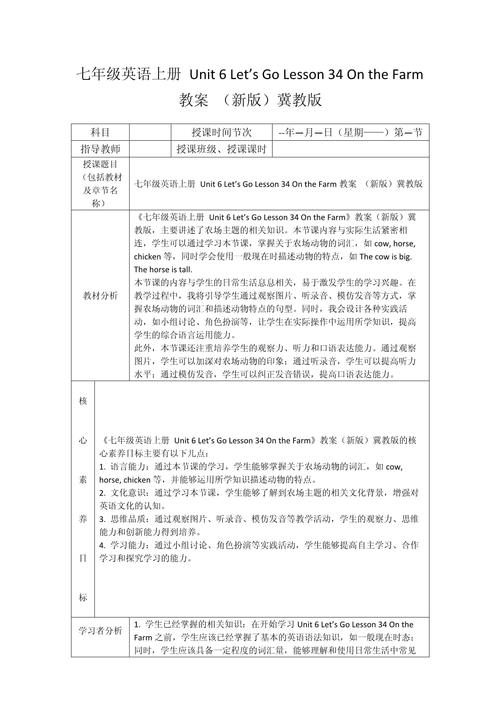
冀教版英语七年级上册教案通用模板
课题
(图片来源网络,侵删)
- Unit [单元号]: [单元主题]
- Lesson [课时号]: [课文名称]
课型
- New Lesson (新授课)
- Listening and Speaking (听说课)
- Reading and Writing (读写课)
- Revision (复习课)
教学目标
-
知识与技能目标:
- 词汇: 学生能够听、说、读、写并运用本课的核心词汇(如: ..., ..., ...)。
- 句型: 学生能够理解并熟练运用本课的重点句型(如: What's this in English? It's a/an ... / Is this a ...? Yes, it is. / No, it isn't.)。
- 听: 能听懂关于[本课话题]的简短对话和指令。
- 说: 能运用所学词汇和句型进行简单的问候、介绍和问答。
- 读: 能读懂关于[本课话题]的简短语篇或对话。
- 写: 能根据图片或提示,写出简单的句子或描述。
-
过程与方法目标:
 (图片来源网络,侵删)
- 通过情景对话、小组合作、游戏等方式,引导学生在“做中学”,培养其自主学习和合作探究的能力。
- 运用多媒体、实物、图片等直观教具,激发学生的学习兴趣,帮助学生在真实或模拟的语境中感知和运用语言。
-
情感态度与价值观目标:
- 培养学生开口说英语的积极性和自信心。
- 鼓励学生乐于参与课堂活动,学会与人合作。
- 引导学生了解中西方文化差异(如适用),培养跨文化交际意识。
教学重难点
-
教学重点:
- 本课核心词汇的认读和运用。
- 本课重点句型的理解和熟练运用。
-
教学难点:
 (图片来源网络,侵删)
- 名词的单复数形式及其用法(如适用)。
a和an的正确使用。- 在真实情境中灵活运用所学语言进行交际。
教学准备
- 教师: PPT课件、单词卡片、实物(如书本、钢笔、苹果等)、录音机或多媒体播放设备、小奖品。
- 学生: 英语课本、练习本、铅笔。
教学过程
| 教学环节 | 教师活动 | 学生活动 | 设计意图 |
|---|---|---|---|
| Step 1: Greeting & Lead-in (热身与导入) | Greet the class: "Good morning, class! Welcome back to school!" 2. Sing an English song like "Hello Song" or "ABC Song". 3. Show some pictures of school objects (pen, book, ruler) and ask: "What can you see?" to lead in the topic. |
Greet the teacher. 2. Sing the song and clap. 3. Try to answer the question in Chinese or English if possible. |
营造轻松的英语学习氛围,通过歌曲和图片激发学生兴趣,自然导入新课主题。 |
| Step 2: New Presentation (新知呈现) | Vocabulary: - Present new words using real objects or clear pictures (e.g., show a pen and say "This is a pen."). - Read the words after the recording, then have students repeat. - Play a game like "Quick Response" or "What's Missing?". 2. Sentence Patterns: - Model the key sentences: "What's this in English?" and "It's a pen." - Ask and answer with a student. - Write the sentences on the blackboard and explain the structure. |
Vocabulary: - Look at the objects/pictures and listen. - Read the words after the teacher and the recording. - Play games to remember the words. 2. Sentence Patterns: - Listen and watch the teacher's model. - Practice the dialogue with the teacher. - Observe and take notes. |
利用直观教学法,将单词和句型与具体事物联系起来,降低学习难度,通过游戏和师生互动,加深学生对新知识的印象。 |
| Step 3: Practice (趣味操练) | Pair Work: - Ask students to work in pairs. Student A holds up an object, Student B asks "What's this in English?" and Student A answers. Then they switch roles. 2. Group Work: - Divide the class into groups of 4. Give each group a set of word cards. One student picks a card and asks the question, others guess. 3. Game: "Find Your Partner" - Give each student a card with a word or a picture. They have to walk around and ask questions to find the person who has the matching card. |
Pair Work: - Practice the dialogue with their partner. 2. Group Work: - Play the guessing game in groups, using the target language. 3. Game: - Move around the classroom, asking and answering to find their partner. |
通过结对活动和小组合作,为学生提供大量运用语言的机会,在轻松的游戏氛围中巩固所学知识,培养学生的合作精神和交际能力。 |
| Step 4: Production (拓展应用) | Survey: - Ask students to do a survey: "What's in your pencil case?" - Provide a simple table for them to fill in. 2. Show and Tell: - Invite a few students to come to the front, show their object and say "This is a/an ...". |
Survey: - Interview their classmates and complete the table. 2. Show and Tell: - Brave students come to the front and introduce their objects to the class. |
将所学知识迁移到实际生活中,进行创造性的语言输出,培养学生的综合语言运用能力和表现力。 |
| Step 5: Summary & Homework (总结与作业) | Summary: - Ask students: "What have we learned today?" Guide them to summarize the key words and sentences. - Review the main points on the blackboard. 2. Homework: - Level 1 (基础): Copy the new words and sentences three times. - Level 2 (提高): Draw five school things and label them in English. - Level 3 (拓展): Introduce three things in your bedroom to your parents in English. |
Summary: - Recall and share what they have learned. 2. Homework: - Listen to the instructions and write down the homework. |
帮助学生梳理本课知识,形成知识体系,分层作业设计,兼顾不同水平的学生,实现个性化学习。 |
板书设计
- Unit 1: Hello and Welcome!
- Lesson 1: Hello!
- Words:
- hello / həˈləʊ/
- name / neɪm/
- I / aɪ/
- am / æm/
- are / ɑː(r)/
- you / juː/
- what / wɒt/
- is / ɪz/
- this / ðɪs/
- in / ɪn/
- English / ˈɪɡlɪʃ/
- it / ɪt/
- a /ə/; an /æn/
- pen / pen/
- book / bʊk/
- ruler / ˈruːlə(r)/
- Sentences:
- Hello! / Hi!
- My name is ... / I'm ...
- What's your name?
- Nice to meet you.
- What's this in English?
- It's a/an ...
- How do you spell it?
- Words:
教学反思
- (本部分供教师课后填写)
- 本节课教学目标是否达成?哪些环节效果较好,哪些有待改进?
- 学生在参与活动时的积极性和反应如何?
- 时间分配是否合理?
- 对于教学重难点的突破,采用了哪些方法?是否有效?
- 下次授课时,可以在哪些方面进行优化?
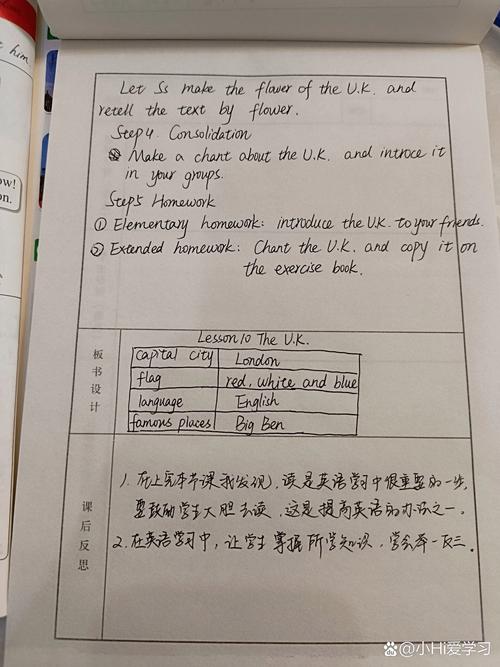
教案范例:冀教版七年级上册 Unit 1, Lesson 1
课题
- Unit 1: Hello and Welcome!
- Lesson 1: Hello!
课型
- New Lesson (新授课)
教学目标
- 知识与技能目标:
- 能听、说、读、写并运用核心词汇:
hello,name,I,am,are,you,what,is,this,in,English,it。 - 能理解并熟练运用问候语和自我介绍的句型:
Hello! / Hi!,My name is ... / I'm ...,What's your name?,Nice to meet you. - 能听懂并初步运用询问物品的句型:
What's this in English? It's a pen.(作为引出,为下节课铺垫)
- 能听、说、读、写并运用核心词汇:
- 过程与方法目标:
- 通过师生对话、情景表演、小组活动等方式,引导学生在真实情境中学习和运用英语。
- 培养学生初步的听、说能力和合作学习意识。
- 情感态度与价值观目标:
- 鼓励学生大胆开口,培养学习英语的兴趣和自信心。
- 学会基本的礼貌用语,乐于与人交往。
教学重难点
- 教学重点:
- 掌握问候与自我介绍的句型。
- 熟练运用
What's your name?和My name is ...进行问答。
- 教学难点:
I am的缩写形式I'm的正确使用。- 区分
What's your name?(问名字) 和What's this?(问物品)。
教学准备
- 教师: PPT课件(包含人物头像、单词卡片)、录音机、课文对话录音、姓名卡片。
- 学生: 英语课本、练习本。
教学过程
| 教学环节 | 教师活动 | 学生活动 | 设计意图 |
|---|---|---|---|
| Step 1: Greeting & Lead-in | (Smile and wave) "Good morning, boys and girls! Welcome to our English class! I'm your new English teacher. You can call me Miss/Mr. [Your Name]." 2. Play a video or audio of a simple "Hello Song". 3. Show a picture of Danny and say: "Look! This is Danny. He is new. Let's say hello to him!" |
"Good morning, teacher!" 2. Listen to the song and try to sing along. 3. "Hello, Danny!" |
建立和谐的师生关系,用歌曲和熟悉的卡通人物创设轻松愉快的课堂氛围,激发学习动机。 |
| Step 2: New Presentation | Greeting & Introducing: - Point to yourself and say: "I am Miss/Mr. [Your Name]." (Write on the board). - Then say: "I'm Miss/Mr. [Your Name]." (Write I'm = I am). - Greet students: "Hello, Li Ming!" (Pretend to know a student). "Hello!" - Ask a student: "What's your name?" Help him/her answer: "My name is Li Ming. / I'm Li Ming." (Write both on the board). 2. Dialogue: - Play the recording of the dialogue in Lesson 1. - Ask students to listen carefully and repeat after the recording. - Explain Nice to meet you. and its response Nice to meet you, too. 3. Game: "Name Chain" - Teacher: "My name is Miss Li. What's your name?" (Student A). - Student A: "My name is Tom. What's your name?" (Student B). - ... and so on. |
Greeting & Introducing: - Listen and repeat: "I am...", "I'm...". - Practice greeting with the teacher. - Listen to the question and try to answer. 2. Dialogue: - Listen to the recording. - Read the dialogue after the recording, paying attention to the pronunciation and intonation. - Learn the new phrase. 3. Game: - Students practice the Q&A in a chain around the class. |
从自我介绍入手,将核心句型自然呈现,通过听录音和跟读,培养正确的语音语调,游戏"Name Chain"让每个学生都有开口的机会,在互动中巩固句型。 |
| Step 3: Practice | Pair Work: - Ask students to practice the dialogue in pairs. One is Danny, the other is Jenny. - Walk around the classroom to offer help. 2. Role-play: - Invite several pairs to come to the front and act out the dialogue. Give them applause. |
Pair Work: - Work with a partner, read the dialogue, and try to act it out. 2. Role-play: - Confident pairs perform the dialogue for the class. |
通过结对练习和角色扮演,让学生在模拟的真实情境中反复运用语言,加深理解和记忆,表演和掌声能增强学生的自信心和成就感。 |
| Step 4: Production | Make a New Dialogue: - Ask students to create a new dialogue with their partner, using the sentence patterns but with their own names. - Example: A: Hello! B: Hello! What's your name? A: My name is ... What's your name? B: My name is ... Nice to meet you. A: Nice to meet you, too. |
Make a New Dialogue: - Work in pairs to create a new dialogue. - A few groups volunteer to show their new dialogue. |
引导学生将所学知识进行重组和创造,实现语言的个性化输出,真正培养运用语言的能力。 |
| Step 5: Summary & Homework | Summary: - Ask: "How do we greet people in English?" and "How do we ask for a name?" - Review the key sentences on the blackboard. 2. Homework: - Level 1: Recite the dialogue in Lesson 1. - Level 2: Introduce yourself to at least three people (classmates or family members) in English. - Level 3: Write a short paragraph to introduce yourself and a friend. |
Summary: - Answer the teacher's questions and review. 2. Homework: - Listen to the instructions and write down the homework. |
总结本课核心内容,强化记忆,分层作业确保学生能在自己能力范围内完成,并将英语学习延伸到课外。 |
板书设计
- Unit 1: Hello and Welcome!
- Lesson 1: Hello!
- Greetings:
- Hello! / Hi!
- Nice to meet you.
- Nice to meet you, too.
- Introductions:
- My name is ... / I'm ...
- What's your name?
- I am ... = I'm ...
- Greetings:
教学反思
- 本节课作为开学第一课,重点在于激发兴趣和建立基本的课堂用语,学生对游戏和表演环节反应热烈,参与度高。
I'm的缩写形式部分学生容易忘记写撇号,下次需要特别强调和板书。- 时间控制较好,但最后的Production环节可以再放开一些,给学生更多创造的空间。
- 整体达到了教学目标,为后续学习打下了良好的基础。
希望这份详细的模板和范例能对您有所帮助!祝您教学顺利!