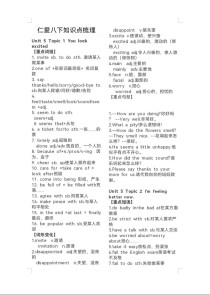
九年级11单元英语翻译有何重点难点?
校园之窗 2025年12月20日 05:49:39 99ANYc3cd6
九年级英语第11单元(通常以 "Could you please tell me where the restrooms are?" 为核心句型)的主题是“礼貌地询问信息和指路” (Polite Inquiry and Giving Directions),这个单元的重点是学习如何使用“间接疑问句” (Indirect Questions) 来提出问题,而不是直接使用疑问句,这样听起来更礼貌、更客气。
下面我将为您详细解析这个单元的核心内容,包括:
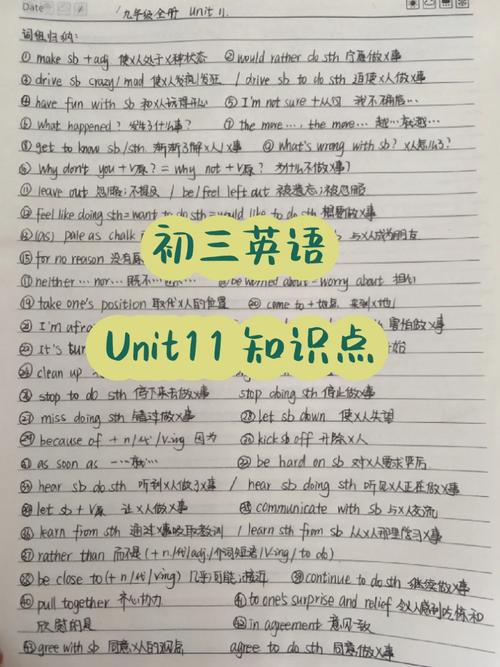
- 核心句型和语法
- 重点词汇和短语
- 课文翻译示例
- 单元知识点总结
核心句型和语法:间接疑问句
这是本单元最重要的语法点,也是整个单元的精髓。
核心概念: 当你想向别人提问,特别是向陌生人或不熟悉的人提问时,使用间接疑问句会比直接疑问句显得更有礼貌。
结构对比:
| 类型 | 结构 | 示例 |
|---|---|---|
| 直接疑问句 | 疑问词 + 助动词/情态动词 + 主语 + 动词原形...? | Where is the library? (图书馆在哪里?) |
| 间接疑问句 | 宾语从句连接词 (that/if/whether) + 疑问词 + 陈述语序 (主语 + 动词...) | Could you please tell me where the library is? |
关键变化:
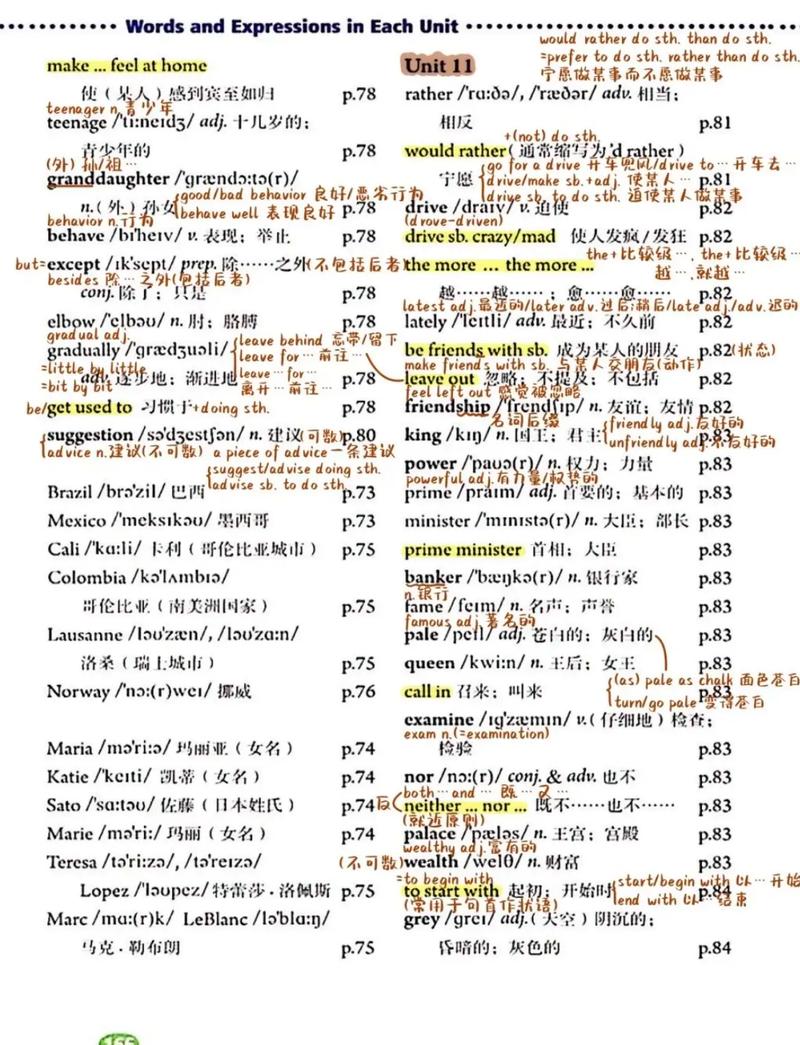
- 引导词:通常用
Could you please tell me...?,Do you know...?,Could you tell me...?等来引出问题。 - 语序:内部的疑问句必须使用陈述句的语序,即“主语 + 谓语”,这是最容易出错的地方!
- 错误:
...where is the library? - 正确:
...where the library is.
- 错误:
常见变化规则:
| 直接疑问句 | 间接疑问句 | 示例 |
|---|---|---|
| 特殊疑问词 (what, where, when, why, how) | 特殊疑问词 + 陈述语序 | What time is it? → Do you know what time it is? |
| 是/否疑问句 (Is/Are/Do/Can...) | if / whether + 陈述语序 |
Is there a bank nearby? → Could you tell me if there is a bank nearby? |
| 特殊疑问词 + 动词 (to do) | 特殊疑问词 + to + 动词原形 |
What should I do? → He asked me what he should do. (在某些语境下) |
重点词汇和短语
A. 提问与指路
- restroom / bathroom / washroom - 厕所 (不同地区的说法)
- department store - 百货商场
- escalator - 自动扶梯
- elevator / lift - 电梯 (美式/英式)
- drugstore / pharmacy - 药店
- bookstore - 书店
- turn left / right - 向左/右转
- go straight - 直走
- on the left / right - 在左边/右边
- next to / beside - 在...旁边
- between...and... - 在...和...之间
- across from / opposite - 在...对面
- in front of - 在...前面
- behind - 在...后面
- block (n.) - (街道的) 一段,一个街区
- make a left / right turn - 左转 / 右转
B. 礼貌用语
- Excuse me. - 打扰一下。
- Could you please tell me...? - 你能告诉我...吗?
- Do you know...? - 你知道...吗?
- I'm sorry to bother you. - 很抱歉打扰你。
- Thanks a lot. / Thank you very much. - 非常感谢。
- You're welcome. - 不客气。
C. 其他实用词汇
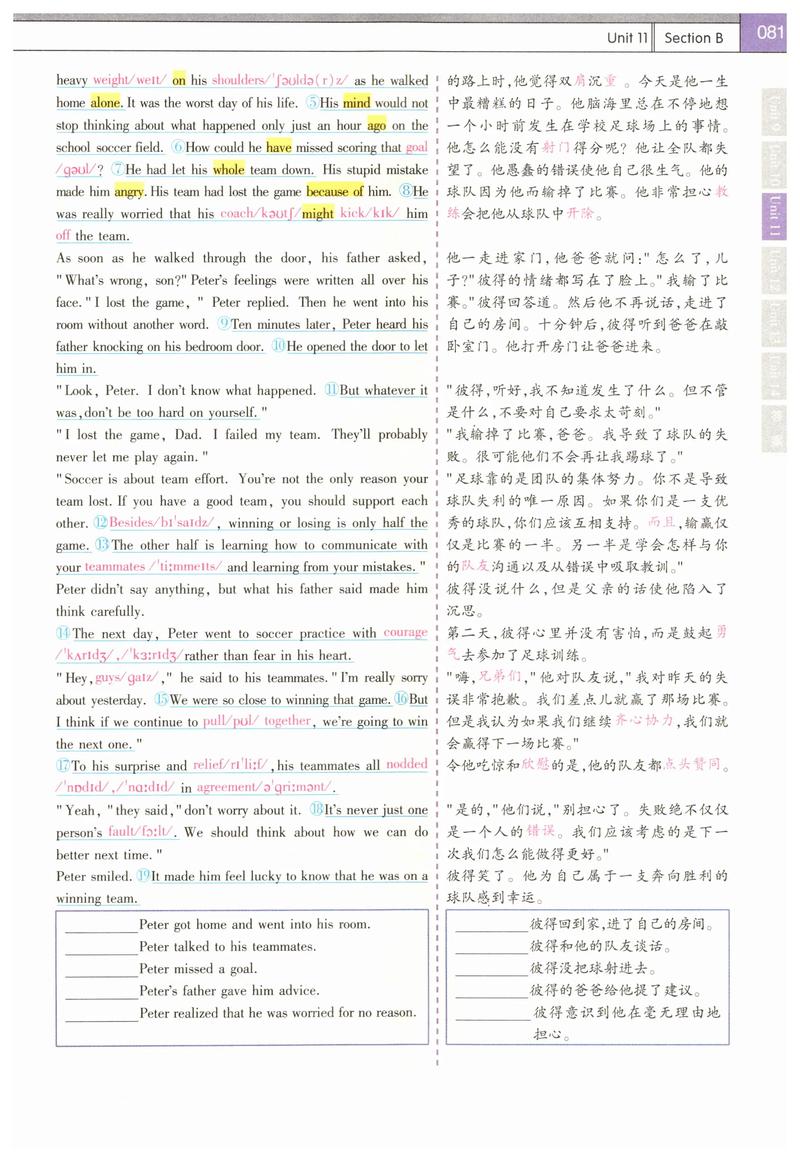
- convenient - 便利的,方便的
- polite - 有礼貌的
- impolite - 不礼貌的
- direct - 直接的
- suggest - 建议
- direction - 方向,指引
- correct - 正确的
课文翻译示例
以下是根据单元主题编写的典型对话和短文翻译。
对话示例:问路
Person A: Excuse me, could you please tell me where the nearest post office is? Person B: Sure. It's on Center Street, next to the library. Person A: How can I get there? Is it far from here? Person B: No, it's not far. Go straight down this street and turn left at the second corner. The post office is on your right, across from a supermarket. Person A: Let me see... go straight, turn left at the second corner, and it's on my right. Got it. Thanks a lot! Person B: You're welcome.
中文翻译:
A: 打扰一下,请问最近的邮局在哪里? B: 它在中心街上,图书馆旁边。 A: 我怎么去那里?离这儿远吗? B: 不远,沿着这条街直走,在第二个路口左转,邮局在你的右边,在一个超市的对面。 A: 让我想想...直走,在第二个路口左转,然后在我的右边,明白了,非常感谢! B: 不客气。
短文示例:
Finding public places in a new city can be difficult. However, if you are polite, people are usually very helpful. Instead of asking directly, "Where is the museum?" you can say, "Excuse me, could you please tell me where the museum is?" This sounds much more polite. When you get directions, make sure you understand. You can repeat the key information, like "So, I go straight and turn left?" to check if you got it right. Being polite and careful can make your trip much more enjoyable.
中文翻译:
在一个新的城市里找公共场所可能会很困难,如果你有礼貌,人们通常都会很乐意帮忙,不要直接问“博物馆在哪里?”,你可以说:“打扰一下,您能告诉我博物馆在哪里吗?”这样听起来要礼貌得多,当你得到指路信息后,一定要确保自己理解了,你可以重复关键信息,所以,我是直走然后左转吗?”来确认自己是否理解正确,礼貌和细心会让你的旅行愉快得多。
单元知识点总结
-
功能:
- 礼貌地寻求帮助 (Politely asking for help)
- 礼貌地询问信息 (Politely asking for information)
- 给别人指路 (Giving directions)
- 描述位置关系 (Describing relative positions)
-
核心语法:
- 间接疑问句:掌握
Could you please tell me...?和Do you know...?等句型。 - 语序变化:牢记间接疑问句内部必须使用陈述语序。
- 礼貌用语:学会使用
Excuse me,Could you please...,Thanks a lot等使交流更顺畅。
- 间接疑问句:掌握
-
文化意识:
- 在英语国家,尤其是在公共场合,对陌生人使用礼貌的间接疑问句是一种基本的社交礼仪,被视为有教养的表现。
- 直接的命令式问法(如 "Tell me where the restroom is!")通常被认为是粗鲁和不礼貌的。
希望这份详细的总结对您有帮助!如果您有课本中具体的课文或句子需要翻译,也可以发给我,我会为您逐句翻译和讲解。