八年级英语下册补全对话怎么做?
校园之窗 2025年12月17日 02:38:42 99ANYc3cd6
提建议与计划
这是八年级下册的重中之重,通常围绕“周末/假期做什么”展开。
情景: 两个朋友,Tom 和 Lily,正在讨论周末的计划。
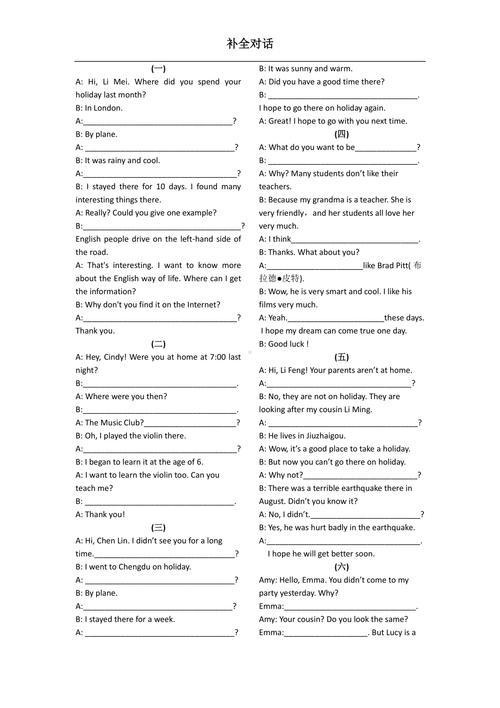
对话:
A: Hi, Tom! 1. ? B: I have no idea. What about you? A: 2. . Do you want to go with me? B: Sounds great! 3. ? A: Let's meet at the school gate at 9:00 a.m. B: 4. . By the way, what should we take? A: We should take some water and snacks. 5. _____ ? B: Good idea! I will bring my camera. See you then! A: See you!
答案与解析:
-
What are you going to do this weekend?
 (图片来源网络,侵删)
- 解析: 提问对方周末的计划,用 "be going to do" 结构,这是最经典的问法。
- 其他说法:
What's your plan for the weekend?/Do you have any plans for the weekend?
-
I'm planning to go hiking in the West Hill Park.
- 解析: 提出自己的计划。
plan to do sth.意为“计划做某事”,说出具体活动“去远足”和地点“西山公园”,让对话更具体。 - 其他说法:
How about going hiking...?(直接提出建议) /I thought we could go hiking...
- 解析: 提出自己的计划。
-
When and where shall we meet?
- 解析: 听到对方的计划后,询问具体的时间和地点,这是很自然的衔接。
shall we...?常用于提出建议或询问意见。 - 其他说法:
Great! What time?/Okay, where should we meet?
- 解析: 听到对方的计划后,询问具体的时间和地点,这是很自然的衔接。
-
That's fine / Okay with me.
- 解析: 同意对方提出的时间和地点,表示赞同。
- 其他说法:
No problem./Sure, see you at 9:00.
-
Would you like to take your camera? / Shall we take our cameras?
 (图片来源网络,侵删)
- 解析: 承接上文关于带什么东西的话题,进一步提出建议或询问对方的意愿。
Would you like to...?是非常礼貌的建议方式。 - 其他说法:
Why not take your camera?(为什么不带呢?) /Don't forget to bring your camera!
- 解析: 承接上文关于带什么东西的话题,进一步提出建议或询问对方的意愿。
谈论过去的经历
通常围绕“假期/周末做了什么”,使用一般过去时。
情景: Amy 和 Jack 正在谈论上周末做了什么。
对话:
A: Hi, Jack! 1. last weekend? B: It was great! 2. with my family. A: Oh, really? 3. ? B: We went to the countryside. It was so beautiful and quiet. A: 4. ? Did you do anything special? B: Yes, we went boating on the lake and had a picnic. 5. _____ ? A: Wow, that sounds fantastic! I was busy with my homework. I'm so jealous!
答案与解析:
-
How was your weekend? / What did you do last weekend?
- 解析: 开场白,询问对方周末的情况,两种问法都可以,第一种侧重评价,第二种侧重具体事件。
- 其他说法:
Did you have a good weekend?
-
I went on a short trip.
- 解析: 回答对方的问题,说明自己“去短途旅行了”。
go on a trip是固定搭配。 - 其他说法:
I visited my grandparents./I traveled to another city.
- 解析: 回答对方的问题,说明自己“去短途旅行了”。
-
Where did you go?
- 解析: 听到对方去旅行了,自然地询问目的地,由
went可知,这里需要用一般过去时的疑问句。 - 其他说法:
That's nice! Was it far from here?
- 解析: 听到对方去旅行了,自然地询问目的地,由
-
What did you do there?
- 解析: 继续追问细节,询问在那个地方具体做了什么,这是延续话题的关键。
- 其他说法:
Did you enjoy yourself?(你玩得开心吗?)
-
What about you? / And you?
- 解析: 问完自己的情况后,把话题抛回给对方,表示关心,这是对话中非常常见的礼貌用语。
- 其他说法:
How was your weekend?(如果第一个问题问的是评价,这里可以再问一次)
寻求与提供帮助
通常发生在学校或日常生活中。
情景: Lucy 在图书馆遇到了她的同学 Mike,他看起来很着急。
对话:
A: Hi, Mike! You look worried. 1. ? B: Oh, hi, Lucy. I'm looking for a book about space science, but I can't find it. A: 2. ? I can help you look for it. B: That's very kind of you. I've checked the "Science" section, but it's not there. A: 3. . Maybe it's in the "Technology" section. Or perhaps someone has already borrowed it. B: You're right. 4. ? A: We can ask the librarian for help. She has a computer. B: 5. _____ . Let's go.
答案与解析:
-
What's the matter? / What's wrong? / Can I help you?
- 解析: 看到对方状态不对,主动询问情况或提供帮助。
- 其他说法:
Is everything okay?
-
What kind of book are you looking for? / What's the title of the book?
- 解析: 在提供帮助前,先了解具体情况,比如书的类型或书名,这样更有针对性。
- 其他说法:
What are you looking for?
-
Don't worry. / Let me think.
- 解析: 安慰对方,并开始思考可能的原因。
Don't worry是最常用的安慰语。 - 其他说法:
Maybe it's on another shelf.
- 解析: 安慰对方,并开始思考可能的原因。
-
What should we do now?
- 解析: 在提出几种可能性后,询问下一步该怎么做。
- 其他说法:
Any other ideas?/How can we find out?
-
Good idea! / That's a great suggestion!
- 解析: 对方提出一个好主意(找图书管理员),表示赞同。
- 其他说法:
Yes, let's do that.
打电话
打电话有固定的“套路”,比如自报家门、询问对方身份、留言等。
情景: Tom 给他的朋友 Helen 打电话,但 Helen 不在家。
对话:
A: Hello! 1. ? B: Hello, this is Tom. Is that Helen? A: 2. . She isn't in right now. Can I take a message for you? B: Certainly. 3. ? A: Yes, please. B: Could you tell her that I called? And I want to know if she is free this Saturday. 4. . A: Okay, I'll tell her. Anything else? B: No, that's all. 5. _____ . A: You're welcome. Goodbye!
答案与解析:
-
Who's that speaking? / Is that Helen speaking?
- 解析: 接电话时的标准问法。
Who's that?比较口语化。 - 其他说法:
Hello, this is...(先自报家门,然后问对方是谁)
- 解析: 接电话时的标准问法。
-
This is Helen's sister, Mary. / Speaking.
- 解析: 接电话的人回答,如果是本人,用
Speaking.,如果是别人,需要自报家门,如This is her sister, Mary.。 - 其他说法:
Yes, this is Helen.(如果接电话的人就是Helen)
- 解析: 接电话的人回答,如果是本人,用
-
Could I leave a message for her?
- 解析: 当对方不在时,请求留言。
leave a message for sb.是固定搭配。 - 其他说法:
Yes, please. I'd like to leave a message.
- 解析: 当对方不在时,请求留言。
-
I'll call her back this evening.
- 解析: 说明自己会再打过来,或者让Helen回电话。
call sb. back意为“回电话”。 - 其他说法:
Please ask her to call me back.
- 解析: 说明自己会再打过来,或者让Helen回电话。
-
Thank you very much. / Thanks a lot.
- 解析: 感谢对方帮忙留言。
- 其他说法:
Thanks for your help.
问路与指路
这是另一个高频考点,需要掌握方位介词和指路的句型。
情景: 一个游客 (A) 向路人 (B) 问去博物馆的路。
对话:
A: Excuse me, 1. ? I'm new here. B: Sure. Where do you want to go? A: 2. . Is it far from here? B: Yes, it's a little bit far. 3. , and walk straight for about 10 minutes. A: Okay, go straight. Then what? B: 4. . You'll see a bank on your left. The museum is just next to the bank. A: 5. _____ ? B: No, you can't. But you can take the No. 5 bus. It's more convenient. A: I see. Thank you so much! B: You're welcome.
答案与解析:
-
could you tell me the way to the museum? / how can I get to the museum?
- 解析: 问路的标准句型。
Could you tell me...?比Can you tell me...?更礼貌。 - 其他说法:
Is there a museum near here?
- 解析: 问路的标准句型。
-
I want to go to the City Museum.
- 解析: 说明自己的目的地,最好说清楚是哪个博物馆,避免混淆。
- 其他说法:
I'm looking for the City Museum.
-
Go straight down this street. / Turn left at the first crossing.
- 解析: 开始指路,这是最核心的指路动词短语。
Go straight(直走),Turn left/right(左/右转)。 - 其他说法:
Walk along this road until you see a post office.
- 解析: 开始指路,这是最核心的指路动词短语。
-
Turn right at the second crossing.
- 解析: 继续给出下一个指令,注意使用序数词
first, second, third...来指明在第几个路口转弯。 - 其他说法:
When you see the traffic lights, turn right.
- 解析: 继续给出下一个指令,注意使用序数词
-
Can I walk there?
- 解析: 根据对方说“有点远”,自己判断可能步行不方便,于是询问是否可以步行。
- 其他说法:
Is it within walking distance?(走路能到吗?)
总结与练习建议
- 牢记核心句型: 把以上每个情景中的“重点句型”背下来,这是应对补全对话的基础。
- 注意时态: 根据对话中的关键词(如
last weekend,this Saturday,now)来判断时态。 - 联系上下文: 不要孤立地看每一个空,要结合前后文的意思来选择最合适的句子。
- 多读多练: 找一些类似的对话题,自己先尝试填空,然后再对答案,分析为什么这么填。 对你有帮助!加油!