八年级下册英语第五单元翻译难点在哪?
校园之窗 2025年12月6日 21:06:33 99ANYc3cd6
与主题
- Unit 5 What were you doing when the rainstorm came?
- 中文翻译: 第五单元 当暴风雨来临时,你正在做什么?
- 核心语法: 过去进行时
- 核心主题: 描述在过去某个特定的时间点或时间段,正在进行的动作。
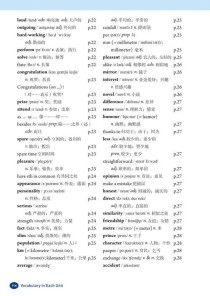
核心词汇翻译
Section A 重点词汇
| 单词 | 词性 | 中文翻译 |
|---|---|---|
| alarm | n. | 闹钟;警报 |
| report | n. & v. | 报告;报道 |
| begin | v. | 开始 |
| heavily | adv. | 大量地;猛烈地 |
| suddenly | adv. | 突然地 |
| strange | adj. | 奇怪的;陌生的 |
| point | v. | 指;指向 |
| silence | n. | 安静;沉默 |
| recently | adv. | 最近 |
| take down | phr. v. | 拆下;拿下;记录 |
| event | n. | 事件;大事 |
| date | n. | 日期;约会 |
| times | n. | 时代;次;倍 |
| alive | adj. | 活着的;有活力的 |
| miss | v. | 想念;错过 |
| past | n. & adj. | 过去;以前的 |
| earthquake | n. | 地震 |
| at first | phr. | 起初;首先 |
| right away | phr. | 立刻;马上 |
| kill | v. | 杀死;使终止 |
| survivor | n. | 幸存者;生还者 |
| hero | n. | 英雄 |
| nation | n. | 国家;民族 |
| song | n. | 歌曲;歌唱 |
| artist | n. | 艺术家;画家 |
| den | n. | 兽穴;窝 |
| rescue | v. & n. | 营救;救援 |
| trapped | adj. | 陷入困境的;被困住的 |
| steal | v. | 偷;窃取 |
| heroic | adj. | 英雄的;英勇的 |
核心句型与语法翻译
过去进行时
这是本单元最核心的语法点。
-
句型结构:
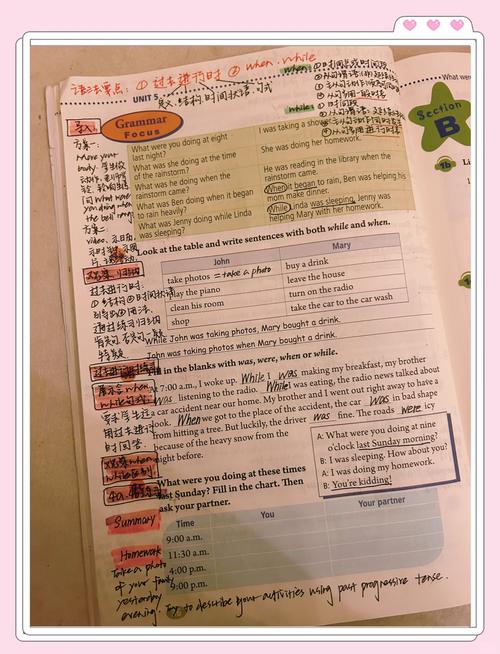 (图片来源网络,侵删)
- 肯定句:
主语 + was/were + 动词-ing + ... - 否定句:
主语 + was/were + not + 动词-ing + ... - 一般疑问句:
Was/Were + 主语 + 动词-ing + ...? - 特殊疑问句:
What/Where/Who + was/were + 主语 + 动词-ing + ...?
- 肯定句:
-
用法: 表示在过去某个特定时间点或时间段,正在进行的动作,常与表示过去特定时间点的状语连用,如
at 8:00 last night(昨晚8点),when the rainstorm came(当暴风雨来临时),this time yesterday(昨天这个时候)。 -
课文例句及翻译:
-
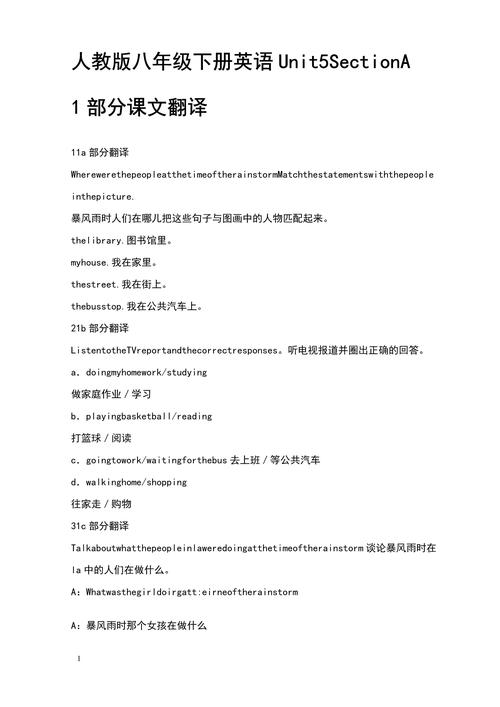
A: What was the boy doing when the rainstorm came? B: He was doing his homework. 翻译: A: 当暴风雨来临时,那个男孩在做什么? B: 他正在做作业。
-
A: What was the girl doing at the time of the rainstorm? B: She was reading in the library. 翻译: A: 暴风雨发生时,那个女孩在做什么? B: 她正在图书馆里看书。
 (图片来源网络,侵删)
 -
A: What was the family doing when the storm started? B: They were having dinner. 翻译: A: 暴风雨开始时,那家人在做什么? B: 他们正在吃晚饭。
-
I was waiting for the bus when it began to rain. 翻译: 当开始下雨时,我正在等公交车。
-
过去进行时 vs. 一般过去时
这是本单元的难点和重点,需要区分使用。
| 时态 | 过去进行时 | 一般过去时 |
|---|---|---|
| 结构 | was/were + doing |
did (动词过去式) |
| 含义 | 强调在过去某个时间点正在进行的动作(动作未完成)。 | 强调在过去某个时间点已经完成的动作(动作有起点和终点)。 |
| 例句 | I was reading a book at 9 pm last night. (昨晚9点我正在看书。) | I read a book last night. (我昨晚看完了一本书。) |
| 关系 | when 引导的时间状语从句中,用过去进行时表示长/背景动作,用一般过去时表示短/突发动作。 |
-
经典对比句型:
 (图片来源网络,侵删)
-
I was walking down the street when I met an old friend. 翻译: 我正在街上走着,这时我遇到了一位老朋友。
was walking(长动作/背景) ->met(短动作/突发事件)
-
While my mother was cooking dinner, the phone rang. 翻译: 当我妈妈正在做晚饭时,电话响了。
was cooking(长动作/背景) ->rang(短动作/突发事件)
-
主要课文/对话翻译
Section A 2d 对话
News Report新闻报道
Lisa: What were you doing at 9:00 last night, Ben? 莉萨: 昨天晚上9点,本,你正在做什么?
Ben: I was home doing my homework. Why? 本: 我在家做作业,怎么了?
Lisa: Well, I was calling you at that time, but nobody answered. 莉萨: 嗯,我那时候正在给你打电话,但是没人接。
Ben: Oh, sorry. My phone was on silent mode. I was studying in my room. 本: 哦,抱歉,我的手机调成静音了,我当时在自己的房间里学习。
Lisa: I see. I was watching the news on TV. There was a big storm in some areas. 莉萨: 我明白了,我正在看电视新闻,有些地区发生了大暴风雨。
Ben: Wow, really? I didn't know about that. 本: 哇,真的吗?我不知道那件事。
Section B 2b 阅读文章
The Storm Brought People Closer Together暴风雨让人们走得更近
It was Saturday, August 29, 2005. The weather was hot and humid in the city of New Orleans. But by 9:00 am, black clouds were in the sky. People were busy doing different things, but they were all watching the weather report on TV.那是2005年8月29日,星期六,新奥尔良市的天气又热又潮湿,但到上午9点,天空中已是乌云密布。**人们都在忙着做不同的事情,但他们都在看天气预报。
Mary was at home with her brother, Jack. They were watching TV. "The storm is coming," said Jack. "We need to leave this area." But Mary disagreed. "I think we'll be fine," she said. "The house is strong." **玛丽和她的哥哥杰克在家,他们正在看电视。“暴风雨要来了,”杰克说。“我们必须离开这个地区。”但玛丽不同意。“我觉得我们会没事的,”她说。“这房子很坚固。”
Meanwhile, a man named Martin was in his kitchen. He was making a sandwich. Outside, his dog, Boss, was barking loudly. Martin looked out of the window. "What's wrong, boy?" he asked. Boss was running around in circles. **一个叫马丁的男人正在他的厨房里,他正在做一个三明治,外面,他的狗“老板”在大声地叫,马丁望向窗外。“怎么了,男孩?”他问道。“老板”正在团团转。
Down on the street, another man, Carlos, was heading home from the supermarket. He was carrying many grocery bags. The wind was blowing hard, and the rain was pouring down. "I need to get home soon," he thought. **在街上,另一个人卡洛斯正从超市回家,他提着很多杂货袋,风刮得很大,雨下得倾盆大雨。“我得快点回家,”他想。
By 3:00 pm, the wind was howling. The storm had begun. People were in danger. But in the middle of the storm, something amazing happened. People started to help each other. **到下午3点,风在怒吼,暴风雨已经开始了,人们陷入了危险,但在暴风雨的中心,一些令人惊奇的事情发生了,人们开始互相帮助。
Martin saw that his neighbor, Mrs. Chen, needed help. She was trying to carry her TV to her car. "Let me help you," Martin said. Together, they moved the heavy TV into Mrs. Chen's car. **马丁看到他的邻居陈女士需要帮助,她正想把她的电视搬到车里。“我来帮你,”马丁说,他们一起把沉重的电视搬进了陈女士的车里。
Carlos saw a family with a little baby. They were standing by the side of the road, looking worried. "Do you need a ride?" Carlos asked. "Yes, please!" the father said. "Our car won't start." Carlos helped them get into his car. **卡洛斯看到一个带着婴儿的家庭,他们站在路边,看起来很担心。“需要搭车吗?”卡洛斯问道。“是的,请!”那位父亲说。“我们的车发动不了了。”卡洛斯帮助他们上了他的车。
Even Mary and Jack changed their minds. They decided to leave. On their way out, they saw an old man who was trapped in his house. "We need to help him!" Jack shouted. They called for help and soon the old man was rescued. **就连玛丽和杰克也改变了主意,他们决定离开,在他们出去的路上,他们看到一个老人被困在房子里。“我们必须帮助他!”杰克喊道,他们呼救了,很快老人就被救了出来。
After the storm, people realized that they were not alone. The storm brought people closer together. 暴风雨过后,人们意识到他们并不孤单,暴风雨让人们走得更近了。