七年级上册英语核心知识点有哪些?
校园之窗 2025年12月6日 14:26:54 99ANYc3cd6
总体特点
译林版七年级上册英语(通常对应牛津译林版七年级上册)的核心目标是帮助学生完成从小学到初中的过渡,重点掌握基础词汇、核心句型和基本语法,并能进行简单的日常交流。
核心知识点模块
以下是本册书最核心的知识点模块,贯穿于各个单元之中。
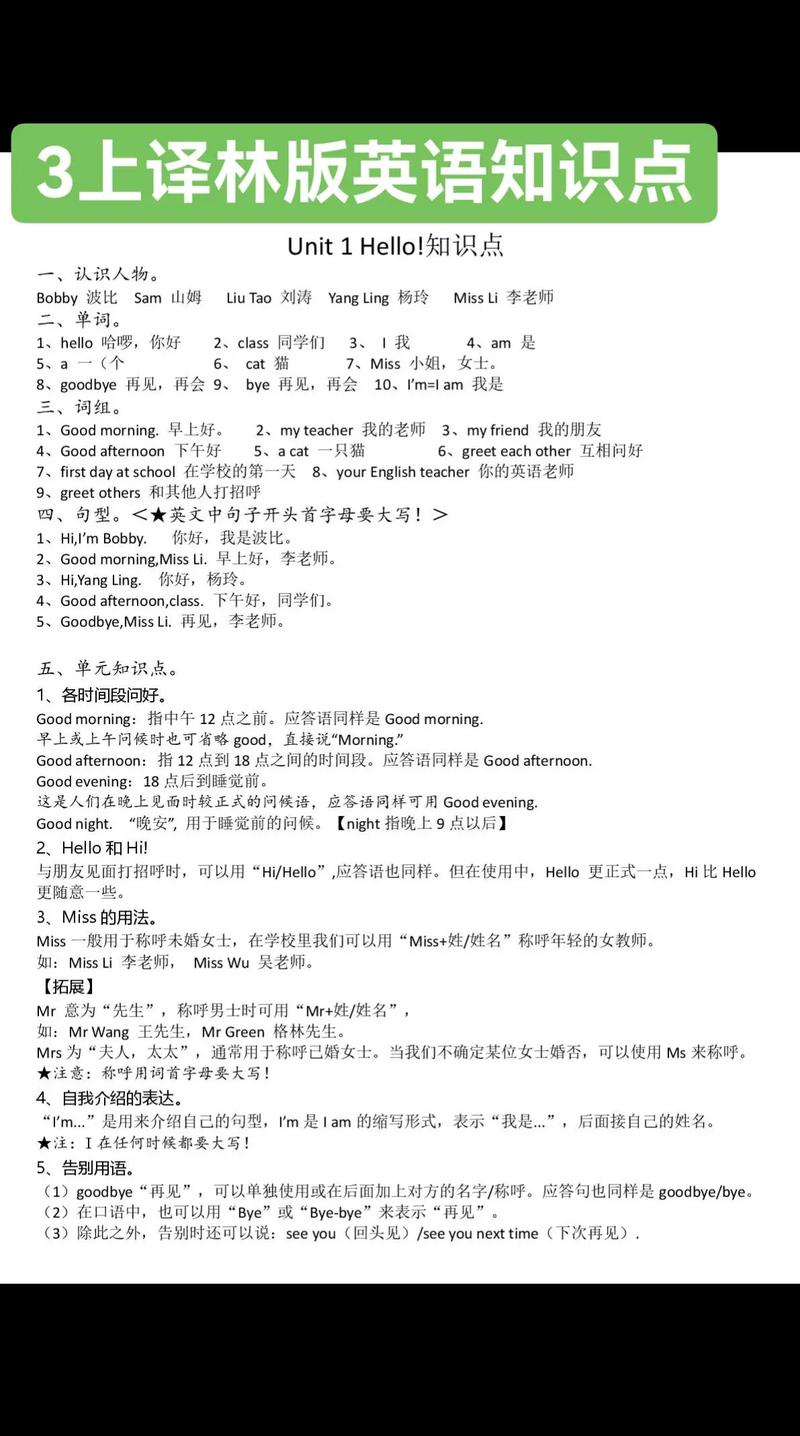
(图片来源网络,侵删)
核心词汇
词汇是学习的基础,必须熟练掌握,以下是按主题分类的核心词汇。
| 主题类别 | 核心词汇示例 |
|---|---|
| 人物与家庭 | family, father, mother, parent, brother, sister, grandfather, grandmother, grandparent, friend, boy, girl |
| 数字 | one, two, three, four, five, six, seven, eight, nine, ten, eleven, twelve, thirteen, fourteen, fifteen, sixteen, seventeen, eighteen, nineteen, twenty, thirty, forty, fifty, sixty, seventy, eighty, ninety, hundred |
| 颜色 | red, yellow, blue, green, black, white, orange, purple, pink, brown, grey |
| 食物与饮料 | rice, noodles, bread, egg, milk, water, tea, juice, apple, banana, orange, pear, vegetable, meat, fish, chicken, hamburger, cake, biscuit |
| 学校生活 | school, classroom, library, book, pen, pencil, ruler, eraser, desk, chair, bag, book, notebook, subject, English, Chinese, Maths, History, Geography, Art, Music, PE (Physical Education), lesson, homework, exam, friend, teacher, student |
| 时间与星期 | time, clock, year, month, week, day, Monday, Tuesday, Wednesday, Thursday, Friday, Saturday, Sunday, morning, afternoon, evening |
| 地点与方位 | home, room, bed, table, door, window, wall, floor, school, park, zoo, shop, library, cinema, post office, on, in, under, near, behind, next to |
| 形容词 | good, bad, big, small, long, short, tall, high, low, new, old, young, happy, sad, tired, hungry, thirsty, beautiful, nice, great, helpful, kind |
| 动词 | be (am, is, are), have, has, like, love, help, study, learn, read, write, draw, sing, dance, run, jump, play, go, come, see, look, watch, listen, eat, drink, sleep, live, work, teach |
| 代词 | I, you, he, she, it, we, they, my, your, his, her, its, our, their (this, that, these, those) |
| 疑问词 | what, who, where, when, why, how, how many, how old, how much |
核心句型
句型是构成对话和篇章的骨架,必须灵活运用。
| 句型功能 | 核心句型 | 例句 |
|---|---|---|
| 问候与介绍 | - Nice to meet you. - What's your name? - My name is... / I'm... - How old are you? - I'm... years old. |
- A: Nice to meet you. B: Nice to meet you, too. - A: What's your name? B: My name is Amy. / I'm Amy. |
| 个人信息 | - He/She is... (年龄/职业). - He/She is from... - He/She has... (特征). |
- He is 12 years old. - She is a student. - He has short hair. |
| 喜好与厌恶 | - Do you like...? - Yes, I do. / No, I don't. - He/She likes... - He/She doesn't like... |
- Do you like apples? Yes, I do. - Does he like milk? No, he doesn't. - She likes reading books. |
| 拥有 | - I/You/We/They have... - He/She/It has... - Do you/they have...? - Does he/she have...? |
- I have a new bike. - He has a dog. - Do they have a cat? Yes, they do. - Does she have long hair? No, she doesn't. |
| 存在与位置 | - There is/are... (某地). - Where is/are...? |
- There is a book on the desk. - There are some students in the classroom. - Where is my bag? It's under the table. |
| 询问与描述 | - What's this/that in English? - It's a/an... - What colour is it/are they? - It's... / They are... |
- What's this in English? It's an apple. - What colour is your pen? It's blue. - What colour are these flowers? They are red. |
| 询问时间 | - What time is it? - It's... (o'clock). - When is your... lesson? |
- What time is it? It's seven o'clock. - When is your English lesson? It's on Monday morning. |
| 提出建议 | - Let's... - How about/What about...? |
- Let's go to the park. - How about some orange juice? |
核心语法
语法是语言的规则,是正确表达的基础。
| 语法点 | 核心规则与用法 | 例句 |
|---|---|---|
| be 动词 (am, is, are) | - I am... - He/She/It/单数名词 is... - You/We/They/复数名词 are... be 动词用于描述身份、职业、状态等。 |
- I am a student. - He is my friend. - The cat is cute. - They are teachers. |
| 名词 | - 可数名词:有单复数形式,规则变化:直接加-s (book-books), 以s/x/ch/sh结尾加-es (box-boxes), 辅音+y结尾变y为i再加-es (baby-babies)。 - 不可数名词:没有复数形式,不能直接用a/an修饰,如water, rice, milk。 |
- one book, two books - one box, three boxes - I like apples. (可数) - I'd like some milk. (不可数) |
| 人称代词与物主代词 | - 主格:I, you, he, she, it, we, they (作主语) - 物主代词:my, your, his, her, its, our, their (修饰名词,表示“...的”) |
- He is my friend. (He是主格, my是物主代词) - This is his book. (his是物主代词) |
| 冠词 | - a/an:用于单数可数名词前,表示“一个”,泛指,a用于辅音音素前,an用于元音音素前。 - the:定冠词,特指双方都知道的人或物。 |
- I have a pen. (pen辅音音素) - This is an apple. (apple元音音素) - The book on the desk is mine. (特指那本书) |
| 情态动词 can | - can + 动词原形,表示“能,会”,常用于能力。 - 否定形式:can't / cannot - 疑问句:Can...? |
- I can swim. - He can't dance. - Can you play the piano? Yes, I can. / No, I can't. |
| 现在进行时 | - 结构:am/is/are + 动词-ing - 用法:表示说话时正在发生的动作。 |
- I am reading a book now. - He is playing football on the playground. - They are having lunch. |
| 一般现在时 (第三人称单数) | - 结构:主语 (he/she/it/单数) + 动词-s/es - 用法:表示经常性、习惯性的动作或客观事实。 |
- He goes to school every day. - She likes eating bananas. - The sun rises in the east. |
| There be 句型 | - 肯定句:There is + 单数名词/不可数名词 + 地点状语. There are + 复数名词 + 地点状语. - 疑问句:Is there...? Are there...? - 否定句:There isn't... / There aren't... |
- There is a cat in the box. - There are some apples on the tree. - Is there a book on your desk? Yes, there is. / No, there isn't. |
分单元重点概览
| 单元主题 | |
|---|---|
| Unit 1 This is me! | - 问候与自我介绍 - be 动词的用法 (am, is, are) - 人称代词和物主代词 |
| Unit 2 Let's play sports! | - 谈论喜好 (like/love + 动词-ing) - 祈使句 (Let's... / Let me...) - 球类运动前不加 the |
| Unit 3 Welcome to our school! | - 介绍学校场所和设施 - There be 句型 - 介词 (in, on, at, near, behind) |
| Unit 4 My day | - 一天中的活动 - 询问时间 (What time is it?) - 日常活动的一般现在时 |
| Unit 5 Let's celebrate! | - 节日与庆祝活动 - 现在进行时 (表示计划或即将发生的动作) - 节日相关词汇 |
学习建议
- 词汇为王:每天坚持背诵和复习单词,利用词根词缀、联想记忆等方法,并结合例句理解用法。
- 句型操练:不要死记硬背句型,要通过替换关键词(如将
I like apples中的apples换成bananas)来灵活运用。 - 语法理解:语法规则是骨架,但要通过大量的阅读和听说来内化,不要孤立地学语法,要把它放到语境中去理解。
- 听说领先:多听课本录音、英文儿歌,尝试模仿语音语调,大胆开口说,即使犯错也没关系。
- 整理错题本:把自己做错的题目,特别是语法题,整理到错题本上,定期回顾,避免重复犯错。
希望这份知识点总结对您有帮助!祝您学习进步!
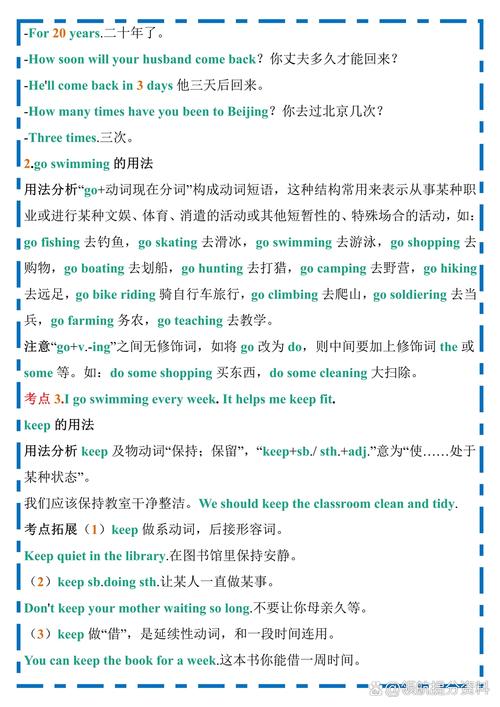
(图片来源网络,侵删)

(图片来源网络,侵删)