八年级英语冀教版教案如何高效设计?
校园之窗 2026年1月15日 03:18:15 99ANYc3cd6
第一部分:八年级英语(冀教版)整体教学思路与教案模板
整体教学思路
八年级是初中学习的关键时期,学生开始接触更复杂的语法和更广泛的词汇,冀教版教材注重话题、功能和结构的结合,强调语言的实际运用,教学应遵循以下原则:
- 话题引领,情境贯穿:以每个单元的话题为核心,创设真实或接近真实的语言情境,让学生在情境中学习和运用语言。
- 听说领先,读写跟进:重视听力和口语能力的培养,通过大量的输入来促进输出,在此基础上,再进行阅读和写作的训练。
- 任务型教学,合作探究:设计明确的教学任务,鼓励学生通过小组合作、角色扮演、项目制作等方式主动探究,完成任务,从而习得语言。
- 文化渗透,立德树人:在语言教学中,适时融入中西方文化对比,培养学生的跨文化交际意识和国际视野,同时结合课文内容进行德育渗透。
- 差异化教学,关注全体:关注不同层次学生的学习需求,设计分层任务和练习,确保每个学生都能在原有基础上有所提高。
标准教案模板
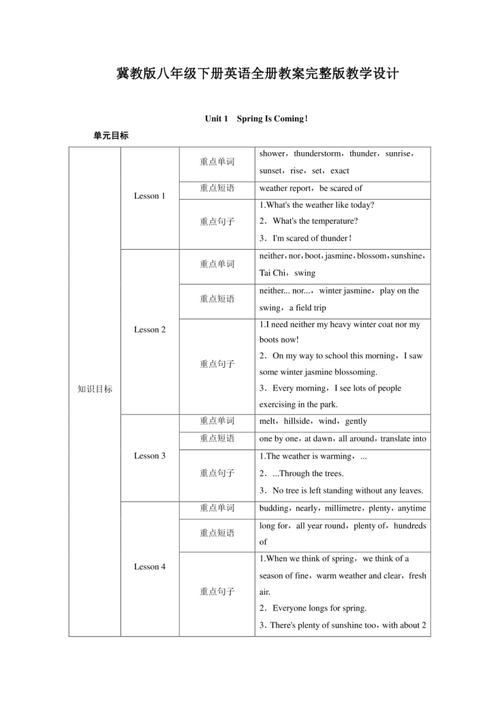
课题 (Topic): [Unit 1 Lesson 1: A Trip to Beijing] 课时 (Period): [The 1st Period] 课型 (Lesson Type): [Listening and Speaking / Reading and Writing]
教学目标
-
知识与技能
- 词汇: 学生能听、说、读、写并运用以下单词:[palace, museum, square, wonderful, exciting]
- 短语: 学生能理解并运用以下短语:[the Palace Museum, Tian'anmen Square, have a great time]
- 句型: 学生能熟练运用以下句型进行交流:
- [What are you going to do this summer vacation?]
- [I'm going to visit Beijing.]
- [Where are you going to visit?]
- 语法: 学生能初步感知并理解一般将来时
be going to的用法。 - 听: 学生能听懂关于旅行计划的简短对话。
- 说: 学生能运用所学词汇和句型与同伴谈论自己的旅行计划。
- 读: 学生能读懂关于介绍北京景点的简短文章。
- 写: 学生能写出3-5句话描述自己的一个旅行计划。
-
过程与方法
- 通过情境创设、小组讨论、角色扮演等活动,体验用英语交流的过程。
- 学习通过听关键词、预测内容等策略来提高听力理解能力。
- 学习通过略读和精读来获取文章主旨和细节信息。
-
情感态度与价值观
 (图片来源网络,侵删)
- 激发学生对祖国大好河山的热爱之情。
- 培养学生乐于与人分享、积极规划未来的生活态度。
- 增强学生的跨文化交际意识。
教学重难点
- 教学重点:
- 掌握本课的核心词汇和短语。
- 熟练运用
be going to结构谈论未来的计划。
- 教学难点:
- 在实际交际中准确、灵活地运用
be going to结构。 - 听力中捕捉关键信息,阅读中理解长难句。
- 在实际交际中准确、灵活地运用
教学准备
- 教师: 多媒体课件、单词卡片、图片、音频/视频材料。
- 学生: 课本、练习册、预习本。
教学过程
| 环节 | 时间 | 教学活动 | 设计意图 | 板书/PPT |
|---|---|---|---|---|
| Step 1: 导入 | 5 mins | Greeting: 师生问好。 2. Lead-in: 播放一段北京旅游的宣传视频或展示一组北京著名景点的图片(如故宫、天安门、长城),提问:"Do you know these places? Where is it? Have you ever been to Beijing?" 引导学生自由谈论。 |
通过直观的视听材料,激发学生兴趣,自然导入本课主题“旅行”。 | PPT展示图片和视频,板书课题:A Trip to Beijing |
| Step 2: 新知呈现 | 15 mins | Vocabulary Teaching: 借助图片和PPT教授新词 palace, museum, square。 创设情境:“Danny is planning a trip to Beijing. What places is he going to visit?” 引出短语 the Palace Museum, Tian'anmen Square。 2. Sentence Pattern Presentation: 播放课文第一部分的录音,让学生整体感知对话内容。 再次播放,展示对话文本,用不同颜色标出核心句型: A: What are you going to do...? B: I'm going to... A: Where are you going to...? B: I'm going to... * 讲解 be going to 的结构和用法(表示计划、打算做某事)。 |
在情境中呈现新词汇和句型,降低学习难度,通过听、读、分析,让学生理解并初步掌握核心语言点。 | PPT展示词汇图片和对话文本,重点句型用彩色突出,板书 be going to + 动词原形。 |
| Step 3: 练习与巩固 | 10 mins | Controlled Practice: Pair Work: 让学生两人一组,模仿对话,替换关键词(如地点、活动)进行练习,教师巡视指导。 "Make a Survey": 设计表格,让学生在小组内用 "What are you going to do this weekend?" 采访至少三位同学,并记录结果。 |
通过控制性练习,帮助学生内化句型结构,通过调查活动,增加学生开口说的机会,将语言知识转化为语言技能。 | 发放调查表格或在PPT上展示表格。 |
| Step 4: 应用与拓展 | 10 mins | Listening Practice: 播放一段关于“去海边”的对话录音,要求学生完成听力填空(如:They are going to go to the __. They are going to __ on the beach.)。 2. Reading Practice: 快速阅读一篇关于北京长城的短文,回答问题:"What is the Great Wall like?" * 精读短文,找出并理解描述长城的形容词。 |
听力和阅读练习是语言输入的重要环节,旨在培养学生获取信息的能力,并巩固所学词汇。 | PPT展示听力材料和阅读理解题目。 |
| Step 5: 总结与作业 | 5 mins | Summary: 师生共同回顾本节课所学的主要内容(词汇、句型、语法)。 2. Homework Assignment: Level A (基础): 背诵本课单词和对话。 Level B (提高): 写一段话,介绍你自己的一个旅行计划(至少5句话)。 * Level C (拓展): 搜集一个你感兴趣的国外旅游胜地的资料,下节课分享。 |
总结帮助学生梳理知识,形成体系,分层作业满足不同学生的需求,实现个性化学习。 | PPT展示作业要求。 |
板书设计

                       Unit 1 Lesson 1: A Trip to Beijing
New Words:
palace     museum     square      wonderful      exciting
Key Sentences:
- What are you going to do this summer vacation?
- I'm going to visit Beijing.
- Where are you going to visit?
- I'm going to visit the Palace Museum.
Grammar: be going to + 动词原形
      (表示计划、打算)
第二部分:具体单元教案范例(以八年级上册第一单元为例)
课题: Unit 1 Lesson 1: A Trip to Beijing 课时: The 1st Period 课型: Listening and Speaking
教学目标
-
知识与技能
- 词汇: 能听、说、读、写
palace, museum, square, wonderful, exciting。 - 短语: 能理解并运用
the Palace Museum, Tian'anmen Square, have a great time。 - 句型: 能熟练运用 "What are you going to do...?" 和 "I'm going to..." 谈论未来的计划。
- 语法: 初步理解并感知一般将来时
be going to的结构和用法。 - 听: 能听懂关于旅行计划的简短对话,并获取关键信息(地点、活动)。
- 说: 能运用所学词汇和句型与同伴进行简单的角色扮演,谈论自己的旅行计划。
- 词汇: 能听、说、读、写
-
过程与方法
- 通过视听、问答、小组合作等方式,在情境中学习和运用语言。
- 学习通过预测和抓关键词来提高听力效率。
-
情感态度与价值观
- 激发学生对北京乃至祖国其他城市的向往和热爱。
- 培养学生乐于与人分享、积极规划未来的生活态度。
教学重难点
- 重点: 掌握核心词汇和
be going to句型。 - 难点: 在实际交流中正确使用
be going to结构。
教学准备
- 教师:自制PPT(包含北京图片、视频、对话文本、练习题)、课文录音。
- 学生:课本、预习本。
教学过程
(Step 1: Warm-up and Lead-in - 5 minutes)
- Greeting: T: Good morning, class! Ss: Good morning, teacher!
- Sing a Song: T: Let's sing a song together "What are you going to do?" (播放一首关于将来时的简单歌曲,活跃气氛)。
- Lead-in:
- T: (Show a picture of the Great Wall on PPT) Look at this picture! What's this? Ss: It's the Great Wall!
- T: Yes! It's in Beijing. Beijing is our capital. It's a great city. (Show more pictures of the Forbidden City, Tian'anmen Square, etc.) Today, let's talk about a trip to Beijing. (Write the title on the blackboard: A Trip to Beijing)
(Step 2: New Presentation - 15 minutes)
-
Vocabulary Learning:
- T: (Show the picture of the Forbidden City) This is the Palace Museum. It's very old and beautiful. Read after me: "palace". (Ss repeat)
- T: (Show the picture of Tian'anmen Square) This is Tian'anmen Square. It's very big. Read after me: "square". (Ss repeat)
- T: (Show the picture of a museum) We can see many old things here. It's a museum. (Ss repeat)
- T: (Show a picture of a happy face) If you are in Beijing, you will feel wonderful and exciting. (Teach "wonderful" and "exciting").
-
Dialogue Listening and Reading:
- T: Now, let's listen to the dialogue. Danny and Jenny are talking about their vacation. Listen carefully and answer: What is Danny going to do this summer vacation? (Play the recording for the first time)
- Ss: He is going to visit Beijing.
- T: Good! Now listen again. What places is he going to visit? (Play the recording for the second time, pause if necessary)
- Ss: The Palace Museum and Tian'anmen Square.
- T: Excellent! Now open your books to page 2. Let's read the dialogue together. (Read the dialogue sentence by sentence, paying attention to the pronunciation and intonation.)
- T: (Point to the key sentences on the PPT) Look at these sentences. "What are you going to do this summer vacation?" and "I'm going to visit Beijing." What does "be going to" mean? Yes, it means "打算、计划". (板书句型和语法点)
(Step 3: Practice - 10 minutes)
-
Pair Work:
- T: Now, work in pairs. Suppose you are Danny and Jenny. Practice the dialogue. You can change the places and activities. For example, you can go to Shanghai and visit the Oriental Pearl Tower. (Give students 2-3 minutes to practice)
- T: Which pair wants to show your dialogue? (Invite 1-2 pairs to perform in front of the class)
-
Survey:
- T: Let's do a survey. Please walk around the classroom and ask your classmates: "What are you going to do this weekend?" Fill in the chart on your paper.
- (Students walk around and ask questions. The teacher helps students who need it.)
- T: Time's up! Let's share. Who can tell me what your classmate Li Ming is going to do this weekend?
- S1: He is going to play basketball.
- T: Great job!
(Step 4: Production - 10 minutes)
-
Listening Practice:
- T: (Show a picture of a beach on PPT) Now, let's listen to another dialogue. Two friends are talking about their trip. Listen and fill in the blanks.
- (Play the recording: "A: What are you going to do this weekend? B: I'm going to the beach. A: What are you going to do there? B: I'm going to swim and build sandcastles.")
- T: Check the answers together. (The answers are: beach, swim, build sandcastles)
-
Short Discussion:
- T: If you have a chance to travel anywhere, where are you going to go? What are you going to do? Please discuss with your partner for 2 minutes.
- (Students discuss. Then the teacher asks some students to share their ideas.)
- T: Wang Fei, please tell us. S2: I'm going to Sanya. I'm going to swim in the sea and enjoy the sunshine.
(Step 5: Summary and Homework - 5 minutes)
-
Summary:
- T: Today, we've learned how to talk about our future plans using "be going to". We also learned some words about places. What have you learned today?
- (Guide students to summarize the key points.)
-
Homework:
- Level A: Copy the new words and key sentences three times. Recite the dialogue on page 2.
- Level B: Write a short passage (at least 5 sentences) about your travel plan. You can use the words and sentences we learned today.
- Level C: Search for information online about one of the places in Beijing (e.g., the Palace Museum). Next class, you will give a one-minute introduction.
板书设计
                       Unit 1 Lesson 1: A Trip to Beijing
New Words:
palace     museum     square      wonderful      exciting
Key Sentences:
- What are you going to do this summer vacation?
- I'm going to visit Beijing.
- Where are you going to visit?
- I'm going to visit the Palace Museum.
Grammar: be going to + 动词原形
      (表示计划、打算)
      I am going to...   He/She is going to...
      We/You/They are going to...