八年级英语人教版目录有哪些重点单元?
校园之窗 2026年1月13日 03:13:00 99ANYc3cd6
人教版八年级上册英语 目录
前言 / Preface
- 介绍了教材的编写理念、结构以及如何使用这本教材。
Starter Unit 1 Getting Ready for School
(图片来源网络,侵删)
- 主题: 开学准备
- 词汇: 学习用品、学科名称、日常活动
- 句型: What's this in English? It's a/an... / What subject do you have? We have...
- 语法: 名词的单复数;指示代词 this, that, these, those
Starter Unit 2 My School Life
- 主题: 我的校园生活
- 词汇: 校园场所、课程表、时间表达
- 句型: When is your English class? It's on Monday at 8:00. / What do you think of...? I think it's...
- 语法: 介词 in, on, at (用于时间);what 引导的特殊疑问句
正式单元
Unit 1 Where did you go on vacation?
- 主题: 假期旅行
- 核心词汇: vacation, beach, museum, exam, Central Park, delicious, expensive, cheap, crowded, wonderful
- 核心句型:
- — Where did you go on vacation? — I went to New York City.
- — Did you go out with anyone? — No. No one was here. / Yes, I went with my sister.
- — How was the food? — It was delicious.
- 核心语法:
- 一般过去时: 规则与不规则动词的过去式。
- 不定代词: anyone, someone, everyone, something, anything, nothing 等。
Unit 2 How often do you exercise?
- 主题: 日常活动与频率
- 核心词汇: exercise, skateboarding, junk food, coffee, dentist, health, habit, grade, sleep
- 核心句型:
- — What do you usually do on weekends? — I sometimes go shopping.
- — How often do you watch TV? — I watch TV once a week.
- — How many hours do you sleep every night? — I sleep nine hours.
- 核心语法:
- 频率副词: always, usually, often, sometimes, hardly ever, never。
- How often 与 How many 的区别。
Unit 3 I'm more outgoing than my sister.
(图片来源网络,侵删)
- 主题: 性格特征与比较
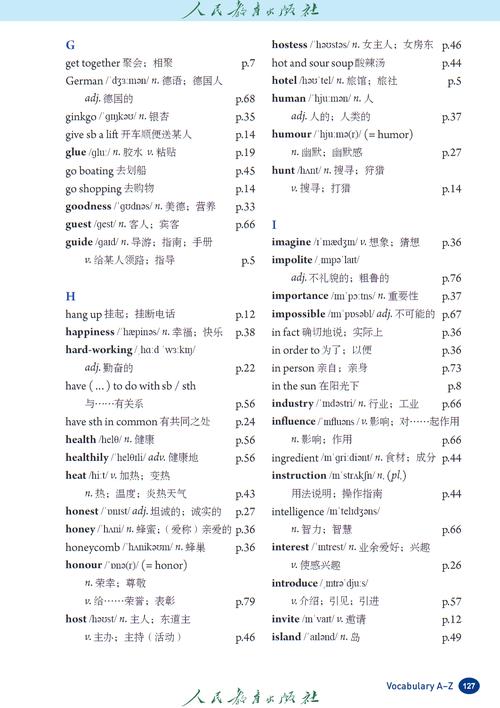
- 核心词汇: outgoing, better, loudly, quietly, hard-working, competition, fantastic, which, clearly, win
- 核心句型:
- — Is that Tara? — No, it's Tina. Tina is taller than Tara.
- — Sam has longer hair than Tom. — Yes, he's calener than Tom.
- — In some ways, we are the same. — In some ways, we are different.
- 核心语法:
- 形容词和副词的比较级: -er, -ier, more + 形容词/副词。
- both... and... (两者都...)。
Unit 4 What's the best movie theater?
- 主题: 娱乐场所与评价
- 核心词汇: theater, comfortable, seat, screen, ticket, fresh, close, quality, creative, reporter, so far
- 核心句型:
- — What's the best movie theater in town? — Sun Cinema. It's the closest to home.
- — Which radio station is the best? — I think 107.9 FM is the best.
- — It has the most comfortable seats.
- 核心语法:
- 形容词和副词的最高级: -est, -iest, the most + 形容词/副词。
- 辨析:
the most comfortable seats(最高级) vs.more comfortable seats(比较级)。
Unit 5 Do you want to watch a game show?
- 主题: 电视节目与喜好
- 核心词汇: sitcom, news, soap opera, educational, plan, hope, find out, discussion, stand, happen
- 核心句型:
- — What do you think of game shows? — I love watching them.
- — Do you want to watch the news? — No, I can't stand it.
- — What do you hope to learn? — I hope to learn about world events.
- 核心语法:
- 情态动词
want to和hope to的用法。 - 动词不定式作宾语。
- 情态动词
Unit 6 I'm watching TV.
- 主题: 正在进行的动作
- 核心词汇: newspaper, soup, young, use, wash, movie, just, chef, host, miss
- 核心句型:
- — What are you doing? — I'm reading a newspaper.
- — Is he watching TV? — Yes, he is. / No, he isn't. He's cleaning.
- — This is Jenny. I'm cooking dinner.
- 核心语法:
- 现在进行时:
am/is/are + V-ing。 - 现在进行时表现阶段或说话时正在发生的动作。
- 现在进行时:
Unit 7 Will people have robots?
(图片来源网络,侵删)
- 主题: 未来生活与预测
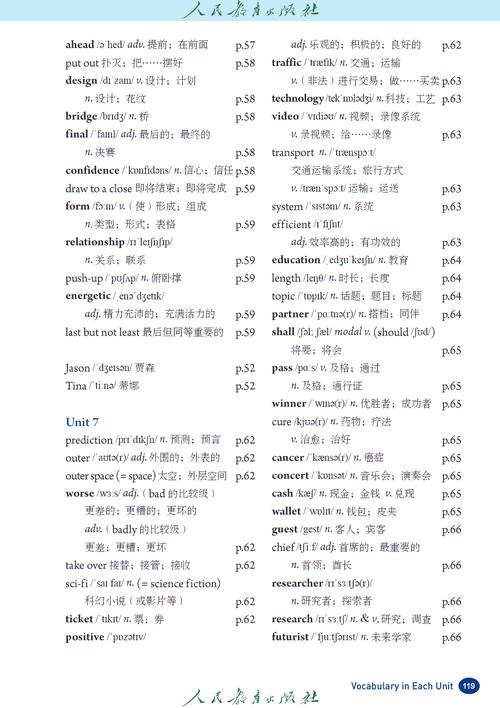
- 核心词汇: robot, paper, less, fewer, pollution, tree, planet, earth, part, human, shape, seem, impossible, already, even
- 核心句型:
- — Will people use money in 100 years? — No, they won't. Everything will be free.
- — Kids won't go to school. They'll study at home on computers.
- — There will be fewer trees.
- 核心语法:
- 一般将来时:
will + 动词原形。 more, fewer, less的用法。
- 一般将来时:
Unit 8 How do you make a banana milk shake?
- 主题: 食物制作与顺序
- 核心词汇: shake, blender, turn on, cut up, peel, pour, yogurt, honey, watermelon, spoon, add, finally, salt
- 核心句型:
- — How do you make a banana milk shake? — Peel the bananas. Cut up the bananas.
- — How much yogurt do we need? — We need one cup.
- — How many apples do we need? — We need two apples.
- 核心语法:
- 祈使句: 用于发出指令。
How much和How many引导的特殊疑问句。
Unit 9 Can you come to my party?
- 主题: 邀请与应答
- 核心词汇: prepare, exam, flu, available, another, hang, the day after tomorrow, the day before yesterday, look after, invite
- 核心句型:
- — Can you come to my party on Saturday afternoon? — Sure, I'd love to. / Sorry, I can't. I have to prepare for an exam.
- — Let's go to the movies. — That sounds good.
- 核心语法:
- 情态动词
can的用法(邀请与请求)。 have to与can的用法对比。- 日期表达法。
- 情态动词
Unit 10 If you go to the party, you'll have a great time.
- 主题: 虚拟条件与结果
- 核心词汇: jeans, organize, potato chips, chocolate, upset, taxi, travel, agent, make money, expert, journey, be famous
- 核心句型:
- — If you do, you'll be late. / If you do, you'll have a great time.
- — Should I wear jeans to the party? — No, you shouldn't. If you wear jeans, the teachers won't let you in.
- 核心语法:
- if 引导的条件状语从句(If + 一般现在时, 主句用 will + 动词原形)。
附录
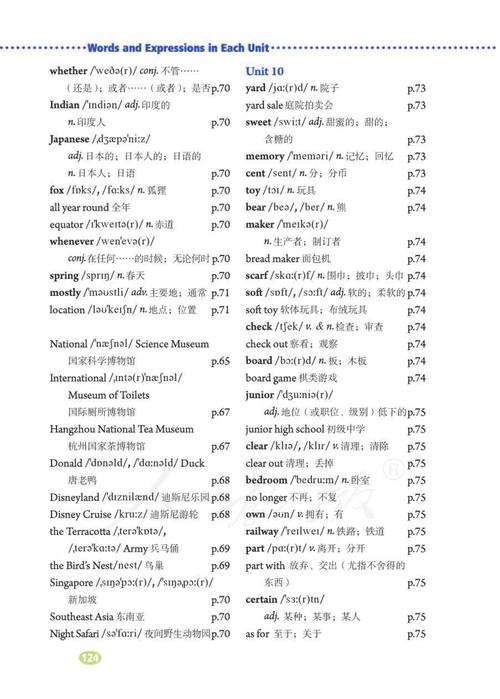
- Words and Expressions in Units (各单元词汇和习惯用语表)
- Irregular Verbs (不规则动词表)
- Tapescripts (听力录音文本)
- Grammar (语法总结)
- Pronunciation (发音总结)
- Vocabulary Index (词汇索引)
教材配套资源
人教版教材会配有以下资源,帮助学生更好地学习:
- 学生用书: 即课本本身。
- 同步练习册: 用于巩固课堂所学知识,包含大量练习题。
- 听力材料: 通常在课本或练习册中附带光盘,或通过官方App/网站在线收听。
- 教师教学用书: 供教师参考,包含教学目标、重难点、教学建议和答案等。
- 点读笔/App: 支持点读发音,提供额外的学习互动功能。
- 人教点读App: 官方推出的免费App,可以收听课文、单词朗读等。
希望这份详细的目录能帮助你全面了解八年级上册英语的学习内容!