八年级仁爱英语复习重点有哪些?
校园之窗 2025年12月21日 23:08:05 99ANYc3cd6
第一部分:知识体系全梳理 (Unit 1-4)
八年级上册的核心内容围绕“人与社会、人与自然、人与自我”三大主题展开,共四个单元。
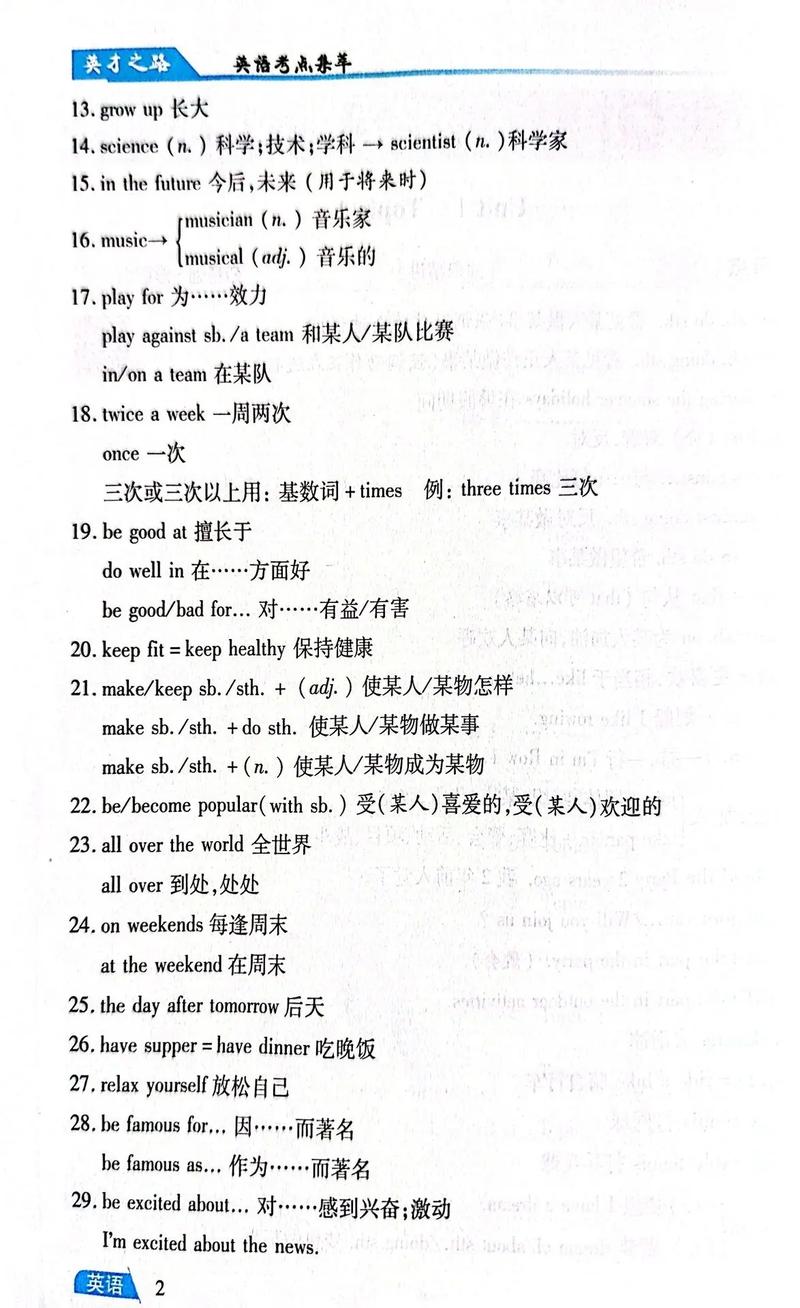
Unit 1: Playing Sports (体育运动)
- 核心话题:谈论运动、爱好、频率,以及表达对运动的看法。
- 核心句型:
- 谈论喜好:
- — What's your favorite sport? / Which sport do you like best?
- — My favorite sport is... / I like... best.
- — Do you like playing basketball?
- — Yes, I do. / No, I don't.
- 谈论频率:
- — How often do you play basketball?
- — I play it once a week. / I often play it.
- (频率副词: always, usually, often, sometimes, hardly ever, never)
- 谈论计划/意愿:
- — What are you going to do this weekend?
- — I'm going to play basketball with my friends.
- 谈论喜好:
- 核心词汇:
- 运动: basketball, soccer, volleyball, tennis, badminton, swimming, running...
- 频率: once, twice, three times, every day, on weekends...
- 其他: join, club, team, win, lose, cheer, exciting, relaxing...
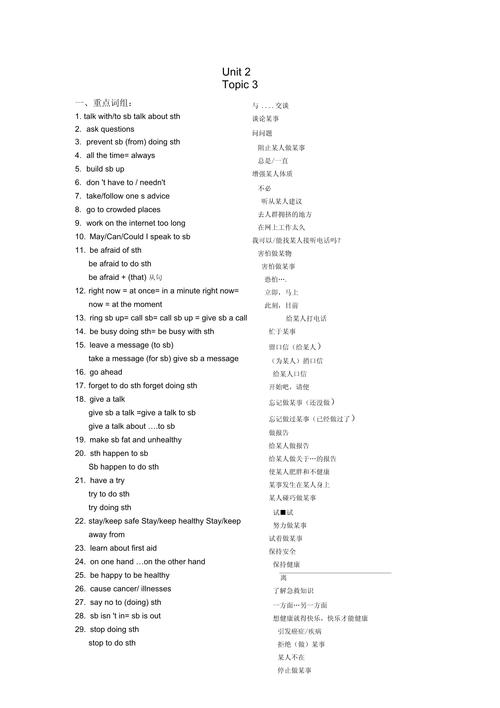
Unit 2: Keeping Healthy (保持健康)
- 核心话题:健康问题、生活习惯、看病就医、给出建议。
- 核心句型:
- 谈论健康问题:
- — What's wrong with you? / What's the matter with you?
- — I have a fever/cold/headache/sore throat.
- 给出建议:
- — You should drink more hot water.
- — You shouldn't eat too much candy.
- — Why not see a doctor? / You'd better see a doctor.
- 谈论感受:
- — How do you feel?
- — I feel tired/better/worse.
- 谈论健康问题:
- 核心词汇:
- 疾病: fever, cold, cough, headache, toothache, stomachache, sore throat...
- 建议相关词: should, shouldn't, had better (not), why not, how about...
- 身体部位: head, tooth, stomach, throat...
- 其他: healthy, unhealthy, habit, medicine, rest...
Unit 3: Our Hobbies (我们的爱好)
- 核心话题:谈论个人爱好,分享喜欢的原因,表达对他人爱好的看法。
- 核心句型:
- 谈论爱好:
- — What's your hobby?
- — My hobby is collecting stamps / reading books...
- — I enjoy drawing pictures / listening to music.
- — How about you? / What about your hobbies?
- 表达原因:
- — Why do you like it?
- — Because it's interesting / relaxing / useful.
- 谈论爱好:
- 核心词汇:
- 爱好: reading, writing, singing, dancing, drawing, swimming, running, collecting stamps/coins, taking photos...
- 形容词: interesting, boring, relaxing, exciting, fun, wonderful, useful, difficult, easy...
- 动词: enjoy, finish, practice, learn, teach...
Unit 4: What's the Best Movie Theater? (最好的电影院是哪家?)
- 核心话题:比较事物,表达个人偏好,使用最高级进行评价。
- 核心句型:
- 比较级和最高级:
- — Which is closer to your home, the cinema or the theater?
- — The cinema is closer than the theater.
- — Which is the best cinema in town?
- — Screen City is the best / the most comfortable.
- 询问偏好:
- — Which do you prefer, action movies or comedies?
- — I prefer action movies. / I like comedies better.
- 比较级和最高级:
- 核心词汇:
- 场所: cinema, theater, museum, zoo, park...
- 影片类型: action movie, comedy, thriller, documentary, cartoon...
- 形容词/副词的比较级和最高级:
- good/well → better → best
- bad/badly → worse → worst
- many/much → more → most
- little → less → least
- far → farther/further → farthest/furthest
- important → more important → most important
- comfortably → more comfortably → most comfortably
第二部分:语法重点与难点突破
八年级上册的语法是初中阶段的核心,务必吃透。
情态动词 should 的用法
- 含义:应该,表示建议或义务。
- 结构:
主语 + should + 动词原形 - 否定式:
主语 + shouldn't + 动词原形 - 用法:
- You should drink plenty of water. (你应该多喝水。)
- He shouldn't stay up late. (他不应该熬夜。)
- 拓展:
had better (not)也表示“最好”,语气比should更强。- You had better see a doctor now. (你最好现在就去看医生。)
频率副词
- 位置:通常放在实义动词前,be 动词、助动词、情态动词后。
- 排序 (从高到低):
- always (100%) → usually (80%) → often (60%) → sometimes (40%) → hardly ever (20%) → never (0%)
- 例句:
- I always get up at 6:00. (我总是6点起床。)
- He usually goes to school by bike. (他通常骑自行车上学。)
- Do you often play computer games? (你经常玩电脑游戏吗?)
- They sometimes watch movies on weekends. (他们有时周末看电影。)
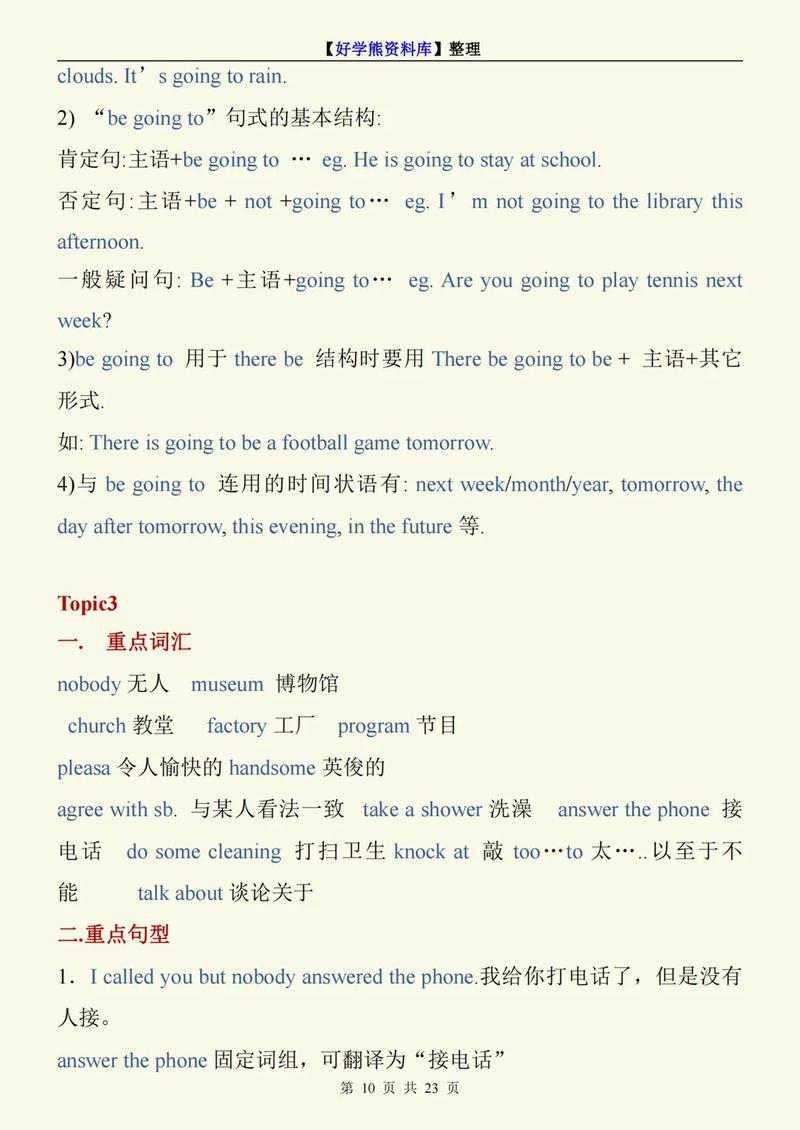
be going to 结构
- 含义:表示计划、打算做某事,或根据现有迹象预测即将发生的事。
- 结构:
主语 + be (am/is/are) + going to + 动词原形 - 用法:
- 表示计划:I'm going to study for the test tonight. (我今晚打算为考试学习。)
- 表示预测:Look at the dark clouds. It's going to rain. (看那些乌云,要下雨了。)
形容词和副词的比较级与最高级
这是本册书的绝对重点和难点!必须牢记规则。
| 类型 | 构成规则 | 原级 | 比较级 | 最高级 | 例句 |
|---|---|---|---|---|---|
| 单音节词 | 直接加 -er / -est |
tall | taller | tallest | He is taller than me. |
以不发音的 e
| |||||
| 以“辅音+y”结尾 | y 变 i,加 -er / -est |
happy | happier | happiest | |
| 重读闭音节词 | 双写末尾辅音,加 -er / -est |
big | bigger | biggest | |
| 多音节词 | 在词前加 more / most |
beautiful | more beautiful | most beautiful | This is more beautiful than that. |
| 部分双音节词 | 可用规则也可用不规则 | careful | more careful / -er | most careful / -est | It's more careful work. |
| 不规则变化 | 需要特殊记忆 | good/well | better | best | This is the best movie. |
| bad/badly | worse | worst | His exam is worse than mine. | ||
| many/much | more | most | I have more books than you. | ||
| little | less | least | He has less time than me. | ||
| far | farther/further | farthest/furthest | The farther you go, the more you see. |
比较级基本句型:
- A +
比较级+ than + B (A比B更...) Which/Who + 比较级, A or B? (哪个/谁更...?)The + 比较级, the + 比较级(越...越...)
最高级基本句型:
- A +
the + 最高级+ (in/of...) (A是...中最...) Which/Who + 最高级? (哪个/谁最...?)
第三部分:高频考点精讲
情景交际与健康建议
常出现在“完形填空”或“补全对话”中,考察的是根据语境选择合适的表达。
- 场景:朋友感冒了。
- 问法:
What's the matter with you?/What's wrong with you?(你怎么了?)How are you feeling now?(你现在感觉怎么样?)
- 答法 (病情):
I have a cold./I have a headache./I feel terrible.
- 建议:
You should drink some hot tea with honey.(你应该喝点加蜂蜜的热茶。)You'd better go to see a doctor.(你最好去看医生。)You shouldn't eat too much ice cream.(你不应该吃太多冰淇淋。)
比较与选择
常出现在“单项选择”或“阅读理解”中,考察比较级和最高级的准确使用。
- 陷阱:忽略比较对象的可比性。
- 错误:My book is more interesting than you. (我的书比你更有趣。)
- 正确:My book is more interesting than yours. (yours = your book)
- 陷阱:形容词和副词的混用。
- 错误:He runs fast than me. (他跑得比我快。)
- 正确:He runs faster than me. (fast是副词,比较级是faster)
爱好与频率
常出现在“阅读理解”或“书面表达”中,考察对频率副词和爱好表达的综合运用。
- 核心:准确使用
How often...?和频率副词回答。— How often do you read English books?— I read them **twice a week**. / I **usually** read them on weekends.
- 表达原因:
because引导的句子是关键。I like reading because it can help me learn a lot.(我喜欢阅读因为它能帮助我学到很多。)
第四部分:实战演练
单项选择
-
— __ do you go to the library? — Once a week. A. How long B. How often C. How far D. How much
-
— What's wrong with you, Tom? — I __ a bad cold. A. have B. has C. am D. got
 (图片来源网络,侵删)
 -
This book is __ more interesting than that one. A. more B. very C. too D. much
-
You __ eat too much candy. It's bad for your teeth. A. should B. shouldn't C. must D. can
-
— Which is __, the bus or the subway? — The subway is. A. fast B. faster C. fastest D. the fastest
情景对话
从方框中选择最佳选项完成对话。
A: Hi, Lily! You look tired. B: (1) __ I stayed up late last night to finish my homework. A: Oh, you should go to bed earlier. (2) __ B: I have a headache. And I feel a little dizzy. A: (3) __ Maybe you have a fever. B: Really? I didn't take my temperature. A: You'd better see a doctor and drink more water. B: Thank you for your advice. (4) __ A: You're welcome. Hope you get well soon!
A. What's the matter? B. What are you going to do this weekend? C. I'm sorry to hear that. D. Why not take a rest? E. How do you feel?
书面表达
假设你的朋友 Mike 对保持健康感到困惑,请你给他写一封邮件,给他一些关于健康饮食和锻炼的建议。
要求:
- 语句通顺,意思连贯。
- 至少使用 3 个
should或shouldn't。 - 不少于 60 词。
参考答案
单项选择
- B (How often 提问频率)
- A (have a cold 是固定搭配,描述当前状态)
- D (much 可以修饰比较级,表示“...得多”)
- B (根据句意“对牙齿不好”,表示不应该)
- B (两者比较,用比较级 faster)
情景对话
- C (对方看起来很累,表示同情)
- A (对方解释原因后,询问具体哪里不舒服)
- E (回答“感觉怎么样”,描述症状)
- D (根据对方的建议,表示感谢)
书面表达 (范文)
Dear Mike,
I'm sorry to hear that you have some problems with staying healthy. Don't worry. Let me give you some advice.
First, you should eat more vegetables and fruit. They are good for your health. You shouldn't eat too much junk food like hamburgers or candy. Second, you should do some exercise every day, such as running, playing basketball or swimming. It can make you strong. Finally, you should get enough sleep. Don't stay up late.
I hope you will be healthier soon.
Yours, Li Hua
复习建议:
- 回归课本:把课本的单词、对话和课文再过一遍,确保基础牢固。
- 整理错题本:把平时作业和考试中的错题重新做一遍,分析错误原因。
- 多做套题:找一些单元测试卷或模拟题进行练习,熟悉考试题型和节奏。
- 开口说,动手写:不要只看不练,尝试用学过的句型和词汇描述自己的日常生活、爱好和朋友。
祝你复习顺利,取得好成绩!