春节英语作文如何写出地道文化味?
作文示例 2025年12月17日 22:06:49 99ANYc3cd6
基础版 (适合初中生或英语初学者)
My Favorite Festival - Spring Festival**
Spring Festival, also called Chinese New Year, is the most important festival in China. It usually comes in January or February. I love Spring Festival very much.
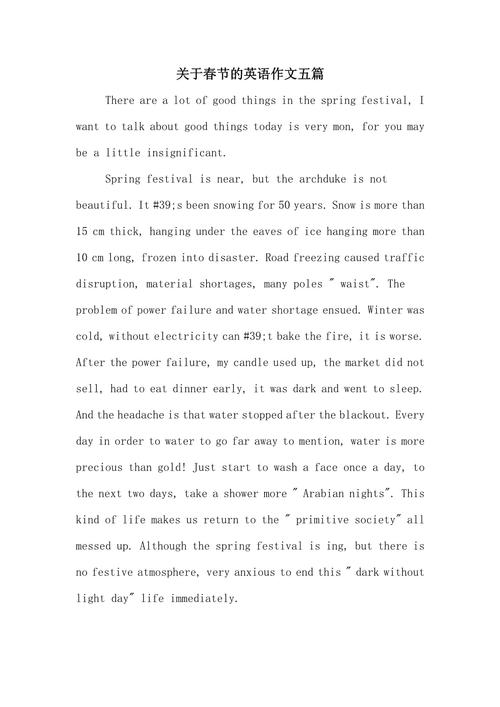
Before the festival, my family and I clean our house from top to bottom. We also put up red couplets on our doors for good luck. On New Year's Eve, my family gets together for a big dinner. We eat dumplings, fish, and many other delicious foods. After dinner, we watch the Spring Festival Gala on TV. At midnight, we set off fireworks to welcome the new year.
During the festival, we visit our relatives and friends. We say "Happy New Year" to them and get lucky money in red envelopes. It's very exciting! Everyone is happy and smiling.
Spring Festival is a time for family reunion and happiness. I always look forward to it every year.
标准版 (适合高中生或中级英语学习者)
The Spring Festival: A Time of Tradition and Joy**
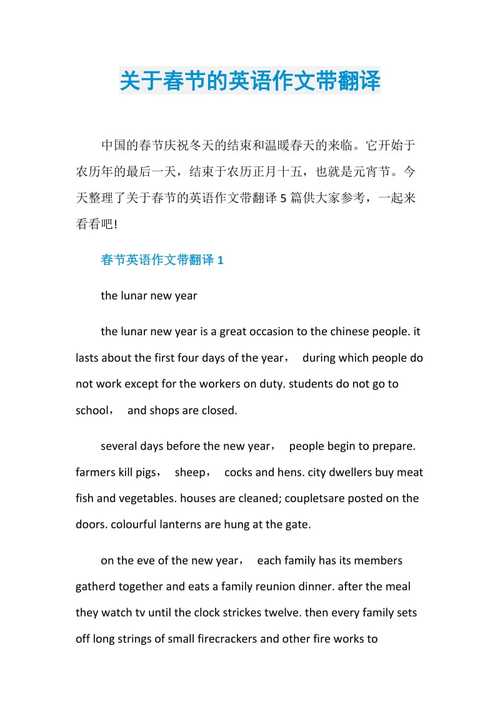
The Spring Festival, or Chinese New Year, stands as the most cherished and significant traditional holiday in China. It is not merely a date on the calendar but a deep-rooted cultural celebration that marks the beginning of a new lunar year. The festival is a vibrant tapestry of rich traditions, family bonds, and hopeful aspirations.
The preparations for the Spring Festival begin weeks in advance. A thorough house cleaning, known as "sweeping the dust," is performed to sweep away any bad luck from the past year, making way for good fortune. Streets and homes are adorned with vibrant red decorations, such as lanterns and paper cuttings, as red is a symbol of prosperity and joy in Chinese culture. The most anticipated event is the New Year's Eve reunion dinner. It is a time when family members, near and far, travel great distances to come together. The table is laden with symbolic dishes: dumplings for wealth, fish for surplus, and rice cakes for a higher position or better fortune in the coming year. The evening is often concluded by watching the annual Spring Festival Gala on television and a spectacular display of fireworks at midnight.
The first day of the new year is dedicated to visiting relatives and friends. This custom, called "New Year visits," is a way to strengthen social ties and extend good wishes. A common greeting during this time is "Gong Xi Fa Cai," which means "wishing you prosperity." Children are especially delighted as they receive "hongbao" (red envelopes) containing money from elders, which is believed to bring them good luck.
In essence, the Spring Festival is more than just a festival; it is a heartfelt celebration of family, a reflection of cultural heritage, and a hopeful start to a new beginning. It fills the air with warmth, excitement, and a sense of renewal for all.
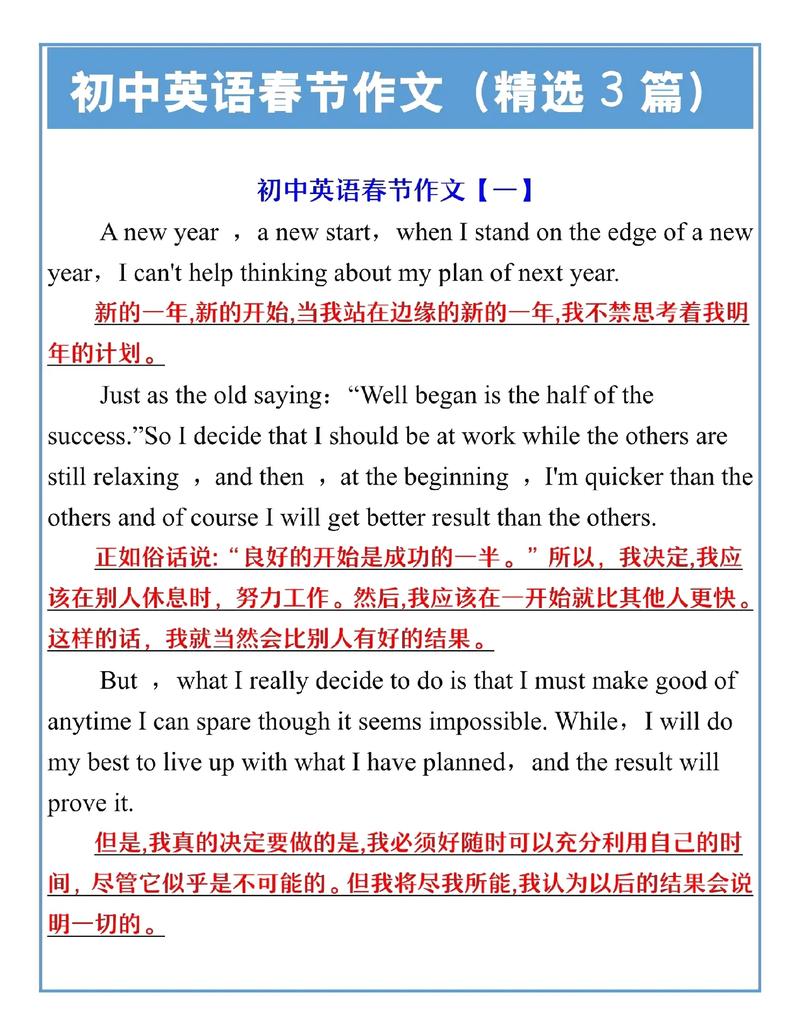
进阶版 (适合大学生或高级英语学习者)
Spring Festival: Weaving the Threads of Culture and Kinship**
As the chill of winter recedes and the first hints of spring appear in the air, China awakens to its most profound and cherished celebration: the Spring Festival, or Chinese New Year. This ancient festival, steeped in millennia of history, transcends the boundaries of a mere holiday to become a cornerstone of cultural identity and familial devotion. It is a time-honored tradition that meticulously weaves together the threads of heritage, gratitude, and hopeful anticipation for the future.
The festival's prelude is a ritualistic transformation of the everyday environment. Homes undergo a meticulous "sweeping of the dust," a symbolic act of purging misfortune and stagnation from the preceding year, thereby purifying the space for incoming good fortune. The color red, imbued with cultural significance as an emblem of luck, joy, and vitality, becomes the dominant hue. Streets are festooned with intricate paper cuttings and glowing lanterns, while doorways are graced with poetic couplets expressing auspicious wishes. The zenith of this preparatory phase is the New Year's Eve reunion dinner, a culinary and emotional cornerstone of the festival. It is a powerful testament to the paramount importance of family, as members from across the globe converge to share a meal brimming with symbolic dishes. Each item, from the plump dumplings shaped like ancient gold ingots to the whole fish signifying a surplus of prosperity, is steeped in meaning. The evening culminates in the collective viewing of the Spring Festival Gala and the spectacular, yet increasingly regulated, spectacle of fireworks, which are believed to ward off evil spirits.
The ensuing days are characterized by a grand social tapestry of visits and greetings. The custom of "bainian," or New Year visits, involves paying respects to elders and friends, exchanging pleasantries, and reinforcing communal bonds. The ubiquitous greeting, "Gong Xi Fa Cai," resonates through neighborhoods, a collective expression of hope for prosperity. For the younger generation, the festival is imbued with a special delight through the tradition of "hongbao" (red envelopes), monetary gifts bestowed by elders that are both tokens of good fortune and expressions of affection.
Ultimately, the Spring Festival is a magnificent confluence of the past and the present. It is a living heritage that reaffirms social structures, celebrates cultural continuity, and offers a collective moment of joy and optimism. In its essence, it is a heartfelt reaffirmation of what it means to be part of a family and a culture, setting the tone for renewal and unity as a new lunar cycle begins.
核心词汇与短语
Nouns (名词):
- Spring Festival / Chinese New Year: 春节
- Tradition: 传统
- Celebration: 庆祝
- Reunion: 团聚
- Custom: 习俗
- Couplets: 春联
- Fireworks: 烟花
- Lanterns: 灯笼
- Dumplings: 饺子
- Fish: 鱼 (象征 "年年有余" yu yu, surplus)
- Rice cakes: 年糕 (象征 "年年高升" nian nian gao sheng, higher position)
- Hongbao / Red envelope: 红包
- Prosperity: 繁荣,兴旺
- Good fortune / Good luck: 好运
- Heritage: 遗产,传统
Verbs (动词):
- Celebrate: 庆祝
- Decorate: 装饰
- Adorn: 装饰 (更正式)
- Set off fireworks: 放烟花
- Gather / Get together: 聚集
- Visit relatives and friends: 拜年
- Exchange greetings: 互相问候
- Receive / Get: 收到
Phrases & Expressions (短语与表达):
- The most important festival: 最重要的节日
- Look forward to: 期待
- Clean the house from top to bottom: 把家里里里外外打扫干净
- Put up red decorations: 贴上红色的装饰
- Reunion dinner: 团圆饭
- Watch the Spring Festival Gala: 看春节联欢晚会
- Ward off evil spirits: 驱邪
- Symbolize...: 象征着...
- A time for family and joy: 一个充满家庭和欢乐的时刻
- Cultural heritage: 文化遗产
- A new beginning: 一个新的开始