春节英语作文如何写?
作文示例 2025年12月17日 06:38:08 99ANYc3cd6
Of course! Here are a few versions of an English essay about the Spring Festival (Chinese New Year), ranging from a simple one for younger students to a more detailed one for older students or general readers.
Version 1: Simple & Concise (For Younger Students)
My Favorite Festival: The Spring Festival
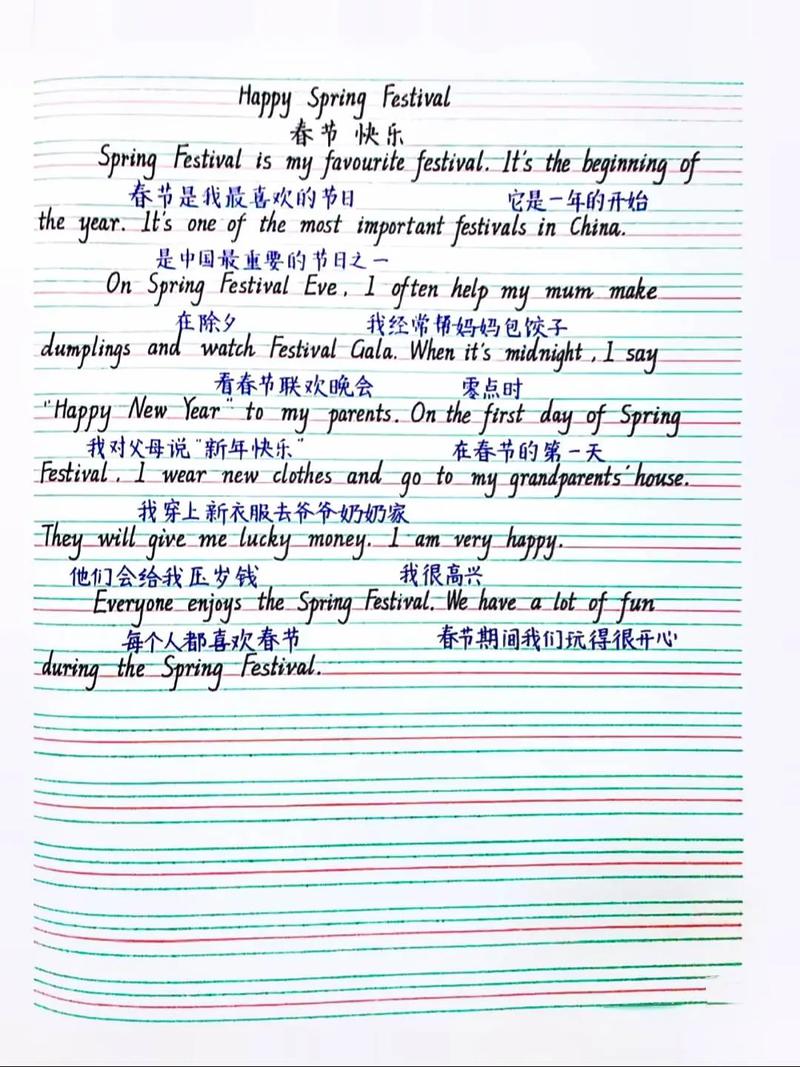
My favorite festival is the Spring Festival, also known as Chinese New Year. It is the most important holiday in China. It usually comes in January or February.
Before the festival, my family cleans our house. This is to sweep away bad luck. We also decorate our doors with red paper cutouts. Red is a lucky color in China.
On New Year's Eve, our family gets together for a big dinner. We eat dumplings, fish, and many other delicious foods. After dinner, we watch the Spring Festival Gala on TV. At midnight, we set off fireworks to welcome the new year.
During the festival, children are very happy because they get "red envelopes" with money from their elders. We also visit our relatives and friends to say "Happy New Year."
I love the Spring Festival because it is a time for family, fun, and good food!
Version 2: Standard & Detailed (For Middle School / General Readers)
The Spring Festival: A Time of Tradition and Reunion
The Spring Festival, or Chinese New Year, stands as the most cherished and significant traditional holiday in China. More than just a date on the calendar, it is a profound cultural symbol representing new beginnings, family reunions, and the hope for a prosperous future. Celebrated at the turn of the lunar calendar, typically between late January and mid-February, the festival is a vibrant tapestry of rich customs and joyful festivities.
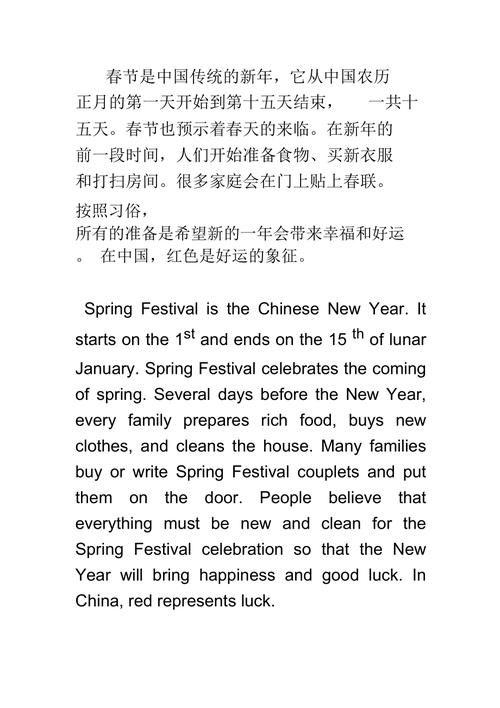
The preparations for the Spring Festival begin weeks in advance. A crucial tradition is "sweeping the dust," where families thoroughly clean their homes. This act is symbolic, meant to sweep away any bad luck or misfortunes from the past year, making way for good fortune in the new one. Houses are then adorned with vibrant decorations. The color red dominates, as it is believed to ward off evil spirits. Families hang red lanterns, paste Spring Festival couplets with poetic verses on their doorways, and display intricate paper cuttings, all wishing for happiness, health, and prosperity.
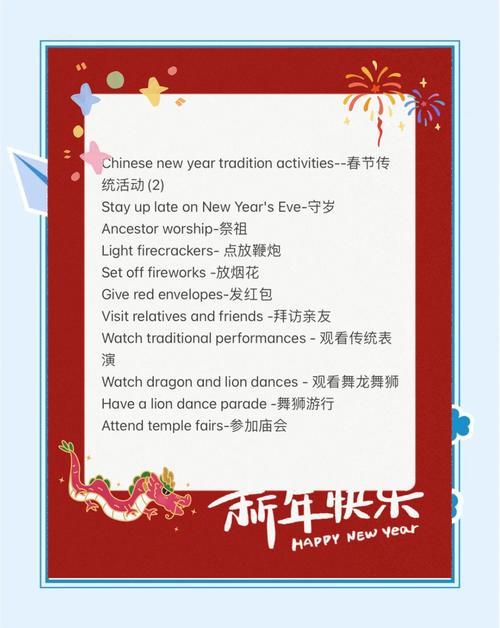
The climax of the festival is New Year's Eve. This is the night for the most important event: the Reunion Dinner. No matter how far away they are, family members travel from all corners of the country and even the world to come together. The dinner table is laden with symbolic dishes: fish for abundance, dumplings for wealth, and rice cakes for a higher position or better fortune in the coming year. After the meal, families often stay up late to watch the annual Spring Festival Gala, a nationally televised variety show, or set off fireworks and firecrackers, creating a spectacular and noisy display to scare away the mythical beast "Nian" and celebrate the arrival of the new year.
The first few days of the new year are filled with visits to relatives and friends. This is a time to exchange greetings of "Gong Xi Fa Cai," which means "wishing you prosperity." For children, the most exciting part is receiving "red envelopes" (hongbao). These are red packets containing money, given by elders as a blessing for their health and happiness. It is a time of laughter, sharing, and strengthening family bonds.
In conclusion, the Spring Festival is much more than a holiday. It is a deep-rooted cultural experience that reinforces the values of family, respect for tradition, and optimism for the future. It is a period that brings warmth, joy, and a renewed sense of hope to millions of people.
Key Vocabulary & Phrases (关键词和短语)
Here are some useful words and phrases you can use in your essay:
- Spring Festival / Chinese New Year: 春节
- Lunar Calendar: 农历
- Traditional Holiday: 传统节日
- Family Reunion: 家庭团聚
- Custom / Tradition: 习俗 / 传统
- Symbolic: 象征性的
- To Ward Off Evil Spirits: 驱赶邪灵
- Prosperity / Fortune: 繁荣 / 财富
- Preparations: 准备工作
- Sweeping the Dust (Chen Chen): 扫尘
- Decorations: 装饰品
- Red Lanterns: 红灯笼
- Spring Festival Couplets: 春联
- Paper Cuttings: 剪纸
- Reunion Dinner: 团圆饭
- Symbolic Dishes: 象征意义的菜肴
- Dumplings: 饺子
- Fish (for abundance): 鱼 (象征年年有余)
- Fireworks / Firecrackers: 烟花 / 鞭炮
- Red Envelopes (Hongbao): 红包
- To Exchange Greetings: 互致问候
- Gong Xi Fa Cai: 恭喜发财 (A common New Year's greeting)
- To Strengthen Family Bonds: 增进家庭感情