端午节英语作文怎么写?
作文示例 2026年1月27日 04:19:17 99ANYc3cd6
基础版 (适合初中或英语初学者)
My Favorite Festival - the Dragon Boat Festival**
My favorite festival is the Dragon Boat Festival. It is a traditional Chinese holiday. It usually comes in May or June of the lunar calendar.
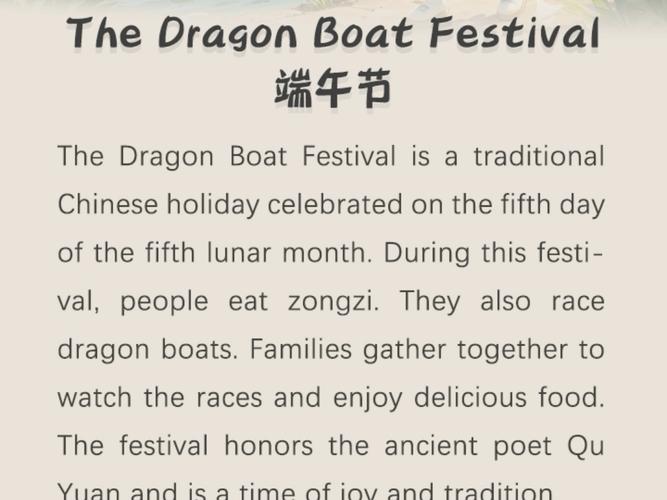
There is a very famous story about this festival. It is about a poet named Qu Yuan. He loved his country very much, but he was very sad. When he heard his country was in danger, he jumped into a river. People loved him, so they raced their boats on the river to try and save him. This is why we have dragon boat races today.
During the Dragon Boat Festival, my family and I eat a special food called zongzi. Zongzi is made of glutinous rice with different fillings like meat or beans, all wrapped in bamboo leaves. It is very delicious!
I love the Dragon Boat Festival because it has a meaningful story and yummy food. It is a great time for family.
标准版 (适合高中生或中级英语学习者)
The Dragon Boat Festival: A Celebration of Tradition and Culture**
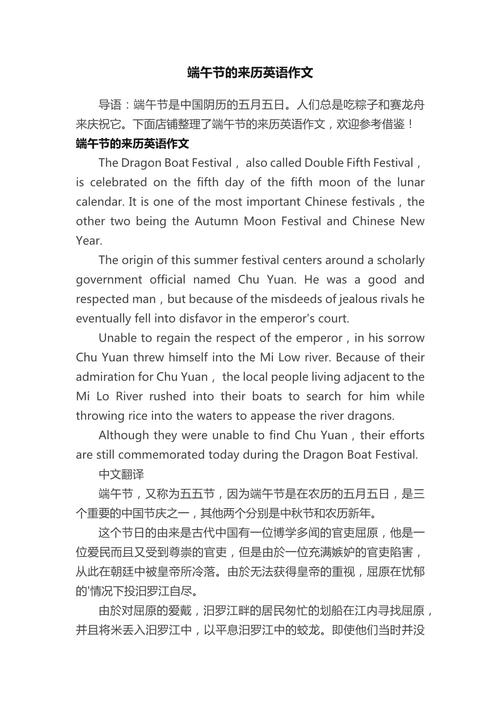
The Dragon Boat Festival, also known as Duanwu Festival, is one of the most important traditional festivals in China. Celebrated on the 5th day of the 5th lunar month, it is a rich tapestry of history, sports, and culinary delight, all woven together to honor a great patriotic poet, Qu Yuan.
The festival's origins are deeply rooted in a poignant legend. Qu Yuan, a loyal minister of the Chu State, was exiled after his advice was ignored. When his state was conquered by a rival, he was overcome with grief and sorrowfully drowned himself in the Miluo River. To prevent his body from being eaten by fish, local people paddled out on their boats, beating drums and throwing sticky rice balls called zongzi into the water. This act of remembrance is believed to be the origin of the two most iconic traditions of the festival: dragon boat racing and eating zongzi.
Today, these traditions are still very much alive. Dragon boat racing has evolved into a thrilling international sport, with teams in long, narrow boats decorated like dragons, paddling furiously to the rhythm of drums. The atmosphere is electric with excitement and cheers. Meanwhile, families gather to prepare and enjoy zongzi. These pyramid-shaped parcels of glutinous rice, filled with savory or sweet ingredients and wrapped in bamboo leaves, are a delicious and essential part of the festival.
In conclusion, the Dragon Boat Festival is more than just a holiday. It is a time to remember history, to cherish family bonds, and to celebrate the enduring spirit of Chinese culture. It is a day filled with the aroma of zongzi, the sound of cheering crowds, and the powerful spirit of teamwork on the water.
高级版 (适合大学生或高级英语学习者)
The Dragon Boat Festival: An Ode to Patriotism and Cultural Continuity**
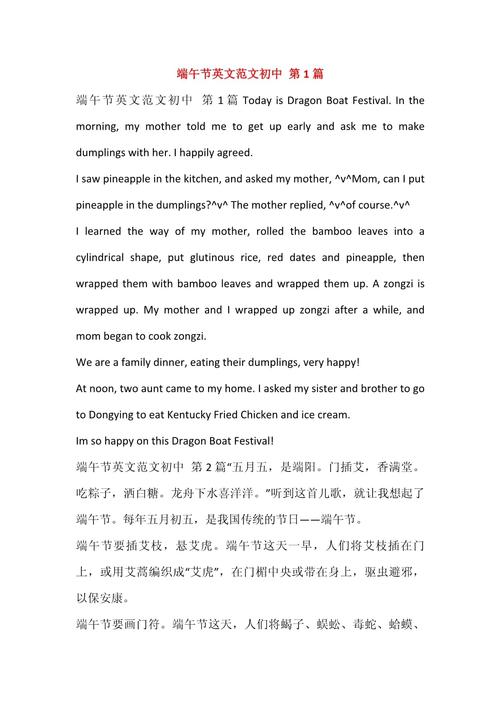
In the mosaic of Chinese cultural celebrations, the Dragon Boat Festival, or Duanwu, stands out as a profound and vibrant festival. Observed on the fifth day of the fifth lunar month, it transcends mere revelry, serving as a poignant commemoration of the ancient poet Qu Yuan and a vibrant showcase of enduring traditions that have shaped the collective identity of the Chinese people for millennia.
The festival's genesis is inextricably linked to the tragic yet heroic story of Qu Yuan, a minister of the Chu Kingdom during the Warring States period. Falsely accused and exiled, Qu Yuan watched in despair as his beloved state fell to the powerful Qin. In a final act of defiant patriotism, he tied a heavy stone to his body and leaped into the Miluo River. Legend recounts that local fishermen, racing their boats to his rescue and desperately throwing rice dumplings into the river to satiate the fish and preserve his body, gave birth to the festival's two most cherished customs: the dragon boat races and the consumption of zongzi.
These customs have evolved over centuries but have retained their core significance. Dragon boat racing is no longer just a ritual but a spectacular display of athleticism and teamwork. The long, sinuous boats, adorned with fearsome dragon heads and tails, slice through the water to the thunderous beat of drums, symbolizing the valiant but futile rescue attempt. Meanwhile, the preparation of zongzi is a cherished domestic ritual. The art of wrapping glutinous rice and various fillings—ranging from savory pork and salted egg yolk to sweet red bean paste—in fragrant bamboo leaves is a skill passed down through generations. Each family has its own unique recipe, making the zongzi a delicious vessel for familial heritage and tradition.
Ultimately, the Dragon Boat Festival is a multifaceted celebration. It is a solemn occasion to honor a national hero, a thrilling spectacle of competitive spirit, and a heartfelt opportunity for family reunion. It is a living testament to the continuity of Chinese culture, where ancient legends are not merely stories of the past, but are actively reenacted and cherished in the present, ensuring that the spirit of patriotism and cultural pride continues to thrive.