外研社八年级下册教案如何设计更高效?
校园之窗 2026年1月5日 01:48:03 99ANYc3cd6
由于八年级下册通常包含多个模块,这里无法提供每一个模块每一课的完整教案,但我会为您提供一个详细的教案框架,并以八年级下册第一模块第一单元为例,展示一份完整的、可直接参考使用的教案范例,您可以根据这个框架和范例,套用到其他模块和单元的教学中。
外研社版八年级下册英语教案通用框架
一份完整的教案通常包含以下几个部分:
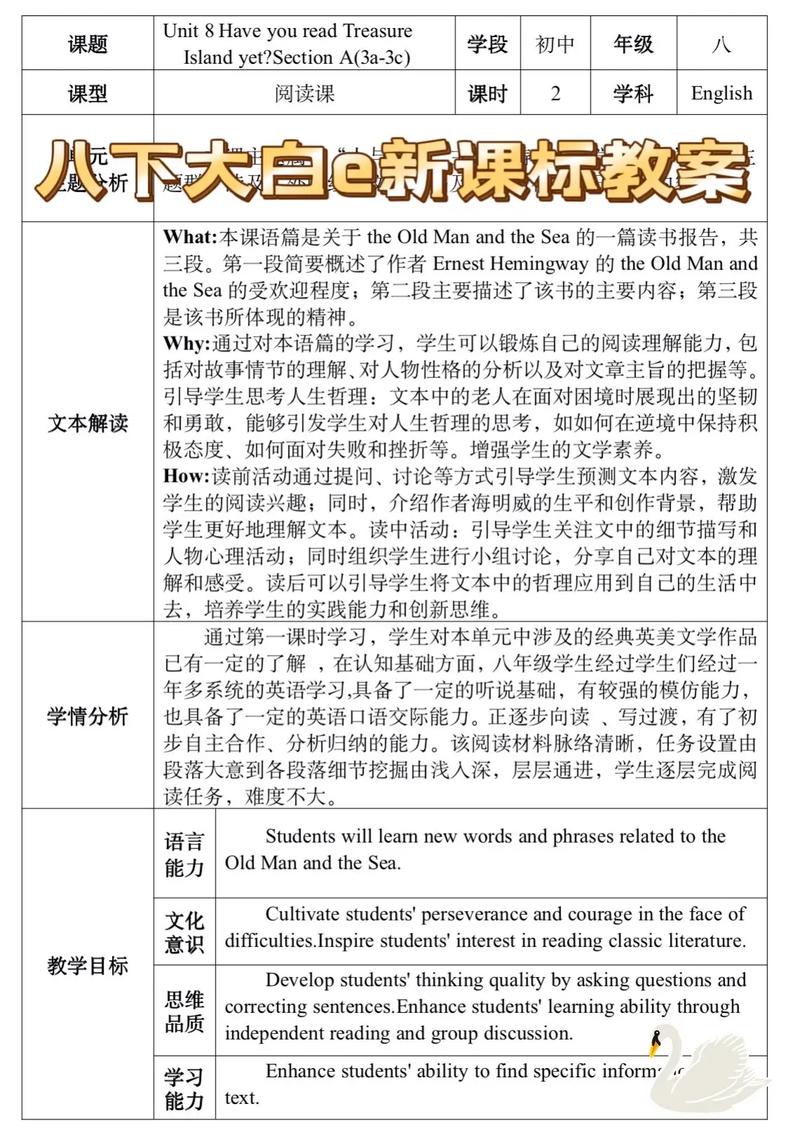
(图片来源网络,侵删)
课题信息
- 课题名称: 模块编号 + 模块主题 + 单元编号 ( Module 1 Feelings and impressions Unit 1 It smells delicious.)
- 授课年级: 八年级下册
- 课时: 第几课时 ( 第1课时 / The first period)
教学目标
- 语言知识目标:
- 词汇: 要求学生掌握的核心词汇(四会:听、说、读、写)和认读词汇。
- 短语: 要求学生掌握的重点短语和搭配。
- 句型: 要求学生掌握的核心句型及其用法。
- 语言技能目标:
- 听: 能听懂关于描述事物和感受的简短对话或独白。
- 说: 能运用感官词汇和句型描述食物、物品或场景,表达自己的感受。
- 读: 能读懂描述性短文,获取主要信息和细节。
- 写: 能运用所学词汇和句型写一段简短的描述性文字。
- 情感态度与价值观目标:
- 培养学生乐于与人交流、分享感受的习惯。
- 引导学生学会欣赏生活中的美好事物,保持积极乐观的生活态度。
- 了解中西方在饮食文化等方面的异同,培养跨文化意识。
教学重难点
- 教学重点:
- 核心词汇的掌握和运用。
- 描述感官感受的句型结构(如: It smells/tastes/looks...)。
- 教学难点:
- 形容词的正确使用(区分-ed和-ing形容词,如: interested vs. interesting)。
- 在实际情境中灵活运用所学词汇和句型进行口头和书面表达。
- 听力中捕捉关键信息的能力。
教学准备

(图片来源网络,侵删)
- 教师准备: 多媒体课件、单词卡片、图片、音频/视频材料、实物(如水果、零食等)。
- 学生准备: 课本、练习册、预习本。
教学过程 这是教案的核心部分,通常分为以下几个环节:
-
Warming-up / Lead-in (热身/导入) (约5分钟)
- 目的: 激活学生已有知识,创设情境,激发学习兴趣,自然引入本课主题。
- 活动形式: 歌曲、游戏、提问、图片展示、短视频等。
-
Presentation (新知呈现) (约15分钟)
- 目的: 呈现本课的核心词汇、句型和语法。
- 活动形式:
- 词汇教学: 利用图片、实物、动作、情境等方式展示新词,并讲解词义、发音和用法。
- 句型/语法教学: 通过创设情境(如看图说话、听对话),引出核心句型,并进行结构分析和操练。
-
Practice (巩固练习) (约15分钟)
 (图片来源网络,侵删)
- 目的: 通过不同形式的练习,帮助学生内化所学知识,从机械操练过渡到意义操练。
- 活动形式:
- 控制性练习: 替换练习、填空、选择、问答等。
- 半控制性练习: 情境对话、角色扮演、看图描述等。
- 小组活动: 小组讨论、信息差活动等。
-
Production / Production (输出应用) (约7分钟)
- 目的: 鼓励学生运用所学知识进行真实的、有意义的语言输出,综合运用语言技能。
- 活动形式: 小组任务、辩论、调查报告、短剧表演、写作任务等。
-
Summary and Homework (总结与作业) (约3分钟)
- 师生共同回顾本课所学重点内容,可以让学生自己总结。
- 作业: 布置分层、可操作、与课堂内容紧密相关的作业,以巩固和延伸学习。
板书设计
- 目的: 清晰、有条理地呈现本课的知识结构,帮助学生构建知识网络。
- 通常包括模块/单元主题、核心词汇、重点句型、语法点等。
教学反思
- 目的: 课后对教学过程进行回顾和反思,总结成功之处,分析不足,为今后的教学改进提供依据。
- 目标达成度、教学环节设计、学生参与度、时间分配、突发事件处理等。
教案范例:外研版八年级下册 Module 1 Unit 1
课题信息
- 课题名称: Module 1 Feelings and impressions Unit 1 It smells delicious.
- 授课年级: 八年级下册
- 课时: 第1课时
教学目标
- 语言知识目标:
- 词汇: 掌握
delicious, sweet, sour, bitter, crispy, salty, smell, taste, look, feel等核心词汇。 - 句型: 掌握并运用感官描述的句型:
It smells/tastes/looks/feels...
- 词汇: 掌握
- 语言技能目标:
- 听: 能听懂包含感官描述的简短对话,获取食物名称和感受。
- 说: 能运用感官词汇和句型描述食物的味道、气味、外观和口感。
- 读: 能读懂关于描述食物的短文。
- 写: 能写几句简单的话来描述一种自己喜欢的食物。
- 情感态度与价值观目标:
- 培养学生乐于分享、积极交流的态度。
- 引导学生感受饮食文化的乐趣,并学会用恰当的语言表达自己的感受。
教学重难点
- 教学重点:
- 掌握描述感官的形容词
delicious, sweet, sour, bitter, crispy, salty。 - 熟练运用句型
It smells/tastes/looks/feels...进行描述。
- 掌握描述感官的形容词
- 教学难点:
- 准确使用
taste和feel描述食物的不同方面(味道 vs. 口感)。 - 在小组活动中,流利、自信地运用所学知识进行交流。
- 准确使用
教学准备
- 教师准备: PPT课件、各种味道的食物(如柠檬、糖、薯片、巧克力、一小块苦瓜等)、单词卡片、录音机。
- 学生准备: 课本、预习本。
教学过程
| 环节 | 设计意图 | 时间 | |
|---|---|---|---|
| Step 1: Warming-up & Lead-in | Greeting: Greet the students as usual. 2. Game: "Guess What It Is": The teacher shows a picture of a delicious dish (e.g., Kung Pao Chicken) on the PPT and asks: "What's this? Do you like it? How does it make you feel?" 3. Introduce the topic: "Today, we are going to learn how to describe food and things using our senses. Our topic is 'Feelings and impressions'." |
通过图片和提问,迅速将学生带入与食物和感受相关的情境中,激发学习兴趣,自然导入本课主题。 | 5 mins |
| Step 2: Presentation | Vocabulary Teaching: Present realia (lemon, sugar, potato chips, chocolate, bitter melon) or pictures on the PPT. Ask a student to taste the lemon and ask: "How does it taste?" Guide the student to answer: "It's sour." Write "sour" on the board. Repeat with other items, presenting and drilling the words: sweet, crispy, salty, bitter, delicious. 2. Sentence Pattern Presentation: Point to the lemon again and ask: "How does it smell?" (It might not have a strong smell, so ask about chocolate). "How does the chocolate smell?" (It smells sweet). Write the sentence pattern on the board: It smells + adj. Similarly, present: It tastes + adj. (sour, sweet), It looks + adj. (delicious, beautiful), It feels + adj. (crispy). Emphasize the difference between taste (味道) and feel (口感). |
利用实物和情境进行词汇教学,直观、生动,便于学生理解和记忆,通过从感官词汇自然过渡到句型,让学生在语境中学习语言结构。 | 15 mins |
| Step 3: Practice | Controlled Practice - Matching: Show a list of words (sweet, sour, crispy, salty) and a list of pictures (lemon, candy, chips, chips). Ask students to match the words with the correct pictures. 2. Semi-controlled Practice - Pair Work: Ask students to work in pairs. Student A describes a food from the PPT or in their mind (e.g., "It's yellow. It's sweet. It's round."). Student B guesses what it is (e.g., "Is it a banana?"). 3. Listening Practice (Activity 2 & 3 on Page 2): Play the recording. Ask students to listen and check the words they hear in Activity 2. Play the recording again. Ask students to listen and answer the questions in Activity 3. |
从机械的词汇匹配,到半控制性的结对练习,再到结合课本的听力练习,层层递进,帮助学生巩固所学知识,并为后续的输出做准备。 | 15 mins |
| Step 4: Production | Group Work - "Food Show" 1. Divide students into groups of 4. 2. Each group chooses one food item (real or imagined). They have 3 minutes to prepare a short dialogue to describe it. They must use at least three of the sentence patterns: "It smells...", "It tastes...", "It looks...", "It feels...". 3. Invite some groups to come to the front and perform their "Food Show". The class can guess the food or give comments. |
这个任务要求学生综合运用本课所学知识进行创造性输出,将语言学习与实际应用相结合,能有效锻炼学生的口语表达能力和合作精神。 | 7 mins |
| Step 5: Summary & Homework | Summary: Ask students: "What have we learned today?" Help them summarize the key vocabulary and sentence patterns. 2. Homework: Level 1 (Consolidation): Copy the new words and sentences three times. Level 2 (Application): Write a short paragraph (at least 5 sentences) to describe your favorite food. * Level 3 (Extension): Interview your parents about their favorite food and describe it for them. |
总结帮助学生梳理知识脉络,分层作业能满足不同层次学生的需求,既巩固了基础,又提供了拓展应用的机会。 | 3 mins |
板书设计
                            Module 1 Feelings and impressions
                            Unit 1 It smells delicious.
---------------------------------------------
|          **Core Vocabulary**             |
|  delicious  sweet   sour   bitter       |
|  crispy    salty   smell  taste        |
|  look      feel                        |
---------------------------------------------
|          **Key Sentence Patterns**        |
|  It smells + adj.  (e.g., It smells sweet.) |
|  It tastes + adj.   (e.g., It tastes sour.)  |
|  It looks + adj.   (e.g., It looks delicious.) |
|  It feels + adj.   (e.g., It feels crispy.) |
---------------------------------------------
教学反思
- 本节课的设计是否符合学生的认知水平?学生的参与度如何?
- 在“Food Show”环节,学生是否能灵活运用所学句型?有哪些常见的错误需要纠正?
- 听力材料的难度是否适中?学生反馈如何?
- 下次教学时,可以增加更多实物,让学生亲身体验,或者引入更多关于“感受”的词汇(如
exciting, boring),为下一单元做铺垫。
希望这份详细的框架和范例能对您的教学工作有所帮助!