八年级if条件状语从句,怎么学才对?
校园之窗 2025年12月15日 12:46:13 99ANYc3cd6
第一部分:什么是 if 条件状语从句?
想象一下,if 条件状语从句就像一个“..就...”的魔法公式,它用来表达在某种条件(..)下,会发生某种结果(就...)。
- 条件:可能发生的事情,通常由
if引导。 - 结果:在条件成立后发生的事情,通常由主句来陈述。
基本结构:
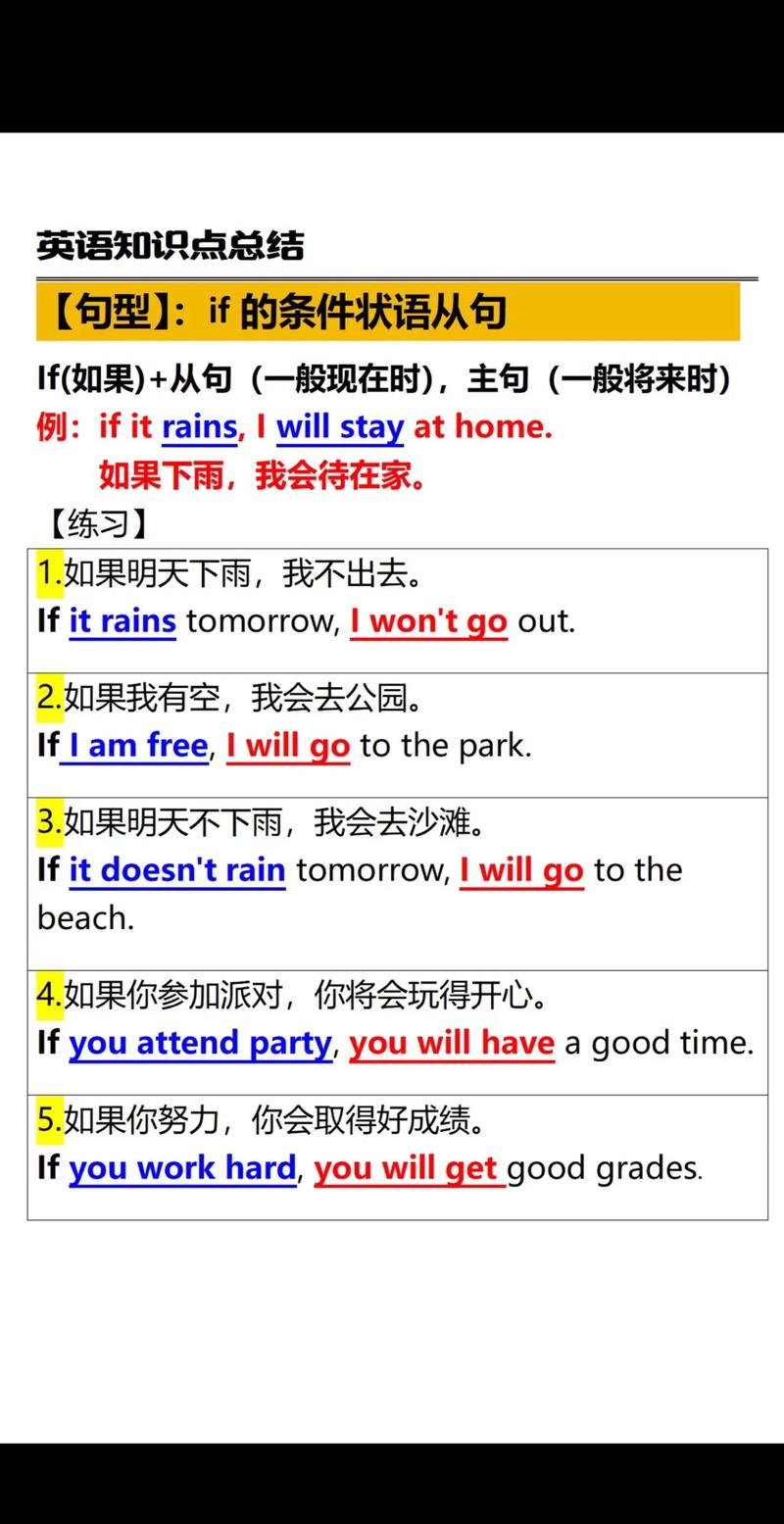
If + 条件从句, (,) + 主句.
示例:
- If it rains tomorrow, I will stay at home.
- 条件:如果明天下雨 (if it rains tomorrow)
- 结果:我就待在家里 (I will stay at home)
- If you study hard, you will pass the exam.
- 条件:如果你努力学习 (if you study hard)
- 结果:你就会通过考试 (you will pass the exam)
第二部分:核心语法规则(重中之重!)
这是 if 条件句最容易出错的地方,也是考试的重点。
规则:在 if 条件状语从句中,如果主句是一般将来时,从句必须用 一般现在时代替一般将来时。
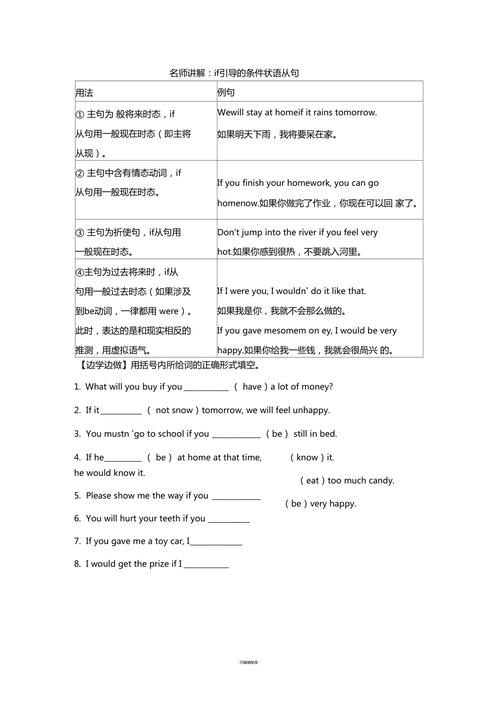
为什么? 因为条件状语从句描述的是一种“假设”或“前提”,这个前提在说话时被认为是将来可能发生的事情,但在语法上,我们把它当作一个事实来陈述,所以用一般现在时。
错误示范:
If it will rain tomorrow, I will stay at home.(❌ 错误)If you will study hard, you will pass the exam.(❌ 错误)
正确示范:
If it **rains** tomorrow, I **will stay** at home.(✅ 正确)If you **study** hard, you **will pass** the exam.(✅ 正确)
记忆口诀: 主将从 if (主句用将来时,从句用if引导,从句用一般现在时)。
第三部分:if 条件句的常见类型(八年级重点掌握前两种)
根据条件和发生的可能性,if 条件句可以分为以下几种类型:
Type 1: 可能发生的将来情况(真实条件句)
- 含义:描述将来很可能发生的事情。
- 结构:
- If + 主语 + 动词现在时, ... + 主语 + will + 动词原形.
- (If you heat ice, it will melt.)
- 示例:
- If he comes tomorrow, I will tell him the news.
如果他明天来,我会告诉他这个消息。
- If you finish your homework, I will buy you a new game.
如果你完成了作业,我就给你买个新游戏。
- If he comes tomorrow, I will tell him the news.
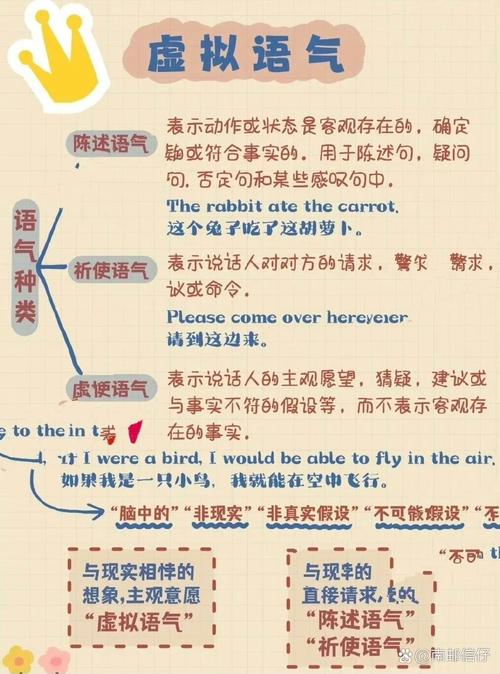
Type 2: 与现在事实相反的假设(虚拟语气)
- 含义:描述现在不大可能发生或纯粹是想象的情况。
- 结构:
- If + 主语 + 动词过去式 (be动词用were), ... + 主语 + would/could/might + 动词原形.
- (If I were you, I would study harder.)
- 示例:
- If I had a lot of money, I would travel around the world.
如果我有很多钱,我就会环游世界。(但我现在没有钱)
- If I were you, I would take the job.
如果我是你,我就会接受那份工作。(但我不是你)
- 特别注意:在 "If I were you..." 这样的虚拟句型中,
be动词通常用were,即使在主语是I/he/she/it时也用were,这是更标准的用法。
- If I had a lot of money, I would travel around the world.
Type 3: 与过去事实相反的假设(虚拟语气)
- 含义:描述过去没有发生,但希望或假设它发生了的情况。
- 结构:
- If + 主语 + had + 过去分词, ... + 主语 + would/could/might + have + 过去分词.
- (If I had studied harder, I would have passed the exam.)
- 示例:
- If I had studied harder, I would have passed the exam.
如果我当时学习更努力,我就能通过考试了。(但我当时没努力,所以没通过)
- If you had told me yesterday, I would have helped you.
如果你昨天告诉了我,我就会帮你了。(但你昨天没告诉我)
- If I had studied harder, I would have passed the exam.
八年级要求:重点掌握 Type 1 和 Type 2,Type 3 通常在更高年级学习,但了解一下有助于你更全面地理解 if 句型。
第四部分:练习与巩固
单选选择
-
If it ____ tomorrow, we will go hiking. A. won't rain B. doesn't rain C. will not rain D. isn't rain
-
If I ____ you, I would say sorry to her. A. am B. was C. were D. is
-
If he ___ hard, he will get good grades. A. study B. studies C. will study D. studied
-
If I ___ a bird, I could fly in the sky. A. am B. was C. were D. is
答案:
- B (主句是将来时,从句用一般现在时否定形式 doesn't rain)
- C (与现在事实相反,be动词用were)
- B (主句是将来时,从句用一般现在时)
- C (与现在事实相反,be动词用were)
句型转换
-
He will come to the party if he is free. (改为同义句) → If he is free, he ____ ____ to the party.
-
I can't buy the car because I don't have enough money. (改为 if 句型) → If I ____ enough money, I ____ buy the car.
-
She will miss the bus if she doesn't hurry. (改为否定句) → If she ____ ____, she won't miss the bus.
答案:
- will come
- had, could (或 would) (这里用虚拟语气,表示“如果我有钱,我就能买”)
- doesn't hurry
第五部分:常见误区与总结
-
混淆时态:忘记“主将从 if”的规则,在从句中错误地使用
will。- 错:If it will rain, I will stay.
- 对:If it rains, I will stay.
-
混淆虚拟语气:将 Type 1 和 Type 2 混淆,要根据句子的意思判断是描述“很可能发生”还是“不太可能/纯想象”。
- 可能发生:If it rains, I will stay. (Type 1)
- 不可能/想象:If I were a bird, I would fly. (Type 2)
-
逗号的使用:当
if从句放在句首时,通常在从句后面加一个逗号。- If it rains, I will stay at home. (✅)
- I will stay at home if it rains. (✅) 从句在后,通常不加逗号。
- 记住基本结构:If + 条件, 结果。
- 牢记核心规则:主将从 if (主句用
will,从句用动词原形/现在时)。 - 区分三种类型:
- Type 1 (可能):
If + 主语 + 动词现在时, 主语 + will + 动词原形. - Type 2 (现在虚拟):
If + 主语 + 动词过去式, 主语 + would + 动词原形. - Type 3 (过去虚拟):
If + 主语 + had + 过去分词, 主语 + would have + 过去分词.(八年级了解即可)
- Type 1 (可能):
希望这份详细的总结能帮助你彻底掌握 if 条件状语从句!多加练习,你一定能运用自如!