八年级英语上册人教版教案怎么设计更有效?
校园之窗 2025年12月10日 21:45:33 99ANYc3cd6
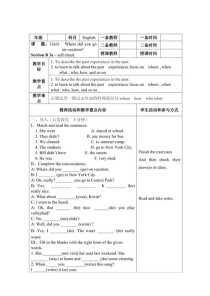
人教版八年级英语上册第一单元教案
单元基本信息
- 单元主题: Where did you go on vacation? (你去哪里度假了?)
- 核心功能: Talking about past events (谈论过去发生的事情)
- 核心语法: 一般过去时
- 核心词汇:
- 名词: vacation, beach, museum, zoo, pool, cinema, visitor, movie, test, camp, lake, beach, park
- 动词: go, visit, study, stay, play, move, watch, do, is/are (was/were), have/has (had)
- 形容词: wonderful, interesting, beautiful, boring, terrible, crowded, expensive, cheap, famous
- 疑问词: Where, What, How
- 课时安排: 本单元建议用 5-6 课时完成。
第一课时:Section A (1a-2d)
课时目标:
- 知识与技能:
- 能听、说、读、写并正确运用以下词汇:
vacation, beach, museum, zoo, pool, cinema。 - 能听懂并运用句型
Where did you go on vacation?和I went to...进行简单的问答。 - 初步感知并理解一般过去时的概念,特别是动词过去式的变化规则(规则变化)。
- 能听、说、读、写并正确运用以下词汇:
- 过程与方法:
- 通过图片、情景对话等方式,引导学生在真实语境中学习和运用语言。
- 通过结对活动、小组讨论等形式,培养学生的合作交流能力。
- 情感态度与价值观:
鼓励学生乐于分享自己的假期经历,培养积极乐观的生活态度。
 (图片来源网络,侵删)
教学重难点:
- 重点: 掌握核心词汇,并能运用
Where did you go? I went to...进行问答。 - 难点: 理解并初步感知一般过去时,特别是动词过去式的形式。
教学准备:
- 多媒体课件,包含本单元词汇的图片和音频。
- 单词卡片。
教学过程:
Step 1: Warm-up & Lead-in (热身与导入) (5分钟)

- Greeting: Greet the students with "Good morning/afternoon, everyone!"
- Free Talk: Ask a simple question to activate students' prior knowledge.
T: "Summer vacation is coming. What do you usually do in summer vacation?" (引导学生说出 go swimming, go to the park, play computer games 等)
- Introduce Topic: Show a picture of a beautiful beach or a famous landmark.
T: "Wow, it's a great place! If you go there, you are on vacation. Today, we are going to talk about 'Where did you go on vacation?'" (板书单元标题)
Step 2: Presentation (新知呈现) (15分钟)
-
Vocabulary Teaching (词汇教学):
 (图片来源网络,侵删)
- Use PPT to show pictures of
beach, museum, zoo, pool, cinema. - T: "Look at this picture. Where is it? It's a beach. Read after me: beach." (教师领读,学生跟读,注意发音)
- Repeat for other words. Use actions or simple descriptions to help students remember (e.g., for "zoo", make a gesture of an animal).
- Game: Quick response. Show a picture, students say the word as quickly as possible.
- Use PPT to show pictures of
-
Sentence Pattern Presentation (句型呈现):
- T: (Pointing to the beach picture) "I went to the beach on my vacation." (强调 "went" 的发音,并与 "go" 对比)
- T: "Ask me: Where did you go on vacation?" (引导学生提问)
- Ss: "Where did you go on vacation?"
- T: "I went to the beach." (板书核心句型)
- Explain the structure:
Where + did + 主语 + go + on vacation?和主语 + went + to + 地点. - Drill the pattern with other vocabulary. T: "I went to the zoo." Ss: "Where did you go on vacation?" T: "I went to the zoo."
Step 3: Practice (练习) (10分钟)
-
1a: Match the words with the pictures.
- Ask students to open their books to page 1.
- Have students match the words in 1a with the pictures in 1a individually.
- Check the answers together. Ask a student to read the word and another to point to the picture.
-
1b: Listen and number the people [1-3].
- T: "Now, let's listen to the tape. Three people are talking about their vacation. Listen carefully and number them."
- Play the recording for the first time. Students just listen.
- Play the recording again. This time, students number the people.
- Play the recording a third time for students to check their answers.
- Check answers with the whole class.
-
Pair Work (结对活动):
- T: "Work with your partner. Ask and answer about the people in 1b."
- Model the dialogue with a student:
- T: "Where did Grace go on vacation?"
- S1: "She went to New York City."
- Students practice in pairs. Walk around the classroom to offer help and monitor their progress.
Step 4: Consolidation & Production (巩固与产出) (10分钟)
- 2d: Role-play the conversation.
- Ask students to read the conversation in 2d silently and try to understand the meaning.
- Play the recording for students to listen and repeat, paying attention to the intonation and pronunciation.
- Explain any new words or phrases if necessary (e.g.,
anything special,did anything). - Ask students to work in pairs and role-play the conversation. Encourage them to act it out.
- Invite one or two pairs to perform in front of the class.
Step 5: Summary & Homework (总结与作业) (5分钟)
-
Summary:
- T: "What did we learn today?" (引导学生回顾核心词汇和句型)
- Review the key words and the sentence pattern
Where did you go on vacation? I went to...
-
Homework:
- 抄写并背诵本节课所学的六个新单词和核心句型。
- 预习 2a 和 2b 的内容。
- 口头作业: Ask your parents "Where did they go on vacation?" and report it to the class next time.
第二课时:Section A (2a-2c) & Grammar Focus
课时目标:
- 知识与技能:
- 能听懂并运用形容词
wonderful, interesting, beautiful, boring, terrible描述过去的经历。 - 掌握一般过去时的肯定句、否定句和疑问句的基本结构。
- 能区分
be动词的过去式was/were。
- 能听懂并运用形容词
- 过程与方法:
- 通过听力练习,培养学生获取关键信息的能力。
- 通过语法聚焦和练习,系统掌握一般过去时的基本用法。
- 情感态度与价值观:
学会用积极的词汇描述生活,培养发现生活美好的能力。
教学重难点:
- 重点: 掌握形容词的用法,理解并运用一般过去时的基本句型结构。
- 难点: 动词过去式的规则与不规则变化(初步),
was/were的正确使用。
教学过程:
Step 1: Revision (复习) (5分钟)
- Quick Review: Use flashcards to review the words learned in the last class (beach, museum, etc.).
- Pair Work: Ask a few pairs to ask and answer the question
Where did you go on vacation?using the vocabulary from 1a.
Step 2: Listening Practice (听力练习) (10分钟)
-
2a: Listen and check (√) the questions you hear.
- T: "Now, we'll listen to a conversation. Listen carefully and check the questions you hear."
- Play the recording. Students check the questions.
- Check answers. Ask students to read the questions aloud.
-
2b: Listen again. Fill in the blanks.
- T: "Listen again. This time, you need to fill in the blanks with what you hear."
- Play the recording again. Pause at each blank for students to write.
- Play the recording one more time for students to check their answers.
- Check answers with the class. Pay attention to the words
did, went, was, wereand the adjectives.
Step 3: Grammar Focus (语法聚焦) (15分钟)
-
Present the Grammar:
- Write the sentences from 2b on the blackboard:
Did you go anywhere interesting?I went to the beach.The beach was beautiful.The water was warm.The people were friendly.
- T: "Look at these sentences. What's special about the verbs?" (引导学生观察动词的变化:
go->went,is->was,are->were) - Explain: "We use the past tense to talk about things that happened in the past. For most verbs, we add
-edto make the past form. Forbeverbs, we usewasfor I/he/she/it andwerefor you/we/they." - 板书 Grammar Focus:
- 肯定句: 主语 + 动词过去式 + ...
I went to the mountains.She was at home.
- 否定句: 主语 + did not (didn't) + 动词原形 + ...
I didn't go anywhere.He wasn't (was not) at school.
- 一般疑问句: Did + 主语 + 动词原形 + ...?
Did you go to the park?Was she happy?
- 简略回答: Yes, 主语 + did. / No, 主语 + didn't.
Yes, I did. / No, I didn't.
- 肯定句: 主语 + 动词过去式 + ...
- Write the sentences from 2b on the blackboard:
-
Grammar Practice:
- Provide a few simple sentences for students to change into past tense.
- e.g., "I am happy." -> "I was happy."
- "They play soccer." -> "They played soccer."
- "Do you like it?" -> "Did you like it?"
Step 4: Practice (练习) (10分钟)
- 2c: Pair work. Ask and answer questions about Grace's, Kevin's, and Julie's vacations.
- T: "Look at the information in 2b. Work with your partner. Ask and answer questions about their vacations."
- Model: "Where did Grace go? She went to New York City. Was it good? Yes, it was wonderful."
- Students work in pairs. Encourage them to use the adjectives from the box.
- Invite pairs to present their dialogues.
Step 5: Homework (作业) (5分钟)
- 完成《同步练习》中关于一般过去时基础练习的题目。
- 用本课所学的形容词写三个句子,描述你上周做的一件事。
第三课时:Section B (1a-1e)
课时目标:
- 知识与技能:
- 能听、说、读、写并正确运用新词汇:
camp, lake, beach, museum, visitor, crowded, expensive, cheap, famous。 - 能运用
How was your vacation? It was...及形容词进行交流。 - 能听懂一段关于度假经历的描述,并获取关键信息。
- 能听、说、读、写并正确运用新词汇:
- 过程与方法:
通过情景创设和任务型活动,拓展词汇量,提升综合语言运用能力。
- 情感态度与价值观:
学会评价事物,表达自己的观点。
教学过程:
- Warm-up: Review adjectives from the last class.
- Presentation: Teach new vocabulary in 1a using pictures and sentences.
- Listening (1d): Play the recording for 1d, students listen and fill in the blanks.
- Pair Work (1e): Students use the information in 1d to practice the conversation.
- Production: Ask students to talk about their own vacation using
How was your vacation? It was...
第四课时:Section B (2a-2c)
课时目标:
- 知识与技能:
- 能阅读一篇关于Jane的假期经历的短文,理解大意和细节信息。
- 能根据文章内容回答问题和判断正误。
- 学习并运用日记的格式。
- 过程与方法:
- 通过略读和精读策略,培养学生的阅读理解能力。
- 通过复述和讨论,加深对文章内容的理解。
教学过程:
- Pre-reading: Show a picture of a diary. Ask "What is this? Do you keep a diary?" Introduce the topic.
- While-reading:
- Skimming: Ask students to read the diary quickly and answer "Where did Jane go on vacation?"
- Scanning: Ask students to read again and complete 2b (fill in the blanks) and 2c (True or False).
- Post-reading:
- Check answers and explain difficult sentences.
- Ask students to retell Jane's vacation story in their own words.
- Discuss: "Was Jane's vacation good or bad? Why?"
第五课时:Section B (3a-Self Check)
课时目标:
- 知识与技能:
- 能根据提示词写一篇简短的关于自己或他人假期经历的日记或短文。
- 能在写作中正确运用一般过去时和所学形容词。
- 能自我检查或同伴检查写作中的基本错误。
- 过程与方法:
- 通过范文引导,学习写作结构和思路。
- 通过小组互评,提高写作质量。
教学过程:
- Warm-up: Review the diary from 2a.
- Writing (3a): Provide a chart with prompts (Who, Where, When, What did you do, How was it). Students use the chart to write a short paragraph.
- Writing (3b): Ask students to write a diary entry about their own last vacation. Remind them of the diary format (date, day, weather).
- Self Check & Peer Review:
- Students use the "Self Check" part to review key words and grammar.
- After writing, students exchange their diaries with a partner and check for mistakes (verb tense, spelling, etc.).
- Summary: A few students share their best writings with the class.
教学反思
本单元的教学设计遵循了“输入-内化-输出”的语言学习规律,通过情景导入、听力输入、语法聚焦、口语练习、阅读理解和写作输出等一系列活动,层层递进地引导学生掌握核心知识,在实际教学中,应注意以下几点:
- 趣味性: 多运用游戏、图片、视频等资源,保持课堂的趣味性,特别是对于一般过去时这种需要大量练习的语法点。
- 互动性: 鼓励学生多说多练,创造轻松的课堂氛围,让每个学生都有开口的机会。
- 分层教学: 关注学生的个体差异,为不同水平的学生设计不同难度的任务,对于基础较弱的学生,可以给予更多的句型模板和词汇提示。
- 评价方式: 采用形成性评价为主,及时表扬学生的进步,鼓励他们大胆尝试,不怕犯错。