初一英语知识点有哪些核心难点?
校园之窗 2026年1月30日 05:39:30 99ANYc3cd6
初中一年级英语核心知识点总结
初中一年级是英语学习打基础的黄金时期,主要目标是掌握基本的语音、词汇和语法,并能进行简单的日常交流。
第一部分:语音
-
26个英文字母:
 (图片来源网络,侵删)
- 元音字母: A, E, I, O, U (有时 Y)
- 辅音字母: 剩下的21个
- 要求: 能熟练认读、背诵、默写;掌握字母在单词中的常见发音。
-
国际音标:
- 元音 (20个):
- 单元音: /i:/ (ee, ea), /ɪ/ (i, y), /e/ (e, ea), /æ/ (a), /ɑ:/ (ar), /ɔ:/ (ar, al, or), /ɒ/ (o), /u:/ (oo, u), /ʊ/ (oo, u), /ʌ/ (u, o)
- 双元音: /eɪ/ (a, ay, ei), /aɪ/ (i, y, ie), /ɔɪ/ (oy, oi), /əʊ/ (o, ow), /aʊ/ (ou, ow), /ɪə/ (ear, ere), /eə/ (air, are), /ʊə/ (oor, ure)
- 辅音 (28个):
- 清辅音: /p/, /t/, /k/, /f/, /s/, /ʃ/ (sh), /θ/ (th), /h/, /tʃ/ (ch), /tr/, /ts/
- 浊辅音: /b/, /d/, /g/, /v/, /z/, /ʒ/ (s), /ð/ (th), /dʒ/ (j), /dr/, /dz/, /m/, /n/, /ŋ/ (ng), /l/, /r/, /w/, /j/
- 要求: 能准确认读和发音,这是拼读单词的基础。
- 元音 (20个):
-
拼读规则:
- 元音字母在开音节和闭音节中的发音 (如: a-e /eɪ/, a /æ/)。
- 常见字母组合的发音 (如: ee /i:/, ea /e/ or /i:/, oo /u:/ or /ʊ/, sh /ʃ/, ch /tʃ/, th /θ/ or /ð/)。
第二部分:词汇
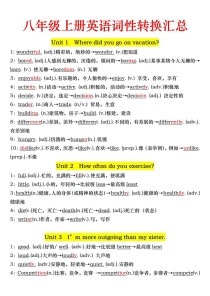
词汇是语言的血肉,七年级上册的词汇主要围绕自我介绍、家庭、学校、食物、颜色、数字、方位等主题展开。
- 核心词汇分类:
- 人物与家庭:
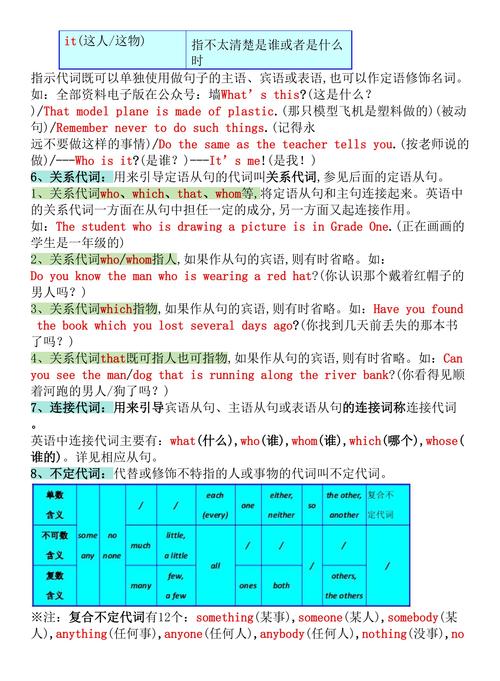
- 人称代词: I, you, he, she, it, we, they
- 物主代词: my, your, his, her, its, our, their
- 家庭成员: father/dad, mother/mom, parents, brother, sister, grandfather/grandpa, grandmother/grandma, family
- 问候与介绍:
- Hello, Hi, Good morning/afternoon/evening
- I'm... / My name is...
- Nice to meet you.
- What's your name? / How are you?
- 数字与时间:
- 数字 0-100
- 时间: What time is it? / It's... o'clock.
- 星期: Monday, Tuesday, ..., Sunday
- 月份: January, February, ..., December
- 学校与学习:
- 科目: English, math, Chinese, music, art, P.E. (Physical Education)
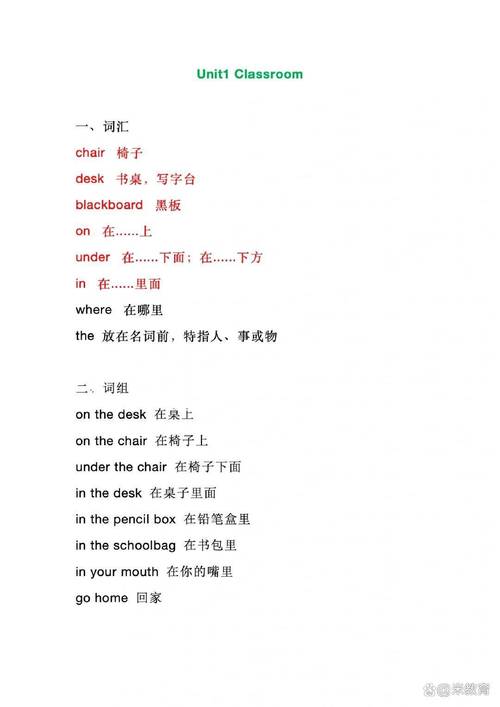
- 物品: book, pen, pencil, ruler, eraser, schoolbag, desk, chair
- 动词: have (有), study (学习), like (喜欢), read (读), write (写), listen (听)
- 食物与饮料:
- 食物: rice, bread, egg, noodle, hamburger, fish, chicken, vegetable, fruit
- 饮料: water, milk, juice, tea, Coke
- 颜色与描述:
- 颜色: red, yellow, blue, green, black, white, orange, purple, brown
- 形容词: good, bad, happy, sad, big, small, long, short, tall, new, old
- 方位与地点:
- 方位介词: in (在...里面), on (在...上面), under (在...下面), near (在...附近), behind (在...后面), next to (紧挨着)
- 地点: classroom, school, library, park, zoo, home, room
- 动物:
cat, dog, pig, duck, bird, panda, tiger, lion, elephant, monkey
 (图片来源网络,侵删)
- 人物与家庭:
第三部分:语法
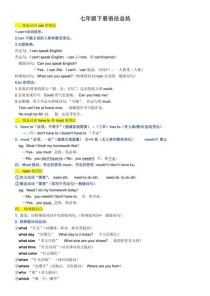
语法是语言的骨架,七年级上册的语法是整个初中英语的基础。
-
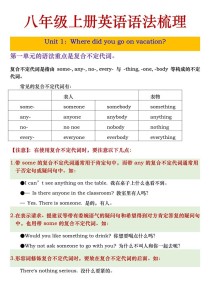
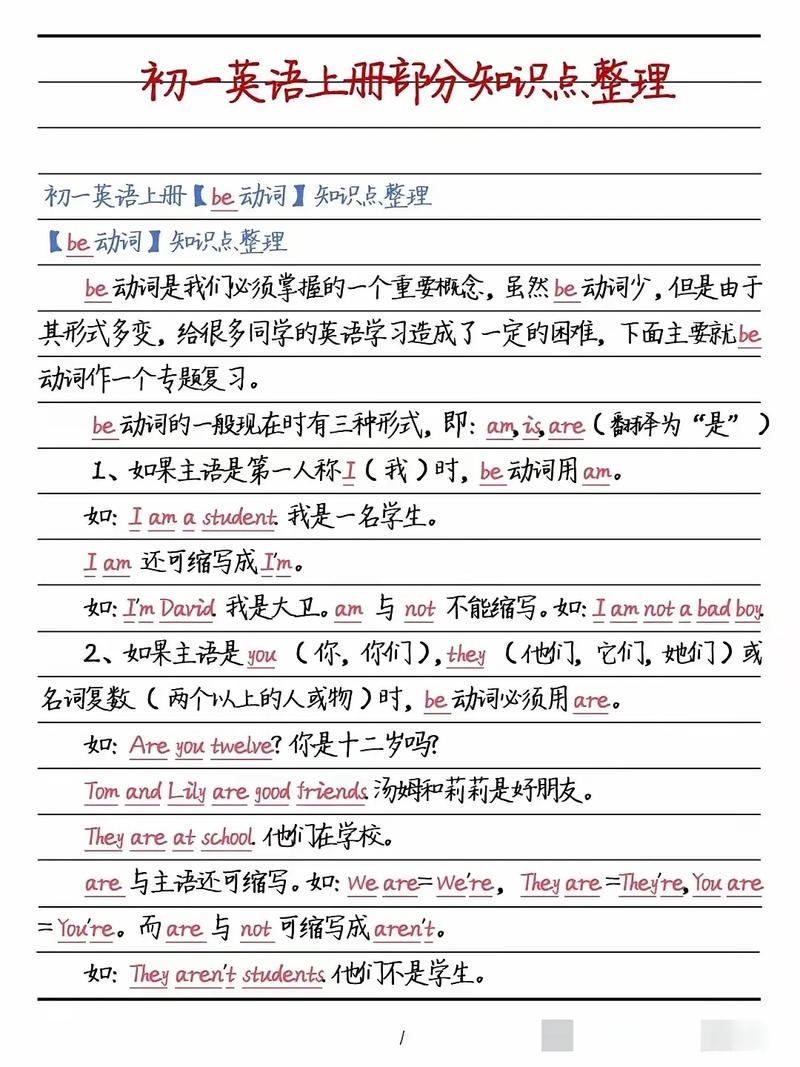
be 动词 的用法
- 形式: am, is, are
- 口诀: 我用 am,你用 are,is 跟着他、她、它,单数 is,复数 are。
- 用法:
- 构成陈述句: 主语 + be + ... (e.g., I am a student. He is my friend.)
- 构成一般疑问句: Be + 主语 + ...? (e.g., Are you a teacher? Is she from China?)
- 构成否定句: 主语 + be + not + ... (e.g., I am not busy. They are not in the classroom.)
- 简略回答: Yes, 主语 + be. / No, 主语 + be + not. (e.g., —Are you Tom? —Yes, I am. / No, I'm not.)
-
人称代词 和物主代词
- 人称代词: 代替人或物 (作主语或宾语)。 | 主格 | 宾格 | | :--- | :--- | | I (我) | me | | you (你/你们) | you | | he (他) | him | | she (她) | her | | it (它) | it | | we (我们) | us | | they (他们/她们/它们) | them |
- 物主代词: 表示“...的” (形容词性) 和“...的东西” (名词性)。 | 形容词性 | 名词性 | | :--- | :--- | | my (我的) | mine (我的东西) | | your (你的/你们的) | yours (你的/你们的东西) | | his (他的) | his (他的东西) | | her (她的) | hers (她的东西) | | its (它的) | its (它的东西) | | our (我们的) | ours (我们的东西) | | their (他们的/她们的/它们的) | theirs (他们的/她们的东西) |
-
名词
 (图片来源网络,侵删)
- 可数名词: 有单复数形式。
- 规则变化: 大部分在词尾加 -s (e.g., book -> books)。
- 特殊变化: 以 s, x, ch, sh 结尾加 -es (e.g., box -> boxes);辅音+y 变 y 为 i 再加 -es (e.g., family -> families);f/fe 变 v 再加 -es (e.g., leaf -> leaves)。
- 不可数名词: 没有复数形式,不能用 a/an 修饰,计量时用 "a/an + 单位名词 + of + 不可数名词" (e.g., a glass of water, three pieces of bread)。
常见不可数名词: water, milk, juice, tea, rice, bread, meat, fish, money, time, homework, information, news。
- 可数名词: 有单复数形式。
-
冠词
- 不定冠词 a/an: 用于单数可数名词前,表示“一个,某一个”。
- a 用在辅音音素开头的单词前 (e.g., a book, a university /juːnɪˈvɜːsəti/)。
- an 用在元音音素开头的单词前 (e.g., an apple, an hour /aʊə/)。
- 定冠词 the: 特指某人或某物,或上文提到过的人或物 (e.g., The book on the desk is mine.)。
- 不定冠词 a/an: 用于单数可数名词前,表示“一个,某一个”。
-
介词
- 主要掌握表示方位和时间的介词。
- 方位介词: in (在...内部), on (在...表面), under (在...下方), near (在...附近), behind (在...后面), next to (紧挨着)。
- e.g., The cat is in the box. The ball is under the table.
- 时间介词: at (用于具体时间点), on (用于具体某一天), in (用于月份、季节、年份)。
e.g., at 7 o'clock, on Monday, in October, in 2025, in summer。
-
there be 句型
- 含义: “某地有某物”。
- 结构: There is / are + ... + (地点状语)。
- 用法:
- is 后跟单数名词或不可数名词 (e.g., There is a book on the desk. There is some water in the bottle.)。
- are 后跟复数名词 (e.g., There are some students in the classroom.)。
- 疑问句: Is/Are there...?
- 否定句: There isn't / aren't... (e.g., There isn't a cat. There aren't any birds.)。
-
祈使句
- 含义: 表示命令、请求、建议等。
- 结构: 动词原形 + 其他成分。
- 肯定: Open the door. / Be quiet.
- 否定: Don't be late. / Don't open the window.
-
情态动词 can
- 含义: 能,会,可以 (表示能力或许可)。
- 结构: 主语 + can + 动词原形 + ...
- 用法:
- 肯定句: I can swim. (我会游泳。)
- 否定句: I can't swim. (我不会游泳。)
- 疑问句: Can you swim? (你会游泳吗?)
- 简略回答: Yes, I can. / No, I can't.
第四部分:功能意念与话题
- 问候与介绍
- 自我介绍: Hello, I'm... / My name is... I'm from... I'm... years old.
- 询问他人: What's your name? How old are you? Where are you from?
- 谈论物品所属
Whose book is this? It's mine. / It's Tom's.
- 谈论喜好
- Do you like...? Yes, I do. / No, I don't.
- I like... / I don't like...
- 谈论时间与日程
- What time is it? It's...
- What day is it today? It's Monday.
- I have English on Monday.
- 谈论位置
- Where is the ball? It's under the desk.
- Where are the keys? They are on the sofa.
- 谈论能力
Can you play the piano? Yes, I can. / No, I can't.
- 谈论食物
- What would you like? I'd like some rice and fish.
- Do you like hamburgers? Yes, I do.
学习建议
- 大声朗读: 每天坚持朗读课文和单词,培养语感,纠正发音。
- 勤于背诵: 熟记核心词汇和重点句型,这是运用语言的前提。
- 整理笔记: 将语法点、易错点整理成笔记,方便随时复习。
- 多做练习: 通过做题来巩固所学知识,特别是语法和词汇。
- 勇于开口: 不要害怕犯错,尝试用简单的英语和家人、同学交流。
- 培养兴趣: 通过看英文动画片、听英文歌等方式,让学习英语变得更有趣。
希望这份总结对你的学习有帮助!祝你英语学习进步!