外研九年级英语语法重点难点解析?
校园之窗 2025年12月15日 07:06:28 99ANYc3cd6
下面我将按照“核心语法点”、“重点难点解析”和“备考建议”三个部分,为你进行详细讲解。
第一部分:核心语法点
外研版九年级的语法主要围绕时态、语态、从句、非谓语动词等展开,并在此基础上进行深化和拓展。
动词时态
九年级需要熟练掌握并灵活运用以下八种基本时态,尤其是现在完成时和过去完成时。
| 时态名称 | 结构 | 核心用法与例句 | 常见时间状语 |
|---|---|---|---|
| 一般现在时 | do/does | ① 表示事实、真理或普遍规律。 ② 表示习惯性、经常性的动作。 The earth goes around the sun. He often plays basketball after school. |
always, usually, often, sometimes, every day, on Sundays |
| 现在进行时 | am/is/are doing | ① 表示说话时正在进行的动作。 ② 表示现阶段正在进行的动作。 Listen! Someone is knocking at the door. I am reading a book these days. |
now, at the moment, look, listen, these days |
| 现在完成时 | have/has done | 【九年级重点】 ① 表示过去发生并持续到现在的动作或状态。 ② 表示过去发生过的、对现在有影响的动作。 I have lived here for ten years. (动作持续) He has broken his leg. (结果影响现在) |
for, since, already, yet, just, ever, never, so far, in the past few years |
| 一般过去时 | did | ① 表示过去某个时间点发生的动作或存在的状态。 ② 表示过去经常或反复发生的动作。 He went to Beijing yesterday. When I was a child, I often cried. |
yesterday, last week, in 2010, just now, the other day |
| 过去进行时 | was/were doing | ① 表示过去某个具体时间点正在进行的动作。 ② 表示过去某段时间内持续进行的动作。 I was watching TV at 8 o'clock last night. They were building a bridge from 2010 to 2012. |
at 9:00 yesterday, at that time, this time yesterday, from...to... |
| 过去完成时 | had done | 【九年级重点难点】 表示“过去的过去”,即在过去某个时间点或动作之前已经发生或完成的动作。 By the time he arrived, the train had already left. I didn't go to the cinema because I had seen the movie before. |
before, by the time, when, by + 过去时间点 |
| 一般将来时 | will do / am/is/are going to do | ① will do:表示临时的、即将来临的动作或预测。② be going to do:表示计划好的、打算做的动作或已有迹象表明要发生的事。It will rain tomorrow, I think. (预测) I am going to visit my grandparents this weekend. (计划) |
tomorrow, next week, in the future, soon, in + 一段时间 |
| 过去将来时 | would do / was/were going to do | would do常用于宾语从句中,表示从过去的角度看将来要发生的事。He said he would come back soon. |
the next day, the following week |
被动语态
被动语态是九年级的另一个重点,要掌握各种时态的被动语态结构。
基本结构: be + 动词的过去分词
| 时态 | 被动语态结构 |
|---|---|
| 一般现在时 | am/is/are + done |
| 一般过去时 | was/were + done |
| 现在进行时 | am/is/are being + done |
| 过去进行时 | was/were being + done |
| 现在完成时 | have/has been + done |
| 过去完成时 | had been + done |
| 一般将来时 | will be + done / am/is/are going to be + done |
| 含情态动词 | can/may/should/must be + done |
用法:
- 不知道或没必要指出动作的执行者时。
This book was written in 1990. (不知道是谁写的)
- 强调动作的承受者时。
The bridge was built last year. (强调“桥”被建造)
- 动作的执行者不言而喻或泛指“人们”时。
English is spoken all over the world. (人们说英语)
- 在正式的书面语中,使语气更客观、正式。
It is reported that the president will visit China.
 (图片来源网络,侵删)
从句
九年级主要学习三大从句:宾语从句、状语从句、定语从句。
宾语从句
- 作用: 作动词、介词或形容词的宾语。
- 三要素:
- 连接词:
that(无实际意义,可省略)if/whether(是否,不充当句子成分)who, what, which, when, where, why, how(疑问词,充当句子成分)
- 语序: 陈述句语序 (主语 + 谓语),即使主句是疑问句,从句也必须是陈述句语序。
- 时态:
- 主句是现在时,从句可用任何所需的时态。
- 主句是过去时,从句要用过去的某种时态 (一般过去时、过去进行时、过去将来时等)。如果从句是客观真理或事实,则用一般现在时。
- 连接词:
- 例句:
- He said (that) he was tired. (连接词that,时态后移)
- I wonder if/whether it will rain tomorrow. (连接词if/whether)
- Can you tell me where the post office is? (连接词where,语序为is the post office)
状语从句 状语从句用来修饰主句的动词、形容词或副词,表示时间、地点、原因、条件、目的、结果、让步等。
| 类型 | 常用连词 | 例句 |
|---|---|---|
| 时间状语从句 | when, while, as, before, after, since, as soon as, till/until | I was doing my homework when my mother came back. |
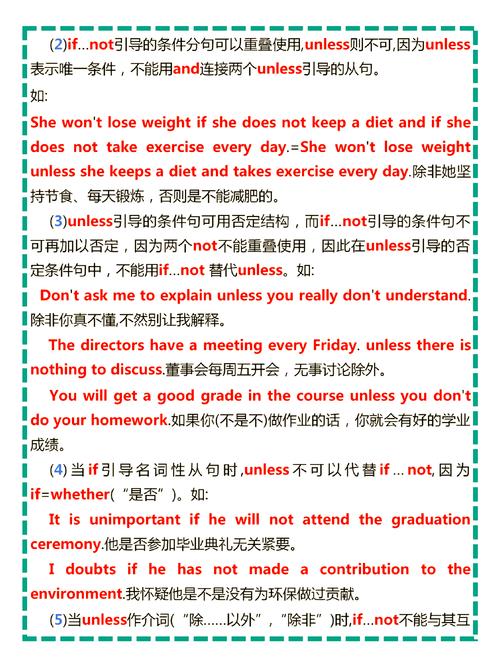
| 条件状语从句 | if, unless | If it doesn't rain tomorrow, we will go hiking. |
| 原因状语从句 | because, since, as | He was late because he missed the bus. |
| 让步状语从句 | though, although, even though/if | Although he is young, he knows a lot. |
| 目的状语从句 | so that, in order that | He got up early so that he could catch the first bus. |
| 结果状语从句 | ...so...that..., ...such...that... | He was so tired that he fell asleep immediately. |
| 比较状语从句 | than, as...as | This book is more interesting than that one. |
注意: 在if, unless, when, as soon as等引导的条件或时间状语从句中,如果主句用will, shall等表示将来的动词,通常用一般现在时代替一般将来时。
- I will call you as soon as I arrive. (不用will arrive)
定语从句
- 作用: 修饰名词或代词,相当于一个形容词。
- 核心构成:
先行词 + 关系代词/关系副词 + 从句 - 关系词:
- 关系代词:
who(指人,作主语/宾语),whom(指人,作宾语),whose(指人/物,作定语),which(指物,作主语/宾语),that(指人/物,作主语/宾语)。 - 关系副词:
when(指时间,作时间状语),where(指地点,作地点状语),why(指原因,作原因状语)。
- 关系代词:
- 例句:
- The man who is standing over there is my teacher. (who指人,在从句中作主语)
- The book that/which I bought yesterday is interesting. (that/which指物,在从句中作宾语)
- This is the house where I was born. (where指地点,在从句中作地点状语)
情态动词
九年级的情态动词重点是must, have to, need的用法区别。
| 情态动词 | 含义 | 用法特点 |
|---|---|---|
| must | 必须,一定 | ① 表示主观义务或命令。 ② 表示肯定的推测,意为“一定,肯定”。 You must finish your homework. He must be at home. The light is on. |
| have to | 不得不 | ① 表示客观需要或环境迫使。 ② 有人称和数的变化,有时态变化。 I have to get up early tomorrow. He had to leave early yesterday. |
| need | 需要 | ① 作情态动词,多用于否定句和疑问句,无人称和数的变化。 ② 作实义动词,有人称和数的变化,后接to do或名词。 You needn't worry about him. (情态动词) Do you need to go now? (实义动词) |
非谓语动词
非谓语动词是语法的难点,包括动词不定式、动名词和分词。
| 类型 | 形式 | 核心用法 |
|---|---|---|
| 动词不定式 | to do |
① 作主语 (To learn English well is important.) ② 作宾语 (He wants to go home.) ③ 作宾语补足语 (The teacher asked us to keep quiet.) ④ 作定语 (I have a lot of work to do.) ⑤ 作状语 (表目的: He came to help me.) |
| 动名词 | doing |
① 作主语 (Swimming is my favorite sport.) ② 作宾语 (I enjoy listening to music.) ③ 作介词宾语 (She is good at singing.) |
| 分词 | doing (现在分词) |
① 作定语 (a sleeping baby) ② 作宾语补足语 (I saw him crossing the street.) ③ 作状语 (Seeing the teacher, the students stopped talking.) |
done (过去分词) |
① 作定语 (a broken window) ② 作宾语补足语 (I had my hair cut yesterday.) ③ 作状语 (Seen from the hill, the city looks beautiful.) |
第二部分:重点难点解析
-
现在完成时 vs. 一般过去时
- 核心区别: 是否与现在有联系。
- 现在完成时: 强调结果或持续,动作发生在过去,但结果影响现在,或从过去持续到现在。
- I have lost my key. (我现在没钥匙,结果影响现在)
- I have lived here for 10 years. (我过去住这儿,现在还住着,持续到现在)
- 一般过去时: 强调动作本身,动作在过去发生,已经结束,与现在无关。
- I lost my key yesterday. (我昨天丢了钥匙,只是陈述过去的事实)
- I lived there for 10 years. (我在那儿住了10年,但现在不住了)
-
过去完成时
- 理解“过去的过去”: 找到一个明确的“过去时间点”,在这个时间点之前发生的动作,就用过去完成时。
- 例句分析:
- When I got to the cinema, the film had already started. (我到电影院是“过去的时间点”,电影开始是在“我到”之前,所以用过去完成时)
-
定语从句
- 关系词的选择: 关键看先行词(被修饰的词)和关系词在从句中所作的成分。
- 作主语/宾语:用
who/that/which,作宾语时,who/which/that常可省略。 - 作定语(表...的):用
whose。 - 作状语(何时/何地/为何):用
when/where/why。
- 作主语/宾语:用
- 关系词的选择: 关键看先行词(被修饰的词)和关系词在从句中所作的成分。
第三部分:备考建议
- 系统梳理,构建框架: 不要零散地记知识点,按照上面提到的“核心语法点”分类,把每个语法点(如现在完成时、被动语态)作为一个模块来学习,理解其结构、用法和标志词。
- 专项练习,巩固强化: 针对每个语法点,做大量的单选、填空、句子改错等练习,在练习中犯错是最好的学习机会,要把错题整理到错题本上,定期回顾。
- 语境运用,融会贯通: 语法最终是为运用服务的,多读课文,尝试用学过的语法点去分析句子结构,尝试用不同的时态、语态、从句来口头或书面表达同一个意思,加深理解。
- 错题本,攻克难点: 准备一个错题本,记录做错的题目,不仅要抄题目和正确答案,更要写下错误原因(是时态混淆?语序不对?还是关系词选错?)和正确思路,考前翻看错题本效率极高。
- 回归课本,夯实基础: 外研课本中的课文和练习是最好的学习材料,反复朗读课文,不仅能培养语感,还能在真实语境中巩固语法知识。
希望这份详细的梳理能帮助你更好地掌握九年级英语语法!祝你学习进步!