春节英语作文如何写出节日氛围?
作文示例 2026年1月17日 03:01:37 99ANYc3cd6
标准版 (适合初中或高中水平)
The Spring Festival: A Time for Family and Hope**
The Spring Festival, also known as Chinese New Year, is the most important and cherished traditional festival in China. Celebrated by Chinese people all over the world, it is a time for family reunions, honoring ancestors, and welcoming a new beginning.
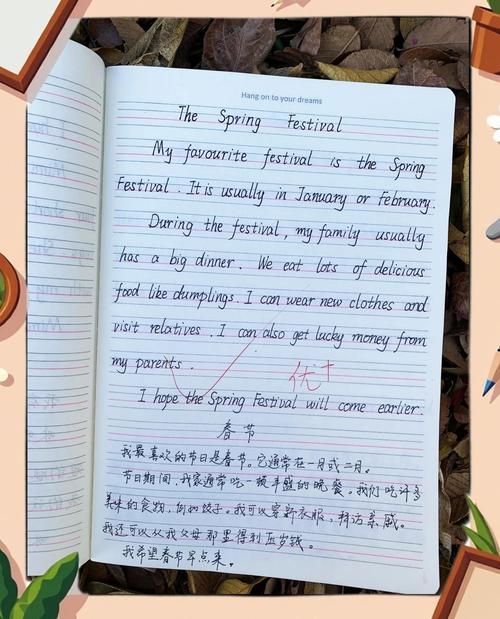
The festival usually begins on the first day of the first lunar month and lasts for 15 days, ending with the Lantern Festival. Weeks before the celebration, families start their preparations. They clean their homes thoroughly to "sweep away" bad luck from the past year. This is called "sweeping the dust." New clothes are bought, and red decorations, such as couplets with auspicious poems and lanterns, are put up everywhere, creating a festive and joyful atmosphere.
The most important part of the Spring Festival is the reunion dinner on New Year's Eve. No matter how far away they are, family members will travel back home to gather for this special meal. The table is filled with delicious dishes, each with a special meaning. For example, fish is served because its name, "yu," sounds like the word for "surplus," symbolizing abundance for the coming year. After dinner, the whole family stays up late, believing it will help their parents live a longer life.
On New Year's Day, people visit their relatives and friends to exchange greetings. The most common greeting is "Gong Xi Fa Cai," which means "wishing you prosperity." It is also a tradition for children and unmarried adults to receive red envelopes, or "hongbao," which contain money as a gift for good luck. The streets are filled with the sound of firecrackers, which are believed to scare away evil spirits.
In conclusion, the Spring Festival is more than just a holiday. It is a deep-rooted cultural symbol that celebrates family, tradition, and hope for a bright future. It strengthens family bonds and brings people together in a spirit of joy and optimism.
进阶版 (适合高中或大学水平)
The Tapestry of Tradition: My Experience of the Chinese New Year**
To me, the Spring Festival, or Chinese New Year, is not merely a date on the calendar but a vibrant tapestry woven with threads of ancient tradition, familial love, and collective hope. It is an annual pilgrimage of the heart, a time when the chaotic rhythm of modern life gives way to the comforting cadence of centuries-old customs.
The anticipation begins weeks in advance. The "spring cleaning" is a ritualistic purge, not just of dust and clutter, but of any lingering misfortune from the old year. The air soon fills with the scent of tangerines and the sight of vibrant red—color of luck and joy. Families meticulously paste poetic couplets on doorways and hang red lanterns, transforming their homes into sanctuaries of festivity.
The apex of this celebration is the New Year's Eve reunion dinner. This is no ordinary meal; it is the gravitational center of the festival, pulling family members from across the globe back to the family table. The feast is a symphony of symbolism: dumplings shaped like ancient gold ingots for wealth, sweet rice cakes for a "higher" or better year, and the whole fish representing surplus. As we share laughter and stories around the table, we are not just eating; we are reinforcing the bonds of kinship and passing down our heritage.
The first day of the new year is a whirlwind of social calls. The streets echo with the auspicious phrase "Gong Xi Fa Cai," and the hands of elders press crisp, red "hongbao" into the palms of the younger generation—a tangible wish for prosperity and good fortune. The thunderous crack of firecrackers, though now often regulated, once served to awaken the world and ward off malevolent spirits, a primal echo of our ancestors' beliefs.
Ultimately, the Spring Festival is a profound cultural mirror. It reflects our reverence for family, our respect for tradition, and our unwavering optimism for the future. It is a time to honor our roots while stepping boldly into a new chapter, a beautiful reminder that no matter how far we roam, the warmth of home and the promise of a new beginning will always await us.
核心词汇与短语
名词:
- Spring Festival / Chinese New Year: 春节
- Lunar Calendar: 农历
- Reunion: 团聚
- Tradition / Custom: 传统 / 习俗
- Ancestor: 祖先
- Decoration: 装饰品
- Couplet (Chunlian): 春联
- Lantern: 灯笼
- Reunion Dinner: 团圆饭
- Dumpling (Jiaozi): 饺子
- Fish (Yu): 鱼
- Rice Cake (Nian Gao): 年糕
- Red Envelope (Hongbao): 红包
- Firecracker: 鞭炮
- Prosperity: 繁荣,富裕
动词:
- Celebrate: 庆祝
- Gather / Reunite: 聚集 / 团聚
- Clean / Sweep: 清扫
- Decorate: 装饰
- Visit / Pay a call: 拜访
- Exchange greetings: 互相问候
- Set off (firecrackers): 燃放(鞭炮)
- Ward off evil spirits: 驱赶邪灵
形容词与副词:
- Traditional / Festive: 传统的 / 节日的
- Joyful / Cheerful: 愉快的 / 兴高采烈的
- Vibrant / Colorful: 充满活力的 / 五彩缤纷的
- Auspicious / Lucky: 吉利的 / 幸运的
- Symbolic: 象征性的
- Warm: 温暖的
- Thoroughly: 彻底地
常用句型:
- The Spring Festival is the most important festival in China... (春节是中国最重要的节日……)
- It is a time for... (这是一个……的时刻)
- The festival begins... and ends... (节日从……开始,到……结束)
- The most important part/aspect of the festival is... (这个节日最重要的一部分是……)
- It is a tradition to... (……是一种传统。)
- ...symbolizes/represents... (……象征/代表着……)
- In conclusion,... (…)
- The festival is not just about..., but also about... (这个节日不仅仅是关于……,更是关于……)
希望这些资料对你有帮助!你可以根据自己的需要选择合适的版本,或者将它们组合起来,形成你自己的文章。