春节英语作文如何写出文化韵味?
作文示例 2026年1月16日 11:28:30 99ANYc3cd6
初中水平
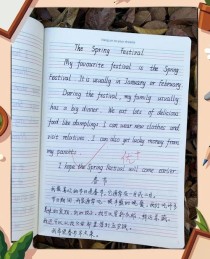
这篇作文结构简单,词汇基础,适合初中生。 My Favorite Festival: Spring Festival**
Spring Festival, also called Chinese New Year, is my favorite festival. It is the most important traditional festival in China. It usually comes in January or February.
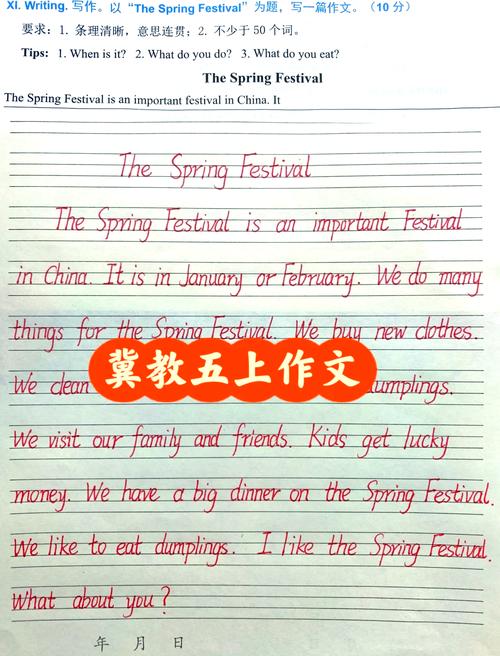
Before the festival, my family is very busy. We clean our house from top to bottom. This is called "sweeping the dust," which means we want to sweep away bad luck. My mother and I go shopping for new clothes and delicious food. My father writes Spring Festival couplets and puts them on the doors. They are red papers with good wishes for the new year.
On New Year's Eve, our family has a big reunion dinner. We eat many traditional foods, like dumplings and fish. Fish means "surplus" in Chinese, so we hope to have a good year. After dinner, we watch the Spring Festival Gala on TV. It is a very popular show for all Chinese families. At midnight, we set off fireworks to celebrate the new coming year. The sky becomes very bright and beautiful.
During the festival, I get red envelopes, or "hongbao," from my grandparents and parents. They are red packets with money inside. I always feel so happy! We also visit our relatives and friends. We say "Happy New Year" to each other.
I love Spring Festival because it is a time for family, happiness, and new beginnings. It is the happiest time of the year for me.

高中水平
更丰富,使用了更多高级词汇和句式,适合高中生。 The Color and Joy of Spring Festival**
Spring Festival, or Chinese New Year, stands as the most cherished and significant traditional holiday in China, a vibrant tapestry woven with rich customs, family warmth, and a hopeful spirit for the future. It is a time-honored celebration that marks the end of the winter season and the beginning of a new lunar year.
The anticipation for the festival begins weeks in advance. A thorough house cleaning, known as "sweeping the dust," is a crucial ritual, symbolically sweeping away the past year's misfortunes to make way for good fortune. Streets and markets buzz with excitement as families shop for new clothes, decorations, and an abundance of special foods. The most iconic decoration is the "Fu" character, often pasted upside down on doors, as its pronunciation is a homophone for "blessing," signifying that blessings have "arrived."
New Year's Eve, or "Chuxi," is the heart of the celebration. It centers on the reunion dinner, a lavish feast where family members, near and far, gather around the table. This meal is laden with symbolic dishes: dumplings for wealth, fish for prosperity, and rice cakes for a higher position or better fortune in the coming year. After the feast, families traditionally watch the annual Spring Festival Gala, a national television event that has become a modern staple of the celebration. As the clock strikes midnight, the sky erupts in a spectacular display of fireworks and firecrackers, believed to scare away evil spirits and welcome the new year with a loud, joyous bang.

The following days are filled with visits to relatives and friends. The most exciting moment for children is receiving "hongbao" (red envelopes), which are red packets containing money, bestowed by elders as a token of good luck and blessings. The air is filled with cheerful greetings of "Gong Xi Fa Cai," meaning "wishing you prosperity."
In essence, Spring Festival is more than just a holiday; it is a profound cultural experience that reinforces family bonds, honors traditions, and instills a collective optimism. It is a beautiful celebration of renewal, togetherness, and the enduring spirit of hope.
大学水平
这篇作文立意更深,从文化内涵和现代变迁的角度来探讨春节,适合大学生或更高水平的英语学习者。 Spring Festival: A Tapestry of Tradition and Modernity in Contemporary China**
Spring Festival, the annual pinnacle of China's cultural calendar, is far more than a mere holiday; it is a deeply ingrained social and cultural phenomenon that encapsulates the core values of family, continuity, and renewal. As China undergoes rapid modernization, the celebration of Spring Festival presents a fascinating interplay between time-honored traditions and contemporary adaptations, reflecting the nation's evolving identity.
The festival's rituals are steeped in symbolism and serve to cleanse the old and usher in the new. The pre-festival practice of "sweeping the dust" is a literal and metaphorical purification of one's living space, a ritualistic shedding of past hardships. The adornment of homes with vibrant red couplets, auspicious characters like "Fu," and intricate paper-cuts is not merely decorative but a powerful assertion of cultural identity and hope. These acts are a collective reaffirmation of communal values in an increasingly individualistic society.
The apex of the festival is the New Year's Eve reunion dinner. This ritual is the bedrock of the festival's significance, a sacred moment when geographical distances are bridged, and familial bonds are strengthened through shared culinary heritage. The menu, replete with dishes imbued with symbolic meaning—from fish (surplus) to long noodles (longevity)—transcends mere sustenance to become a narrative of cultural memory and aspiration for prosperity. In the digital age, while the physical gathering remains paramount, technology now plays a role; video calls allow separated family members to participate in the dinner virtually, a poignant testament to how tradition adapts to modern realities.
Post-dinner traditions also showcase this blend of old and new. The watching of the Spring Festival Gala, once a unifying national pastime, now competes with a myriad of digital entertainment options. Yet, it persists as a shared cultural touchstone. The custom of giving "hongbao" has been revolutionized by digital platforms like WeChat, transforming the physical red envelope into a virtual transfer of money. This innovation preserves the essence of the gift—the bestowing of luck and blessings—while aligning with the convenience of a cashless society.
In conclusion, Spring Festival is a dynamic and resilient cultural institution. It is a mirror reflecting China's soul, balancing reverence for ancestral customs with the fluidity of modern life. It is a period when the nation collectively pauses to reconnect with its roots, celebrate familial love, and look forward to the future with renewed hope, proving that even in a world of relentless change, the spirit of togetherness endures.