春节习俗 英语作文
作文示例 2026年1月4日 00:58:53 99ANYc3cd6
初级水平
Spring Festival Customs
Spring Festival, also called Chinese New Year, is the most important festival in China. It is a time for family reunions and happiness.
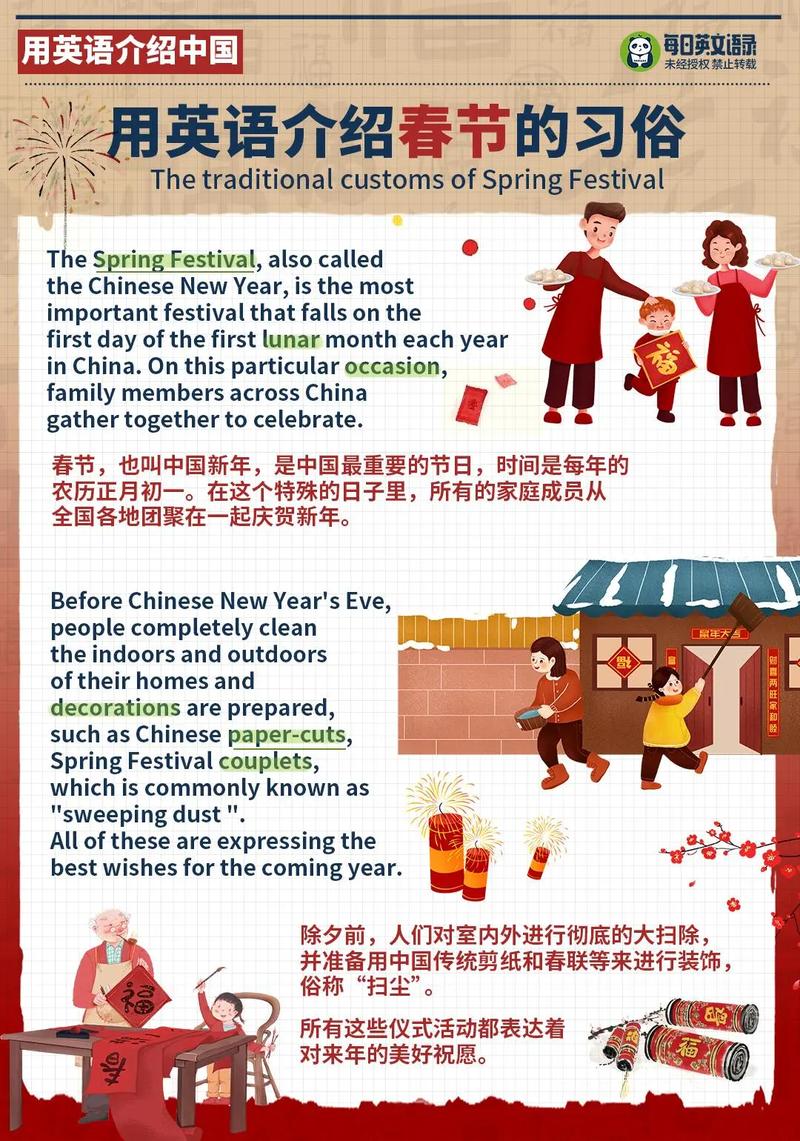
Before the festival, people are very busy. They clean their homes to sweep away bad luck. They also buy new clothes and a lot of delicious food, like dumplings and fish.
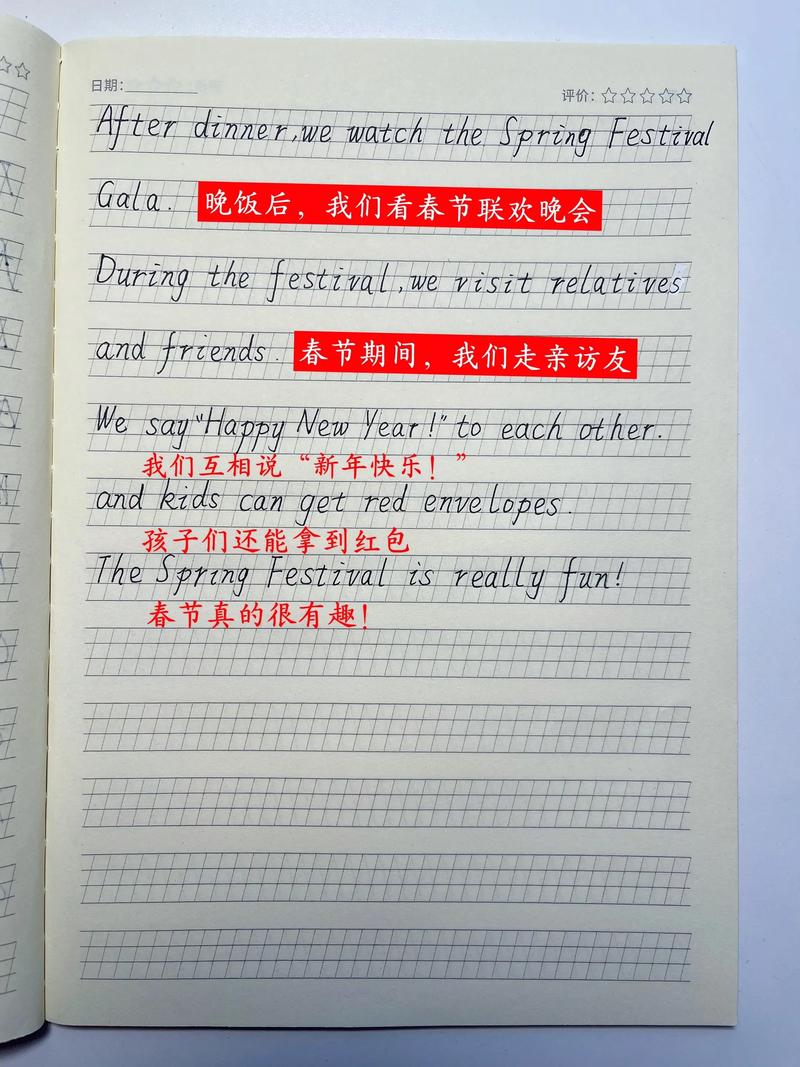
On New Year's Eve, families get together for a big dinner. After dinner, many people watch the Spring Festival Gala on TV. At midnight, we set off fireworks to welcome the new year.
On New Year's Day, we visit our relatives and friends. We say "Happy New Year" to them and give them red envelopes with money. The children are always very happy because they can get lucky money.
I love Spring Festival because it is fun and I can spend a good time with my family.
中级水平
The Colorful Traditions of the Spring Festival
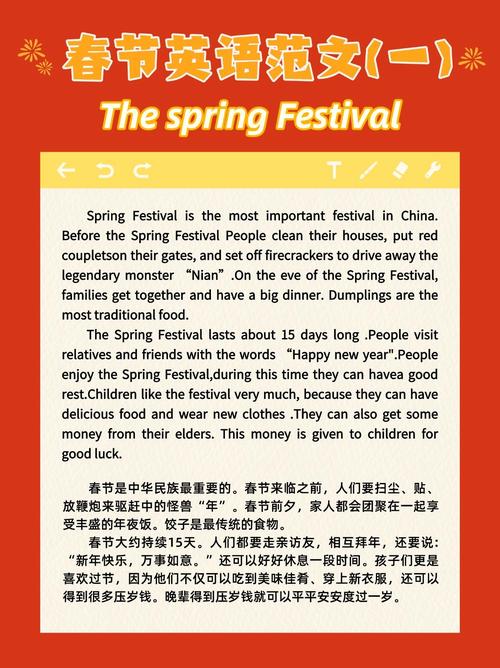
The Spring Festival, or Chinese New Year, stands as the most cherished and significant traditional holiday in Chinese culture. More than just a celebration, it is a profound cultural symbol centered on family reunion, hope, and the ushering in of good fortune.
The festivities begin long before the actual date. A crucial custom is "Chen Gan," or the "Spring Cleaning." Families thoroughly clean their homes to literally and figuratively sweep away any bad luck or misfortune from the previous year, making way for a fresh start. Shopping for new clothes and decorations, as well as stocking up on traditional foods such as dumplings (which symbolize wealth) and fish (a homophone for "surplus"), are also essential preparations.
The peak of the celebration is New Year's Eve. This night is marked by the grandest family reunion dinner of the year. Dishes are rich with symbolic meaning, and the atmosphere is filled with warmth and laughter. Following the dinner, millions of families across the country gather to watch the annual Spring Festival Gala on television. As the clock strikes midnight, the sky erupts in a spectacular display of fireworks and firecrackers, believed to scare away evil spirits known as "Nian."
The first day of the new year is dedicated to visiting relatives and friends. This custom, known as "Bai Nian," involves greeting elders with auspicious phrases like "Gong Xi Fa Cai" (wishing you prosperity). A highlight for children is receiving "Hongbao" (red envelopes) containing money from their elders, which are not just gifts but tokens of good luck and blessings.
In essence, the Spring Festival is a vibrant tapestry of customs that strengthens family bonds and celebrates the promise of a new beginning. It is a time-honored tradition that continues to bring joy and unity to the Chinese people.
高级水平
A Tapestry of Tradition: Unpacking the Customs of the Chinese Spring Festival
The Chinese Spring Festival, or Chūn Jié, is not merely a holiday but the very cornerstone of China's cultural and social calendar. It is a multifaceted celebration that transcends geographical boundaries, serving as a powerful testament to the enduring values of family, ancestry, and renewal. Its rich tapestry of customs, passed down through generations, weaves together a narrative of hope, respect, and communal harmony.
The preparatory phase, often commencing weeks in advance, is steeped in symbolism. The act of "sweeping the dust" (扫尘, sǎo chén) is a profound ritual, representing the purging of old grievances and misfortunes to create a pristine environment for incoming good fortune. Equally significant is the procurement of new attire, which symbolizes a new chapter in one's life. The bustling markets are filled with auspicious foods: dumplings (饺子, jiǎozi) for their resemblance to ancient gold ingots, signifying wealth; fish (鱼, yú), a homophone for "surplus" (余, yú); and sweet rice cakes (年糕, niángāo), representing a higher income or position in the coming year.
The apex of the festival is the New Year's Eve reunion dinner (年夜饭, nián yè fàn). This is arguably the most important meal of the year, a sacred moment when families, often traveling great distances, converge to share a meal laden with symbolic dishes. The clinking of glasses and exchange of stories reinforce familial bonds. As midnight approaches, the tradition of "Nian" (年) is commemorated through the deafening cacophony of firecrackers, a practice believed to ward off the mythical beast and evil spirits, thereby securing a peaceful and prosperous new year.
The subsequent days are characterized by a series of rituals governed by tradition. The first day is typically reserved for honoring deities and elders. The custom of "Bai Nian" (拜年), or New Year's visits, involves meticulously planned visits to relatives' homes, where younger generations offer formal greetings and auspicious blessings. In return, they receive "Hongbao" (红包), red envelopes containing money, which are emblematic of good luck and the transfer of blessings from the older to the younger generation.
In conclusion, the customs of the Spring Festival are far more than quaint observances; they are the living expressions of a deep-seated cultural identity. From the meticulous preparations to the joyous reunions and the passing on of blessings, each custom serves to reinforce social cohesion, express gratitude, and reaffirm humanity's enduring hope for a brighter future. It is a vibrant, dynamic tradition that continues to evolve while preserving its ancient soul at the heart of Chinese society.