七年级下册Unit11核心考点有哪些?
校园之窗 2025年12月23日 01:08:31 99ANYc3cd6
Unit 11: How was your school trip? (你的学校旅行怎么样?)
核心词汇
名词
- trip: 旅行,旅程 (school trip 学校旅行)
- museum: 博物馆
- zoo: 动物园
- aquarium: 水族馆
- science center: 科学中心
- gift shop: 礼品店
- gift: 礼物,赠品
- seal: 海豹
- shark: 鲨鱼
- octopus: 章鱼
- hangar: (飞机)库
- climb: 爬,攀登
- visitor: 参观者,游客
- movie: 电影
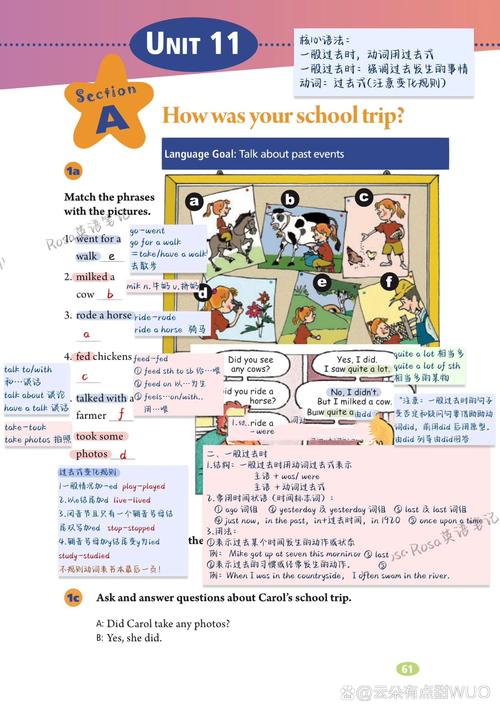
- rode a horse: 骑马 (ride的过去式)
- went camping: 去露营 (go的过去式)
- went fishing: 去钓鱼 (go的过去式)
- took some photos: 拍了一些照片 (take的过去式)
- hung out: 闲逛,消磨时间 (hang的过去式)
- win a prize: 赢得奖品
形容词 (用于评价过去的事情)
- great: 棒极了
- interesting: 有趣的
- fantastic: 极好的,了不起的
- exciting: 令人兴奋的
- lovely: 可爱的,美好的
- expensive: 昂贵的
- cheap: 便宜的
- boring: 无聊的
- terrible: 糟糕的,可怕的
- slow: 慢的
- fast: 快的
- popular: 受欢迎的
动词 (过去式)
- was/were: 是 (be动词的过去式)
- saw: 看见 (see)
- went: 去 (go)
- bought: 买 (buy)
- ate: 吃 (eat)
- had: 有,吃 (have)
- took: 拍照,带走 (take)
- rode: 骑 (ride)
- got: 得到 (get)
- hung: 悬挂,闲逛 (hang)
- said: 说 (say)
- came: 来 (come)
其他
- with: 和...一起
- because: 因为
- learned about: 学习,了解
- of course: 当然
- drive a car: 开车
重点句型
询问和评价过去的经历
-
— How was your school trip? — It was great / fantastic / interesting / boring.
 (图片来源网络,侵删)
- — 你的学校旅行怎么样?
- — 棒极了 / 太棒了 / 有趣 / 无聊。
-
— How were the animals? — They were cute / lovely / scary.
- — 那些动物怎么样?
- — 它们很可爱 / 可爱 / 吓人。
描述过去做了什么
-
— What did you do on your school trip? — We went to the zoo / aquarium.
- — 你在学校旅行里做了什么?
- — 我们去了动物园 / 水族馆。
-
I saw a shark / some seals.
 (图片来源网络,侵删)
我看到了一条鲨鱼 / 一些海豹。
-
I bought a gift for my friend.
我给我的朋友买了一份礼物。
-
We took some photos.
我们拍了一些照片。
-
Did you go to the gift shop? — Yes, I did. / No, I didn't.
- — 你去礼品店了吗?
- — 是的,我去了。/ 不,我没去。
特殊疑问句
- Where did you go? (你去了哪里?)
- When did you go? (你什么时候去的?)
- Who did you go with? (你和谁一起去的?)
- Why was it interesting? (为什么它很有趣?)
核心语法:一般过去时
这是整个单元的重中之重。
定义 用于描述过去某个时间点发生的动作或存在的状态。
构成
-
be动词的过去式:
- I/He/She/It → was
- You/We/They → were
- 例句: I was happy. (我很高兴。) They were at the museum. (他们在博物馆。)
-
实义动词的过去式:
- 大部分动词在词尾直接加 -ed。
- play → played (玩)
- watch → watched (观看)
- look → looked (看)
- 以不发音的 e 只加 -d。
- like → liked (喜欢)
- live → lived (居住)
- 以“辅音字母 + y”变 y 为 i 再加 -ed。
- study → studied (学习)
- carry → carried (携带)
- 重读闭音节结尾,双写最后一个辅音字母再加 -ed。
- stop → stopped (停止)
- plan → planned (计划)
- 大部分动词在词尾直接加 -ed。
否定句和疑问句
-
否定句: 主语 + didn't + 动词原形 + ...
- 例句: I didn't go to the zoo. (我没有去动物园。)
- He wasn't at school yesterday. (他昨天不在学校。)
-
一般疑问句: Did + 主语 + 动词原形 + ...?
- 回答: Yes, ... did. / No, ... didn't.
- 例句: Did you see any sharks? (你看到鲨鱼了吗?)
- — Yes, I did. / No, I didn't. (是的,我看到了。/ 不,我没看到。)
话题写作
主题:描述一次旅行或活动
写作结构:
-
开头: 介绍活动的基本信息(时间、地点、和谁一起)。
Last Sunday, I had a great school trip with my classmates. (上周日,我和同学们进行了一次很棒的学校旅行。)
-
中间: 详细描述活动过程和感受,按时间顺序或逻辑顺序来写。
- What did you do? (你做了什么?)
- First, we went to the science center. (我们去了科学中心。)
- Then, we watched a movie about space. (我们看了一部关于太空的电影。)
- After that, we had lunch in the restaurant. (之后,我们在餐厅吃了午饭。)
- Finally, we visited the gift shop and bought some souvenirs. (我们参观了礼品店,买了一些纪念品。)
- How was it? (它怎么样?)
- The movie was fantastic and exciting. (那部电影太棒了,令人兴奋。)
- The food was delicious but a little expensive. (食物很美味,但有点贵。)
- What did you do? (你做了什么?)
-
总结这次活动的感受和收获。
It was a wonderful day. I learned a lot and had a lot of fun. (这是美好的一天,我学到了很多,也玩得很开心。)
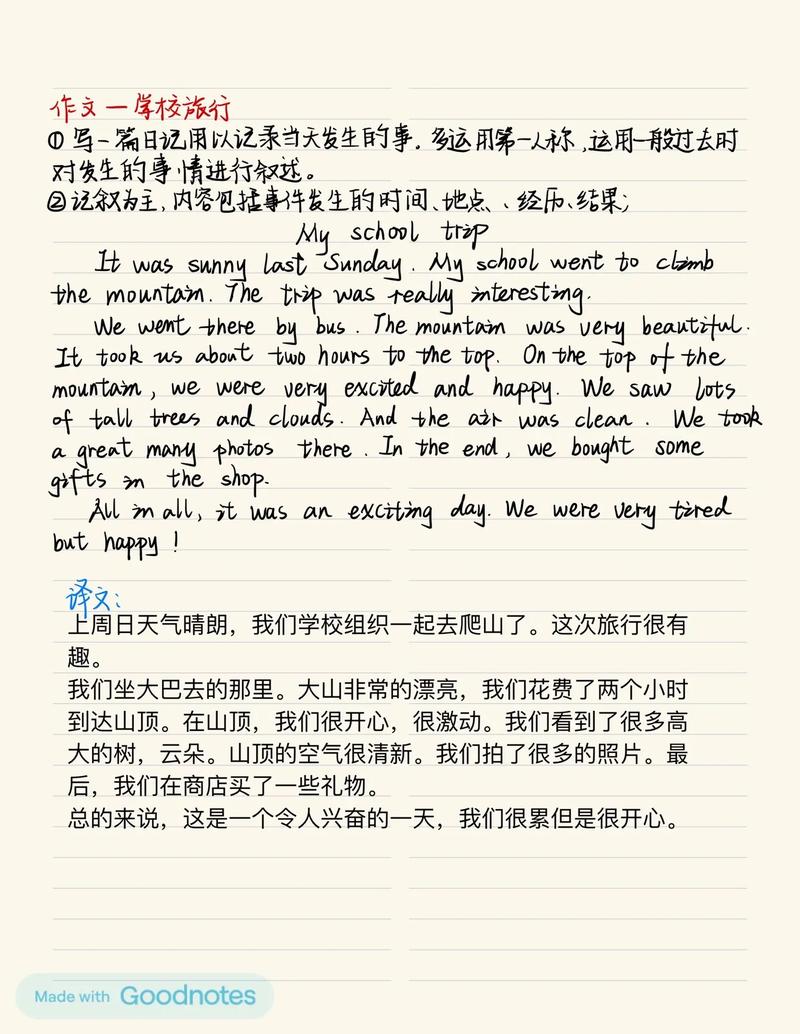
范文示例:
My School Trip
Last Friday, our class had a school trip to the aquarium. It was a sunny day, and I went with my best friend, Tom.
We took the school bus there. The aquarium was big and fantastic. First, we watched a dolphin show. The dolphins were so smart and cute. Everyone clapped for them. Then, we walked around to see other sea animals. I saw some big sharks and a clever octopus. They were amazing! After that, we went to the gift shop. I bought a keychain with a shark on it. Tom bought a T-shirt.
We had a picnic lunch near the sea. The food was delicious. In the afternoon, we took many photos. We were all tired but very happy.
It was a great trip. I saw many interesting things and learned a lot about ocean life. I hope we can have another school trip soon!