春节英语作文怎么写?
作文示例 2025年12月21日 18:35:21 99ANYc3cd6
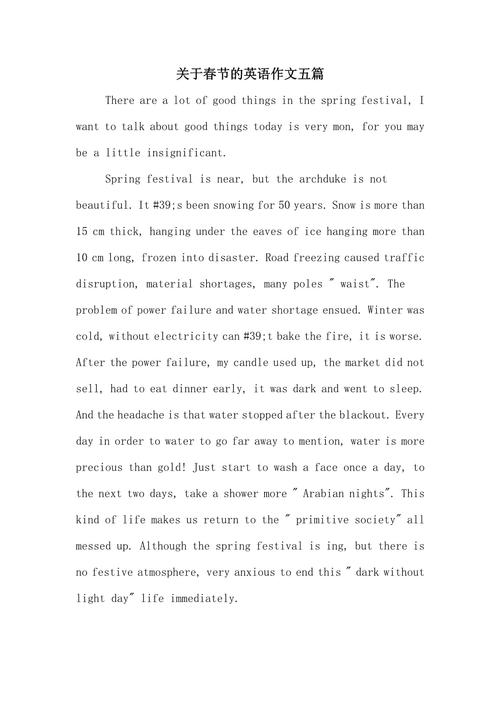
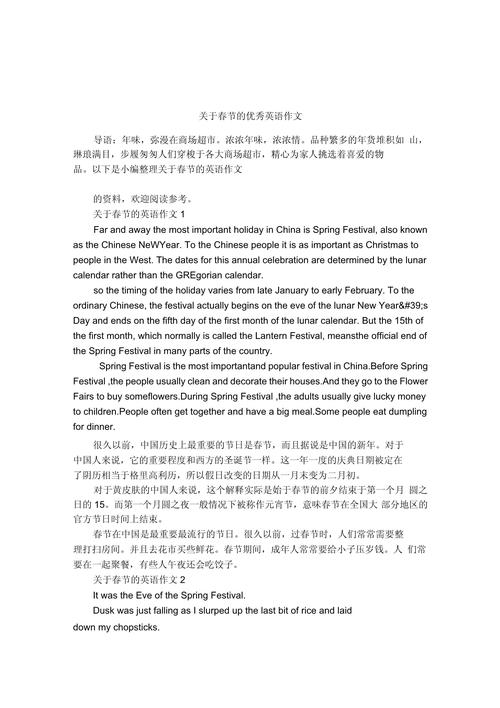
写一篇关于春节的英语作文,可以从不同的角度入手,比如介绍春节的由来、描述庆祝活动、分享个人经历,或者探讨春节在现代社会的意义。
下面我为你提供一个全面的写作指南,包括不同主题的范文、核心词汇和短语以及写作技巧,希望能帮助你写出一篇优秀的春节作文。
Part 1: 写作结构与思路
一篇好的作文通常包含三个部分:引言、主体和结论。
-
- 开门见山,点明春节是中国最重要的传统节日。
- 可以用一个生动的比喻,春节是中国人心中最重要的节日,就像西方的圣诞节一样。”
- 简要介绍春节的时间(农历正月初一)和核心意义(家庭团聚、辞旧迎新)。
-
主体:
- 这是作文的核心,需要分点、有条理地展开,你可以选择以下1-2个方面进行详细描述:
- 节前准备: 大扫除、买年货、贴春联和福字、准备年夜饭。
- 除夕之夜: 团圆饭、看春晚、守岁、放烟花。
- 新年第一天: 拜年、给红包、穿新衣、说吉祥话。
- 文化内涵: 家庭的重要性、对未来的期盼、传统的传承。
- 技巧: 使用 "Firstly," "Secondly," "Moreover," "In addition" 等连接词,让文章更有条理。
- 这是作文的核心,需要分点、有条理地展开,你可以选择以下1-2个方面进行详细描述:
-
- 总结春节的意义,不仅仅是吃喝玩乐,更是文化的传承和情感的纽带。
- 可以表达自己对春节的喜爱之情,或者展望未来。
- 用一句有力的话结尾,春节是连接过去与未来的桥梁,是每一个中国人心中温暖的港湾。”
Part 2: 核心词汇与短语
掌握这些词汇能让你的作文更地道、更丰富。
名词:
- The Spring Festival / Chinese New Year (春节)
- Lunar New Year (农历新年)
- Reunion Dinner (年夜饭/团圆饭)
- Red Envelopes (Hongbao) (红包)
- Couplets / Spring Scrolls (春联)
- Fu Character (福字)
- Fireworks / Firecrackers (烟花/鞭炮)
- Lion Dance / Dragon Dance (舞狮/舞龙)
- Lunar Calendar (农历)
- Family Reunion (家庭团聚)
- Tradition / Heritage (传统/遗产)
动词:
- Celebrate (庆祝)
- Gather / Get together (聚集)
- Decorate (装饰)
- Set off fireworks (放烟花)
- Pay New Year's calls (拜年)
- Give red envelopes (发红包)
- Clean the house (大扫除)
- Prepare for (为...做准备)
- Look forward to (期盼)
形容词/短语:
- The most important/festive/significant festival (最重要/最喜庆/最有意义的节日)
- A time for family and joy (一个充满家庭和欢乐的时刻)
- Full of excitement and anticipation (充满兴奋和期待)
- Symbolize good luck and fortune (象征好运和财富)
- A sense of renewal and hope (一种更新和希望的感觉)
Part 3: 范文示例
这里提供三篇不同主题和风格的范文,你可以根据自己的需要参考。
标准介绍型 (适合初中或基础水平)
The Spring Festival: My Favorite Festival
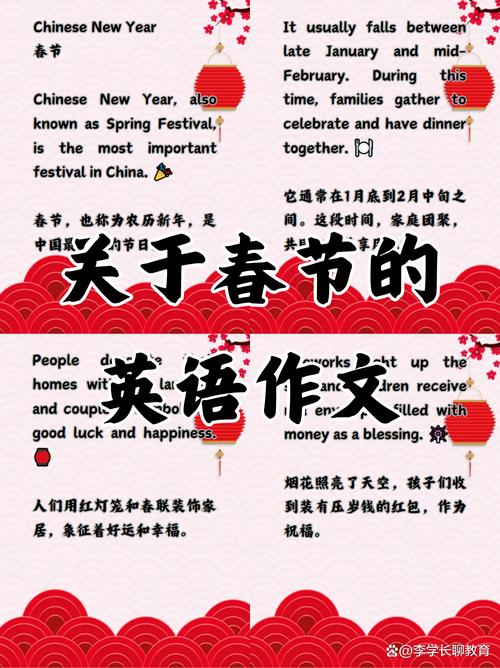
The Spring Festival, also known as Chinese New Year, is the most important traditional festival in China. It is a time for family reunions and celebrating the arrival of a new year. For me, it is the most exciting and happiest time of the year.
The celebration starts long before the New Year's Eve. My family and I will clean our house from top to bottom to "sweep away" the bad luck of the old year. Then, we go shopping for new clothes and delicious food. My favorite part is decorating our door with red couplets and a big "Fu" character, which means good luck.
On New Year's Eve, the whole family gets together for a big reunion dinner. We eat dishes like dumplings and fish, which have special meanings. After dinner, we watch the Spring Festival Gala on TV and wait for the new year to come. At midnight, we set off fireworks to welcome the new year.
On the first day of the new year, we put on our new clothes and visit our relatives and friends. We say "Happy New Year" and "Gong Xi Fa Cai" to wish them good luck. The most exciting moment for children is receiving red envelopes with money inside!
The Spring Festival is more than just a holiday. It is a time to cherish our family and our traditions. I love the Spring Festival because it brings so much joy and warmth to my heart.
个人经历型 (适合高中或进阶水平)
The Warmth of Home: My Spring Festival Experience
If there is one word that defines the Spring Festival for me, it is "home." As a college student who studies far away, the journey back home for the festival is an annual pilgrimage filled with anticipation. The Spring Festival is not just a date on the calendar; it is a profound feeling of belonging and love.
The journey home itself is a story. The train station is a sea of people, all carrying the same hope in their hearts – to return to their families. When I finally step through the door, the familiar aroma of my mother's cooking instantly washes away all the fatigue of the trip. This is the true beginning of the festival for me.
The days are a blur of happy activities. I help my father paste the red couplets on the door, their bold characters promising fortune for the coming year. On New Year's Eve, the reunion dinner is a grand affair. The table is laden with symbolic dishes: fish for abundance, dumplings for wealth, and rice cakes for a higher position in the coming year. We laugh, share stories from the past year, and toast to our future. It is in these moments that I realize the essence of the festival is not in the food, but in the connection we share.
As I grow older, I appreciate the Spring Festival on a deeper level. It is a beautiful tradition that connects generations, reminding us of our roots and the enduring strength of family. No matter where I am in the world, the warmth of the Spring Festival will always be my anchor to home.
文化内涵型 (适合大学或深度思考)
Beyond the Fireworks: The Cultural Significance of the Spring Festival
While the vibrant red lanterns, deafening firecrackers, and generous red envelopes are the iconic images of the Spring Festival, its true significance lies in the profound cultural values it represents. More than just a holiday, the Spring Festival is a living embodiment of Chinese culture, centered on the core principles of family, harmony, and renewal.
First and foremost, the Spring Festival is a powerful celebration of the family unit. The concept of "团圆" (tuányuán), or reunion, is paramount. The massive annual migration of millions of people, known as the "Chunyun," is a testament to the unwavering priority of family. This period of reunion strengthens kinship bonds, allowing for the passing down of stories, values, and traditions from one generation to the next. It is a time when filial piety and respect for elders are prominently displayed through customs like paying New Year's calls.
Furthermore, the festival is rich with symbolism that reflects a collective hope for the future. The color red, omnipresent during the festival, is not merely decorative; it is a powerful symbol of good fortune, joy, and warding off evil spirits. Every food, from the dumplings shaped like ancient gold ingots to the whole fish served to ensure a surplus in the coming year, carries a wish for prosperity and happiness. These rituals, though seemingly simple, are a collective expression of humanity's timeless aspiration for a better life.
In conclusion, the Spring Festival is a complex and beautiful tapestry woven from threads of history, family, and hope. It is a time-honored tradition that not only provides a moment of rest and celebration but also reinforces the cultural identity and social fabric of the Chinese people. It reminds us that in a rapidly changing world, the values of family, harmony, and hope remain as relevant and cherished as ever.
Part 4: 写作小贴士
- 明确你的读者和目的: 是给老师看,还是分享给外国朋友?这决定了你语言的正式程度和内容的选择。
- 加入个人感受: 用 "I feel..." "For me..." "My favorite part is..." 这样的句子,让文章更有真情实感。
- 善用感官描写: 描述你看到的(红色装饰)、听到的(鞭炮声、祝福声)、闻到的(年夜饭的香味)、尝到的(饺子的味道)、感觉到的(家人的温暖),让读者身临其境。
- 使用复合句: 尝试使用 "Although...", "Because...", "Not only... but also..." 等句型,提升句式多样性。
- 检查语法和拼写: 写完后一定要仔细检查,确保没有低级错误。
希望这些资料能对你有所帮助!祝你写作顺利!