八年级上册英语教案设计如何优化课堂互动?
校园之窗 2025年12月16日 20:19:20 99ANYc3cd6
八年级上册英语教案设计
课题: Unit 6 I'm watching TV. (第一课时) Section A 1a-2c (Present Continuous Tense: What are you doing?) 授课年级: 八年级上册 课时:** 1课时 (45分钟)
教学目标
-
知识与技能目标:
 (图片来源网络,侵删)
- 词汇: 学生能够听、说、读、写并运用以下核心词汇:
doing, homework, studying, watching TV, cleaning, reading, talking on the phone。 - 句型: 学生能够理解并熟练运用现在进行时的特殊疑问句及其回答:
- — What are you doing?
- — I'm watching TV.
- — What is he/she doing?
- — He/She is reading.
- 语法: 学生能够掌握现在进行时的基本结构和用法:
am/is/are + V-ing,并能在真实情境中运用。
- 词汇: 学生能够听、说、读、写并运用以下核心词汇:
-
过程与方法目标:
- 通过情景创设、师生互动、小组合作等方式,引导学生在“做中学”,感知、体验并归纳现在进行时的用法。
- 利用图片、多媒体和真实情境,培养学生运用英语进行交际的能力和获取信息的能力。
-
情感态度与价值观目标:
- 鼓励学生积极开口说英语,增强学习英语的自信心和成就感。
- 培养学生观察生活、热爱生活的态度,并学会用英语描述身边的人和事。
教学重难点
-
教学重点:
- 掌握现在进行时的基本结构:
am/is/are + V-ing。 - 熟练运用核心句型
What are you/he/she doing?进行问答。
- 掌握现在进行时的基本结构:
-
教学难点:
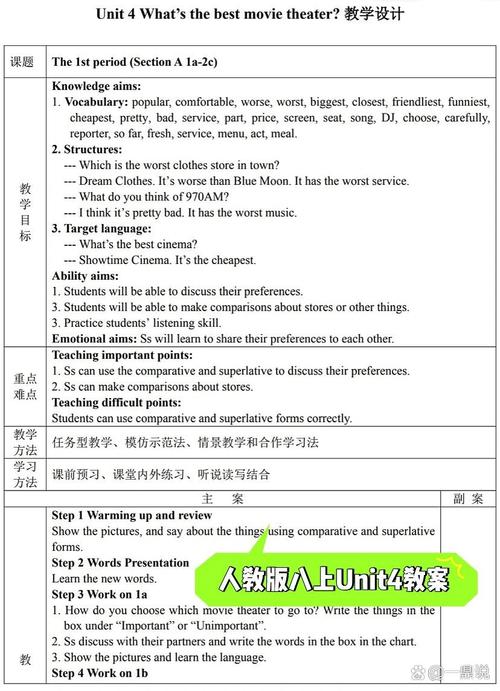 (图片来源网络,侵删)
- 现在分词的构成规则,特别是双写末尾辅音字母再加-ing的规则(如
run -> running)。 - 区分现在进行时与一般现在时的用法(本课时为初步感知,后续课时会系统对比)。
- 现在分词的构成规则,特别是双写末尾辅音字母再加-ing的规则(如
教学准备
- 教师: 多媒体课件、单词卡片、动作图片/短视频、录音机或电脑。
- 学生: 英语课本、练习本、笔。
教学过程
| 教学环节 | 教师活动 | 学生活动 | 设计意图 |
|---|---|---|---|
| Step 1: Warming-up & Lead-in (5分钟) | Greeting: Greet the students as usual. 2. Action Game: Do some actions in front of the class, such as reading a book, writing, eating an apple. Ask: "What am I doing?" Help students to answer "You are reading/writing/eating." 3. Present the topic: Show a picture of a family watching TV together. Ask: "Look at the picture. What are they doing?" Lead in the new unit title: "Today, we are going to learn how to talk about what people are doing right now." |
Greet the teacher. 2. Observe the teacher's actions and try to answer the questions. 3. Look at the picture and guess the answer. |
通过游戏和图片创设轻松的课堂氛围,激活学生已有的知识储备,并自然地引出本课主题——谈论正在发生的动作。 |
| Step 2: Presentation (15分钟) | Vocabulary & Sentence Pattern Presentation a. Show 1a: Present the pictures in 1a on the PPT. Ask: "What is he/she doing?" and teach the new words: doing homework, studying, watching TV, cleaning, reading, talking on the phone. b. Drill the vocabulary: Read the words and phrases after the teacher. Play a game "Quick Response". Grammar Presentation a. Structure: Write on the blackboard: I am (I'm) doing. He/She is (He's/She's) doing. You/We/They are (You're/They're) doing. b. Explain the "V-ing" rule: 一般情况 + ing (e.g., watch -> watching) 不发音的e结尾,去e + ing (e.g., make -> making, read -> reading) * 重读闭音节,末尾辅音字母双写 + ing (e.g., run -> running, swim -> swimming) c. Practice the structure: Give more verbs and ask students to change them into the -ing form. |
Look at the pictures, learn the new words and phrases, and repeat them. 2. Participate in the "Quick Response" game to consolidate the new vocabulary. 3. Observe the sentence structures on the blackboard and understand the use of am/is/are. 4. Take notes and learn the rules of making the -ing form. 5. Practice changing verbs into -ing forms. |
直观的图片和情境呈现,帮助学生将单词与意义直接联系,清晰的板书和语法规则的讲解,有助于学生构建系统的语法知识,从机械操练到初步应用,符合语言学习的认知规律。 |
| Step 3: Practice (10分钟) | Listening (1b & 2a) a. Task 1b: Ask students to look at the picture in 1b. Play the recording for the first time. Let students just listen. b. Play the recording again. Ask students to number the pictures. c. Check answers: Play the recording once more for students to check. Pair Work (1c) a. Model: Ask a student to come to the front. The teacher asks: "What are you doing?" The student answers according to the picture. Then they swap roles. b. Pair Practice: Ask students to work in pairs, using the pictures in 1b to ask and answer questions. c. Invite pairs to perform in front of the class. |
Listen to the recording carefully and finish the listening task. 2. Check the answers with the teacher and the recording. 3. Watch the teacher's model. 4. Work in pairs, practice the dialogue using the target language. 5. Act out the dialogue for the class. |
听力训练锻炼学生抓取关键信息的能力,结对活动为学生提供了大量的口语实践机会,在互动中巩固所学知识,提高语言运用的流利性和准确性。 |
| Step 4: Production (10分钟) | Survey (2c) a. Task Explanation: Explain the task in 2c. Students need to walk around the classroom and ask their classmates "What are you doing?" and fill in the chart. b. Give an example: "Ask me, please." (Teacher is doing something, e.g., standing and teaching.) "What are you doing, Ms. [Teacher's Name]?" "I'm teaching." c. Let students start the survey. Play some soft background music to create a relaxed atmosphere. d. Report: Ask several students to report their findings to the class. "Li Ming is reading a book. Wang Fang is talking on the phone..." |
Understand the task requirements. 2. Ask and answer questions with different classmates in English. 3. Fill in the chart with the information they get. 4. Report their survey results to the class. |
这是一个真实的交际任务,将课堂所学延伸到学生的实际生活中,它不仅能综合运用本课所学知识,还能培养学生的合作精神、沟通能力和信息整理能力。 |
| Step 5: Summary & Homework (5分钟) | Summary: a. Ask students: "What have we learned today?" Guide them to summarize the key points: Words: doing, homework, watching TV... Sentences: What are you doing? I'm... * Grammar: am/is/are + V-ing b. Teacher adds: Emphasize that we use the present continuous tense for actions happening right now. Homework: a. Level 1 (必做): Copy the new words and sentences three times. b. Level 2 (选做): Draw a picture of your family at home and write 5 sentences to describe what they are doing. (e.g., "My father is reading a newspaper. My mother is cooking...") c. Level 3 (挑战): Interview your parents about what they are doing after dinner and write a short report. |
Recall and summarize what they have learned in this class. 2. Take down the homework. |
引导学生自主总结,有助于形成知识体系,培养归纳能力,分层作业设计尊重学生的个体差异,确保所有学生都能巩固基础,同时为学有余力的学生提供拓展空间,实现因材施教。 |
板书设计
A clean and organized blackboard helps students follow the lesson.
| Unit 6 I'm watching TV. |
|---|
| What are you doing? |
| Key Vocabulary: |
| * doing homework |
| * studying |
| * watching TV |
| * cleaning |
| * reading |
| * talking on the phone |
| Grammar Focus: |
| I am (I'm) watching TV. |
| He/She is (He's/She's) reading. |
| We/You/They are (We're/They're) talking. |
| am/is/are + V-ing |
| V-ing Rules: |
| watch → watching |
| make → making |
| run → running |
教学反思
本节课的设计力求以学生为中心,通过“感知-理解-练习-运用”的模式展开教学,优点在于:
- 情境贯穿始终: 从热身到产出,始终围绕“谈论正在发生的事”这一核心情境,语言学习具有真实性和意义性。
- 活动形式多样: 听、说、读、写、演、调查等多种活动相结合,调动了学生的多种感官,保持了学习的新鲜感和积极性。
- 分层任务设计: 从词汇学习到结对练习,再到调查任务,难度层层递进,符合学生的认知规律。
在实施过程中,需要注意:
- 时间控制: Production环节(调查活动)可能会比较耗时,教师需要灵活掌控,确保每个环节都能按计划完成。
- 关注全体学生: 在结对活动和调查活动中,要特别关注那些性格内向或基础薄弱的学生,鼓励他们开口,给予他们展示的机会。
- 语法难点处理: 对于现在分词的构成规则,特别是双写规则,可能需要更多的例句和练习来巩固,可以在后续课时中继续强化。
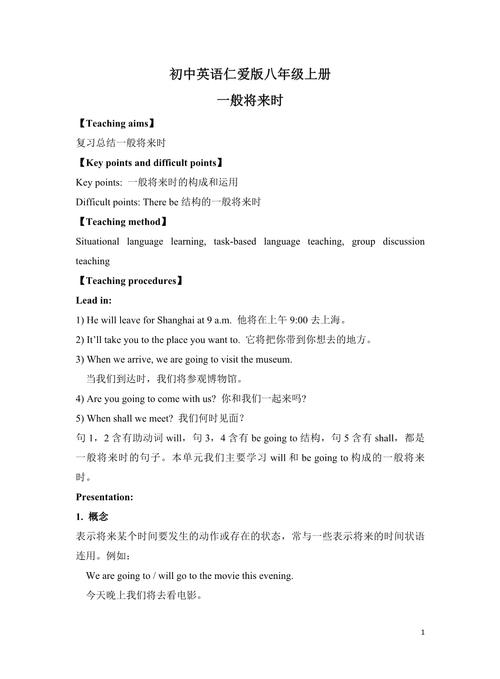
(图片来源网络,侵删)