人教版七年级下册英语课文重点是什么?
校园之窗 2025年12月13日 14:21:23 99ANYc3cd6
整体结构与特点
- 主题鲜明:每个单元都有一个核心话题,如“日常活动”、“天气”、“动物”、“职业”等。
- 情境化:对话和短文都设置在真实的生活情境中,便于学生理解和运用。
- 功能性强:重点学习如何用英语进行特定功能的交流,如“询问时间”、“描述天气”、“提建议”等。
- 螺旋上升:在七年级上册的基础上,引入了更多的时态(如现在进行时)、句型和词汇。
各单元核心内容概览
以下是各单元的主要学习内容:
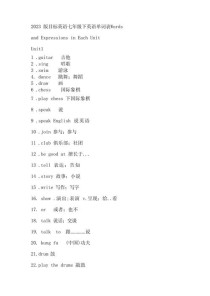
Unit 1: Can you play the guitar?
- 核心话题:能力与俱乐部
- 重点句型:
- — Can you ...? — Yes, I can. / No, I can't.
- — What can you do? — I can ...
- I want to join the ...
- 重点词汇:
- 动词:
sing,dance,swim,draw,play chess,speak English - 名词:
guitar,piano,violin,drums,club,story,show,kung fu - 情景用语:
join,be good at,tell stories
- 动词:
Unit 2: What time do you go to school?
- 核心话题:日常作息与时间
- 重点句型:
- — What time do you ...? — I ... at ...
- — When do you ...? — I ... at ...
- I usually ... at ...
- 重点词汇:
- 时间表达:
o'clock,quarter,half past,a.m.,p.m. - 动词短语:
go to school,get up,run,eat breakfast,take a walk,do homework,go to bed - 频率副词:
always,usually,sometimes
- 时间表达:
Unit 3: How do you get to school?
- 核心话题:交通方式与距离
- 重点句型:
- — How do you get to school? — I take the bus / ride a bike / walk.
- — How does he get to school? — He takes the subway.
- It takes about ... minutes to get to school.
- How far is it from ... to ...?
- 重点词汇:
- 交通方式:
take the bus/subway/train,ride a bike,walk,by bus/bike/train - 距离与时间:
kilometer,minute,far,take (花费时间)
- 交通方式:
Unit 4: Don't eat in class.
- 核心话题:规则与建议
- 重点句型:
- (Don't) ... in the classroom.
- We must / mustn't ...
- — Can we eat in the hallways? — No, we can't.
- — What are the rules? — We have to wear uniforms.
- 重点词汇:
- 规则:
rule,classroom,hallway,fight,eat,listen,wear,uniform,outside,arrive,late - 情态动词:
can,can't,must,mustn't,have to
- 规则:
Unit 5: Why do you like pandas?
- 核心话题:动物及其特点
- 重点句型:
- — Why do you like ...? — Because they're ...
- — Why does he like ...? — Because it's ...
- — What animals do you like? — I like ...
- Let's see the ...
- 重点词汇:
- 动物:
panda,tiger,elephant,koala,lion,giraffe,animal - 形容词:
cute,smart,beautiful,scary,lazy,friendly,shy - 地点:
zoo,pet,kind
- 动物:
Unit 6: I'm watching TV.
- 核心话题:正在发生的动作
- 重点句型:
- — What are you doing? — I'm watching TV.
- — What's he doing? — He's using the computer.
- — Are you doing your homework? — Yes, I am. / No, I'm not.
- 重点词汇:
- 现在进行时动词:
watching TV,cleaning,reading,eating,studying,washing - 地点:
home,school,library,mall,pool
- 现在进行时动词:
Unit 7: It's raining.
- 核心话题:天气状况与感受
- 重点句型:
- How's the weather? / What's the weather like?
- It's sunny/cloudy/rainy/windy/snowy.
- — How's it going? — Great! / Not bad. / Terrible.
- 重点词汇:
- 天气:
weather,sunny,cloudy,rainy,windy,snowy,hot,cool,warm,cold - 活动:
cooking,playing basketball,studying,watching TV
- 天气:
Unit 8: Is there a post office near here?
- 核心话题:方位与地点
- 重点句型:
- — Is there a ... near here? — Yes, there is. / No, there isn't.
- — Where's the ...? — It's on/in/next to/behind/between... and...
- — How can I get to ...? — Go straight and turn left/right.
- 重点词汇:
- 地点:
post office,library,restaurant,bank,supermarket,pay phone,park,bridge - 方位介词:
near,next to,between,behind,on,in,in front of,across from
- 地点:
Unit 9: What does he look like?
- 核心话题:外貌描述
- 重点句型:
- — What does he look like? — He's of medium height/build. He has short straight hair.
- — What does she look like? — She's tall and thin. She has long curly hair.
- 重点词汇:
- 身高体型:
tall,short,of medium height,thin,heavy,of medium build - 头发:
long,short,curly,straight,hair - 其他特征:
glasses,round face,long face
- 身高体型:
Unit 10: I'd like some noodles.
- 核心话题:食物与点餐
- 重点句型:
- — What kind of noodles would you like? — I'd like beef noodles.
- — What size bowl of noodles would you like? — A large bowl, please.
- — Can I help you? / May I take your order?
- 重点词汇:
- 食物:
noodles,beef,chicken,mutton,cabbage,potatoes,tomato,egg,rice,porridge,dumplings,soup - 尺寸:
large,medium,small
- 食物:
Unit 11: How was your school trip?
- 核心话题:过去经历与评价
- 重点句型:
- — How was your school trip? — It was great / boring / exciting.
- — Did you go to the zoo? — Yes, I did. / No, I didn't.
- Were there any sharks? — Yes, there were. / No, there weren't.
- 重点词汇:
- 动词过去式:
was,were,went,saw,bought,ate,had,watched,learned,found - 评价:
great,interesting,fantastic,boring,terrible,expensive,cheap
- 动词过去式:
Unit 12: What did you do last weekend?
- 核心话题:周末活动(一般过去时)
- 重点句型:
- — What did you do last weekend? — I played soccer / visited my grandparents / did my homework.
- — Did you clean your room? — Yes, I did. / No, I didn't. I went to the movies.
- 重点词汇:
- 动词过去式:
played,visited,cleaned,watched,studied,went,camped,went fishing/hiking/swimming - 时间:
last weekend,Saturday morning,Sunday afternoon
- 动词过去式:
课文范例
这里提供两个单元的典型课文对话,让您感受一下课文的风格。

范例 1: Unit 6 (现在进行时)
What are they doing?**
(Jenny and Danny are at the park. They see some people.)
Jenny: Look! What's he doing? Danny: He's playing basketball. Jenny: Is he playing with his friends? Danny: Yes, he is. They're having a good time. Jenny: What's she doing over there? Danny: Oh, she's reading a book under the tree. She looks very relaxed. Jenny: And what are those two people doing? Danny: They're walking their dogs. The dogs are playing with each other. It's so cute! Jenny: Yes, it is. Everyone is enjoying the beautiful weather.
范例 2: Unit 4 (规则)
School Rules**

(A new student, Tom, is asking an old student, Lucy, about the rules.)
Tom: Hi, Lucy. I'm new here. What are some of the school rules? Lucy: Well, first, we can't arrive late for class. We must be on time. Tom: Okay. What about in the classroom? Lucy: We have to be quiet. Don't talk loudly. And we must listen to the teachers. Tom: Can we eat in the classroom? Lucy: No, we can't. We can eat in the dining hall. Oh, and we can't run in the hallways. It's dangerous. Tom: I see. What about uniforms? Lucy: Yes, we have to wear school uniforms on school days. Tom: Thanks for telling me, Lucy. Lucy: You're welcome. Just follow the rules, and you'll be fine.
如何有效学习课文
- 预习:在学习新课前,先浏览一遍课文,找出不认识的单词和句型,标记出来。
- 跟读模仿:听录音并大声朗读课文,模仿语音语调,培养语感。
- 理解大意:不要纠结于每个单词,先理解整个对话或短文在讲什么。
- 精读分析:仔细分析重点句型和词汇的用法,特别是时态、介词等。
- 角色扮演:和同学分角色朗读或表演对话,这是最好的口语练习方式。
- 灵活运用:尝试用学到的句型和词汇来描述自己的生活和经历,真正做到学以致用。
希望这份详细的梳理对您有帮助!