七年级英语一般疑问句怎么学?
校园之窗 2026年1月27日 10:11:44 99ANYc3cd6
什么是一般疑问句?
一般疑问句,也叫 Yes/No Question(是非问句),是要求用 "Yes" 或 "No" 来回答的问句。
基本结构: 助动词 / Be动词 / 情态动词 + 主语 + 谓语动词 + 其他成分?
三大核心类型及构成方法
对于七年级学生来说,主要掌握以下三种类型即可。
Be动词开头的一般疑问句
这是最简单的一种,主要用来询问 “……吗?”,通常与主语的状态、身份、位置等有关。
结构: Be动词 + 主语 + 其他成分?
常用Be动词:
- am (只跟 I 连用)
- is (跟 he, she, it, 单数名词 连用)
- are (跟 you, we, they, 复数名词 连用)
肯定回答: Yes, 主语 + Be动词.
- 注意回答时,主语要用 人称代词 (I, you, he, she, it, we, they),不能重复原句的名词。
否定回答: No, 主语 + Be动词 + not.
- not 可以和 Be动词 缩写:
- am not → aren't (口语中常用)
- is not → isn't
- are not → aren't
举例:
| 肯定句 | 一般疑问句 | 肯定回答 | 否定回答 |
|---|---|---|---|
| I am a student. | Are you a student? | Yes, I am. | No, I am not / I aren't. |
| He is my friend. | Is he your friend? | Yes, he is. | No, he is not / he isn't. |
| She is in the classroom. | Is she in the classroom? | Yes, she is. | No, she is not / she isn't. |
| They are from China. | Are they from China? | Yes, they are. | No, they are not / they aren't. |
| The book is on the desk. | Is the book on the desk? | Yes, it is. | No, it is not / it isn't. |
情态动词开头的一般疑问句
情态动词本身有一定的词义,但后面必须跟动词原形,这类问句通常用来询问 “能……吗?”、“可以……吗?”、“必须……吗?” 等。
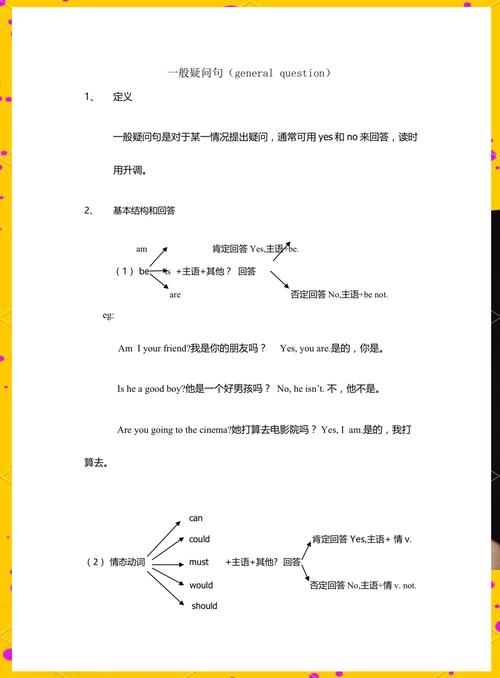
结构: 情态动词 + 主语 + 动词原形 + 其他成分?
常用情态动词:
- can (能,可以)
- may (可以,或许)
- must (必须)
- should (应该)
肯定回答: Yes, 主语 + 情态动词.
否定回答: No, 主语 + 情态动词 + not.
- can not → can't
- may not → mayn't (较少用)
- must not → mustn't
- should not → shouldn't
举例:
| 肯定句 | 一般疑问句 | 肯定回答 | 否定回答 |
|---|---|---|---|
| I can swim. | Can you swim? | Yes, I can. | No, I can not / I can't. |
| He must finish his homework. | Must he finish his homework? | Yes, he must. | No, he must not / he mustn't. |
| You may go now. | May I go now? | Yes, you may. | No, you may not. |
| She should listen to the teacher. | Should she listen to the teacher? | Yes, she should. | No, she should not / she shouldn't. |
实义动词开头的一般疑问句(需要借助助动词)
当句子谓语是 实义动词(如 like, have, play, go, want 等)时,必须借助 助动词 do 或 does** 来构成疑问句。
结构: Do / Does + 主语 + 动词原形 + 其他成分?
如何选择 Do 或 Does?
- 当主语是 I, you, we, they 或复数名词时,用 Do。
- 当主语是 he, she, it 或单数名词时,用 Does。
关键点:
- 无论主语是什么,助动词后面的动词永远用原形! 这是学生最容易出错的地方。
- Do you like apples? (不是 Do you likes...)
- Does he play basketball? (不是 Does he plays...)
肯定回答:
- 用 Do 开头:Yes, 主语 + do.
- 用 Does 开头:Yes, 主语 + does.
否定回答:
- 用 Do 开头:No, 主语 + do not / don't.
- 用 Does 开头:No, 主语 + does not / doesn't.
举例:
| 肯定句 | 一般疑问句 | 肯定回答 | 否定回答 |
|---|---|---|---|
| I like English. | Do you like English? | Yes, I do. | No, I do not / I don't. |
| They play games after school. | Do they play games after school? | Yes, they do. | No, they do not / they don't. |
| He has a new bike. | Does he have a new bike? | Yes, he does. | No, he does not / he doesn't. |
| She wants to go shopping. | Does she want to go shopping? | Yes, she does. | No, she does not / she doesn't. |
| Tom reads books every day. | Does Tom read books every day? | Yes, he does. | No, he does not / he doesn't. |
总结与速记口诀
为了方便记忆,可以总结一个简单的口诀:
问句开头有Be,Be动词提前最简单。 有情态,情态跟,后面动词要还原。 实义动词怎么办?Do, Does 来帮忙。 主语人称是关键,does 只跟单数走。 回答用 yes/no,主语代词不能漏。
专项练习
试着把下面的肯定句变成一般疑问句,并做出回答。
-
She is your sister.
- Is she your sister?
- Yes, she is. / No, she isn't.
-
They can speak Chinese.
- Can they speak Chinese?
- Yes, they can. / No, they can't.
-
You like watching movies.
- Do you like watching movies?
- Yes, I do. / No, I don't.
-
He does his homework in the evening.
- Does he do his homework in the evening?
- Yes, he does. / No, he doesn't.
-
The cat is under the table.
- Is the cat under the table?
- Yes, it is. / No, it isn't.
希望这份详细的总结能帮助你彻底搞懂七年级的一般疑问句!多加练习,就能熟练掌握了。