八年级上英语课本翻译怎么找?
校园之窗 2026年1月25日 00:26:55 99ANYc3cd6
由于完整的课文翻译非常长,且涉及版权问题,这里无法提供逐字逐句的翻译,但我会为您提供单元主题概述、核心知识点、重点词汇和句型,并选取部分典型课文或对话进行翻译示例,希望能帮助您更好地理解和使用课本。
八年级上册英语课本整体概览
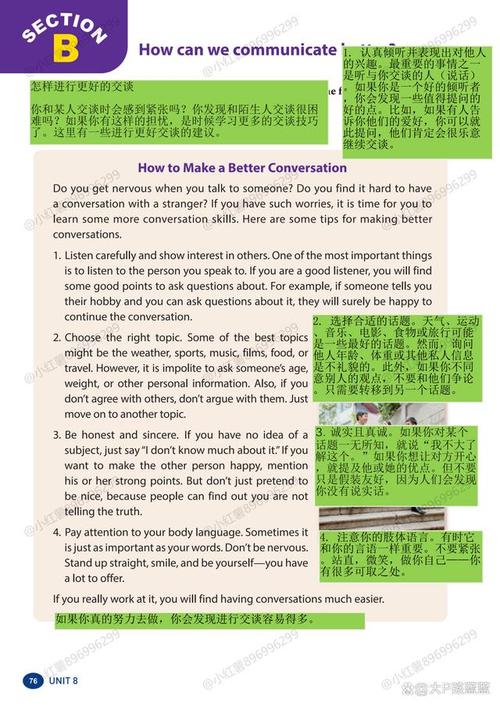
八年级上册共包含10个单元,内容围绕学生的日常生活、兴趣爱好、未来规划、健康生活等话题展开,旨在培养学生的综合语言运用能力。
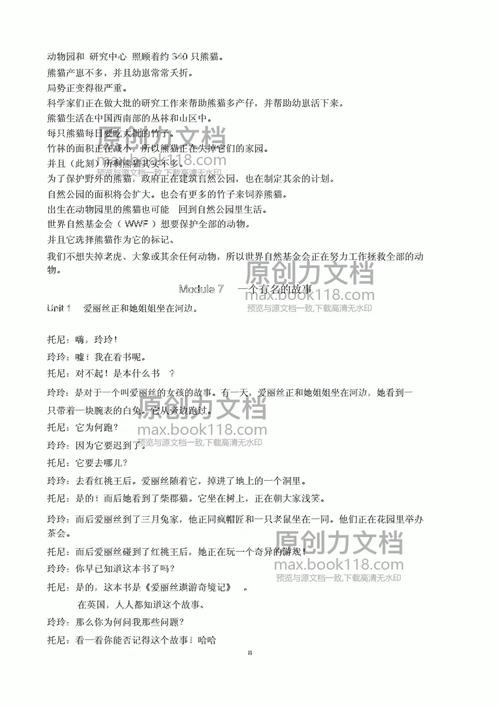
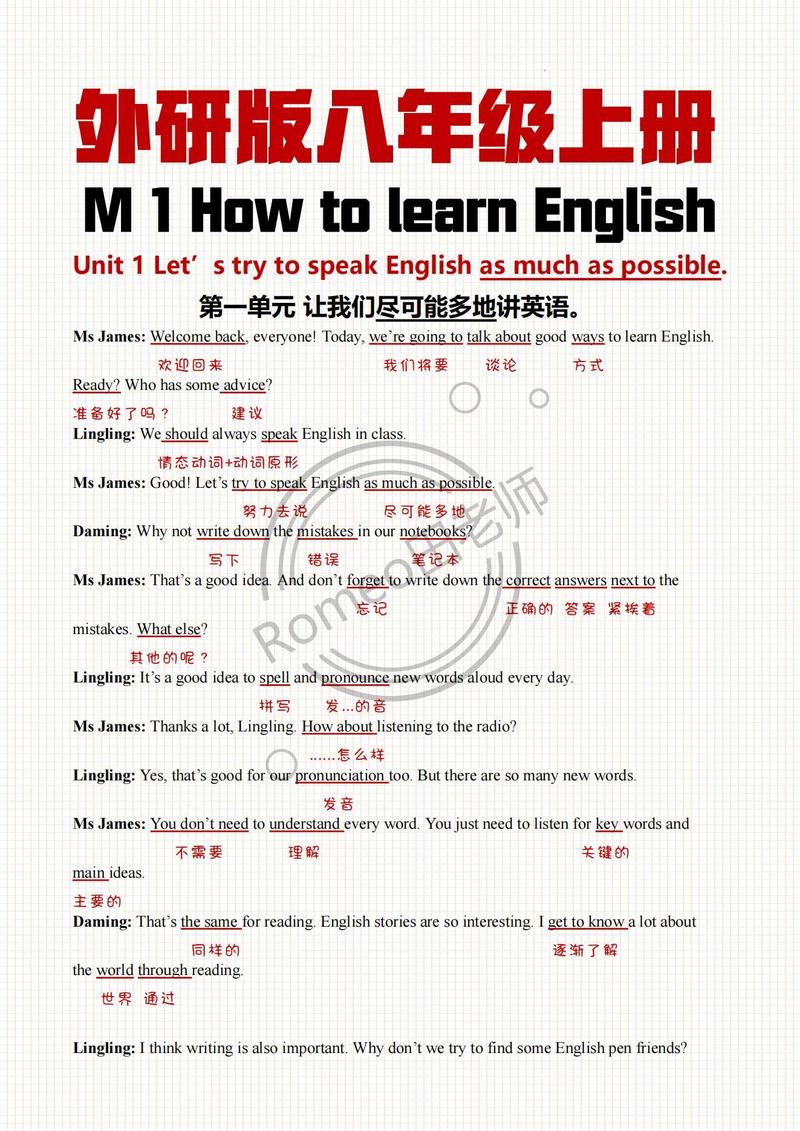
(图片来源网络,侵删)
| 单元 | 主题 | 核心功能/语法点 |
|---|---|---|
| Unit 1 | Where did you go on vacation? (你去哪儿度假了?) | 一般过去时 |
| Unit 2 | How often do you exercise? (你多久锻炼一次?) | 频率副词 & 一般现在时 |
| Unit 3 | I'm more outgoing than my sister. (我比我姐姐外向。) | 形容词和副词的比较级 |
| Unit 4 | What's the best movie theater? (最好的电影院是哪家?) | 形容词和副词的最高级 |
| Unit 5 | Do you want to watch a game show? (你想看综艺节目吗?) | 情态动词 want to & hope to |
| Unit 6 | I'm watching TV. (我正在看电视。) | 现在进行时表说话时正在进行的动作 |
| Unit 7 | Will people have robots? (人们会有机器人吗?) | 一般将来时 will |
| Unit 8 | How do you make a banana milk shake? (你如何做香蕉奶昔?) | 祈使句 & how 引导的特殊疑问句 |
| Unit 9 | Can you come to my party? (你能来我的派对吗?) | 情态动词 can (邀请与回复) |
| Unit 10 | If you go to the party, you'll have a great time. (如果你去派对,你会玩得很开心。) | if 引导的条件状语从句 |
分单元核心内容与翻译示例
Unit 1: Where did you go on vacation? (一般过去时)
- 核心词汇:
vacation(假期),beach(海滩),movie(电影),camp(露营),test(测试),stay(待),decide(决定) - 核心句型:
- — Where did you go on vacation? 你去哪儿度假了?
- — I went to the mountains. 我去山里了。
- — Did you go with anyone? 你和谁一起去的吗?
- — Yes, I did. / No, I didn't. 是的,我去了。/ 不,我没去。
- 翻译示例 (来自 1a):
- 原文: Tina went to the mountains. Brad stayed at home and watched TV. Sally went to the beach.
- 翻译: 蒂娜去了山里,布拉德待在家里看电视,萨莉去了海滩。
Unit 2: How often do you exercise? (频率副词)
- 核心词汇:
exercise(锻炼),housework(家务),hardly(几乎不),ever(曾经),never(从不),junk food(垃圾食品),coffee(咖啡) - 核心句型:
- — What do you usually do on weekends? 你周末通常做什么?
- — I always exercise. 我总是锻炼。
- — How often do you go to the movies? 你多久去看一次电影?
- — I go to the movies maybe once a month. 我可能一个月看一次电影。
- 翻译示例 (来自 1a):
- 原文: always (100%), usually (often), sometimes, hardly ever, never
- 翻译: 总是 (100%), (经常), 几乎不, 从不
Unit 3: I'm more outgoing than my sister. (形容词/副词比较级)
- 核心词汇:
outgoing(外向的),quiet(安静的),hard-working(勤奋的),serious(严肃的),friendly(友好的) - 核心句型:
- — Is that Tara? 那是塔拉吗?
- — No, it's Tina. Tina is taller than Tara. 不,那是蒂娜,蒂娜比塔拉高。
- — Sam has longer hair than Tom. 山姆的头发比汤姆长。
- 翻译示例 (来自 2d 对话):
- 原文:
- Laura: So, who did you talk to at the party?
- Jack: I talked to a boy named Steve. He's new in our class. He's friendlier than most other kids.
- Laura: That's great! Did you meet anyone else?
- Jack: Yeah, I met a girl named Gina. She's quieter than Steve, but she's really funny.
- 翻译:
- 劳拉: 你在派对上和谁聊天了?
- 杰克: 我和一个叫史蒂夫的男孩聊天了,他是我们班的新同学,他比其他大多数孩子更友好。
- 劳拉: 太棒了!你还遇到其他人了吗?
- 杰克: 是的,我遇到了一个叫吉娜的女孩,她比史蒂夫更安静,但她真的很有趣。
- 原文:
Unit 4: What's the best movie theater? (形容词/副词最高级)
- 核心词汇:
comfortable(舒适的),seat(座位),screen(屏幕),close(近的),service(服务),creative(有创造力的) - 核心句型:
- — What's the best movie theater in town? 镇上最好的电影院是哪家?
- — Sun Cinema. It's the closest to home. 太阳电影院,它离家里最近。
- — Which radio station is the most popular? 哪个广播电台最受欢迎?
- 翻译示例 (来自 2b):
- 原文: Town Cinema is the cheapest, but it's the most crowded. Screen City has the biggest screens. Movie World has the most comfortable seats. The best sound is at Screen City.
- 翻译: 城市影院最便宜,但它也是最拥挤的,银幕城有最大的屏幕,世界电影城有最舒适的座位,最好的音响效果在银幕城。
Unit 5: Do you want to watch a game show? (谈论喜好)
- 核心词汇:
sitcom(情景喜剧),news(新闻),soap opera(肥皂剧),game show(游戏节目),talk show(脱口秀),documentary(纪录片) - 核心句型:
- — Do you want to watch the news? 你想看新闻吗?
- — No, I don't like it. What do you want to watch? 不,我不喜欢,你想看什么?
- — I hope I can be a reporter one day. 我希望有一天我能成为一名记者。
- 翻译示例 (来自 2d 对话):
- 原文:
- Jack: What do you want to watch tonight?
- June: Let's talk shows. I love to watch them.
- Jack: Well, I don't like them. How about sports shows?
- June: They're boring. I want to watch a sitcom.
- 翻译:
- 杰克: 你今晚想看什么?
- 琼: 我们看脱口秀吧,我喜欢看它们。
- 杰克: 嗯,我不喜欢,体育节目怎么样?
- 琼: 它们太无聊了,我想看情景喜剧。
- 原文:
Unit 6: I'm watching TV. (现在进行时)
- 核心词汇:
newspaper(报纸),soup(汤),wash(洗),movie(电影),just(刚刚),use(使用) - 核心句型:
- — What are you doing? 你在做什么?
- — I'm watching TV. 我在看电视。
- — Are you doing your homework? 你在做作业吗?
- — Yes, I am. / No, I'm not. I'm cleaning my room. 是的,我在做。/ 不,我没在做,我正在打扫我的房间。
- 翻译示例 (来自 1a):
- 原文: talking on the phone, listening to a CD, washing the dishes, cleaning, reading a newspaper, exercising, making soup
- 翻译: 打电话, 听CD, 洗碗, 打扫卫生, 看报纸, 锻炼, 做汤
Unit 7: Will people have robots? (一般将来时 will)
- 核心词汇:
robot(机器人),paper(纸),live(居住),sea(海洋),pollution(污染),tree(树),part-time(兼职) - 核心句型:
- — Will people use money in 100 years? 一百年后人们会使用钱吗?
- — No, they won't. Everything will be free. 不,不会的,一切都会是免费的。
- — Kids won't go to school. They'll study at home on computers. 孩子们将不用去上学,他们将在家里通过电脑学习。
- 翻译示例 (来自 2b):
- 原文: I think cities will be really big and crowded. There will be more pollution. People won't use money. Everything will be free.
- 翻译: 我认为城市会变得非常大且拥挤,将会有更多的污染,人们将不会使用钱,一切都会是免费的。
Unit 8: How do you make a banana milk shake? (祈使句 & how 问句)
- 核心词汇:
milk shake(奶昔),blender(搅拌机),turn on(打开),peel(剥),pour(倒),yogurt(酸奶),honey(蜂蜜) - 核心句型:
- — How do you make a banana milk shake? 你如何制作香蕉奶昔?
- — First, peel the bananas. Next, put the bananas and yogurt into the blender. Then, pour the milk into the blender. Finally, turn on the blender.
- — How much yogurt do we need? 我们需要多少酸奶?
- — We need one cup of yogurt. 我们需要一杯酸奶。
- 翻译示例 (来自 2b 香蕉奶昔食谱):
- 原文:
- Banana Milk Shake
- Ingredients: bananas, milk, yogurt, honey.
- Instructions:
-
Peel three bananas.
-
Cut up the bananas.
-
Put the bananas and yogurt into a blender.
-
Pour the milk into the blender.
 (图片来源网络,侵删)
 -
Turn on the blender.
-
Drink the milk shake!
-
- 翻译:
- 香蕉奶昔
- 配料: 香蕉, 牛奶, 酸奶, 蜂蜜。
- 步骤:
-
剥三根香蕉。
-
把香蕉切碎。
 (图片来源网络,侵删)
 -
把香蕉和酸奶放入搅拌机中。
-
把牛奶倒入搅拌机中。
-
打开搅拌机。
-
喝奶昔!
-
- 原文:
Unit 9: Can you come to my party? (邀请与回复)
- 核心词汇:
party(派对),invitation(邀请),accept(接受),refuse(拒绝),the day after tomorrow(后天),prepare for(为...做准备),exam(考试) - 核心句型:
- — Can you come to my party on Saturday afternoon? 你周六下午能来我的派对吗?
- — Sure, I'd love to. / Sorry, I can't. I have to prepare for an exam. 我很乐意。/ 抱歉,我不能,我得准备一场考试。
- 翻译示例 (来自 2d 对话):
- 原文:
- Jeff: Hi, Betty. Can you come to my party on Saturday afternoon?
- Betty: I'm sorry, I can't, Jeff. I have to go to the doctor.
- Jeff: How about you, Ted? Can you come to my party?
- Ted: I'd love to! When is it?
- Jeff: At 3:00 p.m. on Saturday.
- 翻译:
- 杰夫: 嗨,贝蒂,你周六下午能来我的派对吗?
- 贝蒂: 很抱歉,杰夫,我不能,我得去看医生。
- 杰夫: 你呢,泰德?你能来我的派对吗?
- 泰德: 我很乐意!是什么时候?
- 杰夫: 周六下午三点。
- 原文:
Unit 10: If you go to the party, you'll have a great time. (条件状语从句)
- 核心词汇:
organize(组织),take away(拿走),happen(发生),travel(旅行),famous(著名的),get a part-time job(找到一份兼职) - 核心句型:
- — If you do, the teachers will be angry. 如果你那样做,老师们会生气的。
- — If we have a party for Lana, everyone will come. 如果我们为兰娜举办一个派对,每个人都会来。
- — If you study hard, you will get good grades. 如果你努力学习,你会取得好成绩。
- 翻译示例 (来自 2b):
- 原文: I think I'm going to go to the party with Karen and Ann. If we do, we'll have a great time. But if you do, you'll be sorry. You should ask your parents first. If they say it's OK, then you can go.
- 翻译: 我想我要和卡伦和安一起去参加派对,如果我们去,我们会玩得很开心,但如果你去,你会后悔的,你应该先问问你的父母,如果他们说可以,那你就可以去。
如何有效使用这份资料?
- 结合课本: 这份资料是课本的补充和总结,请务必对照课本原文一起学习。
- 理解而非死记: 重点理解每个单元的语法核心和常用表达,并尝试自己造句。
- 多听多读: 课本配套的录音是很好的听力材料,请务必多听,模仿语音语调。
- 学以致用: 尝试用学到的词汇和句型来描述自己的日常生活、兴趣爱好或计划。
希望这份详细的总结和翻译示例对您有帮助!如果您有特定单元或课文的疑问,可以随时提出,我会尽力为您解答。