八年级上册英语 词汇
校园之窗 2026年1月18日 00:46:32 99ANYc3cd6
使用建议
- 分类记忆:将单词按名词、动词、形容词、副词等词性分类,或者按话题(如:爱好、交通、健康等)分类,有助于构建知识网络。
- 语境学习:不要孤立地背单词,重点看例句,理解单词在句子中的用法。
- 高频复习:使用艾宾浩斯遗忘曲线的原理,在学习新单词的同时,定期复习旧单词。
- 学以致用:尝试用新学的单词造句,或者写一篇小短文,将单词运用到实际中。
八年级上册核心词汇表
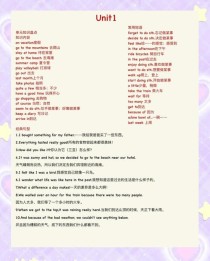
Unit 1: Where did you go on vacation? (你去哪里度假了?)
核心词汇:
| 单词 | 音标 | 词性 | 中文意思 | 例句 |
|---|---|---|---|---|
| anyone | /ˈeniwʌn/ | pron. | 任何人 | Did you go anywhere interesting? (你去什么有趣的地方了吗?) |
| anywhere | /ˈeniweə(r)/ | adv. | 任何地方 | I didn't go anywhere last weekend. (我上周末哪儿也没去。) |
| wonderful | /ˈwʌndəfl/ | adj. | 极好的,精彩的 | We had a wonderful time in Beijing. (我们在北京玩得很开心。) |
| few | /fjuː/ | adj. & pron. | 不多的;少数的 | I'm tired because I few slept hours last night. (我很累,因为昨晚我睡得很少。) |
| most | /məʊst/ | adj., pron. & adv. | 最多的;大多数;最 | Most students like playing basketball. (大多数学生喜欢打篮球。) |
| something | /ˈsʌmθɪŋ/ | pron. | 某事;某物 | I want to eat something sweet. (我想吃点甜的东西。) |
| nothing | /ˈnʌθɪŋ/ | pron. | 没有什么;毫无 | There is nothing in the box. (盒子里什么也没有。) |
| everyone | /ˈevriwʌn/ | pron. | 每个人,人人 | Everyone is here. Let's start. (每个人都到了,我们开始吧。) |
| of course | /əv kɔːs/ | 短语 | 当然 | Can I borrow your pen? - Of course. (我能借你的笔吗?- 当然可以。) |
| myself | /maɪˈself/ | pron. | 我自己 | I taught myself to play the guitar. (我自学了弹吉他。) |
| yourself | /jɔːˈself/ | pron. | 你自己 | Please take care of yourself. (请照顾好你自己。) |
| hen | /hen/ | n. | 母鸡 | There is a hen and some chicks in the yard. (院子里有一只母鸡和一些小鸡。) |
| pig | /pɪɡ/ | n. | 猪 | The pig is sleeping on the farm. (那头猪在农场上睡觉。) |
| duck | /dʌk/ | n. | 鸭子 | Look at the yellow ducks on the lake. (看湖上那些黄色的鸭子。) |
| countryside | /ˈkʌntrisaɪd/ | n. | 乡村,乡下 | I like the fresh air in the countryside. (我喜欢乡下的新鲜空气。) |
| flower | /ˈflaʊə(r)/ | n. | 花 | The flowers in the garden are beautiful. (花园里的花很美。) |
| butterfly | /ˈbʌtəflaɪ/ | n. | 蝴蝶 | A colorful butterfly is flying in the park. (一只色彩斑斓的蝴蝶在公园里飞。) |
| bee | /biː/ | n. | 蜜蜂 | Bees make honey. (蜜蜂酿蜜。) |
| sheep | /ʃiːp/ | n. | 羊,绵羊 | There are many sheep on the hill. (山上有许多绵羊。) |
| farm | /fɑːm/ | n. | 农场 | My uncle has a big farm. (我叔叔有一个大农场。) |
| quite | /kwaɪt/ | adv. | 相当;十分 | The movie is quite interesting. (这部电影相当有趣。) |
| bored | /bɔːd/ | adj. | 厌烦的,无聊的 | I am bored with this book. (我对这本书感到厌烦。) |
| diary | /ˈdaɪəri/ | n. | 日记 | I write a diary every day. (我每天写日记。) |
| building | /ˈbɪldɪŋ/ | n. | 建筑物 | That tall building is a hotel. (那座高大的建筑物是一家酒店。) |
| someone | /ˈsʌmwʌn/ | pron. | 某人,有人 | Someone is knocking at the door. (有人在敲门。) |
Unit 2: How often do you exercise? (你多久锻炼一次?)
核心词汇:

(图片来源网络,侵删)
| 单词 | 音标 | 词性 | 中文意思 | 例句 |
|---|---|---|---|---|
| exercise | /ˈeksəsaɪz/ | v. & n. | 锻炼;运动 | You should exercise more to keep healthy. (你应该多锻炼以保持健康。) |
| housework | /ˈhaʊswɜːk/ | n. | 家务劳动 | I help my mom with housework on weekends. (我在周末帮妈妈做家务。) |
| hardly | /ˈhɑːdli/ | adv. | 几乎不 | I hardly ever watch TV. (我几乎不看电视。) |
| ever | /ˈevə(r)/ | adv. | 曾经 | Have you ever been to Japan? (你曾经去过日本吗?) |
| shop | /ʃɒp/ | v. & n. | 购物;商店 | Let's go shopping this afternoon. (我们下午去购物吧。) |
| once | /wʌns/ | adv. & num. | 一次;一次 | I go to the cinema once a month. (我一个月去看一次电影。) |
| twice | /twaɪs/ | adv. & num. | 两次;两倍 | I brush my teeth twice a day. (我一天刷两次牙。) |
| Internet | /ˈɪntənet/ | n. | 互联网 | I use the Internet to learn English. (我用互联网学英语。) |
| program | /ˈprəʊɡræm/ | n. | 节目;程序 | My favorite TV program is on at 8 p.m. (我最喜欢的电视节目晚上8点开始。) |
| high school | /haɪ skuːl/ | n. | 高中 | He is a student of high school. (他是一名高中生。) |
| than | /ðən/ | conj. | 比 | I am taller than my sister. (我比我姐姐高。) |
| skateboard | /ˈskeɪtbɔːd/ | v. & n. | 踩滑板 | My little brother skateboards every day. |
| junk food | /dʒʌk fuːd/ | n. | 垃圾食品 | Eating too much junk food is bad for your health. (吃太多垃圾食品对你的健康有害。) |
| coffee | /ˈkɒfi/ | n. | 咖啡 | I like drinking coffee in the morning. (我喜欢早上喝咖啡。) |
| health | /helθ/ | n. | 健康 | Good health is very important. (健康非常重要。) |
| result | /rɪˈzʌlt/ | n. | 结果 | What's the result of the exam? (考试的结果是什么?) |
| percent | /pəˈsent/ | n. | 百分之… | About 60 percent of the students go to school by bike. (大约60%的学生骑自行车上学。) |
| online | /ˌɒnˈlaɪn/ | adv. & adj. | 在线(的);联网(的) | We often chat with friends online. (我们经常和朋友在线聊天。) |
| although | /ɔːlˈðəʊ/ | conj. | 尽管;虽然 | Although it was raining, we still went out. (尽管下雨了,我们还是出去了。) |
| through | /θruː/ | prep. | 以;穿过 | He walked through the forest. (他穿过了森林。) |
| mind | /maɪnd/ | v. & n. | 介意;想法 | Do you mind opening the window? (你介意打开窗户吗?) |
| such as | /sʌtʃ æz/ | 短语 | 例如 | I like fruits, such as apples and bananas. (我喜欢水果,例如苹果和香蕉。) |
Unit 3: I'm more outgoing than my sister. (我比我姐姐外向。)
核心词汇:
| 单词 | 音标 | 词性 | 中文意思 | 例句 |
|---|---|---|---|---|
| outgoing | /ˈaʊtɡəʊɪŋ/ | adj. | 外向的 | My friend is very outgoing and likes making friends. |
| better | /ˈbetə(r)/ | adj. & adv. | 更好的;更好地 | This book is better than that one. (这本书比那本更好。) |
| loudly | /ˈlaʊdli/ | adv. | 大声地;响亮地 | Please don't talk loudly in the library. (请不要在图书馆里大声说话。) |
| quietly | /ˈkwaɪətli/ | adv. | 安静地;轻声地 | The students are reading quietly in the classroom. (学生们在教室里安静地阅读。) |
| hard-working | /ˌhɑːd ˈwɜːkɪŋ/ | adj. | 工作努力的 | She is a hard-working student. (她是一个学习努力的学生。) |
| competition | /ˌkɒmpəˈtɪʃn/ | n. | 竞赛;比赛 | We will have a basketball competition next week. (我们下周将有一场篮球比赛。) |
| fantastic | /fænˈtæstɪk/ | adj. | 极好的;了不起的 | The view from the mountain is fantastic. (从山上看到的景色太棒了。) |
| which | /wɪtʃ/ | pron. & adj. | 哪一个;哪些 | Which color do you like, red or blue? (你喜欢哪种颜色,红色还是蓝色?) |
| clearly | /ˈklɪəli/ | adv. | 清晰地;明显地 | He can clearly see the words on the blackboard. (他能清晰地看到黑板上的字。) |
| win | /wɪn/ | v. | 赢;获胜 | Our team won the game. (我们队赢了比赛。) |
| though | /ðəʊ/ | conj. | 虽然;尽管 | It was raining, though it was not cold. (虽然在下雨,但天气不冷。) |
| touch | /tʌtʃ/ | v. & n. | 触摸;感动 | The story touched me deeply. (这个故事深深地触动了我。) |
| reach | /riːtʃ/ | v. | 到达;伸手够到 | I can't reach the book on the top shelf. (我够不到架子顶上的那本书。) |
| break | /breɪk/ | v. & n. | (使)破;打破;休息 | Be careful not to break the glass. (小心别打破玻璃。) |
| laugh | /lɑːf/ | v. & n. | 笑;发笑 | The story made us laugh. (这个故事让我们大笑起来。) |
| share | /ʃeə(r)/ | v. & n. | 分享;共享 | Let's share the pizza. (我们分披萨吃吧。) |
| look through | /lʊk θruː/ | 短语 | 浏览 | I looked through the magazine quickly. (我快速地浏览了那本杂志。) |
| instead of | /ɪnˈsted ɒv/ | 短语 | 代替;而不是 | He walks to school instead of taking a bus. (他走路去上学,而不是坐公交车。) |
Unit 4: What's the best movie theater? (最好的电影院是哪家?)
核心词汇:
| 单词 | 音标 | 词性 | 中文意思 | 例句 |
|---|---|---|---|---|
| theater / theatre | /ˈθɪətə(r)/ | n. | 剧场;电影院 | Let's go to the theater to see a play. (我们去看戏吧。) |
| comfortable | /ˈkʌmfətəbl/ | adj. | 舒适的 | This armchair is very comfortable. (这把扶手椅非常舒服。) |
| seat | /siːt/ | n. | 座位 | Is this seat taken? (这个座位有人坐吗?) |
| screen | /skriːn/ | n. | 屏幕 | The movie is on the big screen. (电影正在大屏幕上放映。) |
| close | /kləʊs/ | adj. | 近的 | My home is close to the school. (我家离学校很近。) |
| card | /kɑːd/ | n. | 卡;卡片 | I sent a card to my friend on his birthday. (我在我朋友生日时给他寄了一张卡片。) |
| report | /rɪˈpɔːt/ | n. & v. | 报告;报道 | He wrote a report about the accident. (他写了一份关于那起事故的报告。) |
| fresh | /freʃ/ | adj. | 新鲜的 | I like to eat fresh vegetables. (我喜欢吃新鲜的蔬菜。) |
| comfortably | /ˈkʌmfətəbli/ | adv. | 舒适地 | We sat comfortably in the sofa. (我们舒适地坐在沙发上。) |
| seat | /siːt/ | v. | 使就座 | Please seat yourself. (请坐。) |
| song | /sɒŋ/ | n. | 歌曲 | She sang a beautiful song. (她唱了一首优美的歌曲。) |
| cinema | /ˈsɪnəmə/ | n. | 电影院 | We often go to the cinema on weekends. (我们周末经常去看电影。) |
| worst | /wɜːst/ | adj. & adv. | 最坏的;最差地 | This is the worst movie I have ever seen. (这是我看过的最差的电影。) |
| service | /ˈsɜːvɪs/ | n. | 服务 | The service in this restaurant is excellent. (这家餐厅的服务非常好。) |
| creative | /kriˈeɪtɪv/ | adj. | 有创造力的 | He is a very creative artist. (他是一位非常有创造力的艺术家。) |
| performer | /pəˈfɔːmə(r)/ | n. | 表演者 | The performers are all very talented. (表演者们都非常才华横溢。) |
| talent | /ˈtælənt/ | n. | 天才;天赋 | She has a talent for music. |
| winner | /ˈwɪnə(r)/ | n. | 获胜者 | He is the winner of the competition. (他是比赛的获胜者。) |
| prize | /praɪz/ | n. | 奖品;奖金 | She won the first prize. (她赢得了一等奖。) |
| example | /ɪɡˈzɑːmpl/ | n. | 例子;榜样 | For example, apples and bananas are fruits. (苹果和香蕉是水果。) |
Unit 5: Do you want to watch a game show? (你想看游戏节目吗?)
核心词汇:
| 单词 | 音标 | 词性 | 中文意思 | 例句 |
|---|---|---|---|---|
| sitcom | /ˈsɪtkɒm/ | n. | 情景喜剧 | I like watching sitcoms because they are funny. (我喜欢看情景喜剧,因为它们很有趣。) |
| news | /njuːz/ | n. | 新闻 | I watch the news every morning. (我每天早上都看新闻。) |
| soap opera | /səʊp ˈɒpərə/ | n. | 肥皂剧 | My mom loves watching soap operas. (我妈妈喜欢看肥皂剧。) |
| education | /ˌedʒuˈkeɪʃn/ | n. | 教育 | Education is very important for a child's future. (教育对孩子的未来非常重要。) |
| plan | /plæn/ | v. & n. | 计划;打算 | What are your plans for the weekend? (你周末有什么计划?) |
| hope | /həʊp/ | v. & n. | 希望;盼望 | I hope to see you soon. (我希望很快能见到你。) |
| find out | /faɪnd aʊt/ | 短语 | 查明;发现 | I want to find out the truth. (我想查明真相。) |
| discussion | /dɪˈskʌʃn/ | n. | 讨论;讨论会 | We had a long discussion about the problem. |
| stand | /stænd/ | v. | 忍受;站立 | I can't stand the noise. (我受不了这个噪音。) |
| happen | /ˈhæpən/ | v. | 发生 | What happened to you? (你发生什么事了?) |
| expect | /ɪkˈspekt/ | v. | 预料;期待 | I expect you to be on time. (我期望你准时。) |
| joke | /dʒəʊk/ | n. | 笑话;玩笑 | He told a funny joke. |
| comedy | /ˈkɒmədi/ | n. | 喜剧;喜剧片 | I prefer comedies to tragedies. (比起悲剧,我更喜欢喜剧。) |
| meaningless | /ˈmiːnɪŋləs/ | adj. | 无意义的 | His words are meaningless to me. |
| action | /ˈækʃn/ | n. | 动作;行动 | I like action movies. (我喜欢动作片。) |
| cartoon | /kɑːˈtuːn/ | n. | 卡通;动画片 | Children love watching cartoons. (孩子们喜欢看动画片。) |
| culture | /ˈkʌltʃə(r)/ | n. | 文化 | Chinese culture has a long history. (中国文化历史悠久。) |
| famous | /ˈfeɪməs/ | adj. | 著名的 | He is a famous singer. (他是一位著名的歌手。) |
| appear | /əˈpɪə(r)/ | v. | 出现;显得 | A man appeared at the door. (一个男人出现在门口。) |
| become | /bɪˈkʌm/ | v. | 变得;成为 | He became a doctor after graduation. (毕业后他成了一名医生。) |
Unit 6: I'm watching TV. (我正在看电视。)
核心词汇:
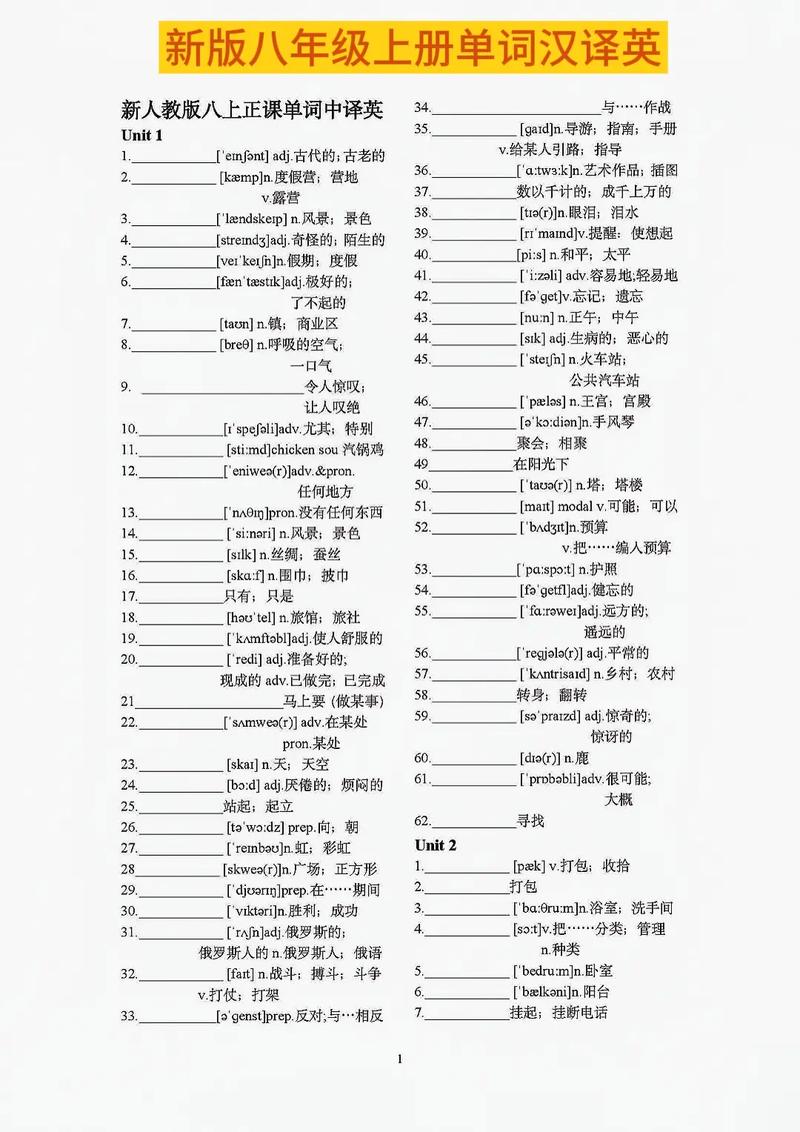
(图片来源网络,侵删)
| 单词 | 音标 | 词性 | 中文意思 | 例句 |
|---|---|---|---|---|
| use | /juːz/ | v. | 使用;运用 | We use computers to work. (我们用电脑来工作。) |
| soup | /suːp/ | n. | 汤 | I'd like a bowl of soup. (我想要一碗汤。) |
| wash | /wɒʃ/ | v. & n. | 洗;洗涤 | Please wash your hands before dinner. (饭前请洗手。) |
| movie | /ˈmuːvi/ | n. | 电影 | Let's go to see a movie. (我们去看电影吧。) |
| just | /dʒʌst/ | adv. | 刚才;仅仅 | I have just finished my homework. (我刚刚完成作业。) |
| kid | /kɪd/ | n. | 小孩;年轻人 | Don't be such a kid! (别这么幼稚!) |
| empty | /ˈempti/ | adj. & v. | 空的;倒空 | The bottle is empty. Can you get me some water? (瓶子是空的,能给我倒点水吗?) |
| dish | /dɪʃ/ | n. | 盘子;菜肴 | Please pass me that dish. (请把那个盘子递给我。) |
| yard | /jɑːd/ | n. | 院子;庭院 | The children are playing in the yard. (孩子们在院子里玩耍。) |
| do the dishes | /duː ðə ˈdɪʃɪz/ | 短语 | 洗碗 | I have to do the dishes after dinner. (我晚饭后得洗碗。) |
| make the bed | /meɪk ðə bed/ | 短语 | 整理床铺 | My mom asks me to make the bed every morning. |
| living room | /ˈlɪvɪŋ ruːm/ | n. | 起居室;客厅 | My family are watching TV in the living room. |
| read a newspaper | /riːd ə ˈnjuːspeɪpə(r)/ | 短语 | 看报纸 | My grandfather is reading a newspaper. |
| talk on the phone | /tɔːk ɒn ðə fəʊn/ | 短语 | 打电话 | She is talking on the phone with her friend. |
| use | /juːs/ | n. | 使用;用途 | The use of this tool is very simple. (这个工具的使用方法很简单。) |
| matter | /ˈmætə(r)/ | n. & v. | 事情;要紧;有重大影响 | What's the matter with you? (你怎么了?) |
| miss | /mɪs/ | v. | 想念;错过 | I will miss you when you leave. (你离开时我会想念你的。) |
| nothing much | /ˈnʌθɪŋ mʌtʃ/ | 短语 | 没什么大事 | - What are you doing? - Nothing much. ( - 你在做什么?- 没什么大事。) |
Unit 7: Will people have robots? (人们会有机器人吗?)
核心词汇:
| 单词 | 音标 | 词性 | 中文意思 | 例句 |
|---|---|---|---|---|
| will | /wɪl/ | v. aux. | 将;将会 | I will call you tomorrow. (我明天会给你打电话。) |
| robot | /ˈrəʊbɒt/ | n. | 机器人 | In the future, we may have robots in our homes. (我们家里可能会有机器人。) |
| everything | /ˈevriθɪŋ/ | pron. | 每件事;一切 | Everything is ready for the party. (派对的一切都准备好了。) |
| paper | /ˈpeɪpə(r)/ | n. | 纸 | Please write on a clean paper. (请用一张干净的纸写。) |
| live | /lɪv/ | v. | 居住 | They live in a small town. (他们住在一个小镇上。) |
| parrot | /ˈpærət/ | n. | 鹦鹉 | A colorful parrot is talking in the cage. (一只色彩斑斓的鹦鹉在笼子里说话。) |
| hundred | /ˈhʌndrəd/ | num. & n. | 百;一百 | There are hundreds of students in the school. (学校里有数百名学生。) |
| seem | /siːm/ | v. | 似乎;好像 | You seem tired. Why not have a rest? (你似乎很累,为什么不休息一下呢?) |
| future | /ˈfjuːtʃə(r)/ | n. | 将来 | What will the world be like in the future? (未来的世界会是什么样子?) |
| pollution | /pəˈluːʃn/ | n. | 污染 | We should try to reduce pollution. (我们应该努力减少污染。) |
| tree | /triː/ | n. | 树 | There is a big tree in front of my house. |
| play a part | /pleɪ ə pɑːt/ | 短语 | 参与;起作用 | Everyone should play a part in protecting the environment. |
| peaceful | /ˈpiːsfʊl/ | adj. | 和平的;宁静的 | I like living in a peaceful village. (我喜欢住在宁静的村庄里。) |
| sky | /skaɪ/ | n. | 天空 | The sky is blue today. (今天天空是蓝色的。) |
| astronaut | /ˈæstrənɔːt/ | n. | 宇航员 | My dream is to be an astronaut. (我的梦想是成为一名宇航员。) |
| apartment | /əˈpɑːtmənt/ | n. | 公寓 | He lives in a new apartment. (他住在一套新公寓里。) |
| rocket | /ˈrɒkɪt/ | n. | 火箭 | The rocket is ready for launch. (火箭已准备好发射。) |
| space | /speɪs/ | n. | 太空;空间 | There are many stars in space. (太空中有很多星星。) |
| even | /ˈiːvn/ | adv. | 甚至;连 | He is even taller than his father. (他甚至比他父亲还高。) |
Unit 8: How do you make a banana milk shake? (你如何做香蕉奶昔?)
核心词汇:
| 单词 | 音标 | 词性 | 中文意思 | 例句 |
|---|---|---|---|---|
| shake | /ʃeɪk/ | v. & n. | 摇动;颤抖;奶昔 | Let's shake hands. (我们握个手吧。) |
| milk shake | /mɪk ʃeɪk/ | n. | 奶昔 | I'd like a strawberry milk shake. |
| blender | /ˈblendə(r)/ | n. | 食品搅拌机 | Please put the fruit into the blender. (请把水果放进搅拌机里。) |
| turn on | /tɜːn ɒn/ | 短语 | 打开(电器) | Please turn on the light. (请打开灯。) |
| cut up | /kʌt ʌp/ | 短语 | 切碎 | Cut up the tomatoes and put them in the bowl. (把西红柿切碎放进碗里。) |
| peel | /piːl/ | v. & n. | 削皮;剥皮 | Please peel an apple for me. (请帮我削个苹果皮。) |
| pour | /pɔː(r)/ | v. | 倒;灌 | Please pour me a glass of water. (请给我倒一杯水。) |
| yogurt | /ˈjɒɡət/ | n. | 酸奶 | I eat yogurt for breakfast. (我早餐吃酸奶。) |
| honey | /ˈhʌni/ | n. | 蜂蜜 | He put some honey in his tea. (他在茶里放了一些蜂蜜。) |
| watermelon | /ˈwɔːtəmelən/ | n. | 西瓜 | Watermelon is my favorite fruit in summer. |
| spoon | /spuːn/ | n. | 勺;匙 | Eat the soup with a spoon. (用勺子喝汤。) |
| pot | /pɒt/ | n. | �;壶;罐 | The pot is boiling. (锅开了。) |
| add | /æd/ | v. | 添加;增加 | Add some salt to the soup. (往汤里加点盐。) |
| finally | /ˈfaɪnəli/ | adv. | 终于 | Finally, he finished his work. (他终于完成了工作。) |
| salt | /sɔːlt/ | n. | 盐 | Pass me the salt, please. |
| sugar | /ˈʃʊɡə(r)/ | n. | 糖 | I put two sugars in my coffee. (我在咖啡里放了两大块糖。) |
| cheese | /tʃiːz/ | n. | 奶酪 | I like eating cheese. (我喜欢吃奶酪。) |
| popcorn | /ˈpɒpkɔːn/ | n. | 爆米花 | Let's buy some popcorn for the movie. (我们给电影买些爆米花吧。) |
| corn | /kɔːn/ | n. | 玉米;谷物 | Farmers grow a lot of corn here. (这里农民种很多玉米。) |
| machine | /məˈʃiːn/ | n. | 机器 | This is a washing machine. (这是一台洗衣机。) |
Unit 9: Can you come to my party? (你能来我的派对吗?)
核心词汇:
| 单词 | 音标 | 词性 | 中文意思 | 例句 |
|---|---|---|---|---|
| prepare for | /prɪˈpeə(r) fɔː(r)/ | 短语 | 为...做准备 | The students are preparing for the exam. (学生们正在为期末考试做准备。) |
| exam | /ɪɡˈzæm/ | n. | 考试 | I have an exam next week. (我下周有一场考试。) |
| flu | /fluː/ | n. | 流行性感冒 | I have a bad flu, so I can't go to school. (我得了重感冒,所以不能去上学。) |
| available | /əˈveɪləbl/ | adj. | 有空的;可获得的 | I am not available on Friday afternoon. (我周五下午有空。) |
| another | /əˈnʌðə(r)/ | adj. & pron. | 又一;另一个 | Could I have another cup of coffee? (我能再来一杯咖啡吗?) |
| hang out | /hæŋ aʊt/ | 短语 | 闲逛;常去某处 | Let's hang out together this weekend. (我们周末一起出去玩吧。) |
| catch | /kætʃ/ | v. | 赶上;染上(疾病) | You should hurry, or you'll catch the bus. (你应该快点,否则就赶不上公交车了。) |
| invite | /ɪnˈvaɪt/ | v. | 邀请 | I invited Tom to my birthday party. (我邀请了汤姆参加我的生日派对。) |
| accept | /ə |
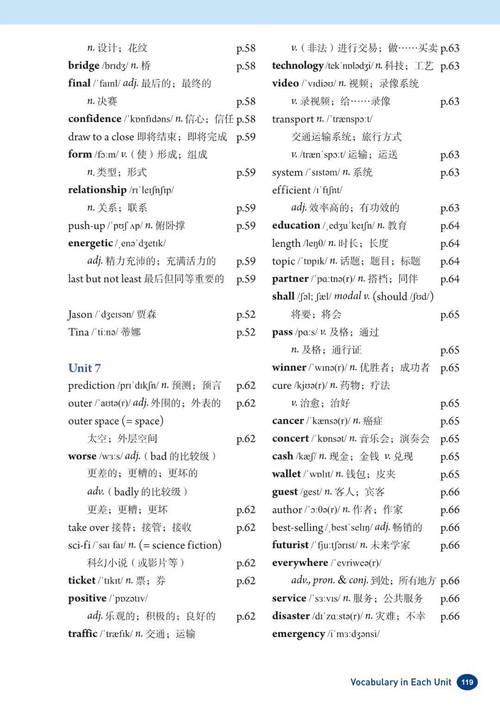
(图片来源网络,侵删)