八年级仁爱版英语教案如何高效设计?
校园之窗 2026年1月11日 19:16:30 99ANYc3cd6
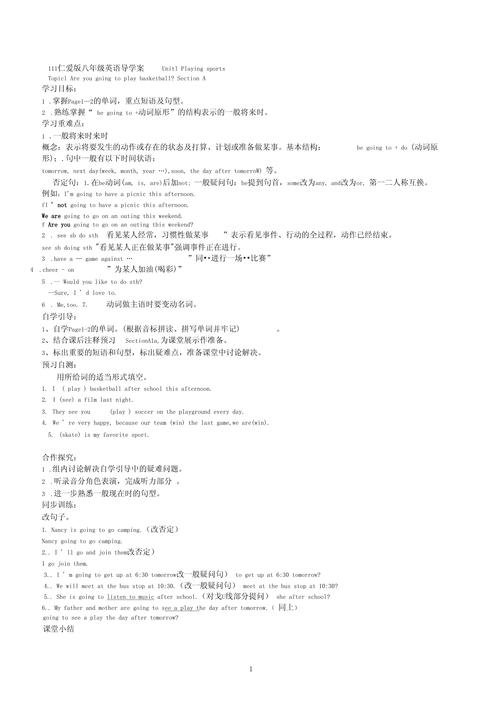
八年级仁爱版英语上册 Unit 3 Topic 1 教案
课题: Unit 3 Our Hobbies Topic 1 What's your hobby? 课时: 第1课时 (Section A)
教学目标
-
知识与技能:
 (图片来源网络,侵删)
- 词汇: 能听、说、读、写并运用本课的核心词汇:
hobby,collect,stamp,coin,key ring,spare time,be interested in。 - 句型: 能熟练掌握并运用以下句型谈论个人爱好:
- — What's your hobby?
- — My hobby is collecting stamps/coins/key rings.
- — I like/love/enjoy/am interested in collecting stamps/coins/key rings.
- — I'm fond of collecting stamps/coins/key rings.
- 听: 能听懂关于爱好的简短对话和问题。
- 说: 能运用所学句型与同伴进行简单的问答,谈论自己和他人的爱好。
- 读: 能读懂关于爱好的简单句子和对话。
- 写: 能根据提示,写出关于自己爱好的简单句子。
- 词汇: 能听、说、读、写并运用本课的核心词汇:
-
过程与方法:
- 通过情景创设、小组合作、结对练习等方式,引导学生在真实的语境中学习和运用语言。
- 运用任务型教学法,让学生在完成任务(如调查、采访)的过程中内化语言知识。
- 培养学生自主学习和合作探究的能力。
-
情感态度与价值观:
- 引导学生认识到培养积极健康的爱好对个人成长的重要性。
- 鼓励学生大胆开口,乐于用英语交流,分享自己的兴趣和快乐。
- 培养学生尊重他人不同爱好的品质。
教学重难点
-
教学重点:
- 核心词汇
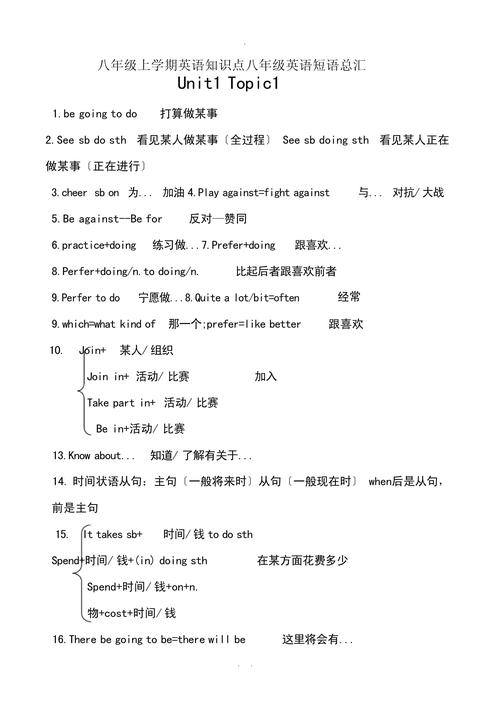
hobby,collect,stamp,coin,key ring的掌握和运用。 - 句型
What's your hobby?及其多种回答方式。
- 核心词汇
-
教学难点:
 (图片来源网络,侵删)
- 动词
collect的用法。 be interested in,be fond of等短语表达“喜欢”的细微差别和正确使用。- 在实际交际中灵活运用所学句型进行问答。
- 动词
教学准备
-
教师准备:
- 多媒体课件,包含图片、音频、视频。
- 单词卡片(
hobby,collect,stamp,coin,key ring)。 - 一些实物或图片(如邮票、硬币、钥匙扣)。
- 调查表格。
-
学生准备:
- 预习课本 Section A 部分。
- 准备笔记本和笔。
教学过程
Step 1: Warming-up & Lead-in (热身与导入) (约5分钟)
-
Greeting:
 (图片来源网络,侵删)
- Teacher: Good morning, class!
- Students: Good morning, teacher!
- Teacher: How are you today?
- Students: We're fine, thank you. And you?
- Teacher: I'm fine, too. Thank you.
-
Sing a Song:
- Play a short, lively English song about hobbies or daily activities (e.g., "If You're Happy and You Know It"). Ask students to clap their hands and sing along.
- Purpose: 营造轻松愉快的课堂氛围,自然地引出“活动”这一话题。
-
Lead-in:
- Teacher: (Show a picture of a person reading a book) Look at this picture. What is he doing?
- Student A: He is reading a book.
- Teacher: Good! Reading is a good activity. (Show a picture of a person playing basketball) What about this one?
- Student B: He is playing basketball.
- Teacher: Excellent! We all have different things we like to do in our free time. These are our hobbies. (Write the word "hobby" on the blackboard and teach its pronunciation and meaning.) Today, we are going to talk about our hobbies. (Present the topic: Unit 3 Our Hobbies Topic 1 What's your hobby?)
Step 2: Presentation (新知呈现) (约15分钟)
-
Teach new words:
- Collecting Stamps:
- Teacher: (Show a real stamp or a clear picture of a stamp) This is a stamp. Some people like to collect them. They put them in an album. (Show a stamp album). This is called collecting stamps. (Teach the word
collectandstampusing cards and pictures). Let's read: "collect", "stamp". - (Write on the board:
collect stamps).
- Teacher: (Show a real stamp or a clear picture of a stamp) This is a stamp. Some people like to collect them. They put them in an album. (Show a stamp album). This is called collecting stamps. (Teach the word
- Collecting Coins:
- Teacher: (Show a real coin or a picture) This is a coin. Some people also like to collect coins from different countries. This is collecting coins. (Teach
coinand the phrasecollect coins). - (Write on the board:
collect coins).
- Teacher: (Show a real coin or a picture) This is a coin. Some people also like to collect coins from different countries. This is collecting coins. (Teach
- Collecting Key Rings:
- Teacher: (Show a key ring) This is a key ring. It's a small ring for your keys. Some people like to collect key rings with different shapes. This is collecting key rings. (Teach
key ringand the phrasecollect key rings). - (Write on the board:
collect key rings).
- Teacher: (Show a key ring) This is a key ring. It's a small ring for your keys. Some people like to collect key rings with different shapes. This is collecting key rings. (Teach
- Collecting Stamps:
-
Teach the key sentence patterns:
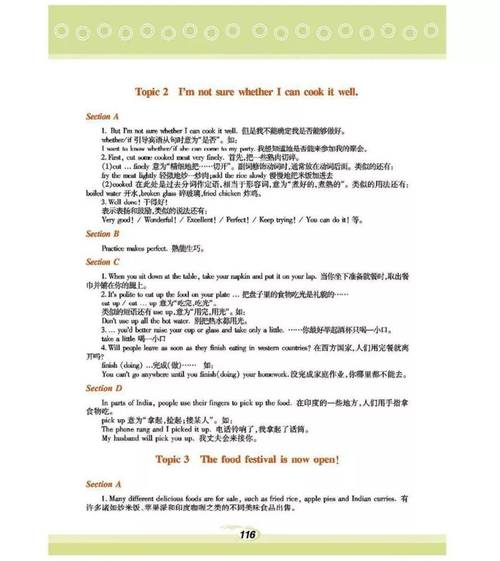
- Pattern 1: What's your hobby?
- Teacher: Now, I want to know your hobbies. I can ask: "What's your hobby?" (Write the sentence on the board, underline
hobby). Let's practice. I ask, you answer. - Teacher: (Points to a student S1) What's your hobby?
- S1: (Might be silent or say "I don't know")
- Teacher: Don't worry. Let's learn how to answer.
- Teacher: Now, I want to know your hobbies. I can ask: "What's your hobby?" (Write the sentence on the board, underline
- Pattern 2: My hobby is... / I like...
- Teacher: My hobby is collecting stamps. (Point to the phrase on the board). I like collecting stamps. (Write it on the board). I enjoy collecting stamps. (Write it). I'm interested in collecting stamps. (Write it). I'm fond of collecting stamps. (Write it). These all mean the same thing. "My hobby is..." is the most common and direct way.
- Teacher: (To S1) Now, what's your hobby?
- S1: My hobby is... (Teacher helps: reading books / playing sports...)
- Teacher: Good! Let's ask the next student. (Teacher asks another student S2). What's your hobby?
- S2: I like playing computer games.
- Teacher: Great! You can use "I like..." too.
- Pattern 1: What's your hobby?
Step 3: Practice (巩固练习) (约15分钟)
-
Listen and Repeat (听音跟读):
- Play the recording of 1a. Ask students to listen carefully and repeat the dialogue, paying attention to the pronunciation and intonation.
- Purpose: 培养学生的语音语感,模仿地道的口语。
-
Pair Work (结对练习):
- Ask students to work in pairs. One student acts as Kangkang, the other acts as Michael. Practice the dialogue in 1a.
- Teacher: Now, please practice the dialogue with your partner. You can read it in roles.
- (After a few minutes, ask 2-3 pairs to perform the dialogue in front of the class.)
- Purpose: 让学生在合作中巩固对话内容,提高口语流利度。
-
Make a New Dialogue (创编新对话):
- Teacher: Good job! Now, let's make our own dialogues. You can use the new words we learned today, like
coinsorkey rings. Use the pattern: "What's your hobby?" "My hobby is..." - (Give students 3 minutes to prepare, then ask some pairs to present their new dialogues.)
- Example:
- A: What's your hobby?
- B: My hobby is collecting key rings. What's your hobby?
- A: I'm interested in collecting coins.
- Purpose: 鼓励学生进行创造性输出,将所学知识内化为自己的语言。
- Teacher: Good job! Now, let's make our own dialogues. You can use the new words we learned today, like
-
Survey (调查活动):
- Hand out the survey table to each student.
- Teacher: Let's do a survey about hobbies. Walk around the classroom and ask your classmates "What's your hobby?". Write down their names and hobbies in the table. Let's see who has the most popular hobby.
- (Students walk around and ask questions in English. The teacher walks around to offer help and monitor.)
- Survey Table: | Name | Hobby | | :--- | :--- | | | | | | | | | |
- Purpose: 将语言学习与真实任务相结合,提高学生运用语言的积极性和交际能力。
Step 4: Production & Summary (产出与总结) (约7分钟)
-
Report the Results (报告结果):
- Teacher: Time's up! Please sit down. Who would like to report your findings? You can say: "I asked [Name]. His/Her hobby is..."
- (Ask 2-3 students to report their survey results.)
- Purpose: 检验学习效果,锻炼学生的口头表达能力。
-
Summary (课堂总结):
- Teacher: Today, we learned how to talk about our hobbies. What did we learn?
- (Guide students to summarize: words like
hobby,collect,stamp,coin,key ring; and sentences like "What's your hobby?" and "My hobby is...") - Teacher: Having a hobby is very important. It can make our life colorful and help us relax. What's your hobby? Keep it and enjoy it!
Step 5: Homework (作业布置) (约3分钟)
-
Written Work:
- Copy the new words and key sentences three times.
- Write a short passage about your own hobby. (3-5 sentences)
- Example: My hobby is reading books. I like reading storybooks. It's very interesting. I'm interested in reading books because I can learn a lot from them.
-
Oral Work:
Practice the dialogue and the new sentence patterns with your parents after class.
板书设计
                            Unit 3 Our Hobbies
                          Topic 1 What's your hobby?
      Words:                          Sentences:
      hobby (n.)                        — What's your hobby?
      collect (v.)                      — My hobby is collecting stamps.
      stamp (n.)                        — I like/love/enjoy collecting coins.
      coin (n.)                         — I'm interested in collecting key rings.
      key ring (n.)                     — I'm fond of collecting...
      spare time
      (On the right side of the board)
      Survey Results:
      Name      Hobby
      ...       ...
教学反思
本节课的设计力求体现“以学生为中心”的教学理念,通过多样化的活动,如歌曲、看图说话、结对练习、调查等,充分调动了学生的学习积极性。
-
成功之处:
- 情境导入自然: 从学生熟悉的日常活动入手,逐步过渡到“爱好”主题,降低了学习难度。
- 直观教学有效: 运用实物、图片和卡片教授新词汇,使抽象的单词变得具体、形象,便于学生理解和记忆。
- 任务驱动性强: “调查”任务将语言学习与实际应用紧密结合,学生在完成任务的过程中,不仅练习了目标语言,还体验了用英语做事情的乐趣和成就感。
- 分层教学: 从机械的听读模仿,到半控制的结对练习,再到完全开放的创编对话和调查,难度层层递进,照顾了不同层次学生的需求。
-
不足之处与改进:
- 时间控制: 在“调查”环节,部分学生可能会因为害羞或用词不当而放慢速度,导致时间紧张,下次可以适当缩短调查时间,或提前将调查表格准备好,明确任务要求。
- 关注个体: 在小组活动中,教师应更关注那些性格内向、不主动开口的学生,主动走到他们身边,给予鼓励和引导,确保他们也能参与到活动中来。
- 拓展延伸: 在介绍表达“喜欢”的多种方式时,可以更清晰地解释它们之间的细微差别(如
enjoy比like程度更深),并给出更多例句,帮助学生更好地理解和运用。
本节课基本达成了预设的教学目标,学生在轻松愉快的氛围中掌握了核心知识,并提升了综合语言运用能力,在今后的教学中,将继续优化教学环节,力求让课堂更高效、更有趣。