七下英语书答案在哪里找?
校园之窗 2026年1月4日 21:42:07 99ANYc3cd6
由于七年级下册英语书包含课本、练习册、听力材料等多个部分,并且每个学校使用的版本可能略有不同,我将为你提供最核心的单元练习和课后习题的答案,并告诉你如何找到更全面的答案。
第一部分:核心单元练习答案(Unit 1- Unit 12)
以下是人教版七年级下册英语(Go for it!)各单元主要练习的答案,这些是老师布置作业最常涉及的部分。
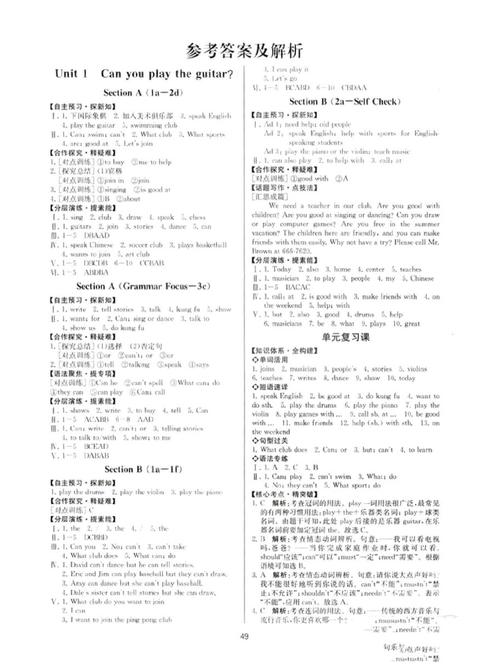
Unit 1: Can you play the guitar?
- 1b Listening:
-
e 2. a 3. c 4. d 5. b
-
- 1c Pair work:
- (Example answers)
- A: Can you swim?
- B: No, I can't. / Yes, I can.
- 2a, 2b Listening:
- 2a: 3, 2, 1
- 2b: 1. join 2. story 3. speak 4. weekend 5. teach
- 2d Role-play:
- (参考对话)
- J: Hi, Bob. Can you tell me about the school club?
- B: Sure, Jenny. We have a music club, an art club, a sports club, and a chess club.
- J: What club do you want to join?
- B: I want to join the chess club. I can play chess well.
- J: I want to join the music club. I can sing and dance.
- Grammar Focus:
- Can you swim? Yes, I can. / No, I can't.
- Can he play chess? Yes, he can. / No, he can't.
- Can she dance? Yes, she can. / No, she can't.
- What can you do? I can draw.
- What club do you want to join? We want to join the chess club.
Unit 2: What time do you go to school?
- 1b Listening:
-
c 2. a 3. b
 (图片来源网络,侵删)
-
- 1c Pair work:
- (Example answers)
- A: What time do you get up?
- B: I get up at 6:30.
- 2a, 2b Listening:
- 2a: 1. 6:30 2. 7:30 3. 8:00 4. 8:30
- 2b: 1. gets up 2. runs 3. eats breakfast 4. goes to school
- 2d Role-play:
- (参考对话)
- R: Hi, Scott. What time do you get up?
- S: I usually get up at 6:40.
- R: And what time do you go to school?
- S: I go to school at 7:30.
- R: Wow! And you eat breakfast at 7:15?
- S: No, I don't. I usually eat breakfast at 8:00.
- Grammar Focus:
- What time do you go to school? I go to school at 7:00.
- What time do they get dressed? They get dressed at 7:15.
- What time does he eat breakfast? He eats breakfast at 8:00.
- When do you usually exercise? I usually exercise in the evening.
Unit 3: How do you get to school?
- 1b Listening:
-
b 2. c 3. a
-
- 1c Pair work:
- (Example answers)
- A: How do you get to school?
- B: I take the bus / ride my bike / walk.
- 2a, 2b Listening:
- 2a: 1. 60 2. 10 3. 15
- 2b: 1. takes 2. kilometers 3. bus 4. takes 5. walk
- 2d Role-play:
- (参考对话)
- T: Hi, Jane. How do you get to school?
- J: I ride my bike. How about you, Tom?
- T: I take the subway. It's fast.
- J: Yeah, but it's a little far from my home.
- Grammar Focus:
- How do you get to school? I take the bus / subway / train.
- How does he get to school? He walks / rides his bike.
- How long does it take? It takes about 15 minutes.
- How far is it from... to...? It's about 10 kilometers.
Unit 4: Don't eat in class.
- 1b Listening:
-
c 2. a 3. b
-
- 1c Pair work:
- (Example answers)
- A: What are the rules?
- B: Well, we can't eat in class. We have to wear the school uniform.
- 2a, 2b Listening:
- 2a: 1. F 2. T 3. F 4. T
- 2b: 1. listen 2. hallway 3. hallways 4. eat 5. fight
- 2d Role-play:
- (参考对话)
- M: What are the rules at your school, Amy?
- A: Well, we can't arrive late for class. We have to wear uniforms.
- M: And can we eat in the classroom?
- A: No, we can't. We have to eat in the dining hall.
- Grammar Focus:
- Don't eat in class.
- You must be on time.
- We have to wear uniforms.
- Can we listen to music in the hallways? No, we can't.
- What do you have to do? We have to clean the classroom.
Unit 5: Why do you like pandas?
- 1b Listening:
-
c 2. b 3. a
-
- 1c Pair work:
- (Example answers)
- A: Why do you like pandas?
- B: Because they're cute.
- 2a, 2b Listening:
- 2a: 1. lions 2. pandas 3. giraffes
- 2b: 1. kind of 2. shy 3. beautiful 4. smart
- 2d Role-play:
- (参考对话)
- L: Let's see the pandas first.
- M: Why do you want to see them?
- L: Because they're cute. And they're kind of interesting.
- M: Yes, but they're also very shy. Where are they?
- L: They're over there, next to the koalas.
- Grammar Focus:
- Why do you like pandas? Because they're kind of interesting.
- Why does he like koalas? Because they're cute.
- Why does she want to see lions? Because they're exciting.
- Where are pandas from? They're from China.
Unit 6: I'm watching TV.
- 1b Listening:
-
a 2. c 3. b
-
- 1c Pair work:
- (Example answers)
- A: What are you doing?
- B: I'm reading a book.
- 2a, 2b Listening:
- 2a: 1. Jenny 2. John 3. Dave
- 2b: 1. is cleaning 2. is watching 3. is eating 4. is doing
- 2d Role-play:
- (参考对话)
- J: Hello?
- L: Hi, Jenny. What are you doing?
- J: I'm watching TV. Do you want to join me for dinner?
- L: Sure, but I'm just washing my dishes.
- Grammar Focus:
- What are you doing? I'm watching TV.
- What is he doing? He's using the computer.
- What is she doing? She's listening to a CD.
- Are you doing your homework? Yes, I am. / No, I'm not.
Unit 7: It's raining!
- 1b Listening:
-
b 2. c 3. a
-
- 1c Pair work:
- (Example answers)
- A: How's the weather?
- B: It's sunny / rainy / windy / cloudy.
- 2a, 2b Listening:
- 2a: 1. Moscow 2. Boston 3. Toronto 4. Shanghai
- 2b: 1. cloudy, sunny 2. raining 3. windy 4. hot, humid
- 2d Role-play:
- (参考对话)
- S: Hi, Rick. How's it going?
- R: Not bad. How's the weather in Boston?
- S: It's sunny. What about in Beijing?
- R: It's raining. How's your cousin?
- S: He's having a great time. He's playing basketball.
- Grammar Focus:
- How's the weather? It's raining / cloudy / sunny.
- What's he doing? He's playing basketball.
- Is she writing a letter? Yes, she is. / No, she isn't.
- How's it going? Great! / Not bad. / Terrible!
Unit 8: Is there a post office near here?
- 1b Listening:
-
b 2. c 3. a
-
- 1c Pair work:
- (Example answers)
- A: Is there a hospital near here?
- B: Yes, there is. It's on Bridge Street.
- 2a, 2b Listening:
- 2a: 1. across from 2. next to 3. between 4. in front of
- 2b: 1. post office 2. library 3. hotel 4. restaurant
- 2d Role-play:
- (参考对话)
- N: Excuse me. Is there a hotel around here?
- L: Yes, there is. It's Bridge Street.
- N: Oh, and is there a restaurant near the hotel?
- L: Yes. There's one right across from the post office.
- Grammar Focus:
- Is there a bank near here? Yes, there is. / No, there isn't.
- Is there a post office on the street? Yes, there is.
- Where is the hotel? It's behind the police station.
- The pay phone is across from the library.
Unit 9: What does he look like?
- 1b Listening:
-
c 2. b 3. a
-
- 1c Pair work:
- (Example answers)
- A: What does he look like?
- B: He's of medium height, and he has short hair.
- 2a, 2b Listening:
- 2a: 1. David 2. Sally 3. Peter
- 2b: 1. curly, long 2. straight, short 3. glasses
- 2d Role-play:
- (参考对话)
- J: Is that your friend?
- S: Which one?
- J: The one with the long hair.
- S: No, that's Tina. She has long straight hair.
- J: Oh, then who's that?
- S: That's Emma. She has short curly hair.
- Grammar Focus:
- What does he look like? He's tall and has short hair.
- What does she look like? She's of medium height and has long straight hair.
- Is he tall or short? He's short.
- Do they have glasses? Yes, they do.
Unit 10: I'd like some noodles.
- 1b Listening:
-
a 2. c 3. b
-
- 1c Pair work:
- (Example answers)
- A: What kind of noodles would you like?
- B: I'd like beef noodles, please.
- 2a, 2b Listening:
- 2a: 1. large 2. medium 3. small 4. large
- 2b: 1. mutton 2. beef 3. chicken 4. cabbage 5. potatoes
- 2d Role-play:
- (参考对话)
- W: I'd like a bowl of beef noodles, please.
- C: What size would you like?
- W: Large, please.
- C: And what kind of noodles would you like?
- W: I'd like egg noodles, please.
- Grammar Focus:
- What would you like? I'd like some beef noodles, please.
- What size would you like? I'd like a large bowl.
- What kind of noodles would you like? I'd like chicken and cabbage noodles.
Unit 11: How was your school trip?
- 1b Listening:
-
c 2. b 3. a
-
- 1c Pair work:
- (Example answers)
- A: How was your school trip?
- B: It was great!
- 2a, 2b Listening:
- 2a: 1. T 2. F 3. T 4. F
- 2b: 1. went 2. saw 3. bought 4. ate 5. were
- 2d Role-play:
- (参考对话)
- H: Hi, Helen. How was your school trip yesterday?
- L: It was great! We went to the zoo.
- H: Oh, really? What did you see?
- L: We saw some clever animals and some big pandas.
- Grammar Focus:
- How was your school trip? It was great / good / interesting / boring.
- Did you go to the zoo? Yes, I did. / No, I didn't.
- Were there any sharks? Yes, there were. / No, there weren't.
- What did you see? I saw some birds.
- Did you buy anything? Yes, I bought a souvenir.
Unit 12: What did you do last weekend?
- 1b Listening:
-
c 2. a 3. b
-
- 1c Pair work:
- (Example answers)
- A: What did you do last weekend?
- B: I played badminton on Saturday morning.
- 2a, 2b Listening:
- 2a: 1. camped 2. went 3. studied 4. had
- 2b: 1. On Saturday morning, ... 2. On Saturday afternoon, ... 3. On Saturday evening, ... 4. On Sunday morning, ... 5. On Sunday afternoon, ...
- 2d Role-play:
- (参考对话)
- K: Hi, Lisa. What did you do last weekend?
- L: Not much. I just stayed at home and did some reading.
- K: How about your friend, Carol? Did she do anything interesting?
- L: Yes, she went camping in the mountains with her family.
- Grammar Focus:
- What did you do last weekend? I played badminton / went camping / studied for a test.
- Did you visit your grandma? Yes, I did. / No, I didn't.
- Was it interesting? Yes, it was. / No, it wasn't.
- Where did she go? She went to the beach.
第二部分:如何找到更完整的答案
由于篇幅有限,以上只列出了部分核心练习的答案,你需要完整的答案,可以尝试以下方法:
-
《同步练习册》或《作业本》答案:
- 这是最直接的方式,市面上有各种版本的配套练习册,书后通常会附有所有题目的答案,购买时请确认是与你的人教版七年级下册英语课本配套的。
-
在线资源网站:
- 百度文库、豆丁网、道客巴巴: 这些文档分享网站有大量用户上传的教材电子版、教案和练习册答案,你可以在搜索框中输入 “人教版七年级下册英语答案” 或 “人教版七年级下册英语同步练习册答案” 进行查找,通常需要下载或在线阅读。
-
学习类APP:
- 作业帮、小猿搜题、有道词典等: 这些APP非常流行,你可以直接拍照搜题,或者输入题目关键词来查找答案和解析,这是最快、最便捷的方式之一。
-
请教老师和同学:
- 老师: 这是最权威、最可靠的方法,老师不仅能给你答案,还能为你讲解解题思路和知识点,帮助你真正学会。
- 同学: 和同学组成学习小组,互相讨论,共同解决问题,这不仅能提高学习效率,还能增进同学间的友谊。
第三部分:如何正确使用答案(非常重要!)
直接抄答案是最低效的学习方式,甚至会让你产生“我会了”的错觉,请务必遵循以下原则:
- 先做题,后对答案: 一定要自己先独立完成作业,即使不确定答案,也要尽力思考。
- 核对答案,分析错误: 做完后,再用答案来核对,重点关注做错的题目,分析自己错在哪里?是单词不认识?是语法没掌握?还是粗心看错了题?
- 理解而非背诵: 对于选择题,不要只记住选哪个字母(A, B, C, D),要理解为什么这个选项是正确的,其他选项为什么是错误的,对于填空题,要理解这个单词或短语为什么这么用。
- 整理错题本: 将做错的题目抄录到错题本上,写下正确答案和错误原因,定期复习错题本,确保同样的错误不再犯第二次。
- 主动求助: 对于自己实在无法理解的难题,一定要标记出来,主动向老师或同学请教。
希望这份详细的答案和建议能对你的英语学习有所帮助!祝你学习进步!