九年级Unit10教案重点是什么?
校园之窗 2025年12月16日 08:50:37 99ANYc3cd6
人教版新目标英语九年级 Unit 10 教案
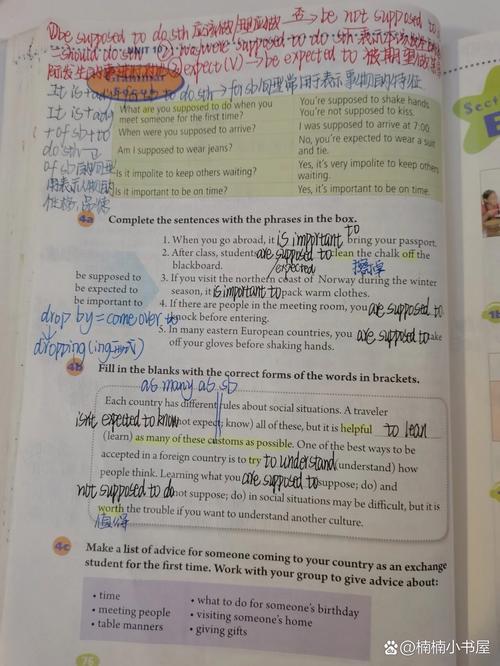
课题: Unit 10 You're supposed to shake hands. (你被期望/应该握手。) 课时: 第1课时 (Section A 1a-2d) 课型: 新授课 授课对象: 九年级学生
教学目标
-
语言知识目标:
 (图片来源网络,侵删)
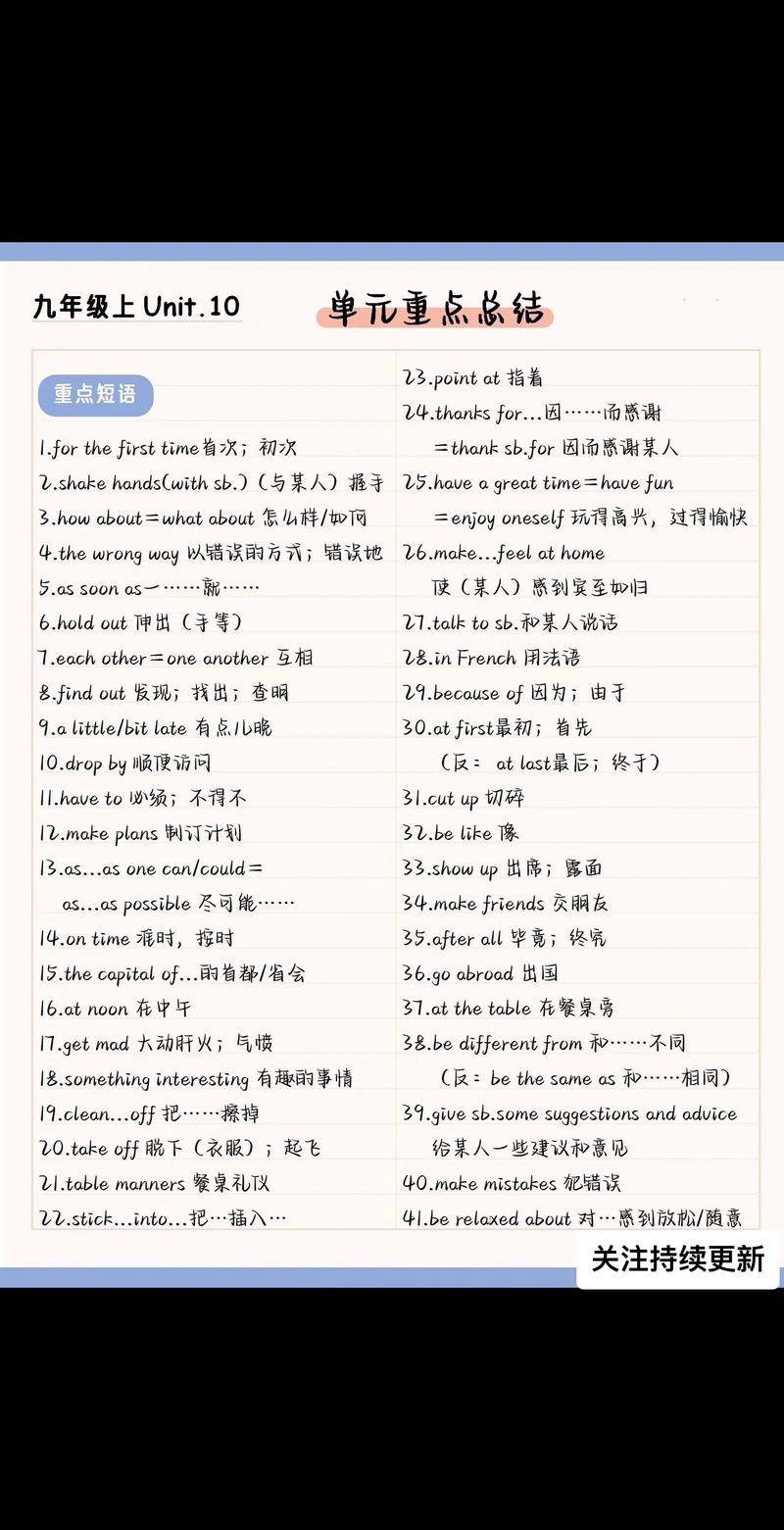
- 核心词汇: 掌握并运用本单元的重点词汇,如
suppose,be supposed to,shake hands,kiss,bow,greet,table manners,fork,chopsticks,drop,elbow,napkin等。 - 核心句型: 熟练运用 "be supposed to do sth." 结构来表达社会习俗、规则和期望。
- — What are you supposed to do when you meet someone for the first time?
- — You're supposed to shake hands.
- — You're not supposed to... / You're supposed to...
- 核心词汇: 掌握并运用本单元的重点词汇,如
-
语言技能目标:
- 听: 能听懂关于不同国家文化习俗和礼仪的简短对话。
- 说: 能运用 "be supposed to" 结构就日常礼仪和餐桌礼仪进行简单的问答和交流。
- 读: 能读懂关于文化习俗的简短材料,获取关键信息。
- 写: 能运用所学句型写出关于某个特定场合(如初次见面、餐桌用餐)的礼仪规则。
-
情感态度与文化意识目标:
- 培养学生对不同文化习俗的尊重、理解和包容的态度。
- 引导学生反思并学习中国的传统礼仪,增强文化自信。
- 激发学生用英语了解世界、传播中国文化的兴趣。
-
学习策略目标:
- 通过小组讨论、情景对话等方式,合作探究,共同学习。
- 学会通过上下文猜测词义,理解文化差异。
教学重难点
-
教学重点:
 (图片来源网络,侵删)
- 掌握并熟练运用核心词汇和
be supposed to do句型。 - 理解并运用该句型来谈论不同文化背景下的行为规范和礼仪。
- 掌握并熟练运用核心词汇和
-
教学难点:
be supposed to的用法及其与should的细微区别(be supposed to更侧重于“习俗、规则、期望”,而should更侧重于“建议、义务”)。- 在实际交际中灵活运用目标语言进行得体的交流。
- 理解并尊重文化差异,避免文化冲突。
教学准备
- 多媒体课件
- 单词卡片
- 世界地图或各国代表图片(如巴西、日本、美国、墨西哥等)
- 视频短片(关于不同国家问候方式的片段)
教学过程
Step 1: Warm-up & Lead-in (热身与导入) (5 mins)
- Greeting: Greet the students as usual.
- T: Good morning, class!
- Ss: Good morning, teacher!
- Video Watching: Play a short video showing people from different countries greeting each other (e.g., shaking hands, bowing, kissing on the cheek).
- T: Look at the video. What are they doing? (Ss may answer: They are greeting each other.)
- T: Yes! They are greeting each other in different ways. Do you know why? (Ss may guess: Because they are from different countries.)
- Purpose: 通过直观的视频导入,激发学生兴趣,自然引出“文化习俗”和“礼仪”的主题,为学习新知做好铺垫。
Step 2: Presentation (新知呈现) (15 mins)
-
Vocabulary Presentation:
 (图片来源网络,侵删)
- Show pictures or use body language to present new words.
shake hands: T performs the action. "Look, I'm shaking hands. This is a way to greet."bow: T performs a slight bow. "In some countries, people bow to show respect."kiss: T points to cheek. "In some countries, people kiss on the cheek when they greet."greet: "When you meet someone, you greet them."
- Have students repeat the words and practice the actions.
- Show pictures or use body language to present new words.
-
Sentence Structure Presentation:
- Create a Situation: "Imagine you are a foreigner in Brazil. You meet someone for the first time. What should you do? What is the right way?"
- Introduce
be supposed to:- T: In Brazil, you are supposed to kiss. (Write on the blackboard)
- T: What does "supposed to" mean? It means "应该、被期望做某事". It's a rule or a custom.
- Contrast with
should: "You should be on time." (This is my advice). "You are supposed to be on school." (This is the school rule). The difference is subtle at this stage, but emphasize thatbe supposed tois about external rules/customs.
- Practice the Q&A Pattern:
- T: (To a student) A, what are you supposed to do when you meet me? (Point to the "shake hands" picture)
- S1: I'm supposed to shake hands.
- T: Excellent! Let's ask and answer in pairs. Use the pictures on the screen.
Step 3: Practice (练习) (15 mins)
-
Activity 1a (Matching):
- Ask students to open their books to Page 75. Look at the pictures in 1a.
- T: Match the countries with the customs. Work in pairs and check your answers.
- Check the answers as a class.
- Purpose: 巩固新词汇与国家文化的初步联系。
-
Activity 1c (Pair Work):
- Focus on the conversation in 1c.
- T: Now, let's practice the conversation. Student A, you are Maria. Student B, you are Dan. Talk about the customs in Brazil and Japan.
- Give students a minute to practice, then ask a few pairs to present their dialogue.
- Purpose: 模板化练习,让学生掌握核心句型的应用场景。
-
Listening Activity (1b):
- T: Now, let's listen to the recording. Maria is talking about her exchange program experiences. Listen and check the customs you hear in 1a.
- Play the recording. Students listen and complete the task.
- Play it again if necessary. Check answers.
- Purpose: 训练学生听取关键信息的能力。
Step 4: Production (产出) (7 mins)
- Group Discussion (2d & Extension):
- Task: "Every country has its own table manners. Let's have a group competition. Your group needs to list 3-5 rules of table manners in China. You can use 'You are supposed to...' or 'You are not supposed to...'."
- Divide students into groups of 4. Give them 3 minutes to discuss and write down their ideas.
- Example Sentences:
- You're supposed to wait for everyone to start eating.
- You're not supposed to talk with your mouth full.
- You're supposed to use chopsticks correctly.
- You're not supposed to point at others with your chopsticks.
- Ask each group to share one or two of their rules. The teacher writes them on the board.
- Purpose: 将所学语言知识迁移到学生熟悉的中国文化情境中,进行创造性的语言输出,同时进行文化渗透,增强文化自信。
Step 5: Summary & Homework (总结与作业) (3 mins)
-
Summary:
- T: Today we learned how to talk about customs and rules using "be supposed to". We know that different countries have different cultures. It's very important to be respectful and open-minded. What have we learned today?
- Guide students to summarize: Key words (
shake hands,bow...), Key structure (be supposed to do...), The importance of cultural understanding. - T: Great job! Remember, when in Rome, do as the Romans do. (入乡随俗)
-
Homework:
- Level 1 (基础): Copy the new words and key sentences three times.
- Level 2 (应用): Write a short passage (at least 5 sentences) about the table manners in China, using "be supposed to" and "not supposed to".
- Level 3 (拓展): Interview your parents or grandparents about an old Chinese custom (e.g., how to greet elders, how to behave at a wedding). Write down 3 things you are supposed to do and share it with the class next time.
板书设计
A clear and organized blackboard design helps students follow the lesson.
| Unit 10 You're supposed to shake hands. |
|---|
| New Words: |
suppose (v.) be supposed to (应该,被期望) |
shake hands bow kiss greet |
table manners fork chopsticks |
| Key Structures: |
| — What are you supposed to do when you meet someone? |
| — You're supposed to shake hands. |
| — You're not supposed to... |
| Cultural Customs (from 1a): |
| Brazil: kiss |
| Japan: bow |
| Mexico: shake hands |
| Table Manners in China (from students): |
| You're supposed to... |
| You're not supposed to... |
教学反思
本节课的设计力求以学生为中心,通过情景创设、小组合作等多种形式,让学生在“用”中学,成功之处在于:
- 导入环节的视频直观生动,能迅速抓住学生注意力。
- 文化对比(特别是最后的餐桌礼仪讨论)环节,将语言学习与文化意识培养紧密结合,学生参与度高。
- 分层作业的设计照顾到了不同层次学生的需求,既有巩固性练习,又有拓展性探究。
需要改进之处:
- 在讲解
be supposed to和should的区别时,可以设计一个更清晰的对比表格或更多例句,帮助学生更好地理解。 - 课堂时间有限,小组讨论的深度可以进一步加强,比如引导学生思考“为什么会有这样的文化差异?”
- 对于基础较弱的学生,可以在Pair Work环节提供更多的句型支架,如句型卡片。