大学英语作文 春节
作文示例 2026年1月4日 10:32:54 99ANYc3cd6
传统与现代交融的春节
The Spring Festival: A Tapestry of Tradition and Modernity**
The Spring Festival, or Chinese New Year, stands as the most cherished and significant traditional holiday in China. More than just a date on the calendar, it is a profound cultural phenomenon that weaves together ancient customs with the vibrant pulse of contemporary life, creating a unique and ever-evolving celebration.
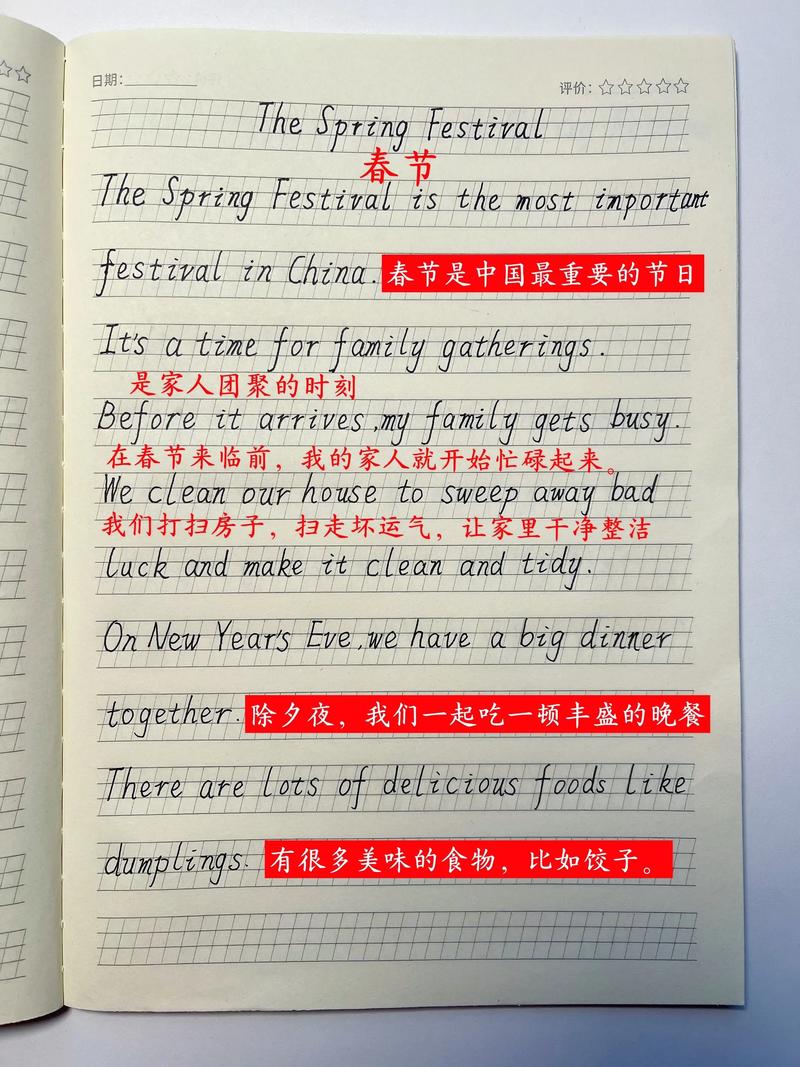
At its heart, the Spring Festival is a time-honored tradition of family reunion. For weeks leading up to the festival, the "Spring Festival Rush," or Chunyun, witnesses the world's largest annual human migration as millions of people travel back to their hometowns. This mass exodus is a powerful testament to the deep-seated value of family in Chinese culture. The reunion dinner on New Year's Eve is the centerpiece of this tradition, where generations gather around a table laden with symbolic dishes, such as dumplings (wealth) and fish (surplus), to share stories, laughter, and blessings.
However, the celebration of the Spring Festival is not static. It has gracefully adapted to the rhythm of modern society. The once ubiquitous paper red envelopes, or hongbao, have found a new digital life on platforms like WeChat. With a simple tap on a smartphone screen, virtual red packets containing money are sent across cities and countries, instantly connecting loved ones. Similarly, while the vibrant dragon and lion dances still captivate crowds in the streets, many families now opt for watching the elaborate Spring Festival Gala on television, a national broadcast that has become a modern ritual in itself.
In conclusion, the Spring Festival is a living tradition. It masterfully balances the preservation of ancestral heritage with the embrace of modern convenience. It is a festival that not only honors the past but also adapts to the present, ensuring that its spirit of love, hope, and renewal continues to thrive in the hearts of Chinese people, both at home and abroad.
春节的文化内涵与全球影响
Beyond the Fireworks: The Cultural Significance of the Spring Festival**

When the color red adorns every street and the sound of firecrackers fills the air, the world knows that the Spring Festival has arrived. While often perceived as a spectacular display of fireworks and feasting, the true essence of this Chinese New Year extends far beyond these surface-level festivities. It is a rich tapestry woven with threads of history, mythology, and profound cultural values.
The festival's origins are steeped in ancient folklore, most notably the tale of the monster Nian. Legend has it that Nian was afraid of three things: the color red, loud noises, and bright light. This myth gave birth to some of the most iconic traditions: hanging red lanterns and couplets on doors to ward off evil, setting off firecrackers to scare away the beast, and staying up late on New Year's Eve to "guard against the year." These customs are not merely for entertainment; they are symbolic acts of purification, renewal, and hope for a prosperous year ahead.
Furthermore, the Spring Festival is a powerful expression of core Confucian values. The act of returning home for the reunion dinner is a tangible manifestation of filial piety and respect for one's elders. It is a time to honor ancestors, pay respects to the elderly, and pass down traditions to the younger generation. The exchange of gifts, particularly red envelopes containing money, is a gesture of goodwill and a blessing for the recipient's future. These rituals reinforce social bonds and strengthen the family structure, which is the cornerstone of Chinese society.
In an increasingly globalized world, the Spring Festival has transcended its cultural borders, captivating audiences worldwide. Major cities from London to New York now host grand parades and light shows to celebrate the lunar new year. This global recognition not only showcases the beauty of Chinese culture but also fosters cross-cultural understanding. It transforms the Spring Festival from a national holiday into a global celebration of diversity and new beginnings.
Ultimately, the Spring Festival is a mirror reflecting the soul of Chinese culture. It is a time to reflect on the past, cherish the present, and look forward to the future with optimism. Its enduring appeal lies in its ability to connect people through shared stories, values, and the universal human desire for a fresh start.
个人视角下的春节记忆
My Most Cherished Spring Festival Memory**
For many, the Spring Festival is a grand, collective celebration. But for me, it is a mosaic of intimate, personal moments that have been etched into my memory. Among all the festive spectacles, my most cherished memory is not the dazzling fireworks or the lavish reunion dinner, but a quiet afternoon spent preparing dumplings with my grandmother.
I was about ten years old, and the air in my grandmother's kitchen was thick with the aroma of flour and the savory scent of the pork and cabbage filling. My grandmother, her hands wrinkled but sure, demonstrated the delicate art of folding the dough into perfect half-moons. I, on the other hand, produced lopsided, misshapen bundles that threatened to fall apart. Instead of scolding me, she just smiled and gently guided my hands. "It's not about perfection," she said, her voice warm like the winter sun. "It's about the love you put into it." That afternoon, we talked, we laughed, and our kitchen was filled with more than just the scent of food; it was filled with conversation and the quiet joy of togetherness.
As I grew older, I came to understand the deeper symbolism of those simple dumplings. They represented wealth and prosperity for the coming year, but more importantly, they were a symbol of family unity. Each dumpling, carefully crafted by different hands, was like a family member, unique yet part of a whole. The act of making them together was a ritual of bonding, a tangible way of creating something beautiful as a family.
Now, living far from home, I still try to make dumplings during the Spring Festival. They are never as good as my grandmother's, but the process still connects me to my roots and to her. This memory reminds me that the true spirit of the Spring Festival is not found in grand gestures, but in the simple, heartfelt connections we share with our loved ones. It is in these quiet, personal moments that the essence of the holiday—love, family, and hope—truly comes alive.
核心词汇与句型
核心词汇:
-
名词:
- Reunion: 团聚
- Tradition/Custom: 传统/习俗
- Heritage: 遗产,传统
- Symbolism: 象征意义
- Prosperity/Wealth: 繁荣/财富
- Renewal/Rebirth: 更新/重生
- Mythology/Legend: 神话/传说
- Ancestor: 祖先
- Filial Piety: 孝道
- Migration (human migration): 迁移 (人口迁移)
- Mosaic: 马赛克,比喻由许多小部分组成的整体
- Ritual: 仪式
-
动词:
- Celebrate: 庆祝
- Gather/Reunite: 聚集/团聚
- Honor/Tribute: 尊敬/致敬
- Ward off: 驱赶
- Embrace/Adapt to: 拥抱/适应
- Weave together: 将...编织在一起
- Transcend: 超越
- Cherish: 珍视
- Etch into memory: 铭记在心
-
形容词:
- Cherished/Precious: 珍贵的
- Profound/Deep: 深刻的
- Vibrant/Lively: 充满活力的
- Iconic/Symbolic: 标志性的/象征性的
- Intimate: 亲密的
- Eternal/Enduring: 永恒的/持久的
- Global/International: 全球的/国际的
实用句型:
-
定义/引入主题:
- The Spring Festival, or Chinese New Year, stands as the most... holiday in China.
- More than just a..., it is a profound cultural phenomenon that...
- When the color red adorns every street..., the world knows that... has arrived.
-
表达对比:
- While often perceived as..., the true essence of... extends far beyond...
- However, the celebration of... is not static. It has gracefully adapted to...
- It masterfully balances the preservation of... with the embrace of...
-
举例说明:
- This is best illustrated by the tradition of...
- A powerful example of this value is...
- Take the custom of... for instance.
-
表达个人观点/
- In conclusion, the Spring Festival is a living tradition.
- Ultimately, the Spring Festival is a mirror reflecting the soul of...
- For me, it is a mosaic of intimate, personal moments.
- This memory reminds me that the true spirit of... is not found in..., but in...
-
高级连接词:
- Furthermore / Moreover: 而且
- Consequently / As a result: 因此
- Nevertheless / However: 然而
- In essence / At its heart: 本质上,在其核心
希望这些范文和资源对您有帮助!祝您学习进步!