七年级英语完型答案怎么用才有效?
校园之窗 2026年1月3日 14:46:17 99ANYc3cd6
第一篇:校园生活
这篇完形填空讲述了学生在新学期的感受和与同学的互动,侧重于情感和人际关系的词汇。
Passage 1
A new school year begins. I am in Grade Seven now. I feel very 1 . Everything is new. The teachers are new, and the classmates are new, 2 . I don't know anyone in my class. I'm a little 3 .
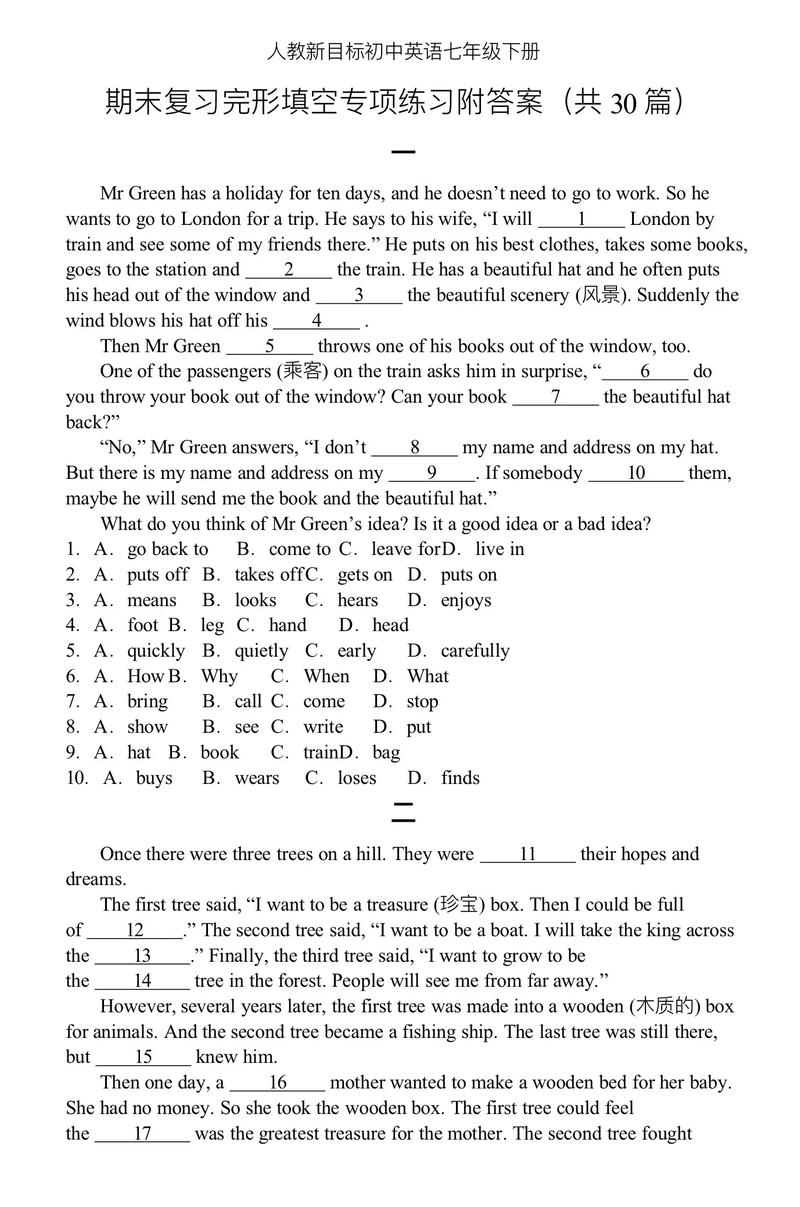
On the first day, a girl with a round face and big eyes smiles at me. She comes to me and says, "Hi, I'm Lily. 4 are you?" I tell her my name is Tom. "Nice to meet you, Tom," she says. Then we 5 to each other. After class, Lily asks me to play basketball with her 6 . I'm happy to say yes. We have 7 fun on the playground.
Now, Lily and I are good friends. We often do homework and talk 8 our school life. I don't feel nervous 9 . I think making new friends is very 10 . I love my new school and my new friends.
Answer Key & Analysis (答案与解析)
答案:
- B
- C
- A
- D
- A
- B
- C
- D
- A
- B
解析:
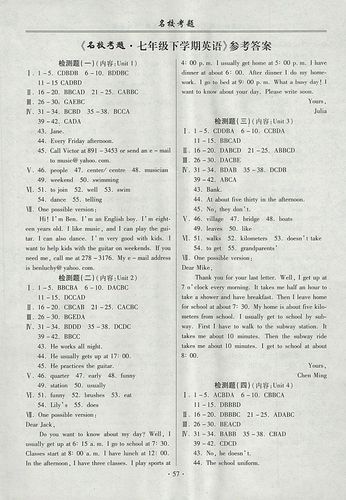
- B. excited (兴奋的),根据后文 "Everything is new" (一切都是新的) 可以推断出作者应该是感到兴奋的,而不是 "tired" (疲惫的), "bored" (无聊的) 或 "angry" (生气的)。
- C. too (也),这里表示“同学也是新的”,用 "too" 放在句末表示“也”。
- A. nervous (紧张的),因为是新环境,不认识任何人,所以感到紧张是合理的。"Happy" (高兴的), "relaxed" (放松的), "sad" (伤心的) 不符合语境。
- D. What (什么),这是询问名字的标准句型 "What's your name?"。
- A. talk (交谈),根据上下文,Lily 主动和作者说话,之后他们开始交谈。"Listen" (听), "write" (写), "sing" (唱) 不太符合初次见面的场景。
- B. after school (放学后),放学后一起玩是很自然的事情。"In class" (在课堂上) 不可能,"at night" (在晚上) 和 "on Sunday" (在星期天) 时间太具体,没有上下文支持。
- C. much (非常),固定搭配 "have much fun" 表示“玩得很开心”。"many" 通常修饰可数名词复数,"a little" 和 "a few" 表示“有一点”,程度不够。
- D. about (,谈论某个话题,用介词 "about"。"on" 表示“在...上面”,"with" 表示“和...一起”,"for" 表示“为了”。
- A. anymore (再也不)。 "not... anymore" 是固定搭配,表示“不再...”,这里指作者现在不再感到紧张了。
- B. important (重要的),交朋友是人生中一件重要的事情。"difficult" (困难的), "boring" (无聊的), "impossible" (不可能的) 不符合积极的语境。
第二篇:个人爱好
这篇完形填空围绕一个学生的爱好——阅读展开,考察学生对活动、地点和书籍相关词汇的掌握。
Passage 2
My name is Amy. My favorite hobby is reading. I 1 books very much. I think books are my best friends.
Every weekend, I go to the 2 . It's not far from my home. There are many different kinds of books there. I like storybooks 3 . They are very interesting. I often sit in a 4 corner and read quietly. Sometimes, I read 5 . I like books about animals, science, and history.
Last week, I 6 a very good book about space. It tells me many things about the stars and the planets. It is very 7 . I read it every day. Now I 8 a lot about the universe. Reading is a good hobby. It helps me learn new things and 9 my free time. I will 10 reading books for my whole life.
Answer Key & Analysis (答案与解析)
答案:
- C. love
- A. library
- B. best
- D. quiet
- C. about
- B. bought
- A. wonderful
- D. know
- B. enjoy
- C. keep
解析:
- C. love (爱),表达对书的强烈喜爱,用 "love" 最合适。"read" (读) 是动作,但 "love reading" 更能体现爱好。"buy" (买) 和 "write" (写) 是具体行为,不是概括性爱好。
- A. library (图书馆),借书或看书最常去的地方是图书馆。"school" (学校), "shop" (商店), "park" (公园) 不符合读书的场景。
- B. best (最),表示最喜欢故事书,用 "best"。"good" (好的) 程度不够,"new" (新的) 和 "old" (旧的) 是无关信息。
- D. quiet (安静的),在图书馆里需要一个安静的环境看书。"busy" (繁忙的), "noisy" (吵闹的), "bright" (明亮的) 都不适合。
- C. about (,后面列举了动物、科学、历史,这些都是书的主题,所以用 "about"。"on" 也可以,但 "about" 更常用和口语化。
- B. bought (买),根据 "Last week" (上周) 可以判断是过去发生的动作,所以用过去式。"buy" 是原形,"reads" 是第三人称单数现在时,"is buying" 是现在进行时,与时间状语不符。
- A. wonderful (精彩的),描述一本好书,用 "wonderful" 非常恰当。"boring" (无聊的) 与 "good book" 矛盾,"difficult" (困难的) 和 "expensive" (昂贵的) 是可能的,但 "wonderful" 更能表达书的内容吸引人。
- D. know (知道),通过读书,作者“知道”了很多关于宇宙的知识。"learn" (学习) 也可以,但 "know" 强调结果是“知道了”。"see" (看见) 和 "hear" (听见) 不符合获取知识的语境。
- B. enjoy (享受),读书能帮助作者享受空闲时间。"spend" (度过) 也可以,但 "enjoy" 更能体现读书带来的乐趣。"save" (节省) 和 "waste" (浪费) 不符合积极语境。
- C. keep (保持)。 "keep doing sth." 是固定搭配,意为“继续做某事”。“将一辈子继续读书”用这个短语最贴切。"start" (开始), "finish" (结束), "stop" (停止) 与文意相反。
第三篇:日常故事
这篇完形填空讲述了一个小故事,关于男孩帮助老人的经历,侧重于动词、形容词和连词的运用。
Passage 3
Last Sunday, I was walking in the park. Suddenly, I saw an old man 1 on the ground. He looked worried and couldn't get up. I ran to him and asked, "Are you 2 , sir?" He said, "I think I hurt my leg."
I wanted to help him. 3 , I was a little scared. What should I do? Then I remembered what my teacher told us: "We should help people in 4 ." So I tried my best to help the old man stand up. It was not 5 . He was very heavy. I called 110 for help 6 .
A few minutes later, a policeman came. He took the old man to the 7 . Before he left, the old man said to me, "Thank you very much, young man. You are a 8 boy." I felt very happy. Helping others makes me feel good.
I think everyone should learn to 9 others. It doesn't have to be a big thing. A small act of kindness can make a big 10 . Let's be kind to everyone.
Answer Key & Analysis (答案与解析)
答案:
- B. sitting
- C. OK
- A. But
- D. trouble
- B. easy
- A. quickly
- C. hospital
- D. kind
- B. help
- C. difference
解析:
- B. sitting (坐着),根据 "He looked worried and couldn't get up" (他看起来很焦虑,站不起来) 可以推断出他是坐在地上的。"falling" (正在跌倒) 是进行时,但这里描述的是已经发生的状态。"lying" (躺着) 和 "running" (跑着) 与后文矛盾。
- C. OK (没事的),这是询问对方是否受伤时的常用语,意为“你还好吗?/没事吧?"。 "Happy" (高兴的), "angry" (生气的), "tired" (疲惫的) 不符合当时的情景。
- A. But (,这里表示转折,虽然想帮忙,但是有点害怕。"And" ( 表示顺承,"So" ( 表示结果,"Or" (或者) 表示选择,均不符合逻辑。
- D. trouble (麻烦),固定搭配 "in trouble" 意为“处于困境中”。 "danger" (危险), "need" (需要), "hurry" (匆忙) 意思接近,但 "in trouble" 是最地道、最常用的表达。
- B. easy (容易的),根据 "He was very heavy" (他很重) 可以推断出扶他起来不容易。"difficult" (困难的) 和 "easy" 是反义词,"happy" (高兴的) 和 "sad" (伤心的) 是情感词,不合适。
- A. quickly (迅速地),描述打电话的动作,用副词 "quickly" 修饰。"slowly" (缓慢地) 与 "A few minutes later" 矛盾,"happily" (高兴地) 和 "quietly" (安静地) 是无关信息。
- C. hospital (医院),老人腿受伤了,最应该去的地方是医院。"school" (学校), "shop" (商店), "library" (图书馆) 不符合。
- D. kind (善良的),老人因为“我”的帮助而感谢,所以称赞“我”是一个善良的孩子。"brave" (勇敢的) 也可以,但 "kind" 更直接地描述了帮助他人的品质。"clever" (聪明的) 和 "tall" (高的) 不符合语境。
- B. help (帮助),文章主旨就是帮助他人,所以这里是 "learn to help others" (学习帮助他人)。"love" (爱), "call" (叫), "find" (找到) 不符合主旨。
- C. difference (不同/影响),固定搭配 "make a difference" 意为“产生影响,有所作为”,这句话的意思是“一个小小的善举可以带来巨大的影响”。 "mistake" (错误), "money" (钱), "noise" (噪音) 不符合文意。
希望这些练习题和解析对你的英语学习有帮助!