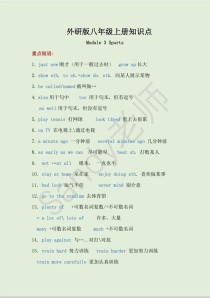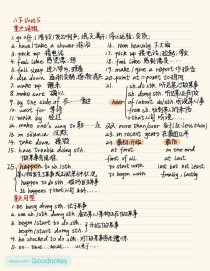
八年级下册英语单元重点
校园之窗 2025年12月22日 13:10:45 99ANYc3cd6
下面我将按照人教版新目标 Go for it! 的教材结构,为你梳理八年级下册英语的单元重点,包括核心语法、重点词汇、功能句型以及学习建议。
总体学习目标
- 语法: 掌握核心的时态(如过去进行时、现在完成时)、情态动词、被动语态等。
- 词汇: 扩大词汇量,特别是与各单元主题相关的词汇。
- 功能: 能够就“建议、请求、帮助、经历、规则”等话题进行简单的交流。
- 阅读与写作: 能够读懂中等难度的语篇,并能运用所学词汇和句型进行连贯的写作。
各单元重点详解
Unit 1: What's the matter? (怎么了?)
主题: 健康问题与建议
(图片来源网络,侵删)
核心语法:
- 用
What's the matter? / What's wrong with...?询问健康问题What's the matter with you?/What's wrong with your brother?
- 用
should和shouldn't提出建议You should lie down and rest.(你应该躺下休息。)He shouldn't eat anything for two hours.(他两个小时 shouldn't 吃任何东西。)
- 情态动词
could用于提出礼貌的请求Could you please get me some water?(你能给我弄点水吗?)Could I use your pen?(我能用一下你的笔吗?)
have a + 疾病的表达方式have a cold(感冒),have a fever(发烧),have a sore throat(喉咙痛),have a headache(头痛),have a stomachache(胃痛)
重点词汇:
- 名词:
matter, problem, rest, advice, thirst, stress, sugar, balance, habit - 动词/动词短语:
hurt, have, go to a doctor, lie down, drink hot tea with honey - 形容词:
stressed, angry, thirsty, hungry, tired
功能句型:
- A: What's the matter? / What's wrong with you? B: I have a sore back.
- A: That sounds serious. You should see a doctor. B: Thank you for your advice.
Unit 2: I'll help to clean up the city parks. (我将帮助打扫城市公园。)
主题: 公益活动与志愿服务
(图片来源网络,侵删)
核心语法:
- 动词不定式作宾语、宾语补足语、目的状语
- 作宾语:
I want to join the Clean-Up Day.(我想参加清洁日。) - 作宾语补足语:
The teacher asked us to clean the classroom.(老师叫我们打扫教室。) - 作目的状语:
He came here to help us.(他来这里是为了帮助我们。)
- 作宾语:
used to do过去常常做某事I used to be afraid of the dark.(我过去怕黑。)
重点词汇:
- 动词/动词短语:
clean up, cheer up, give out, come up with, put off, write down, call up, care for, fix up, take after - 名词:
volunteer, sign, notice, feeling, satisfaction, joy, owner, journey - 形容词:
lonely, happy, excited, interested, disabled
功能句型:
- I'd like to work outside. / You could help clean up the city parks.
- We need to come up with a plan for the City Park Clean-Up Day.
- He fixed up his bicycle and gave it away to a children's home.
Unit 3: Could you please clean your room? (你能打扫一下你的房间吗?)
主题: 家庭责任与请求许可
核心语法:
Could you please...?和Could I...?礼貌地提出请求和请求许可Could you please take out the trash?(你能倒一下垃圾吗?)Could I borrow some money?(我能借点钱吗?)
make和do的区别make the bed(铺床),make breakfast(做早饭),make a mess(弄得一团糟)do the dishes(洗碗),do the laundry(洗衣服),do chores(做家务)
have to和 `must 的区别have to表示客观需要,must表示主观义务。I have to finish my homework now.(我必须现在完成作业。 - 客观要求)You must be quiet in the library.(在图书馆你必须保持安静。 - 规则要求)
重点词汇:
- 动词/动词短语:
do, make, fold, sweep, take out, mess, borrow, invite, hate, stress, waste - 名词:
chore, trash, garbage, dish, stress, fair, waste - 副词:
all the time
功能句型:
- A: Could you please take out the trash? B: Yes, sure. / Sorry, I can't. I have to go to work.
- A: I hate to do chores. B: Well, I hate to do the dishes, but I like to sweep the floor.
Unit 4: Why don't you talk to your parents? (你为什么不和你的父母谈谈呢?)
主题: 人际关系与解决问题
核心语法:
Why don't you...?提出建议Why don't you talk to your parents?(你为什么不和你的父母谈谈呢?)
should的其他用法:should dovs.should be doingYou should talk to them about your problems.(你应该和他们谈谈你的问题。)You should be studying for the test.(你本应该在为考试学习的。 - 表示责备)
instead of代替...He played games instead of doing his homework.(他玩游戏,而不是做作业。)
重点词汇:
- 名词: `pressure, competition, opinion, instead, usual, friendship, communication, argue, nervous, mile, explain, clear**
- 形容词:
instead(注意:这里instead也可以作副词),nervous, angry, quick, wrong, clear - 动词短语:
argue with, get on well with, communicate with, cut out, take part in, focus on
功能句型:
- A: I'm really stressed out. B: You should talk to someone. Why don't you talk to your parents?
- A: I argued with my best friend. B: Maybe you should write him a letter to explain how you feel.
Unit 5: What were you doing when the rainstorm came? (暴风雨来的时候,你正在做什么?)
主题: 过去进行时
核心语法:
- 过去进行时
- 结构:
was/were + doing - 用法: 表示过去某个时间点或时间段正在进行的动作。
- 标志词:
at 8:00 last night, this time yesterday, when... - 例句:
I was doing my homework at 8:00 last night.(昨晚8点我正在做作业。) while和when的区别:while后接过去进行时,表示一个长动作。when后接一般过去时,表示一个短动作或事件。I was walking home when it started to rain.(我正在走回家,这时开始下雨了。 - 走路是长动作,下雨是短事件)
- 结构:
重点词汇:
- 名词:
storm, rainstorm, wind, light, report, area, wood, window, flashlight, wood, mess, date, passage, student, world - 动词:
report, begin, realize, rise, fall, beat, against, die down, pick up, - 形容词:
heavy, sudden, strange, alive
功能句型:
- A: What were you doing at the time of the rainstorm? B: I was waiting for the bus when it began to rain heavily.
Unit 6: An old man tried to move the mountains. (一位老人试图移动山。)
主题: 故事与传说
核心语法:
unless引导的条件状语从句 (相当于if...not...)Unless you believe in yourself, nobody else will.(除非你相信自己,否则没人会。)
so...that...和such...that...结果状语从句so + 形容词/副词 + that...(..以至于...)He ran so fast that I couldn't catch him.(他跑得如此快,以至于我追不上他。)
such + (a/an) + 形容词 + 名词 + that...(..的...以至于...)It was such a funny story that we all laughed.(这是一个如此有趣的故事,以至于我们都笑了。)
not...until...直到...才...He didn't go to bed until 11 o'clock.(他直到11点才上床睡觉。)
重点词汇:
- 动词:
shoot, remind, bit, stick, remind...of..., continue, marry, turn...into..., become - 名词:
bit(一点),god, step, husband, wife, whole, point, voice, beauty, husband, wife, smile, voice, husband, wife, smile, voice - 形容词:
whole, magic, dead, brave, silly, fit, final, main, western, eastern
功能句型:
- The story reminds us that anything is possible if we work hard.
- Unless you have a partner, you can't play the game.
- He was so tired that he fell asleep as soon as he lay down.
Unit 7: What's the best movie theater? (最好的电影院是哪家?)
主题: 作比较与发表意见
核心语法:
- 最高级
- 结构:
the + 形容词/副词最高级 + in/of... - 规则变化: -est, 或 more/most + 形容词/副词原级
- 不规则变化:
good/well -> best, bad/badly -> worst, many/much -> most, far -> farthest/furthest - 例句:
This is the best movie theater in town.(这是镇上最好的电影院。)
- 结构:
重点词汇:
- 形容词/副词:
comfortable, worse, cheapest, most popular, friendliest, most important, boring, creative, beautifully, quietly - 名词:
theater,screen, song, DJ, cinema, talent, example, prize, winner, example, prize, winner, example, prize, winner - 动词:
choose,create, win, play, enjoy, attend, service, act,
功能句型:
- A: What's the best movie theater? B: Sun Cinema. It has the biggest screens.
- A: Which radio station is the most popular? B: I think 970 AM is the best.
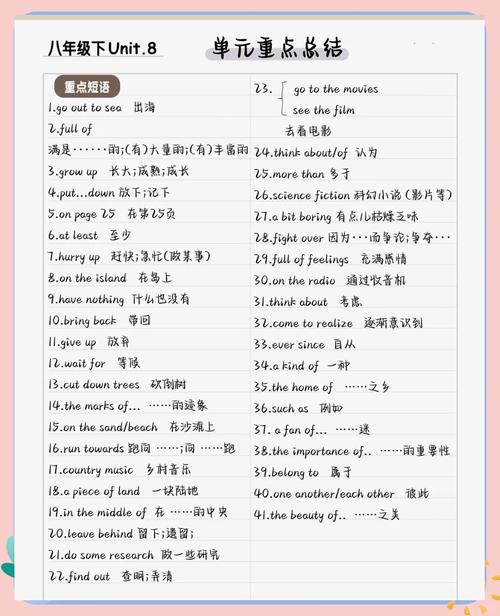
Unit 8: Have you read Treasure Island yet? (你读过《金银岛》吗?)
主题: 现在完成时
核心语法:
- 现在完成时
- 结构:
have/has + 过去分词 - 用法1: 表示过去发生并持续到现在的动作或状态。
I have lived here for ten years.(我在这里住了十年了。)
- 用法2: 表示过去发生过的动作,对现在有影响。
I have lost my key. I can't get in.(我把钥匙弄丢了,我进不去了。)
- 标志词:
already, yet, just, ever, never, since, for have/has gone to和have/has been to的区别:gone to:去了某地,人不在说话现场。been to:去过某地,人已经回来了。
- 结构:
重点词汇:
- 名词:
island, classic, page, progress, hurry, due, captain, fiction, technology, culture, put, character, ship, tool, gun, sand, cannibal, towards, land, treasure - 动词:
finish, read, write, write about, learn about, grow up, become, lose, make one's way, - 副词:
already, yet, just, ever, never
功能句型:
- A: Have you read Little Women yet? B: Yes, I have. / No, I haven't. I've just finished reading it.
- A: Has Sarah turned in her project yet? B: Not yet. She's still working on it.
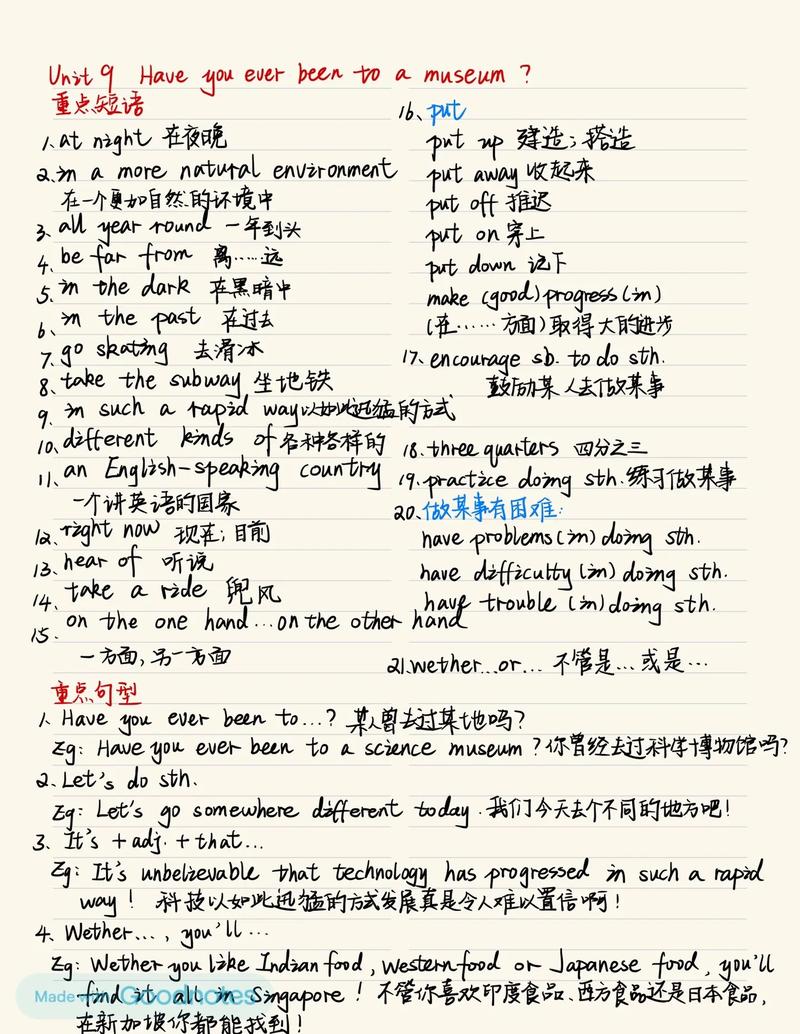
Unit 9: Have you ever been to a museum? (你 ever 去过博物馆吗?)
主题: 谈论经历
核心语法:
- 现在完成时 (
have/has + 过去分词) +ever和neverHave you ever been to a science museum?(你去过科学博物馆吗?)I've never been to a water park.(我从没去过水上乐园。)
How about...? / What about...?提出建议How about going to the amusement park?(去游乐园怎么样?)
would like to do想要做某事I'd like to try paragliding.(我想尝试滑翔伞。)
重点词汇:
- 名词:
amusement park, water park, museum, aquarium, zoo, space, movie, home, gallery, island, - 动词:
be, see, watch, take, walk, get, learn, listen, - 形容词:
fantastic, famous, boring, interesting, exciting, wonderful, free, safe, convenient, dark,
功能句型:
- A: Have you ever been to a museum? B: Yes, I have. I went to the art museum last year.
- A: Let's go somewhere different today. B: How about visiting the space museum?
Unit 10: I'm watching TV. (我正在看电视。)
主题: 现在进行时 vs. 一般现在时
核心语法:
- 现在进行时 (
am/is/are + doing)- 用法: 表示说话时正在进行的动作,或现阶段正在进行的动作。
- 例句:
Listen! Someone is knocking at the door.(听!有人在敲门。)
- 现在进行时表将来
- 用法: 表示已安排好的、近期要发生的计划或事情。
- 例句:
I'm meeting my friend this afternoon.(我今天下午要和朋友见面。)
- 一般现在时 vs. 现在进行时
- 一般现在时: 表示习惯性、经常性的动作或客观事实。
I watch TV every evening.(我每天晚上都看电视。 - 习惯)
- 现在进行时: 表示说话时正在进行的动作。
I'm watching TV now.(我现在正在看电视。 - 此时此刻)
- 一般现在时: 表示习惯性、经常性的动作或客观事实。
重点词汇:
- 动词:
watch, use, wash, clean, read, make, soup, talk, host, exercise, study, movie, soup, talk, host, exercise, study, movie, soup, talk, host, exercise, study, movie, - 副词:
just, now, every day - 名词:
newspaper, soup, movie, soup, movie,
功能句型:
- A: What are you doing? B: I'm watching TV.
- A: What's he doing? B: He's washing the dishes.
学习建议
- 语法是骨架: 八年级下册的语法点非常重要,尤其是过去进行时、现在完成时、情态动词、被动语态和比较级/最高级,一定要通过造句、练习题来彻底搞懂它们的用法和区别。
- 词汇是血肉: 每个单元的词汇都要背熟,特别是动词短语(如
clean up, give out, argue with)和固定搭配(如have a cold, make the bed),可以尝试在语境中记忆,而不是孤立地背单词表。 - 听力与口语: 多听课本录音和配套的听力材料,模仿语音语调,尝试和同学用目标句型进行对话练习,比如用
Could you please...?互相提要求,用Why don't you...?互相给建议。 - 阅读与写作: 阅读单元课文,分析里面的长难句和重点语法结构,写作时,有意识地运用本单元的词汇和句型,比如写一篇关于“一次难忘的经历”的短文,就可以用上现在完成时。
- 整理错题本: 准备一个错题本,把做错的题目,特别是语法题,整理下来,定期回顾,确保不再犯同样的错误。
希望这份详细的重点总结能帮助你更好地学习八年级下册的英语!加油!