春节英语作文如何写?
作文示例 2025年12月17日 06:17:17 99ANYc3cd6
初中生水平 (Junior High School Level)
这篇作文结构清晰,用词简单,适合初学者。 My Favorite Festival - Spring Festival**
Spring Festival, also called Chinese New Year, is my favorite festival. It is the most important traditional holiday in China. It usually comes in January or February. I love this festival because it is a time for family, happiness, and delicious food.
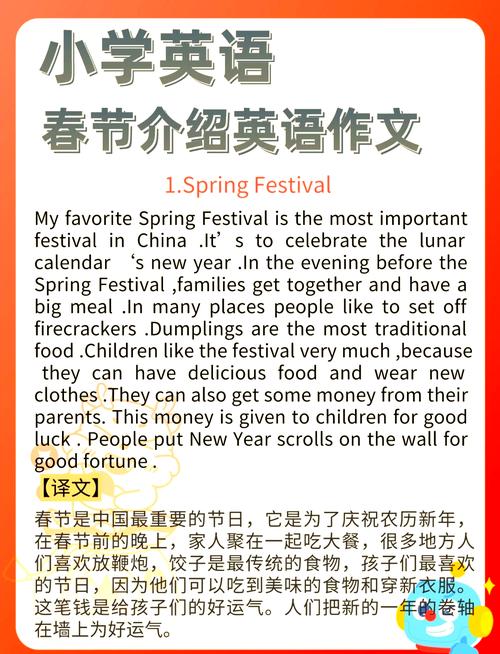
Before the festival, my family and I clean our house from top to bottom. This is to "sweep away" the bad luck of the old year. We also decorate our home with red couplets on the doors and windows. Red is a lucky color in China, and it brings us good fortune.
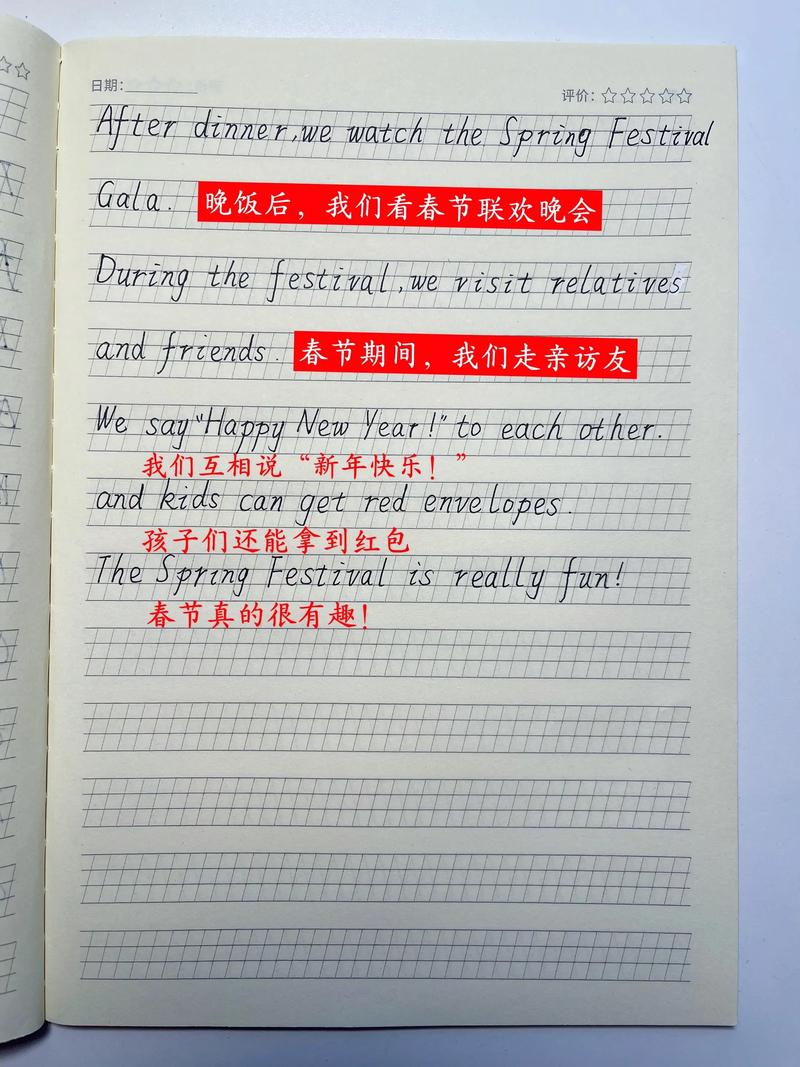
On New Year's Eve, my family gets together for a big dinner. We eat dumplings, fish, and many other delicious dishes. My favorite part is eating dumplings. We also watch the Spring Festival Gala on TV. It is a very popular show with singing, dancing, and funny sketches. At midnight, we set off fireworks to welcome the new year.
During the holiday, I get red envelopes, or "hongbao," from my parents, grandparents, and relatives. They are red packets with money inside. It means they wish me good luck and health. I also wear new clothes and visit my relatives. We say "Happy New Year" to each other and enjoy a happy time together.
Spring Festival is a wonderful time. It makes me feel warm and loved. I hope every day can be like Spring Festival!
高中生水平 (High School Level)
这篇作文用词更丰富,句式更多样,加入了更深层的思考和感受,适合高中生或更高水平的学习者。 The Tapestry of Tradition: My Experience with the Spring Festival**
To me, the Spring Festival, or Chinese New Year, is more than just a holiday; it is a vibrant tapestry woven with threads of ancient tradition, familial love, and the joyful anticipation of a new beginning. It is an annual pilgrimage that draws millions back to the warmth of their homes, a testament to the enduring power of family in the modern world.
The festival's preparations begin long before the actual date. There is a tangible sense of excitement in the air as families engage in a thorough "spring cleaning," symbolically sweeping away the misfortunes of the past year to make way for good luck. The streets and homes are then adorned with splashes of red—the color of joy and prosperity. Poetic couplets with auspicious wishes are pasted on doorways, and the glow of lanterns transforms the night into a scene of festive magic.
The pinnacle of the celebration is undoubtedly the New Year's Eve reunion dinner. This is no ordinary meal; it is a sacred ritual where family members, some of whom may only see each other once a year, gather around a table laden with symbolic dishes. Each food item carries a special meaning, from the whole fish, which signifies abundance, to the dumplings that resemble ancient gold ingots, promising wealth. As we share stories and laughter over this feast, we are not just eating; we are strengthening the bonds that connect us.
As the clock strikes midnight, the sky erupts in a spectacular symphony of fireworks and firecrackers, a cacophony designed to ward off evil spirits and welcome the arrival of the new year. The following days are spent visiting relatives, a custom known as "New Year visits." The act of giving and receiving "hongbao" (red envelopes) is a cherished tradition, not merely for the money inside, but as a tangible symbol of elders' blessings and good wishes for the younger generation's health and success.
In essence, the Spring Festival is a beautiful blend of the old and the new. It reminds us to honor our roots, cherish our loved ones, and embrace the future with hope. It is a time when the past, present, and future converge, leaving us with a heart full of gratitude and a spirit renewed.
简洁通用版 (Short & Versatile Version)
这篇篇幅较短,适合课堂作业或需要快速表达的场合。 Spring Festival**
Spring Festival, also known as Chinese New Year, is the most significant traditional festival in China. Celebrated in late January or February, it marks the beginning of a new lunar year and is a time for family reunions and new hopes.
The celebration starts with thorough house cleaning to sweep away bad luck. People decorate their homes with red lanterns and couplets, as red is a symbol of good fortune. On New Year's Eve, families enjoy a big reunion dinner, eating traditional foods like dumplings and fish, which have special meanings for prosperity. Many people also watch the Spring Festival Gala on TV.
During the holiday, children receive red envelopes, or "hongbao," containing money from elders as a gift for good luck. People visit relatives and friends, exchanging greetings of "Happy New Year."
The Spring Festival is a time filled with joy, laughter, and the warmth of family. It is a cherished tradition that connects people and brings hope for a wonderful new year.
核心词汇与短语 (Key Vocabulary & Phrases)
名词:
- Spring Festival / Chinese New Year: 春节
- Lunar New Year: 农历新年
- Reunion dinner: 团圆饭
- Red envelope(s) / Hongbao: 红包
- Fireworks / Firecrackers: 烟花 / 鞭炮
- Couplets: 对联
- Lanterns: 灯笼
- Tradition: 传统
- Celebration / Festivity: 庆典
- Prosperity: 繁荣,兴旺
- Good fortune / Good luck: 好运
- Relatives: 亲戚
动词:
- Celebrate: 庆祝
- Decorate: 装饰
- Gather / Get together: 聚集
- Sweep away (bad luck): 扫除(坏运气)
- Set off fireworks: 放烟花
- Exchange greetings: 互致问候
- Visit relatives: 拜访亲戚
形容词:
- Traditional: 传统的
- Festive: 喜庆的,节日的
- Lucky: 幸运的
- Important / Significant: 重要的
- Joyful / Happy: 快乐的
- Warm: 温暖的
- Auspicious: 吉祥的
短语:
- A time for...: 一个……的时间
- Look forward to: 期待
- Symbolize / Represent: 象征
- Ward off evil spirits: 驱邪
- New Year visits: 拜年
- Make resolutions: 下决心
- Strengthen family bonds: 加深家庭纽带