英语作文如何与父母相处?
作文示例 2025年12月12日 09:33:01 99ANYc3cd6
经典温馨版 (The Classic Heartwarming Essay)
The Bridge of Love and Understanding**
Family is the first school of life, and parents are our first and most important teachers. The relationship we have with them is a unique bond that shapes our character and values. Getting along well with our parents is not just a duty, but a journey of love, understanding, and mutual growth.
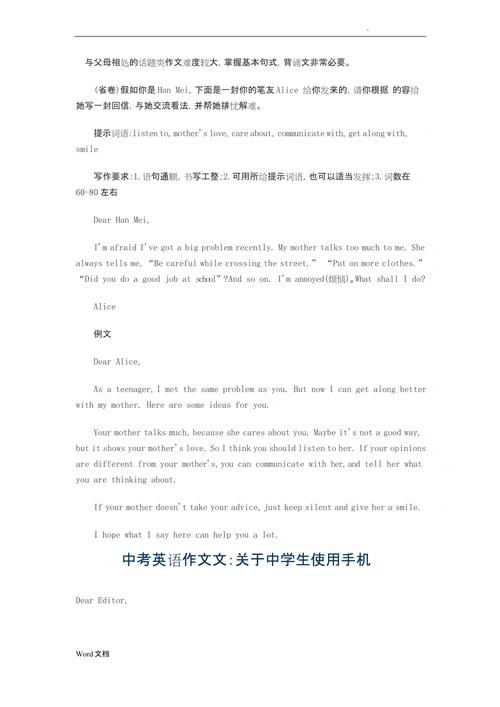
In my childhood, my parents were like two towering trees, providing me with shade and protection. They made decisions for me, from what I should wear to what I should learn. I relied on them completely. As I grew older and entered my teenage years, a natural distance began to form. I started to develop my own opinions and desires, which sometimes clashed with theirs. This period, often called the "generation gap," can be challenging. Misunderstandings arise, and simple conversations can turn into arguments.
However, I have learned that effective communication is the key to bridging this gap. Instead of keeping my feelings bottled up, I now try to express my thoughts and concerns calmly and respectfully. For instance, if I disagree with a rule, I will explain my reasoning instead of simply rebelling. Surprisingly, my parents are often more willing to listen when they feel respected. On the other hand, I also make an effort to see things from their perspective. They have more life experience, and their advice, though sometimes sounding old-fashioned, often comes from a place of deep love and concern.
Spending quality time together is another crucial element. We don't always need to have profound conversations. Simply watching a movie, cooking a meal together, or taking a walk in the park can strengthen our bonds. These small, shared moments create beautiful memories and remind us of the love that holds us together.
In conclusion, the relationship with our parents is a living entity that requires constant nurturing. It is built on a foundation of love, but it thrives on understanding, patience, and open communication. It is a bridge that connects the past with the future, and by working together to maintain it, we can ensure it remains strong and unbreakable for a lifetime.
思辨成长版 (The Reflective & Growth-Oriented Essay)
Navigating the Evolving Dynamics with My Parents**
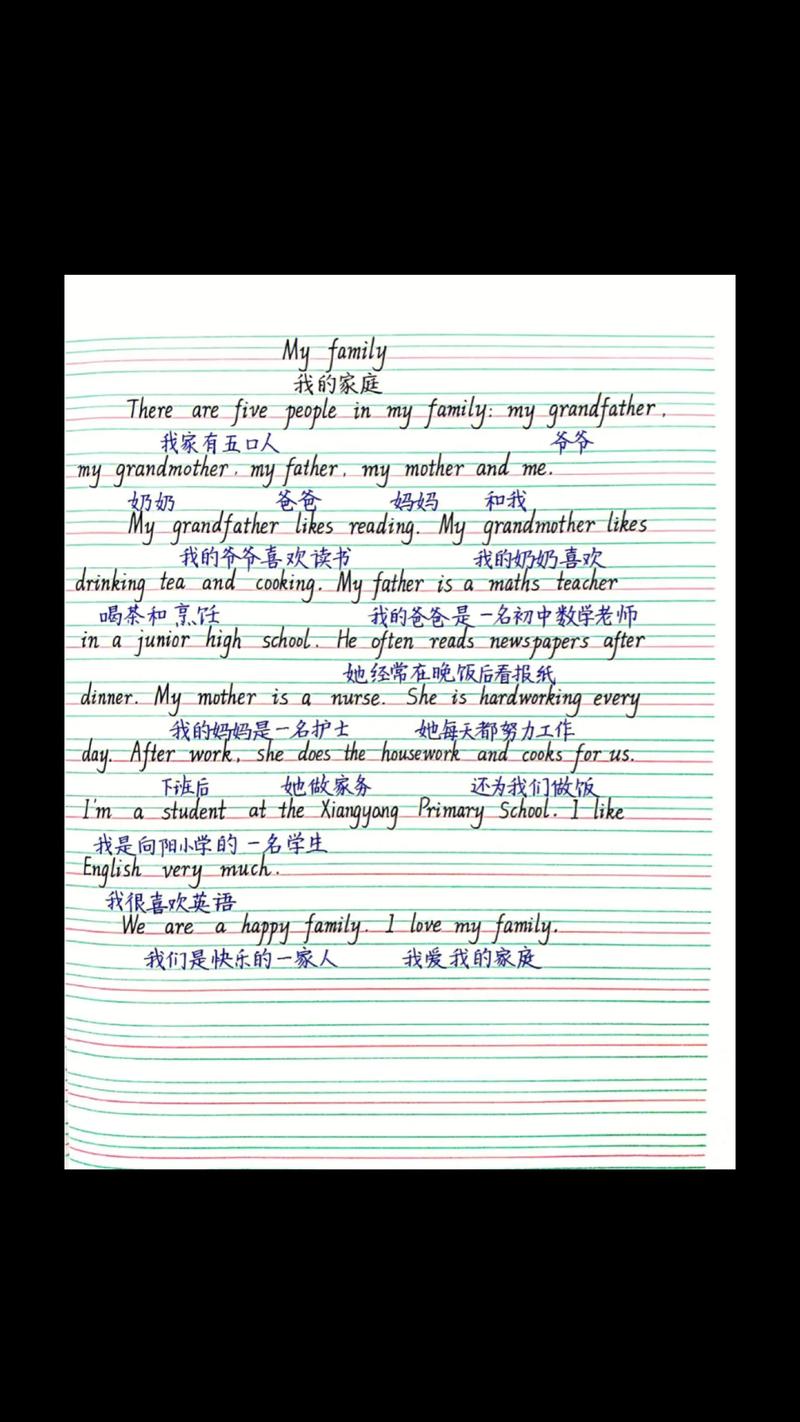
The parent-child relationship is one of the most dynamic connections a person will ever experience. It evolves dramatically over time, from a state of total dependence in childhood to a more complex, interdependent bond in adulthood. For me, learning to get along with my parents has been a profound lesson in empathy, compromise, and self-discovery.
When I was young, my parents were my authority figures and my safety net. Their world was my world, and their rules were my guidelines. The path was clear, and my role was to follow. This dynamic, while secure, lacked the nuance of a peer relationship. As I matured, I began to crave autonomy. I wanted to forge my own identity, make my own mistakes, and define my own version of success. This quest for independence inevitably led to friction. The "generation gap" felt less like a simple difference in opinion and more like a fundamental clash in worldviews.
The turning point came when I realized that getting along didn't mean agreeing on everything. It meant learning to coexist with our differences. I started to see my parents not just as my parents, but as individuals with their own histories, fears, and aspirations. My father, for example, who grew up in a time of scarcity, values stability and security above all else. My mother, a diligent and caring person, worries constantly about my well-being. Understanding the roots of their concerns made their "nagging" feel less like criticism and more like a reflection of their love.
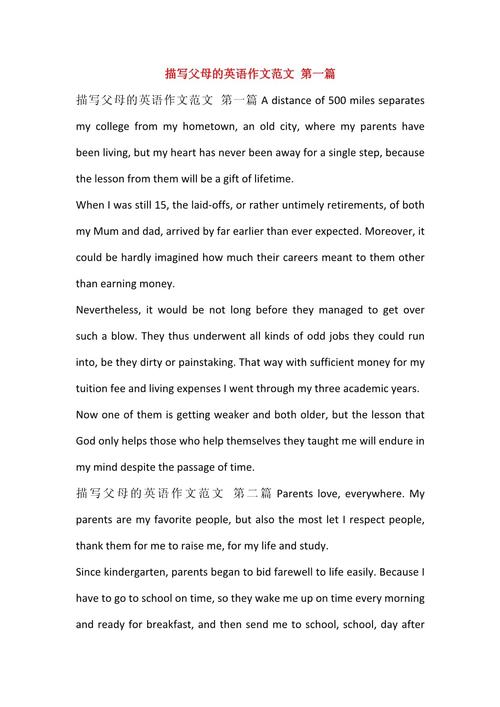
My approach shifted from confrontation to collaboration. I began to involve them in my decisions, not for permission, but for their wisdom. I would say, "I'm thinking about choosing this major, what do you think based on your experience?" This made them feel valued and respected. In return, I learned to be more patient with their habits and more appreciative of their sacrifices. True communication, I found, is not about winning an argument, but about ensuring the other person feels heard.
In essence, the journey of getting along with my parents has been a journey of growing up. It taught me that love is not just about affection; it's about understanding, respect, and the continuous effort to build a relationship that honors both our past and our future.
核心词汇与短语
形容关系/氛围:
- Harmonious 和谐的
- Close-knit 关系紧密的
- Supportive 支持的
- Tense 紧张的
- Strained 关系紧张的
- Mutual understanding 相互理解
- Generation gap 代沟
- Unconditional love 无条件的爱
沟通与行为:
- Communicate effectively 有效沟通
- Express one's feelings 表达感受
- Listen patiently 耐心倾听
- Show respect/respectfulness 表示尊重
- Put oneself in others' shoes 换位思考
- Compromise 妥协,让步
- Rebel against 反抗
- Keep one's feelings bottled up 把感情憋在心里
- Bridge the gap 弥合差距
成长与变化:
- Evolve/evolution 演变,进化
- Mature/maturity 成熟
- Forge one's own identity 塑造自己的身份
- Gain independence 获得独立
- Develop one's own opinions 形成自己的观点
- Life experience 生活经验
- Learn from each other 相互学习
常用句型
开头句:
- The relationship between parents and children is one of the most fundamental and influential bonds in human life.
- Getting along well with one's parents is a lifelong journey that requires constant effort and understanding.
- Family is the cornerstone of our society, and the parent-child relationship is the very foundation of this cornerstone.
阐述观点句:
- As we grow older, this dynamic naturally shifts, often leading to what is known as the "generation gap."
- I have come to realize that effective communication is the cornerstone of a healthy parent-child relationship.
- Understanding their perspective is not about agreeing with them, but about recognizing the love behind their words.
举例说明句:
- For instance, instead of arguing about my curfew, I now try to explain my schedule and the reasons for it.
- A simple example is our weekly family dinner, where we share stories about our day, creating a space for open dialogue.
- Take my father, for example; his insistence on saving money stems from his own challenging upbringing.
结尾句:
- In conclusion, a harmonious relationship with parents is built on a foundation of love, strengthened by communication, and nurtured by mutual respect.
- Ultimately, the time and effort we invest in understanding our parents are among the most rewarding investments we can make in life.
- It is a journey that enriches not only our family life but also our own character, teaching us the true meaning of love, patience, and empathy.
写作技巧与建议
- 明确你的中心思想: 你的作文是想强调“爱”与“理解”,还是“成长”与“变化”?先确定一个核心观点,然后用全文来支撑它。
- 结构清晰: 采用“总-分-总”的结构。
- 开头: 引入话题,表明你的观点。
- 主体: 分段论述,可以写童年、少年、成年不同阶段的变化;也可以写“沟通”、“换位思考”、“共度时光”等不同方法。
- 总结全文,升华主题,给出一个积极的展望。
- 使用具体例子: 空洞的道理不如一个生动的故事,用你自己的真实经历或观察到的例子来让文章更有说服力,不要只说“我们沟通不畅”,而是描述一次具体的争吵以及后来如何和解的。
- 展现真情实感: 无论是温馨还是反思,情感是文章的灵魂,用真诚的语言去描述你的感受,我感到被误解”、“我感到被爱”等。
- 注意时态: 描述过去的事情用过去时,表达普遍真理或现在的观点用现在时。
- 高级词汇和句式: 适当使用一些高级词汇(如上面列出的)和复杂句型(如定语从句、状语从句),能让你的作文增色不少,但切记不要为了用而用,保证准确性和流畅性最重要。
希望这些范文和资料能对你有所帮助!祝你写作顺利!