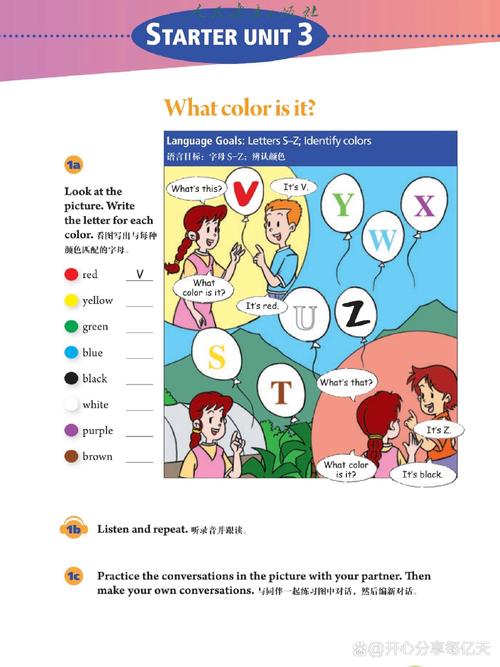
英语go for it七年级下册
校园之窗 2025年11月27日 01:51:19 tjadmin
整体概览
七年级下册共12个单元,内容围绕学生的日常生活、兴趣爱好、校园生活、未来规划等话题展开,旨在培养学生的综合语言运用能力。
各单元核心内容详解
Unit 1: Can you play the guitar?
单元主题: 谈论能力与社团活动
核心句型:
— Can you play the piano? 你会弹钢琴吗?
— Yes, I can. / No, I can't. 是的,我会。/ 不,我不会。
— What can you do? 你会做什么?
— I can dance/swim/sing. 我会跳舞/游泳/唱歌。
— Join the art club! 加入美术俱乐部吧!
— I want to join the music club. 我想加入音乐俱乐部。
重点语法:
构成:
can + 动词原形肯定句:
I can sing.否定句:
I can't (cannot) sing.一般疑问句:
Can you sing?简略回答:
Yes, I can. / No, I can't.情态动词
can的用法:重点词汇:
动词:
play (弹/奏/打), sing, dance, swim, draw, speak, join名词:
guitar, piano, violin, drums, trumpet, club, story, show, weekend其他:
tell stories, kung fu
Unit 2: What time do you go to school?
单元主题: 谈论日常作息时间
核心句型:
— What time do you usually go to school? 你通常几点去上学?
— I usually go to school at seven o'clock. 我通常七点钟去上学。
— When do you go to work? 你什么时候去上班?
— I go to work at eight. 我八点去上班。
重点语法:
动词词尾加
-s或-es(e.g.,goes,watches,has)。at + 具体时间点(e.g.,at 6:30)at + night / noon / midnightWhat time询问具体的时间点 (几点)。When询问不具体的时间 (什么时候)。what time 和 when 引导的特殊疑问句:
时间的表达法:
一般现在时 (主语为第三人称单数):
重点词汇:
动词:
go, get up, run, eat, take, walk, clean, do, exercise名词:
time, morning, afternoon, evening, night, habit, job, work副词:
usually, always其他:
get up, go to school, go home, go to bed, take a walk
Unit 3: How do you get to school?
单元主题: 谈论交通方式与距离
核心句型:
— How do you get to school? 你怎么去上学?
— I ride my bike / take the bus / walk. 我骑自行车/坐公交车/步行。
— How long does it take? 花多长时间?
— It takes about 20 minutes. 大约20分钟。
— How far is it from... to...? 从...到...有多远?
— It's about 10 kilometers. 大约10公里。
重点语法:
How(怎么样)How old(多大)How many(多少,可数名词)How much(多少钱/多少,不可数名词)How long(多长时间)How far(多远)how 引导的特殊疑问句:
动词短语:
take the bus/subway/train,ride a bike,walk to...重点词汇:
动词:
take, ride, walk, live, stop, think of名词:
train, bus, subway, bike, car, boat, stop, station, kilometer, minute, far其他:
get to, by bus, by bike, by subway, by car, by boat, by plane, bus stop
Unit 4: Don't eat in class.
单元主题: 谈论规则与建议
核心句型:
— Don't eat in class. 不要在课堂上吃东西。
— We must be on time. 我们必须准时。
— Can we wear hats? 我们可以戴帽子吗?
— Yes, we can. / No, we can't. 是的,我们可以。/ 不,我们不能。
重点语法:
You can listen to music outside.你可以在外面听音乐。must表示“必须,一定要”,语气较强。have to表示“不得不”,强调客观需要。肯定:
Be quiet!/Open your book!否定:
Don't be noisy!/Don't look out of the window!祈使句:
情态动词
must和have to:can表许可:重点词汇:
动词:
arrive, listen, fight, wear, eat, fight名词:
rule, hallway, dining hall, hall, fight, kitchen其他:
classroom, school, outside, hallways, listen to, in class, be on time, wear hats, make bed, be quiet
Unit 5: Why do you like pandas?
单元主题: 谈论动物及其习性
核心句型:
— Why do you like pandas? 你为什么喜欢熊猫?
— Because they're kind of interesting. 因为它们有点儿有趣。
— Where are they from? 它们来自哪里?
— They're from China. 它们来自中国。
— What animals do you like? 你喜欢什么动物?
— I like elephants. 我喜欢大象。
重点语法:
Why提问原因,Because回答原因。Why 和 Because 引导的句型:
形容词:
interesting, boring, cute, fun, smart, beautiful, shy, dangerous描述动物特点的句型:
Koalas are very cute.Elephants are kind of ugly.重点词汇:
名词:
panda, tiger, elephant, koala, lion, giraffe, animal, zoo, kind, danger, flag, place, water, grass, leaf, meat形容词:
cute, smart, beautiful, shy, scary, dangerous, lazy, cute其他:
get lost, be from, kind of, South Africa, walk on two legs
Unit 6: I'm watching TV.
单元主题: 谈论正在发生的动作
核心句型:
— What are you doing? 你在做什么?
— I'm watching TV. 我在看电视。
— Are you doing your homework? 你在做作业吗?
— Yes, I am. / No, I'm not. I'm cleaning my room. 是的,我在。/ 不,我没在,我在打扫我的房间。
重点语法:
结构:
am/is/are + 动词ing用法: 表示说话时正在进行的动作或现阶段正在发生的动作。
句型变化:
肯定句:
He is reading.否定句:
He isn't (is not) reading.一般疑问句:
Is he reading?简略回答:
Yes, he is. / No, he isn't.现在进行时:
重点词汇