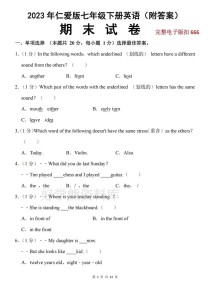
七下英语知识点有哪些重点难点?
校园之窗 2025年12月9日 13:44:18 99ANYc3cd6
下面我将为你详细梳理外研版七年级下册的核心知识点,分为模块、语法、词汇和句型四个部分,并附上学习建议,希望能帮助你系统地掌握。
按模块划分的核心话题与重点句型
外研版七年级下册共分为12个模块,每个模块围绕一个特定的话题展开。

(图片来源网络,侵删)
| 模块 | 核心话题 | 重点句型与知识点 |
|---|---|---|
| Module 1 | Travel & Directions (旅行与问路) | - 方位介词: in, on, under, near, behind, next to, between...and...- 问路与指路: - Excuse me, is there a ... near here? (请问,这附近有……吗?)- Where is the ...? (……在哪里?)- Go straight ahead / Turn left / Turn right. (直走 / 向左转 / 向右转)- It's on your left / right. (它在你的左边/右边。) |
| Module 2 | What can you do? (能力与特长) | - 情态动词 can 的用法 (肯定、否定、疑问及回答):- I can swim. / He can't sing. / Can you play the piano? - Yes, I can. / No, I can't.- 谈论能力: I'm good at drawing. (我擅长画画。) |
| Module 3 | Language in use (语言运用) | - 复习巩固 Module 1 和 2 的核心知识点。 - 重点练习: 综合运用方位介词和 can 描述地点和能力。 |
| Module 4 | A trip to the zoo (动物园之旅) | - 名词复数规则变化 (加 -s, -es, 变 y 为 i 加 es 等)。- 使用 let's 提出建议: Let's go and see the pandas. (我们去看熊猫吧。)- 表达喜好: I like tigers because they are beautiful. (我喜欢老虎,因为它们很漂亮。) |
| Module 5 | School life in the UK (英国的学校生活) | - 一般现在时 (描述日常习惯和事实): - They wear uniforms. (他们穿校服。)- We have lessons from 9 am to 4 pm. (我们从上午9点上到下午4点。)- 比较中英文化差异: In the UK, they have a break in the middle of the day. (在英国,他们在中午有课间休息。) |
| Module 6 | A trip to the countryside (乡村之旅) | - 现在进行时 (描述正在发生的事情): - 结构: am/is/are + 动词ing- What are you doing? - I'm watching TV.- He is swimming in the river.- There be 句型 (某地有某物): - There are some sheep on the hill. (山上有一些绵羊。) |
| Module 7 | A famous story (一个著名的故事) | - 一般过去时 (描述过去发生的事情): - 规则动词过去式 (加 -ed): walked, played, wanted- 不规则动词过去式: go-went, see-saw, eat-ate, have-had, do-did- Yesterday, I went to the park. (昨天我去了公园。)- He didn't do his homework. (他没做作业。) / Did you see a film? - Yes, I did. |
| Module 8 | Around the city (环游城市) | - 方位介词的扩展: above, below, in front of, behind 等。- How 引导的特殊疑问句: - How far is it from...to...? (从……到……有多远?) - It's about two kilometers away. (大约两公里远。)- How do you get to school? (你怎么去学校?) - I take the bus. (我坐公交车。) |
| Module 9 | A story in a park (公园里的故事) | - 过去进行时 (描述过去某个特定时间点正在发生的事情): - 结构: was/were + 动词ing- I was walking in the park. (我当时正在公园里散步。)- They were having a picnic. (他们当时正在野餐。)- while 和 when 的区别: While he was reading, I came in. (当他正在读书时,我进来了。) |
| Module 10 | Life history (生平经历) | - 一般过去时 (复习,重点学习不规则动词过去式)。 - 谈论过去经历: When did you learn to ride a bike? (你什么时候学会骑自行车的?) - I learned it when I was five. (我五岁时学会的。)- want to do sth.: He wanted to be a doctor. (他曾经想成为一名医生。) |
| Module 11 | Body language (肢体语言) | - 情态动词 should 的用法 (提出建议): - You should smile more. (你应该多微笑。)- Should I say hello to him? - Yes, you should. / No, you shouldn't.- 祈使句: Be careful! (小心!) Don't be late! (别迟到!) |
| Module 12 | A summer camp in the US (美国夏令营) | - 一般将来时 (will 和 be going to 的初步接触): - I will go to the US next year. (我明年将去美国。)- What are you going to do there? (你打算在那儿做什么?) - I'm going to learn English. (我打算去学英语。)- 表达计划与打算。 |
核心语法知识点详解
情态动词
-
can(能力):can + 动词原形- 肯定:
I can speak English. - 否定:
He can't play basketball. - 疑问:
Can she swim?-Yes, she can. / No, she can't.
- 肯定:
-
should(建议):should + 动词原形- 肯定:
You should finish your homework. - 否定:
You shouldn't watch too much TV. - 疑问:
Should I ask the teacher?-Yes, you should. / No, you shouldn't.
- 肯定:
动词时态
这是七年级下册的绝对重点和难点。
| 时态 | 用途 | 结构 | 关键词/例子 |
|---|---|---|---|
| 一般现在时 | 习惯、事实、真理 | 主语 + am/is/are/动词三单 |
always, usually, every day, on SundaysHe gets up at 6:00. |
| 现在进行时 | 现在正在发生 | 主语 + am/is/are + V-ing |
now, look, listenListen! They are singing. |
| 一般过去时 | 过去发生并结束的动作/状态 | 主语 + was/were/动词过去式 |
yesterday, last week, agoI went to the cinema yesterday. |
| 过去进行时 | 过去某个时间点正在发生 | 主语 + was/were + V-ing |
at 8:00 yesterday, this time yesterdayI was doing my homework at 9 pm last night. |
| 一般将来时 | 将来要发生的动作或打算 | will + 动词原形 / am/is/are + going to + 动词原形 |
tomorrow, next week, in the futureI will call you. / I am going to buy a book. |
There be 句型
- 表示“存在”:某地有某人/某物。
- 结构:
There is / are + 某物/某人 + 地点. - 就近原则:
be动词的形式由紧挨着它的名词决定。There is a book on the desk.(单数)There are some books on the desk.(复数)There is a pen and two rulers in the pencil box.(就近用is)
名词复数
- 规则变化:
- 一般加
-s:book -> books - 以
s, x, ch, sh结尾加-es:box -> boxes,watch -> watches - 以“辅音字母+y”变
y为i再加-es:baby -> babies,city -> cities - 以
f/fe变f/fe为v再加-es:leaf -> leaves,wolf -> wolves
- 一般加
- 不规则变化: 需要单独记忆,如
child -> children,man -> men,woman -> women,sheep -> sheep(单复数同形)。
核心词汇分类
- 地点名词:
zoo, park, school, hospital, library, cinema, station, countryside, hill, river, shop, market - 动词:
go, visit, see, watch, play, swim, walk, learn, want, have, do, get, wear, smile, say, tell - 形容词:
famous, beautiful, clever, famous, happy, sad, tired, hungry, big, small, new, old, near, far, good, bad - 疑问词:
where, what, who, when, why, how, how many, how much, how far - 方位介词:
in, on, under, near, behind, next to, in front of, between, above, below - 其他:
uniform, lesson, break, story, history, summer camp, body language
学习建议
- 语境记忆法: 不要孤立地背单词和语法,把单词和句型放到课文的对话或短文中去理解和记忆,这样才记得牢,用得活。
- 语法对比法: 七下时态多,容易混淆,一定要对比着学,
I read a book.(习惯) vs.I am reading a book.(正在读) vs.I read a book yesterday.(昨天读了)。He will go there.(单纯将来) vs.He is going to buy a ticket.(计划和打算)。
- 多做练习: 通过课后习题、练习册和试卷来巩固知识点,特别是动词时态的填空和改错题,是检验掌握程度的最好方式。
- 开口说,动手写: 语言是交流的工具,尝试用学过的句型和同学进行简单的英语对话,或者用英语写日记,哪怕只是几句话,也能极大地提升语感和应用能力。
- 整理错题本: 准备一个错题本,把做错的题目(尤其是语法题)抄下来,写下正确答案和原因,考前翻看,效果显著。
希望这份详细的总结能帮助你更好地学习外研版七年级下册英语!祝你学习进步!

(图片来源网络,侵删)

(图片来源网络,侵删)