八年级上英语课文翻译哪里有?
校园之窗 2026年1月30日 07:44:15 99ANYc3cd6
由于八年级上册的课文会根据不同版本(如人教版、外研版、牛津版等)和学校使用的具体教材有所不同,我将为您翻译人教版新目标英语(Go for it!)八年级上册中最具代表性的几个单元的核心课文。
这些翻译旨在帮助您理解课文大意,方便您学习和复习。
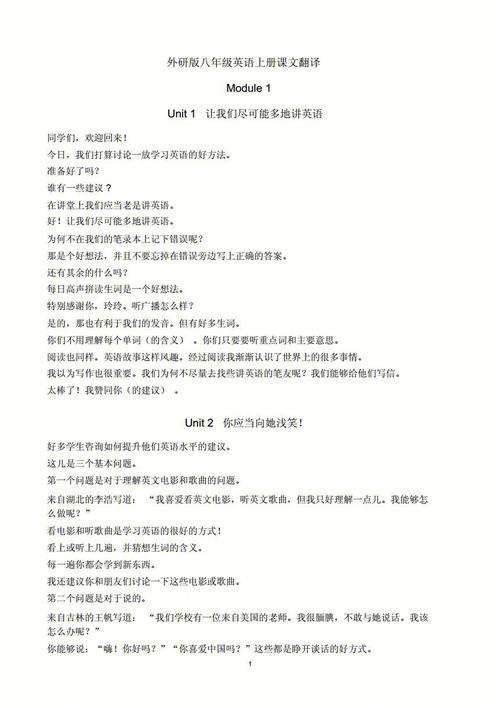
Unit 1: Where did you go on vacation? (你假期去哪儿了?)
这是八年级上册的开篇单元,主要学习谈论过去的经历,重点是一般过去时。
Section A (2d) 对话
原文:
Grace: Where did you go on vacation, Helen? Helen: I went to the mountains. Grace: Did you go with anyone? Helen: Yes, I did. I went with my family. Grace: Did you have a good time? Helen: Yes, I did. It was great.
中文翻译:
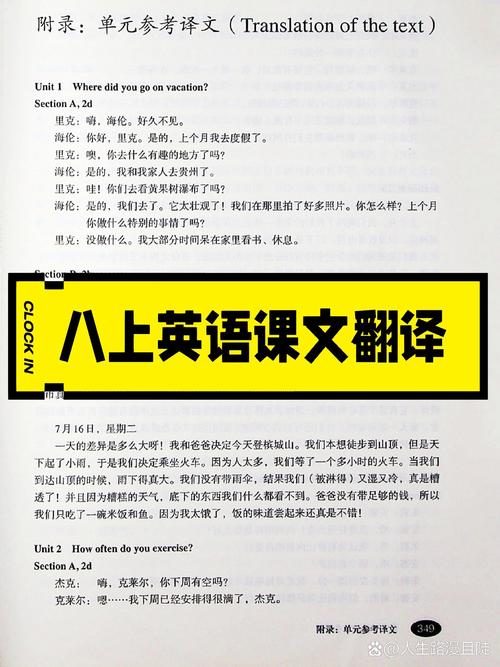
格雷斯:海伦,你假期去哪儿了? 海伦:我去了山里。 格雷斯:你和谁一起去的吗? 海伦:是的,我和我的家人一起去的。 格雷斯:你玩得开心吗? 海伦:是的,非常开心,棒极了。
Unit 2: How often do you exercise? (你多久锻炼一次?)
本单元的核心是谈论日常活动和生活习惯,重点是频率副词 和 一般现在时。
Section A (2d) 对话
原文:
Lisa: What do you usually do on weekends? Mark: I usually exercise. Sometimes I watch TV. Lisa: How often do you watch TV? Mark: Hmm, maybe twice a week. Lisa: Do you go shopping? Mark: No, I never go shopping. I hate shopping.
(图片来源网络,侵删)
中文翻译:
丽莎:你周末通常做什么? 马克:我通常锻炼,有时候我看电视。 丽莎:你多久看一次电视? 马克:嗯,也许一周两次吧。 丽莎:你去购物吗? 马克:不,我从不购物,我讨厌购物。
Unit 3: I'm more outgoing than my sister. (我比我姐姐更外向。)
本单元学习比较人和事物,重点是形容词和副词的比较级和最高级。
Section A (2d) 对话
原文:
Tina: Is that Sam? He's really tall. Tom: Yes, he is. He's taller than me. Tina: Do you both play basketball? Tom: Yes, we do. He plays basketball better than me. Tina: Do you both run fast? Tom: No, he runs faster than me. But I think I'm more outgoing than him.
中文翻译:
蒂娜:那是山姆吗?他真高。 汤姆:是的,他是的,他比我高。 蒂娜:你们俩都打篮球吗? 汤姆:是的,都打,他篮球打得比我好。 蒂娜:你们俩都跑得快吗? 汤姆:不,他跑得比我快,但是我觉得我比他更外向。
Unit 4: What's the best movie theater? (最好的电影院是哪家?)
本单元学习谈论对事物的看法和比较,重点是形容词和副词的最高级。
Section A (2d) 对话
原文:
Tony: What's the best movie theater in town? Helen: Sun Cinema. It's the closest to home. Tony: But it's the most expensive. Helen: Yes, but it has the biggest screens. And it's the most comfortable. Tony: What about Town Cinema? Is it good? Helen: No. It's the worst. It has the worst service.
中文翻译:
托尼:镇上最好的电影院是哪家? 海伦:阳光影院,它离我家最近。 托尼:但是它也是最贵的。 海伦:是的,但是它的屏幕最大,而且也最舒服。 托尼:镇影院怎么样?它好吗? 海伦:不,它是最差的,它的服务最差。
Unit 5: Do you want to watch a game show? (你想看游戏节目吗?)
本单元学习谈论对不同电视节目和电影的喜好,重点是want to, would like to 等表达意愿的句型,以及各类节目名称。
Section A (2d) 对话
原文:
Mark: Do you want to watch the news? Lisa: No, I don't like the news. It's too boring. Mark: What do you want to watch? Lisa: I want to watch a sitcom. They're interesting. Mark: OK, let's watch "Friends". It's my favorite sitcom.
中文翻译:
马克:你想看新闻吗? 丽莎:不,我不喜欢新闻,它太无聊了。 马克:你想看什么? 丽莎:我想看情景喜剧,它们很有趣。 马克:好的,我们来看《老友记》吧,它是我最喜欢的情景喜剧。
Unit 6: I'm watching TV. (我正在看电视。)
本单元学习谈论正在发生的事情,重点是现在进行时。
Section A (2d) 对话
原文:
Jenny: Hello, Steve. Steve: Hi, Jenny. What are you doing? Jenny: I'm reading a book. What about you? Steve: I'm watching TV. Do you want to join me? Jenny: No, thanks. I'm busy. I have to finish my homework.
中文翻译:
珍妮:你好,史蒂夫。 史蒂夫:嗨,珍妮,你在做什么? 珍妮:我正在看书,你呢? 史蒂夫:我正在看电视,你想一起来吗? 珍妮:不了,谢谢,我很忙,我得完成我的家庭作业。
Unit 7: Will people have robots? (人们会有机器人吗?)
本单元学习对未来的预测,重点是一般将来时 "will + 动词原形"。
Section A (2d) 对话
原文:
Jill: Do you think people will have robots in their homes in 100 years? Ben: Yes, I do. I think every home will have a robot. Jill: Will robots help with the housework? Ben: Yes, they will. They'll do everything like cooking and cleaning. Jill: That sounds cool! Will they be our friends? Ben: Maybe. But I don't think they'll be able to talk like us.
中文翻译:
吉尔:你认为一百年后,人们家里会有机器人吗? 本:是的,我认为,我想每个家庭都会有一个机器人。 吉尔:机器人会帮忙做家务吗? 本:会的,他们会做所有的事情,比如做饭和打扫卫生。 吉尔:听起来真酷!它们会成为我们的朋友吗? 本:也许吧,但是我不认为它们能像我们一样说话。
Unit 8: How do you make a banana milk shake? (你怎样做香蕉奶昔?)
本单元学习制作食物和饮料,重点是祈使句 和 表示顺序的连接词 (first, next, then, finally)。
Section A (2d) 对话
原文:
Nina: How do you make a banana milk shake? Leo: Well, first peel three bananas. Then put the bananas in the blender. Nina: What next? Leo: Next, pour the milk into the blender. Then, add two teaspoons of honey. Nina: Is that all? Leo: Finally, turn on the blender. Blend everything for about two minutes.
中文翻译:
妮娜:你怎样做香蕉奶昔? 里奥:嗯,削三根香蕉,然后把香蕉放进搅拌机里。 妮娜:然后呢? 里奥:把牛奶倒进搅拌机里,加两茶匙蜂蜜。 妮娜:就这样吗? 里奥:打开搅拌机,把所有东西搅拌大约两分钟。
Unit 9: Can you come to my party? (你能来我的派对吗?)
本单元学习发出、接受和拒绝邀请,重点是情态动词 can 和 邀请、答复的句型。
Section A (2d) 对话
原文:
Kevin: Hi, Jenny, can you come to my party on Saturday afternoon? Jenny: Sure, I'd love to. What time? Kevin: At 3 p.m. Jenny: Oh, no. I'm sorry, I can't. I have to visit my grandparents. Kevin: That's too bad. Maybe next time. Jenny: Sure, thanks for asking.
中文翻译:
凯文:嗨,珍妮,你周六下午能来我的派对吗? 珍妮:我很乐意,几点? 凯文:下午三点。 珍妮:哦,不,很抱歉,我不能,我得去看望我的祖父母。 凯文:那太遗憾了,也许下次吧。 珍妮:好的,谢谢你邀请我。
Unit 10: If you go to the party, you'll have a great time. (如果你去派对,你会玩得很开心。)
本单元学习谈论假设和结果,重点是if引导的条件状语从句。
Section A (2d) 对话
原文:
Anna: I'm going to the party tomorrow. What should I wear? Ben: If you wear jeans, the teachers won't let you in. Anna: That's right. What if I bring my camera? Ben: If you do, you can take some great photos. Anna: Good idea! I'll bring my camera. And I'll also buy some snacks. Ben: If you do, you'll have a great time.
中文翻译:
安娜:我明天要去参加派对,我该穿什么? 本:如果你穿牛仔裤,老师们不会让你进去的。 安娜:说得对,如果我带上我的相机呢? 本:如果你带了,你可以拍一些很棒的照片。 安娜:好主意!我会带上我的相机,我还会买一些零食。 本:如果你这么做,你会玩得很开心的。
温馨提示:
- 教材版本差异:请确认您使用的是人教版教材,如果是其他版本(如外研版、仁爱版等),课文内容和顺序会有所不同。
- 学习建议:翻译只是辅助理解,更重要的是学习课文的核心句型、词汇和语法结构,并尝试用它们进行口语和写作练习。
- 获取完整翻译:如果您需要某一特定单元、某一特定部分(如3a阅读文章)的完整翻译,可以告诉我具体的单元和课文标题,我可以为您提供更精确的翻译。