七年级下册英语复习题有哪些重点难点?
校园之窗 2026年1月28日 05:34:05 99ANYc3cd6
第一部分:核心语法知识梳理
一般过去时
这是七年级下册的绝对重点!
- 定义:表示在过去某个时间点发生的动作或存在的状态。
- 时间标志词:
yesterday(昨天),the day before yesterday(前天)last night / week / month / year(昨晚/上周/上个月/去年)... ago(……以前,如two days ago两天前)in + 过去的年份(如in 2025)just now(刚才)
- 动词变化规则:
- 一般情况:直接在动词末尾加
-ed。 (e.g.,work→worked,play→played) - 以不发音的
e:直接加-d。 (e.g.,like→liked,live→lived) - 以“辅音字母 + y”结尾:变
y为i,再加-ed。 (e.g.,study→studied,cry→cried) - 以“元音字母 + y”结尾:直接加
-ed。 (e.g.,enjoy→enjoyed,play→played) - 重读闭音节结尾:双写末尾的辅音字母,再加
-ed。 (e.g.,stop→stopped,plan→planned)
- 一般情况:直接在动词末尾加
- 否定句和疑问句:
- 否定句:
didn't + 动词原形。 (e.g., He didn't go to school.) - 一般疑问句:
Did + 主语 + 动词原形...?(e.g., Did he go to school?) - 特殊疑问句:
特殊疑问词 + did + 主语 + 动词原形...?(e.g., What did he do yesterday?)
- 否定句:
情态动词 can 和 could
-
can(能,会) (图片来源网络,侵删)
- 用法:表示现在的能力或许可。
- 结构:
can + 动词原形 - 否定:
cannot / can't + 动词原形 - 疑问:
Can + 主语 + 动词原形...? - 例句:I can swim. (我会游泳。)
-
could(过去能,会)- 用法:表示过去的能力。
- 结构:
could + 动词原形 - 否定:
couldn't + 动词原形 - 疑问:
Could + 主语 + 动词原形...? - 例句:When I was five, I could ride a bike. (我五岁的时候会骑自行车。)
方位介词
用来表示位置关系,是描述场景和路线的基础。
- in (在……里面)
- The cat is in the box. (猫在盒子里。)
- on (在……上面)
- The book is on the desk. (书在桌子上。)
- under (在……下面)
- The ball is under the chair. (球在椅子下面。)
- behind (在……后面)
- The tree is behind the house. (树在房子后面。)
- next to / beside (紧挨着,在……旁边)
- The hospital is next to the post office. (医院紧挨着邮局。)
- between (在……两者之间)
- She sits between Tom and Jack. (她坐在汤姆和杰克之间。)
- near (在……附近)
- Is there a park near here? (这附近有公园吗?)
- in front of (在……前面) (外部)
- There is a car in front of the building. (大楼前面有一辆车。)
- behind (在……后面) (外部)
- The library is behind the supermarket. (图书馆在超市后面。)
形容词和副词的比较级和最高级
用来描述事物之间的差异。
-
规则变化:
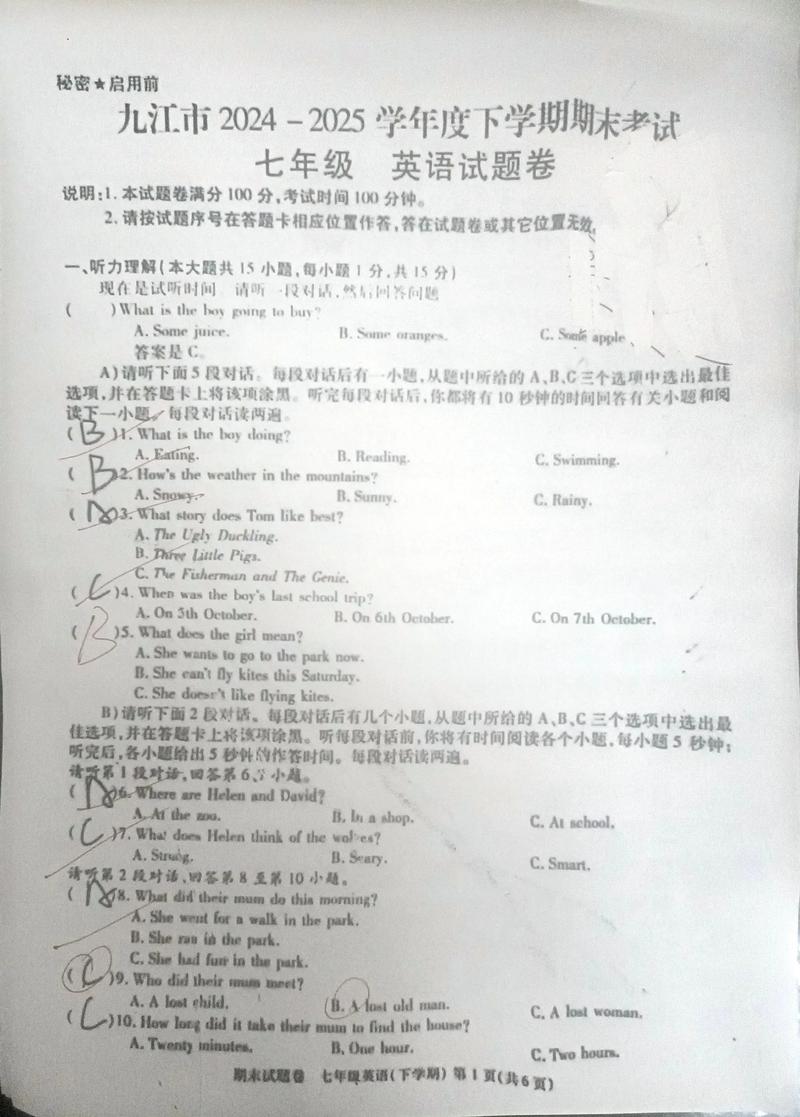 (图片来源网络,侵删)
- 一般情况:直接加
-er/-est。 (e.g.,tall→taller→tallest) - 以
e:加-r/-st。 (e.g.,nice→nicer→nicest) - 以“辅音字母 + y”结尾:变
y为i,再加-er/-est。 (e.g.,happy→happier→happiest) - 重读闭音节结尾:双写末尾辅音字母,再加
-er/-est。 (e.g.,big→bigger→biggest) - 多音节词和部分双音节词:在词前加
more/most。 (e.g.,beautiful→more beautiful→most beautiful)
- 一般情况:直接加
-
不规则变化:
good→better→bestbad→worse→worstmany / much→more→mostlittle→less→leastfar→farther/further→farthest/furthest
-
常用句型:
- 比较级:
- A +
be+ 比较级 + than + B. (e.g., Tom is taller than Mike.) - A + 动词 + 比较级 + than + B. (e.g., He runs faster than me.)
- A +
- 最高级:
- A +
be+ the + 最高级 +in/of...(e.g., She is the tallest girl in our class.) - A + 动词 + (the) + 最高级 +
in/of...(e.g., He runs the fastest of the three boys.)
- A +
- 比较级:
第二部分:重点词汇和短语
-
动词:
visit(参观),go(去),stay(停留),have(度过),do(做),watch(观看),read(阅读),clean(打扫),wash(洗),study(学习),swim(游泳),skate(滑冰),ski(滑雪),sing(唱歌),dance(跳舞),take(拍照),buy(买),eat(吃),drink(喝),see(看见),meet(遇见),get(得到),lose(丢失),find(找到),make(制作),think(想),say(说),tell(告诉),ask(问),answer(回答),decide(决定),hope(希望),want(想要),like(喜欢),love(热爱),hate(讨厌)
-
名词:
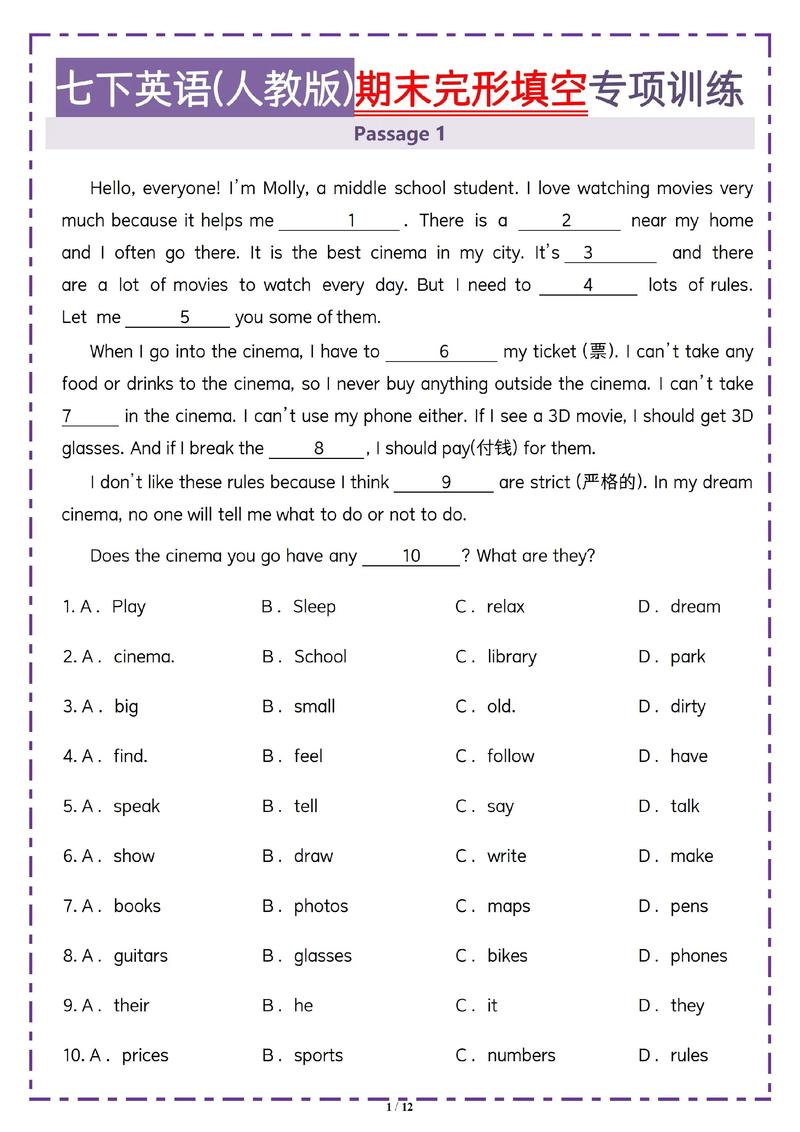 (图片来源网络,侵删)
museum(博物馆),beach(海滩),movie(电影),test(测试),homework(家庭作业),housework(家务),park(公园),zoo(动物园),restaurant(餐馆),store(商店),cinema(电影院),library(图书馆),mountain(山),lake(湖),city(城市),countryside(乡村),trip(旅行),story(故事),news(新闻),friend(朋友),family(家庭),people(人们),child(孩子),year(年),month(月),day(天),time(时间),weather(天气),food(食物),drink(饮料),money(钱),photo(照片),computer(电脑),phone(电话)
-
形容词:
great(很棒的),wonderful(精彩的),terrible(糟糕的),boring(无聊的),interesting(有趣的),exciting(令人兴奋的),difficult(困难的),easy(容易的),important(重要的),happy(开心的),sad(伤心的),tired(疲劳的),angry(生气的),afraid(害怕的),free(空闲的),busy(忙碌的),cold(冷的),hot(热的),warm(温暖的),cool(凉爽的),big(大的),small(小的),tall(高的),short(矮的),long(长的),new(新的),old(旧的),young(年轻的),beautiful(美丽的),funny(滑稽的),quiet(安静的),loud(大声的)
-
副词:
well(好地),fast(快地),slowly(慢地),loudly(大声地),quietly(安静地),happily(开心地),sadly(伤心地),hard(努力地),early(早地),late(晚地)
-
短语:
go to the movies(去看电影)do one's homework(做家庭作业)clean the room(打扫房间)wash the dishes(洗碗)study for a test(为考试而学习)have a great time(玩得开心)take photos(拍照)buy something(买些东西)in the countryside(在乡村)on vacation(在度假)decide to do sth.(决定做某事)hope to do sth.(希望做某事)want to do sth.(想要做某事)find out(查明,发现)how about...?(……怎么样?)because of(因为)
第三部分:经典句型和易错点
经典句型
-
谈论过去的经历:
- What did you do last weekend? (你上周末做了什么?)
- I visited my grandparents. (我去看望了我的祖父母。)
- Did you go to the park? (你去公园了吗?)
- Yes, I did. / No, I didn't. (是的,我去了。/ 不,我没去。)
-
谈论能力和许可:
- Can you swim? (你会游泳吗?)
- Yes, I can. / No, I can't. (是的,我会。/ 不,我不会。)
- Could you play the piano when you were five? (你五岁的时候会弹钢琴吗?)
- Yes, I could. / No, I couldn't. (是的,我会。/ 不,我不会。)
-
谈论天气:
- How's the weather? / What's the weather like? (天气怎么样?)
- It's sunny / rainy / windy / cloudy / snowy. (天气晴朗/下雨/刮风/多云/下雪。)
-
谈论比较:
- My bag is heavier than yours. (我的包比你的重。)
- Who is taller, Tom or Jim? (汤姆和吉姆谁更高?)
- This is the most exciting movie I have ever seen. (这是我看过最令人兴奋的电影。)
易错点辨析
-
some和any的区别:- 肯定句中通常用
some。 (e.g., I have some money.) - 否定句和疑问句中通常用
any。 (e.g., I don't have any money. Do you have any money?) - 例外:在表示请求或建议的疑问句中,常用
some,显得更委婉。 (e.g., Would you like some tea? 你想来点茶吗?)
- 肯定句中通常用
-
How was your weekend?和What did you do?的区别:How was your weekend?询问的是整体感受和评价。 (e.g., It was great, but a little tiring.)What did you do?询问的是具体做了什么事情。 (e.g., I went hiking and watched a movie.)
-
few和a few/little和a little的区别:few/little= 几乎没有,表示否定,后面跟可数名词复数或不可数名词。- He has few friends. (他几乎没有朋友。)
- There is little water in the bottle. (瓶子里几乎没有水了。)
a few/a little= 有一些,表示肯定,后面跟可数名词复数或不可数名词。- He has a few friends. (他有一些朋友。)
- There is a little water in the bottle. (瓶子里还有一些水。)
-
How many和How much的区别:How many+ 可数名词复数 (e.g., How many students are there in your class?)How much+ 不可数名词 (e.g., How much milk do you want?)
第四部分:模拟练习题
单项选择
-
—__ did you go to the museum? —Last Sunday. A. When B. Where C. What D. Who
-
He __ his homework at home yesterday. A. doesn't do B. didn't do C. didn't did D. isn't do
-
—Can you play the guitar? —No, I __. But I can play the piano. A. can't B. can C. couldn't D. could
-
The library is __ the post office and the bank. A. between B. behind C. in front of D. next to
-
This story is __ than that one. I like it very much. A. interesting B. more interesting C. most interesting D. the most interesting
-
There is __ milk in the fridge. Let's go and buy some. A. little B. a little C. few D. a few
完形填空
Last Sunday was a beautiful day. The sun was shining and the sky was blue. My family and I 1 a trip to the countryside. We 2 up early in the morning. After breakfast, we 3 the car and started our journey.
The countryside was 4 than the city. It was very quiet and the air was fresh. We 5 a small farm. There were many animals 6 cows, sheep and chickens. My sister took some photos 7 them. Then we walked by a lake. The water was very clear. We 8 some bread and fed the fish. We were very happy.
In the afternoon, we 9 tired but we had a great time. We 10 back home at about 5 p.m.
- A. take B. takes C. took D. are taking
- A. get B. got C. getting D. gets
- A. get into B. got into C. get on D. got on
- A. quiet B. quieter C. quietest D. the quietest
- A. visit B. visited C. visits D. visiting
- A. with B. for C. like D. as
- A. of B. at C. for D. with
- A. buy B. buys C. bought D. buying
- A. are B. were C. is D. was
- A. go B. goes C. went D. going
阅读理解
A boy and a girl are in the zoo. The boy is Tom and the girl is Lucy. They are good friends. Tom wants to see the monkeys, but Lucy wants to see the pandas. So they go to see the monkeys first. The monkeys are very funny. They are jumping and running around. Tom is laughing loudly.
Then they go to see the pandas. The pandas are from China. They are very cute and lovely. They are eating bamboo. Lucy takes some photos of them. They both think the pandas are the most beautiful animals in the zoo.
It is 12 o'clock now. They are hungry. They go to the restaurant near the zoo and have lunch. They have hamburgers and some orange juice. They are very happy today. 判断正误,正确的写 "T",错误的写 "F"。
- Tom and Lucy are in the park. ( )
- Lucy wants to see the monkeys first. ( )
- The monkeys are jumping and running. ( )
- The pandas are from America. ( )
- They have hamburgers and orange juice for lunch. ( )
词汇运用
- My mother __ (wash) the clothes every weekend. But she didn't wash them last weekend.
- It was __ (sun) yesterday, so we went hiking.
- The red dress is __ (expensive) than the blue one.
- —What's the weather like today? —It's __ (cloud).
- I hope __ (see) you soon.
- He decided __ (go) to the movies with his friends.
句型转换
- They played basketball after school. (改为一般疑问句) __ they __ basketball after school?
- I did my homework last night. (改为否定句) I __ __ my homework last night.
- The blue box is heavier than the red one. (对划线部分提问) __ __ is heavier, the blue box or the red one?
- He can swim. (改为一般过去时) He __ __ swim.
- We had a great time on the beach. (对划线部分提问) __ __ you have a great time?
参考答案
单项选择
A (询问时间) 2. B (一般过去时否定) 3. A (现在能力) 4. A (在两者之间) 5. B (两者比较) 6. A (几乎没有,表否定)
完形填空
C (一般过去时) 2. B (一般过去时) 3. B (get into the car) 4. B (两者比较) 5. B (一般过去时) 6. C ( 7. D (为它们拍照) 8. C (一般过去时) 9. B (一般过去时) 10. C (一般过去时)
阅读理解
F (在动物园) 2. F (Tom想看猴子) 3. T (原文描述) 4. F (来自中国) 5. T (原文描述)
词汇运用
washes / washed (第一空填现在时,第二空根据语境填过去时) 2. sunny 3. more expensive 4. cloudy 5. to see 6. to go
句型转换
Did, play 2. didn't, do 3. Which one 4. could 5. Where did
希望这份复习资料对你有帮助!祝你期末考试取得好成绩!加油!