八年级英语说课稿英文
校园之窗 2026年1月25日 21:10:38 99ANYc3cd6
Of course! Here is a comprehensive and well-structured English lesson plan for an 8th-grade class, presented in the format of a "说课稿" (lecture script for a lesson demonstration). This script is designed to be clear, professional, and easy for a teacher to follow when presenting their lesson to peers or supervisors.
Eighth Grade English Lesson Plan Demonstration Script
Good morning/afternoon, everyone.
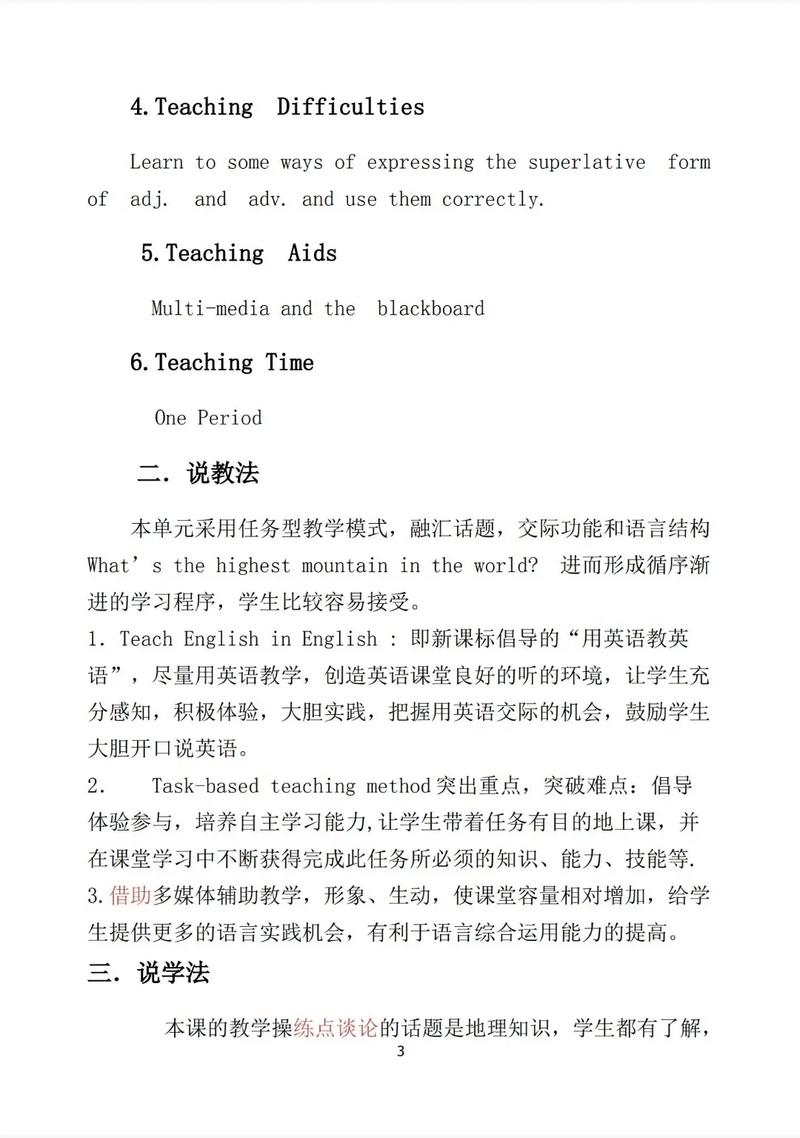
My name is [Your Name]. It's a great honor to be here today to share my teaching ideas for an 8th-grade English lesson. The lesson I'm going to present is based on Unit [e.g., 5] from the Go for It! series, specifically, Section A: "What were you doing when the rainstorm came?"
I will structure my presentation into five parts:
- Analysis of Teaching Material
- Analysis of Students
- Teaching Aims and Key/Difficult Points
- Teaching and Learning Methods
- Teaching Procedures
Part 1: Analysis of Teaching Material
First, let's analyze the teaching material. This lesson is a crucial part of the unit on "Past Continuous Tense." It focuses on using the past continuous tense to describe an ongoing action at a specific time in the past. The context is personal narratives about events that happened during a rainstorm.
The core content includes:
- Key Vocabulary:
rainstorm,alarm,begin,heavily,suddenly,reporter,area,million,newspaper,survivor. - Key Sentence Structures:
- "What were you doing when the rainstorm came?"
- "I was reading in the library when the rainstorm started."
- "While you were sleeping, I was calling you."
This lesson serves as a bridge between simple past tense and more complex narrative structures. It helps students learn to tell stories with more detail and context, which is essential for developing their communicative competence. The topic of weather and unexpected events is relatable and engaging for teenagers, making it an excellent platform for practice.
Part 2: Analysis of Students
Next, let's consider our students. They are 8th graders, around 14 years old.
- Cognitive Level: They have already learned the simple past tense and are developing their ability to understand more abstract grammatical concepts. They are curious and eager to express themselves in English but may still lack confidence and accuracy.
- Language Proficiency: They have a foundational vocabulary and can handle simple conversations. However, they often struggle with verb tenses, especially when it comes to distinguishing between the simple past and the past continuous.
- Learning Interests: They enjoy interactive, student-centered activities like group work, games, and using multimedia. Relatable, real-life topics like weather, school life, and personal experiences capture their attention effectively.
Based on this analysis, I will design activities that are visually stimulating, highly interactive, and provide plenty of scaffolding to support their learning.
Part 3: Teaching Aims and Key/Difficult Points
According to the curriculum standards and the analysis above, I have set the following teaching aims:
Knowledge and Skills Aims:
- Students will be able to recognize and use the key vocabulary related to the topic.
- Students will master the form and usage of the Past Continuous Tense (
was/were + doing). - Students will be able to ask and answer questions using "What were you doing when...?" and give appropriate responses.
Process and Methods Aims:
- Students will improve their listening and speaking skills through pair and group work.
- Students will learn to cooperate with peers and communicate effectively in English.
- Students will develop the ability to use context to understand new language.
Affective Aims:
- To build students' confidence in using English for communication.
- To foster a positive and cooperative atmosphere in the classroom.
- To encourage students to share their personal experiences and be empathetic listeners.
Key and Difficult Points:
- Key Point: The correct usage of the Past Continuous Tense to describe an action that was in progress at a specific past moment.
- Difficult Point:
- Distinguishing between the Past Continuous Tense (an ongoing action) and the Simple Past Tense (a completed action).
- Using "when" and "while" correctly to connect two past actions.
Part 4: Teaching and Learning Methods
To achieve these aims and overcome the difficulties, I will employ a combination of teaching and learning methods:
- Communicative Language Teaching (CLT): The lesson will be centered around communication, with a focus on meaning and fluency.
- Task-Based Language Teaching (TBLT): Students will complete meaningful tasks, such as role-playing and interviewing, which require them to use the target language.
- The Audio-Lingual Method: Drills and repetition will be used to help students internalize the sentence patterns.
- Student-Centered Approach: The lesson will be designed to maximize student participation and minimize teacher talking time.
Teaching Aids:
- Multimedia projector and computer (for showing pictures, videos, and the PPT).
- Blackboard or whiteboard.
- Handouts with practice activities.
Part 5: Teaching Procedures
This is the core of my lesson. I will divide it into five stages, with an estimated time of 45 minutes in total.
Stage 1: Lead-in & Warming-up (5 minutes)
- Activity: "Guess What I Was Doing"
- Procedure:
- I will show a short, silent video clip of a sudden rainstorm or a series of pictures showing different activities (e.g., someone reading, someone running, someone cooking).
- I will act out a simple action, like looking out the window, and ask the class: "Look! What am I doing now?" (Elicit: "You are looking out the window.")
- Then I will point to a picture of a person in the rain and ask: "Look at this picture. What was he doing when the rain came?" This will create a natural need for the Past Continuous Tense.
- I will write the target sentence structure on the board: "What were you doing when...?"
- Purpose: To activate students' prior knowledge of the simple present tense, create a clear context for the new grammar point, and arouse students' interest.
Stage 2: Presentation (10 minutes)
- Activity: Listening and Vocabulary Introduction
- Procedure:
- I will ask students to listen to the recording of 1b in their textbooks. They need to listen and find out what the people were doing when the rainstorm came.
- After listening, I will present the new vocabulary (
rainstorm,suddenly, etc.) using pictures and gestures. I will drill the pronunciation with the class. - I will play the recording again and pause it after each person's line. I will write the key sentences on the board:
- "I was in my house, waiting for the bus to take me to work."
- "I was walking home from school."
- "I was helping my mom make dinner."
- I will guide students to observe the sentences and elicit the grammar rule: "was/were + verb-ing". I will explain that this tense is used for an action that was in progress at a specific time in the past.
- Purpose: To help students understand the meaning and form of the Past Continuous Tense in a meaningful context and to introduce necessary vocabulary.
Stage 3: Practice (15 minutes)
- Activity 1: Controlled Practice (Pair Work)
- Students will open their books to 1c. They will work in pairs, taking turns to ask and answer questions based on the picture in 1a.
- I will model a conversation with a student: A: "What was the boy doing when the rainstorm came?" B: "He was doing his homework."
- I will walk around the classroom, offering help and monitoring their progress.
- Activity 2: Semi-Controlled Practice (Group Work)
- I will put students into small groups of four.
- Each group will receive a set of event cards (e.g., "the power went out," "the phone rang," "your friend arrived").
- They will take turns asking and answering: "What were you doing when [the event] happened?"
- Purpose: To move from controlled to freer practice, allowing students to use the target language repeatedly in a supportive environment and build confidence.
Stage 4: Production (10 minutes)
- Activity: "My Unforgettable Moment" - A Mini-Presentation
- Procedure:
- I will ask students to think of a memorable event from their past (e.g., a birthday party, a school trip, a time they were sick).
- In their groups, they will take turns telling their story. They must use the Past Continuous Tense to describe what they and others were doing when the key event happened.
- Example: "Last summer, I was swimming at the beach when I saw a dolphin!"
- I will invite one or two confident students to share their story with the whole class.
- Purpose: To encourage students to use the language creatively and personally, moving beyond mere repetition to genuine communication. This stage assesses their ability to apply the grammar in a new context.
Stage 5: Summary and Homework (5 minutes)
- Summary:
- I will quickly review the key sentence structure on the board:
was/were + doing. - I will ask a few students to share one thing they learned today.
- I will quickly review the key sentence structure on the board:
- Homework:
- Consolidation: Complete the exercises in the workbook related to the Past Continuous Tense.
- Application: Write a short paragraph (5-6 sentences) about "What your family was doing at 8 o'clock last night." This encourages them to apply the grammar in a written form.
- Purpose: To reinforce what has been learned and to provide a meaningful extension of the lesson beyond the classroom.
Blackboard Design
My blackboard will be organized to highlight the key information of the lesson.
| Topic: What were you doing when the rainstorm came? |
|---|
| Key Vocabulary: rainstorm, suddenly, heavily, alarm, reporter |
| Key Grammar: Past Continuous Tense Structure: was/were + verb-ing Usage: An action in progress at a specific time in the past. |
| Example Sentences: • What were you doing when the rainstorm came? • I was reading in the library. • While you were sleeping, I was calling you. |
| Homework: 1. Workbook exercises. 2. Write about your family at 8 PM last night. |
Conclusion
In conclusion, this lesson is designed to be interactive, communicative, and student-centered. By starting with a relatable context, providing clear instruction, and moving through a variety of practice activities, I aim to help students not only learn the grammar rule but also develop the confidence to use it effectively.
This concludes my presentation. Thank you for your attention. I would be happy to answer any questions you may have.