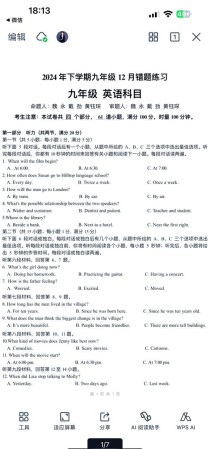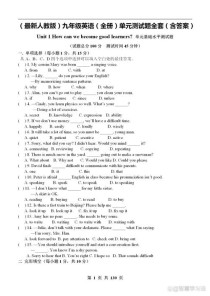
八年级英语第三次月考重点难点是什么?
校园之窗 2026年1月22日 07:36:24 99ANYc3cd6
考试范围预测
第三次月考通常覆盖八年级上学期后半段或整个上学期的核心内容,具体范围请以你老师的通知为准,但一般会包括以下模块:
核心单元:
-
Unit 6: An old man tried to move the mountains. (神话传说、故事讲述)
- 重点词汇:
put on,once upon a time,try to do,continue,get married,give birth to,be able to,instead of - 重点句型:
Unless you believe in yourself, nobody else will.(Unless引导的条件状语从句) - 语法:
unless引导的条件状语从句
- 重点词汇:
-
Unit 7: What's the highest mountain in the world? (地理、自然、世界之最)
- 重点词汇:
meter,desert,population,take in,at birth,up to,achievement - 重点句型:
Qomolangma is 8,844.43 meters high.(描述高度) - 语法: 形容词和副词的最高级
- 重点词汇:
-
Unit 8: I'll help clean up the city parks. (志愿者活动、社会服务)
- 重点词汇:
clean up,cheer up,give out,come up with,put off,sign up,hand out - 重点句型:
I'd like to work outside./You could help clean up the city parks.(提出建议) - 语法: 情态动词
could提出建议;put off,give out等动词短语
- 重点词汇:
-
Unit 9: Have you ever been to a museum? (谈论经历、现在完成时)
 (图片来源网络,侵删)
- 重点词汇:
space museum,amusement park,water park,have been to,have gone to,take a ride,in the past - 重点句型:
Have you ever been to a science museum?(现在完成时的疑问句) - 语法: 现在完成时 (
have/has + 过去分词),与一般过去时的区别
- 重点词汇:
-
Unit 10: I'm watching TV. (现在进行时表将来)
- 重点词汇:
newspaper,soup,message,join,boring,surprising - 重点句型:
What are you doing?/I'm watching TV./I'm meeting my friends at 7 pm.(现在进行时表将来安排) - 语法: 现在进行时表将来安排
- 重点词汇:
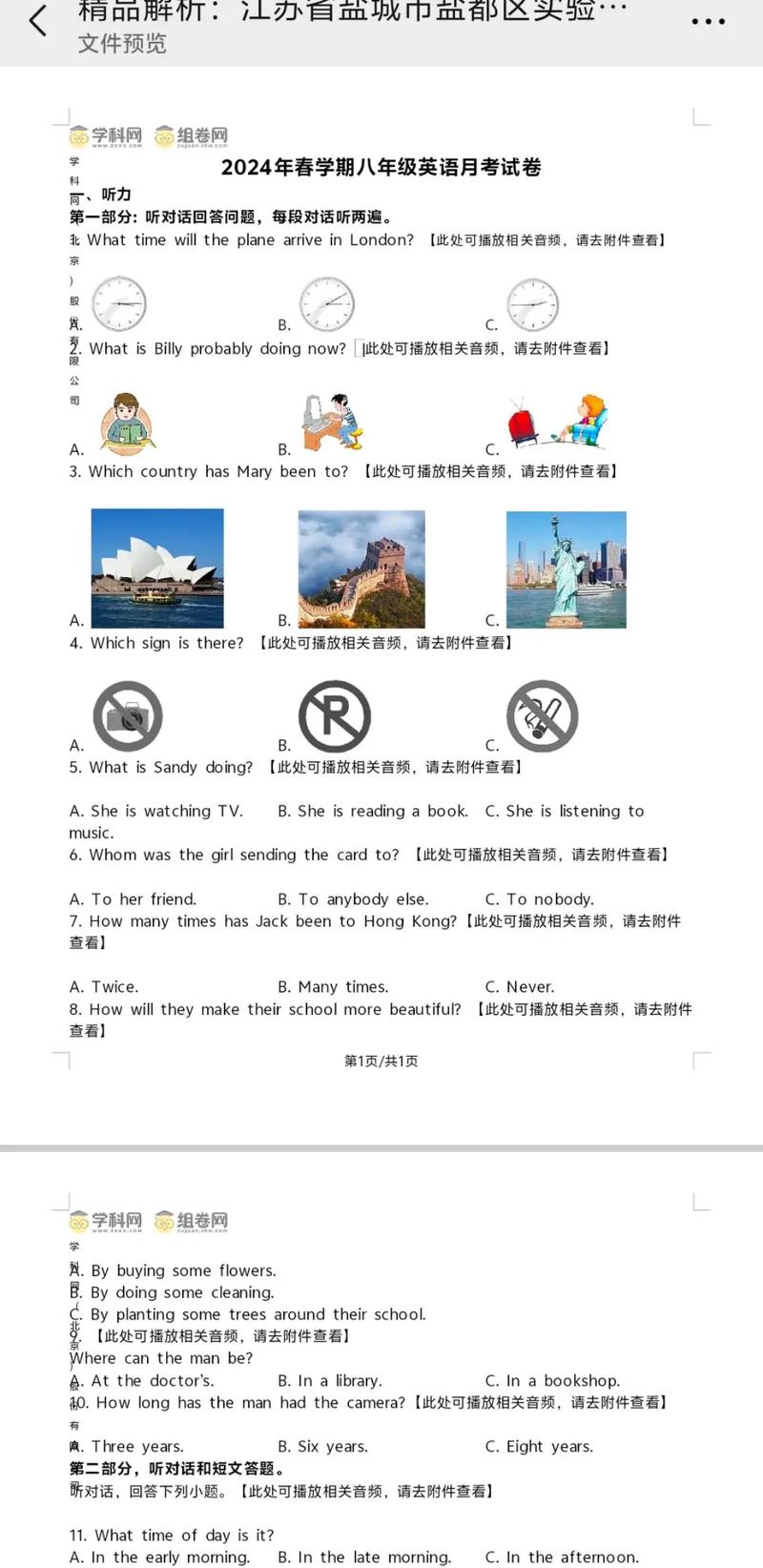
听力部分:
- 短对话理解 (涉及日常问候、天气、活动、建议等)
- 长对话理解 (围绕某个话题展开,如旅行计划、周末活动、学校生活)
- 短文理解 (讲述一个故事或描述一个场景)
词汇与语法:
- 单词拼写与词义辨析
- 动词短语搭配 (如
put on,give out,clean up) - 时态语态综合运用 (一般现在时、一般过去时、现在进行时、现在完成时)
- 从句 (如
that,if,unless引导的从句)
阅读理解:
- A/B篇:应用文阅读 (如通知、广告、邮件、海报)
- C/D篇:记叙文或说明文阅读 (围绕人物故事、科普知识、文化习俗等)
书面表达:
- 应用文: 写一封邮件、一则通知、一张活动海报或一篇日记。
- 话题: 通常与单元话题相关,如“一次难忘的旅行”、“我最喜欢的一个故事”、“我的志愿者经历”、“我的周末计划”等。
常见题型与解题技巧
| 题型 | 考查重点 | 解题技巧 |
|---|---|---|
| 听力 | 抓取关键信息、理解对话主旨 | 提前读题:利用播放指令的时间,快速浏览题目和选项,预测内容,2. 抓关键词:注意数字、时间、地点、人物、动词,3. 记笔记:用简单符号记录关键信息,4. 听清问题:注意问题是问“what”, “where”, “when”, “why”还是“how”。 |
| 单项选择 | 语法、词汇、固定搭配 | 分析句子结构:判断缺少什么成分(主、谓、宾、定、状),2. 找准关键词:如时间状语(yesterday vs already)、连词(if, unless),3. 代入排除:将选项代入句子,看哪个最通顺、最符合逻辑,4. 牢记固定搭配:如 be interested in, look forward to。 |
| 完形填空 | 上下文理解、词汇辨析、逻辑推理 | 通读全文,把握大意:不要急着填空,先快速读一遍,了解文章讲了什么,2. 逐句分析,瞻前顾后:结合上下文语境和固定搭配来选择,3. 先易后难:有把握的先填,不确定的先跳过,4. 复读检查:填完后,再通读一遍,看是否通顺、逻辑是否连贯。 |
| 阅读理解 | 细节查找、主旨大意、推理判断 | 先看问题,再读文章:带着问题去阅读,提高效率,2. 定位原文:细节题答案通常能在原文中找到对应句子,3. 区分事实与观点:注意区分哪些是作者陈述的事实,哪些是个人观点,4. 推理要谨慎:推理题答案不能脱离原文,要基于文章信息进行合理推断。 |
| 词汇运用 | 单词变形、词性转换 | 分析句子成分:判断空格处需要什么词性(名词、动词、形容词、副词),2. 判断时态和语态:如果是动词,考虑时态和主语与动词的被动/主动关系,3. 考虑单复数:如果是名词,看主语是否是复数,4. 牢记变形规则:如 -ly 变副词,-tion 变名词等。 |
| 书面表达 | 内容完整性、语言准确性、结构清晰度 | 审题:明确文体、要点、人称和时态,2. 列提纲:简单列出写作要点,确保不遗漏,3. 写主题句:每段开头用一句话概括段落大意,4. 使用连接词:如 First, Second, Besides, However, In conclusion,使文章结构清晰,5. 检查:写完后,检查拼写、语法、标点错误。 |
备考策略与建议
-
回归课本,夯实基础
- 单词: 每天坚持背诵和默写本学期所有单元的单词,特别是黑体词和重点短语,制作单词卡片,利用碎片时间记忆。
- 课文: 反复朗读课文,特别是重点对话和课文段落,培养语感,巩固句型。
- 语法: 整理笔记本上的语法笔记,特别是
unless引导的条件状语从句、形容词/副词最高级、现在完成时和现在进行时表将来,可以做专项练习来巩固。
-
整理错题,查漏补缺
- 把平时作业和周测中的错题整理到错题本上。
- 分析错误原因:是单词不认识?语法没掌握?还是粗心看错了?
- 考前重点复习错题本,确保同样的错误不再犯第二次。
-
专项突破,强化训练
- 听力: 每天坚持听15-20分钟,可以听课本录音、英文歌曲或简单的英文小故事,注意模仿语音语调。
- 阅读: 每天做1-2篇阅读理解,练习阅读速度和准确率,做完后认真分析错题。
- 写作: 背诵一些万能句型和优秀范文,针对常考话题(如旅行、故事、活动)自己动手写一写,可以请老师帮忙批改。
-
模拟实战,调整状态
- 找一套往年真题或高质量的模拟卷,在规定时间内完成,给自己一个“实战演练”。
- 这样可以帮你熟悉考试节奏,合理分配时间,并发现自己的薄弱环节。
- 考前一天不要再做难题,可以看看错题本和笔记,保持轻松的心态。
模拟练习题(示例)
I. 单项选择
-
—__ you study harder, you won't pass the exam. —I see. I'll try my best. A. If B. Unless C. Because
-
—__ have you lived in this city? —For about ten years. A. How long B. How often C. How soon
-
My father __ newspapers every morning. A. is reading B. reads C. read
-
The Yellow River is the second __ river in China. A. long B. longer C. longest
-
We need to __ some money to charity. A. give out B. find out C. work out
II. 完形填空
It was a cold winter morning. An old man was walking in the street when he saw a little boy 1 at the corner. The old man went up and asked, " 2 are you crying, little boy?" "I lost my ten dollars," the little boy said 3 . "My mother is ill, and I wanted to buy some medicine for her, but the money is gone." The old man felt 4 for him. He took out his wallet and gave the boy ten dollars. The boy was very 5 and said, "Thank you very much! You are so kind!" The old man smiled and said, " 6 . I'm just giving it back to you. I dropped it here just now."
- A. crying B. laughing C. singing
- A. What B. Why C. Where
- A. sadly B. happily C. loudly
- A. angry B. sorry C. tired
- A. sad B. surprised C. happy
- A. That's right B. You're welcome C. Not at all
III. 阅读理解
Do you want to visit a museum? Here are two good choices for you.
City Museum It is in the center of the city. You can learn about the history and development of our city. There are many old photos and maps here. It's open from 9:00 am to 5:00 pm. The ticket is 20 yuan for adults and 10 yuan for students.
Science and Technology Museum It is near the park. It's a great place for kids. You can see many interesting things, like robots and spaceships. There are also some fun science shows. You can watch a show at 10:00 am or 2:00 pm every day. The ticket is 30 yuan for everyone.
-
If you want to learn about the city's history, you can go to the __. A. City Museum B. Science and Technology Museum
-
How much should a student and his father pay for the tickets to the City Museum? A. 20 yuan. B. 30 yuan. C. 40 yuan.
-
What can you see in the Science and Technology Museum? A. Old photos. B. Robots. C. Old maps.
-
When can you watch a science show in the Science and Technology Museum? A. At 9:00 am. B. At 2:00 pm. C. Both A and B.
-
The two passages are mainly about __. A. two different museums B. the history of the city C. science shows for kids
IV. 书面表达
假设你是李华,你的英国笔友 Tom 对中国的传统节日很感兴趣,请你给他写一封邮件,介绍你最喜欢的传统节日——春节,内容包括:
- 春节的时间(通常在一月底或二月初)。
- 人们做什么(如:吃年夜饭、放鞭炮、给红包)。
- 你为什么喜欢它(如:家人团聚、很热闹)。
要求:80词左右,邮件格式已给出。
Dear Tom,
How are you? I'm happy to tell you about my favorite festival.
Best wishes, Li Hua
参考答案:
I. 单项选择
B 2. A 3. B 4. C 5. A
II. 完形填空
A 2. B 3. A 4. B 5. C 6. C
III. 阅读理解
A 2. B 3. B 4. C 5. A
IV. 书面表达 (参考范文) Dear Tom, How are you? I'm happy to tell you about my favorite festival. My favorite festival is the Spring Festival. It usually comes at the end of January or in February. Before the festival, families get together and have a big dinner. On New Year's Eve, children can get lucky money in red envelopes. I like it very much because it's a time for family reunion. Everyone is happy and the atmosphere is really exciting. What's your favorite festival? Please tell me. Best wishes, Li Hua