
春节英文作文该写哪些内容?
作文示例 2026年1月17日 04:02:09 99ANYc3cd6
基础版 (适合初学者 / 小学生)
My Favorite Festival: Spring Festival
Spring Festival, also called Chinese New Year, is my favorite festival. It usually comes in January or February. It is a time for family to get together.
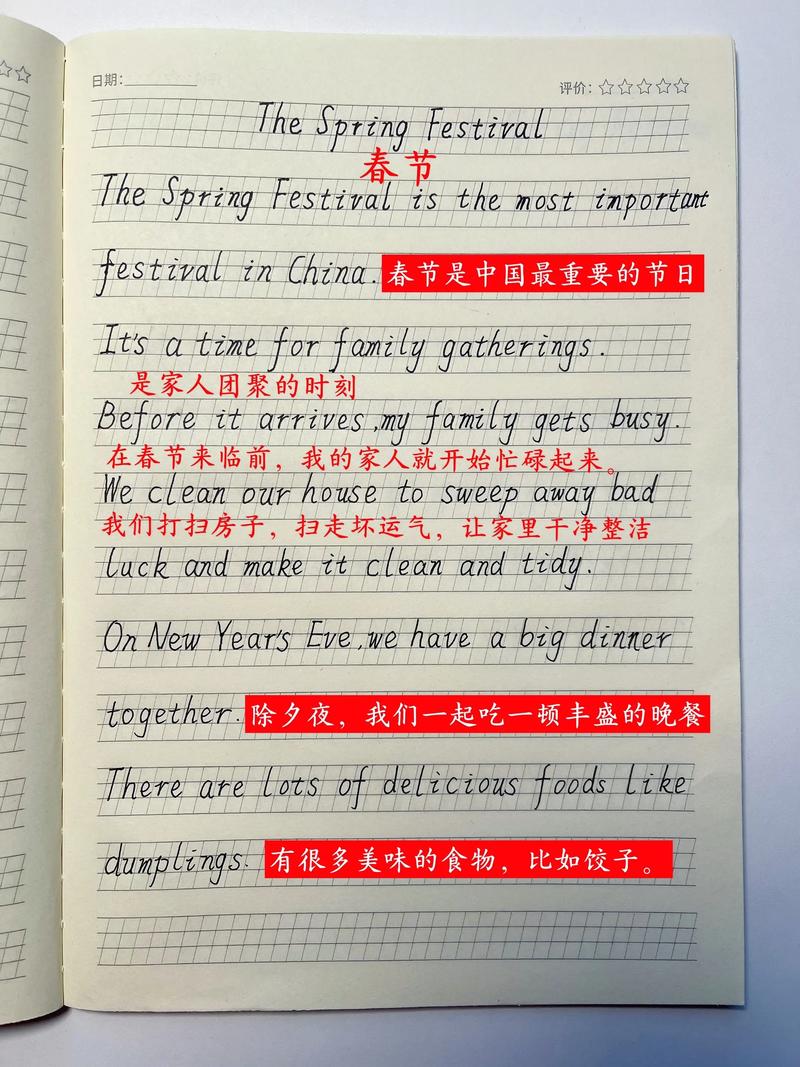
Before the festival, my mother cleans the house. My father and I put up red decorations on the walls. On New Year's Eve, we have a big dinner with my grandparents, uncles, and aunts. We eat dumplings and fish. After dinner, we watch the Spring Festival Gala on TV. At midnight, we set off fireworks to say goodbye to the old year and welcome the new year.
During the festival, children are very happy because they get "red envelopes" with money from their elders. We also visit our relatives and friends. We say "Happy New Year" to them.
I love Spring Festival because it is fun and full of love. I always look forward to it every year.
标准版 (适合中学生)
The Spring Festival: A Celebration of Tradition and Family

The Spring Festival, or Chinese New Year, stands as the most cherished and significant traditional holiday in China. More than just a date on the calendar, it is a vibrant tapestry woven with rich traditions, heartfelt family reunions, and a hopeful spirit for the future. Celebrated in late January or early February, the festival ushers in the beginning of a new lunar year.
The preparations for the Spring Festival begin weeks in advance. This period, known as "Chenfu," involves a thorough cleaning of every home to sweep away any bad luck from the past year. Families then adorn their doors and windows with poetic couplets, vibrant paper-cuts, and the character "福" (Fu), meaning good fortune, often hung upside down to signify its arrival. The color red, symbolizing joy and prosperity, is omnipresent.
The climax of the festival arrives on New Year's Eve. This is the time for the most important reunion dinner of the year. No matter how far they are, family members travel back home to share a sumptuous meal featuring auspicious foods like dumplings (wealth) and fish (abundance). After the feast, families gather to watch the annual Spring Festival Gala on television. As the clock strikes midnight, the sky erupts in a spectacular display of fireworks and firecrackers, believed to scare away evil spirits and bring good luck.
The first few days of the new year are spent visiting relatives and friends. This custom, known as "Bainian," is a way to strengthen social bonds and exchange blessings. A highlight for children is receiving "hongbao" (red envelopes) containing money from their elders, a gesture of good wishes for their future. The festival concludes with the Lantern Festival, marking the first full moon of the new year.

In essence, the Spring Festival is more than just a holiday; it is a deep-rooted cultural experience that celebrates the importance of family, tradition, and new beginnings. It is a time to honor the past and embrace the future with joy and optimism.
进阶版 (适合高中生或英语水平较高者)
The Spring Festival: A Tapestry of Cultural Heritage and Modern Celebration
The Spring Festival, or Chinese New Year, is the grandest and most anticipated festival in the Chinese cultural sphere. It is a multifaceted celebration that transcends mere festivity, serving as a profound cultural anchor that reinforces family bonds, honors ancient traditions, and ushers in a future brimming with hope. Occurring on the first day of the first lunar month, its date shifts annually according to the Gregorian calendar, typically falling between late January and mid-February.
The festival's prelude is a meticulous ritual known as "Chenfu" (除尘), or "sweeping the dust." This is not merely a physical cleaning but a symbolic act of casting away the misfortunes and bad luck of the preceding year to make space for good fortune. Homes are then transformed into vibrant canvases of red, the color of joy and prosperity. Elaborate paper-cuts depicting zodiac animals and auspicious scenes are pasted on windows, while poetic couplets with hopeful verses adorn doorways. The character "福" (Fu), meaning "good fortune," is prominently displayed, often inverted to signify that fortune has "arrived."
The apex of the celebration is the New Year's Eve reunion dinner (年夜饭). This is the heart of the festival, a moment when geographical distances dissolve as family members from all corners of the country, and even the world, converge for a lavish meal. The table groans with symbolic dishes: fish (年年有余, "may there be surpluses every year"), dumplings (shaped like ancient gold ingots, symbolizing wealth), and rice cakes (步步高升, "to rise higher year by year"). The evening is often accompanied by the iconic Spring Festival Gala, a national television event that has become a modern tradition.
As midnight approaches, the sky ignites. Fireworks and firecrackers are set off, their thunderous cacophony and brilliant flashes intended to drive away the mythical beast "Nian" and any lingering evil spirits, thereby purifying the world for the new year. The following days are dedicated to "Bainian" (拜年), the custom of paying visits to relatives and friends to exchange greetings and well-wishes. Children, in particular, eagerly await the presentation of "hongbao" (红包), red envelopes containing money, which are tokens of luck and affection.
Ultimately, the Spring Festival is a dynamic and enduring institution. It masterfully blends ancient customs with contemporary life, serving as a powerful reminder of cultural identity and the enduring importance of family. It is a time-honored cycle of renewal, a period to reflect on the past, cherish the present, and look forward to the future with renewed hope and collective joy.
核心词汇与短语 (Key Vocabulary & Phrases)
名词 (Nouns):
- Spring Festival / Chinese New Year: 春节
- Lunar New Year: 农历新年
- Reunion: 团聚, 重聚
- Tradition / Custom: 传统, 习俗
- Decoration: 装饰品
- Couplets (春联): 对联
- Paper-cuts (剪纸): 剪纸
- Red Envelope (红包): 红包
- Fireworks / Firecrackers: 烟花 / 鞭炮
- Dumplings: 饺子
- Auspicious food: 吉祥的食物
- Prosperity / Fortune: 繁荣 / 财富
- Good luck: 好运
动词 (Verbs):
- Celebrate: 庆祝
- Gather / Get together: 聚集
- Adorn / Decorate: 装饰
- Set off (fireworks): 燃放 (烟花)
- Sweep away (bad luck): 扫走 (坏运气)
- Visit (relatives): 拜访 (亲戚)
- Exchange greetings / wishes: 互致问候 / 祝福
形容词 (Adjectives):
- Traditional / Festive: 传统的 / 节日的
- Vibrant / Colorful: 充满活力的 / 色彩斑斓的
- Auspicious / Lucky: 吉祥的 / 幸运的
- Heartfelt / Sincere: 真诚的
- Lavish / Sumptuous: 丰盛的
- Profound / Deep-rooted: 深刻的 / 根深蒂固的
短语 (Phrases):
- A time for family reunion: 家庭团聚的时刻
- Look forward to: 期待
- Usher in a new year: 迎来新年
- Symbolize joy and prosperity: 象征喜悦与繁荣
- Strengthen family bonds: 加深家庭纽带
- Bring good luck: 带来好运
- A highlight for children: 孩子们的一大亮点
- A cultural heritage: 文化遗产
希望这些材料对你有帮助!你可以根据自己的需要选择合适的版本进行学习和修改。