八年级上册英语知识点有哪些重点难点?
校园之窗 2025年12月4日 02:53:57 99ANYc3cd6
八年级上册英语核心知识点总结
第一部分:词法
重点词汇分类
-
形容词
- 描述人的品质:
outgoing(外向的),quiet(安静的),hard-working(勤奋的),lazy(懒惰的),funny(滑稽的),serious(严肃的) - 描述事物/感受:
fantastic(极好的),expensive(昂贵的),cheap(便宜的),comfortable(舒适的),terrible(糟糕的),awful(糟糕的),boring(无聊的),interesting(有趣的),important(重要的),difficult(困难的),easy(容易的),different(不同的),same(相同的),popular(受欢迎的),unhealthy(不健康的),free(空闲的)
- 描述人的品质:
-
副词
 (图片来源网络,侵删)
- 程度副词:
very,so,too,quite,really,extremely - 频率副词:
always(总是),usually(,often(经常),sometimes(有时),hardly ever(几乎不),never(从不) - 方式副词:
quickly(快地),slowly(慢地),loudly(大声地),quietly(安静地) - 地点副词:
here,there,home,abroad - 时间副词:
today,tomorrow,yesterday,now,then,early,late
- 程度副词:
-
情态动词
can/could(能力,许可)may/might(可能,许可)must(必须,一定)should(应该)- 重点:
have to(不得不) 与must的区别:must表示主观意愿,have to表示客观需要。must的否定形式是mustn't(禁止),have to的否定形式是don't/doesn't have to(不必)。
-
非谓语动词
- 动词不定式
to do- 作目的状语:
I came here **to learn** English.(我来这里是为了学习英语。) - 作宾语:
He wants **to be** a doctor.(他想成为一名医生。) - 作后置定语:
I have a lot of homework **to do**.(我有很多作业要做。) - 作宾语补足语:
The teacher told us **to keep** quiet.(老师让我们保持安静。)
- 作目的状语:
- 动词不定式
-
其他重点词
few / a few/little / a littlefew / a few+ 可数名词复数few(几乎没有,表否定)a few(有几个,表肯定)
little / a little+ 不可数名词little(几乎没有,表否定)a little(有一点,表肯定)
other / others / the other / the others / anotherother + 复数名词:some other books(其他的书)the other + 单数/复数名词:one side... the other side...(一边...另一边...)others(泛指“其他人或物”):Some like apples, others like bananas.(一些人喜欢苹果,另一些人喜欢香蕉。)the others(特指“其余的所有人或物”):I have two pens. One is red, the other is blue.(我两支笔,一支是红的,另一支是蓝的。)another + 单数名词 / another + 数词 + 复数名词:Would you like another cup of tea?(再来杯茶吗?)
第二部分:句法
基本句型
- 主谓宾:
I like English. - 主系表:
English is interesting. - 主谓:
The bird is singing. - 主谓双宾:
My father bought me a bike./My father bought a bike for me. - 主谓宾宾补:
The news made me happy.
重点句型
-
比较等级
 (图片来源网络,侵删)
- 原级:
as...as...(和...一样),not as/so...as...(不如...)He is as tall as his father.(他和他父亲一样高。)This book is not as interesting as that one.(这本书不如那本有趣。)
- 比较级:
A + 比较级 + than + BThis book is more interesting than that one.(这本书比那本更有趣。)
- 最高级:
the + 最高级 + (in/of...)He is the tallest in his class.(他是班里最高的。)
- 原级:
-
both...and.../either...or.../neither...nor...both A and B(A和B都):Both Tom and Mary are students.either A or B(要么A要么B,就近原则):Either you or he is right.neither A nor B(既不A也不B,就近原则):Neither he nor I like swimming.
-
It's + adj. + for sb. + to do sth.It's important for us to learn English well.(学好英语很重要。)
-
There be句型There is going to be a meeting tomorrow.(明天将有一场会议。)There used to be an old tree here.(这里过去有一棵老树。)
-
感叹句
 (图片来源网络,侵删)
What + a/an + 形容词 + 名词 (+ 主语 + 谓语)!What a beautiful girl she is!
How + 形容词/副词 + 主语 + 谓语!How beautiful the girl is!How fast he runs!
第三部分:时态
八年级上册主要学习并巩固了以下几种时态:
| 时态名称 | 结构 | 时间状语 | 功能 |
|---|---|---|---|
| 一般现在时 | 主语 + 动词原形/三单形式(+s/es) |
always, usually, often, sometimes, every day, on Sundays |
描述事实、习惯、真理 |
| 现在进行时 | am/is/are + 动词ing形式 |
now, at the moment, look, listen |
描述说话时正在发生的动作 |
| 一般将来时 | will + 动词原形am/is/are going to + 动词原形 |
tomorrow, next week, in the future, soon |
描述将来要发生的动作或计划 |
| 一般过去时 | 主语 + 动词过去式 |
yesterday, last night/week, just now, in 1999 |
描述过去某个时间发生的动作或状态 |
| 现在完成时 | have/has + 动词过去分词 |
already, yet, just, ever, never, since, for |
重点难点:过去发生且对现在有影响的动作;从过去持续到现在的动作/状态 |
现在完成时详解:
- 结构:
have/has + p.p. - 用法1: 表示过去发生的动作对现在造成的影响或结果。
I **have lost** my key. I can't get into the house.(我把钥匙弄丢了。结果:我进不了屋。)
- 用法2: 表示从过去开始,持续到现在的动作或状态。
He **has lived** here for ten years.(他在这里住了十年了。动作:从十年前开始,一直住到现在。)We **have known** each other since childhood.(我们从小就认识。状态:从童年开始,一直到现在都认识。)
- 标志性词组:
for + 一段时间(e.g.,for two hours)since + 过去的时间点(e.g.,since 2010,since last Monday)
- 与一般过去时的区别:
- 一般过去时: 强调动作发生在过去的时间点,与现在无关。
I saw that movie yesterday.(我昨天看了那部电影。)
- 现在完成时: 强调动作对现在的影响或动作的持续性。
I have seen that movie.(我已经看过那部电影了,言下之意:我知道剧情了。)
- 一般过去时: 强调动作发生在过去的时间点,与现在无关。
第四部分:核心话题
-
Topic 1: How do you get to school? (交通方式)
- 句型:
How do you get to school? - 回答:
I take the subway / bus / train./I ride my bike / walk./I get to school by subway / bus / bike / on foot. - 词汇:
subway,train,bus,bike,car,walk,ride,get to,how far,how long
- 句型:
-
Topic 2: How often do you exercise? (频率副词与健康生活)
- 句型:
How often do you...? - 回答:
I always/usually/often/sometimes/hardly ever/never... - 词汇:
junk food,coffee,cola,health,habit,try to do,look after,stay healthy
- 句型:
-
Topic 3: What are you doing for vacation? (假期计划)
- 句型:
What are you doing for vacation?/Where are you going?/Who are you going with? - 时态: 现在进行时表将来
- 词汇:
vacation,plan,camping,hiking,fishing,rent,get back,take a vacation
- 句型:
-
Topic 4: How do you get to school? (比较级与最高级)
- 重点: 形容词和副词的比较级和最高级变化规则及用法。
- 句型:
A is (not) as... as B./A is...er than B./A is the...est of/in... - 词汇:
talented,outgoing,serious,calm,wild,athletic
-
Topic 5: Can you come to my party? (邀请与请求)
- 句型:
Can you come to my party?/I have to study for a test./I'm sorry, I can't. I have to... - 情态动词:
can,have to,must - 词汇:
prepare for,exam,flu,available,another time
- 句型:
-
Topic 6: I'm watching TV. (现在进行时)
- 重点: 现在进行时的构成和用法,特别是表示说话时正在进行的动作。
- 句型:
What are you doing?/I'm watching TV./Is he waiting for a bus? - 词汇:
shower,make soup,read a newspaper,talk on the phone,listen
第五部分:写作
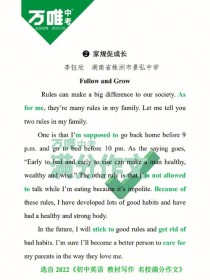
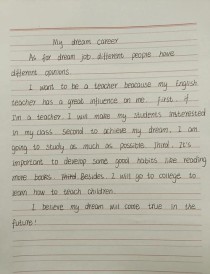
八年级写作通常围绕上述话题展开,常见文体有:
-
邮件/信件
- 结构:
- 称呼:
Dear [Name], - 开头问候 -> 说明写信目的 -> 展开细节 -> 结尾祝福/请求。
-
Best wishes,/Yours, - 署名:
[Your Name]
- 称呼:
- 应用场景: 邀请朋友参加派对、回复邀请、介绍自己的假期计划等。
- 结构:
-
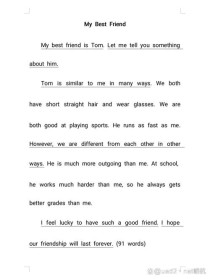
人物介绍
- 结构:
- 开头: 介绍人物的基本信息(姓名、年龄、与你的关系等)。
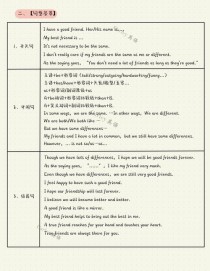
- 中间: 描述外貌、性格、爱好、优点等。多使用比较级,如
My friend Tom is taller than me. He is more outgoing. - 表达你对这个人的看法或你们之间的友谊。
- 重点: 运用形容词、比较级和最高级。
- 结构:
-
调查报告
- 结构:
- 开头: 说明调查的主题和对象。
- 用
Most students...,Some students...,Few students...等句型展示调查结果,并适当使用always,usually,often等频率副词。 - 总结调查发现或提出自己的看法。
- 重点: 使用频率副词和表达比例的词汇。
- 结构:
第六部分:易错点提醒
-
some和any的使用:- 肯定句中用
some:I have some friends. - 否定句和疑问句中常用
any:I don't have any friends./Do you have any friends? - 特例: 在表示请求或建议的疑问句中,用
some语气更委婉:Would you like some coffee?
- 肯定句中用
-
so和such的区别:so + 形容词/副词:so beautiful,so quicklysuch + (a/an) + 形容词 + 名词:such a beautiful girl,such beautiful flowers
-
spend,take,pay,cost的区别:sb. spend (time/money) on sth. / (in) doing sth.:I spent 100 yuan on this book.It takes sb. time to do sth.:It took me two hours to finish my homework.sb. pay (money) for sth.:I paid 50 yuan for this T-shirt.sth. cost (sb.) money:This book cost me 100 yuan./The book costs 100 yuan.
-
现在完成时与一般过去时的混用:
- 当有明确的过去时间状语(如
yesterday,last week)时,只能用一般过去时,不能用现在完成时。 - 当想表达“已经做过某事”或“做某事多久了”时,用现在完成时。
- 当有明确的过去时间状语(如
希望这份总结能对你的八年级英语学习大有帮助!祝你学习进步!