外研版七年级英语课文重点是什么?
校园之窗 2026年1月16日 01:38:46 99ANYc3cd6
由于课文篇幅较长,我无法在此完整呈现所有课文原文,但我将为您整理出每一模块的核心主题、重点词汇、句型和课文大意,并附上一些经典课文的片段,这样可以帮助您快速了解和复习。
整体结构
外研版七年级上册通常包含:
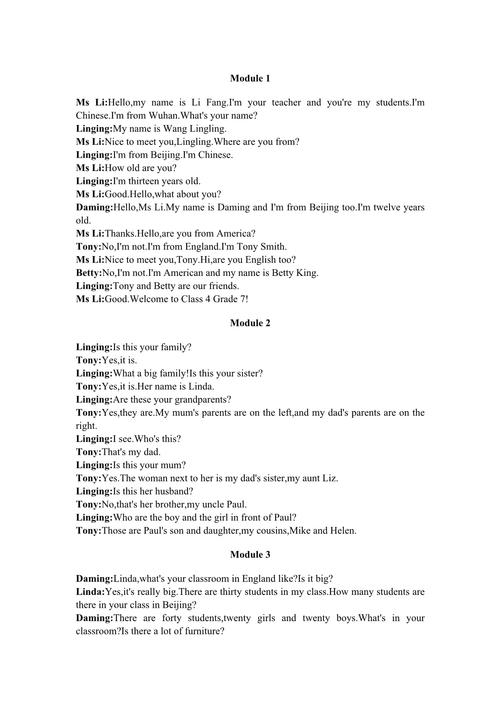
- Starter Modules (预备模块): 1-8模块,主要复习或学习26个字母、基础问候、数字、颜色、物品等。
- Modules (正式模块): 1-10模块,进入系统性的单元学习。
Starter Modules (预备模块) 内容概览
| 模块 | 核心主题 | 重点词汇/句型 | 课文大意 |
|---|---|---|---|
| 1 | Greeting (问候) | Hello, Hi, Good morning/afternoon/evening, I'm..., What's your name? | 两个新同学在校园里互相问候并做自我介绍。 |
| 2 | Introduction (介绍) | This is..., He/She is..., from, a student, a teacher | 介绍新同学、新老师给其他人认识。 |
| 3 | Classroom (教室) | book, pen, ruler, desk, chair, in English, What's this in English? | 在教室里,老师和学生用英语询问和识别各种文具。 |
| 4 | Colours (颜色) | red, yellow, blue, green, black, white, orange, purple, What colour is it? | 描述身边物体的颜色,如书包、衣服等。 |
| 5 | Numbers (数字) | one to ten (1-10), How many...? | 学习1到10的数字,并询问和回答物品的数量。 |
| 6 | Age (年龄) | How old are you? I'm... years old. And you? | 互相询问年龄,并介绍自己和他人的年龄。 |
| 7 | eleven to twenty (11-20), phone number, What's your phone number? | 学习11到20的数字,并练习询问和说出电话号码。 | |
| 8 | This is my..., He/She is..., His/Her name is... | 综合运用前面所学的知识,介绍自己的朋友或家人。 |
Modules (正式模块) 内容概览
以下是正式模块(1-10)的详细内容。
Module 1: My first day at school (我在学校的第一天)
- Unit 1: Listening and Vocabulary
- 主题: 新学校、新同学、新科目。
- 重点词汇:
grade,class,student,lesson,English,Chinese,Maths,History,Science,art,PE(Physical Education)。 - 重点句型:
- What grade/class are you in? -- I'm in Grade Seven, Class One.
- What's your favourite subject? -- My favourite subject is English.
- Is it science? -- Yes, it is. / No, it isn't.
- Unit 2: Reading and Writing
- 课文大意: 一篇关于托尼在中学第一天的日记,他描述了自己对新学校、新同学和新老师的印象,表达了对新学期的期待。
- 经典片段:
"Today is my first day at middle school. I'm in Class 1, Grade 7. My new teacher is Ms Li. She is very nice. I have a new friend. His name is Daming. We are in the same class. I like my new school. It's big and beautiful."
Module 2: My family and friends (我的家人和朋友)
- Unit 1: Listening and Vocabulary
- 主题: 介绍家庭成员和朋友。
- 重点词汇:
family,mother,father,parent,sister,brother,grandmother,grandfather,grandparent,friend,who,this,that,these,those。 - 重点句型:
- Who's this/that? -- This is my mother. / That's my father.
- Who are they? -- They are my grandparents.
- Is he your brother? -- Yes, he is.
- Unit 2: Reading and Writing
- 课文大意: 介绍玲玲的家庭照片,照片里有她的父母、祖父母,还有她的朋友Betty和Tony,文章描述了每个人的年龄和职业。
- 经典片段:
"This is a photo of Lingling's family. This is her father. He's a doctor. And this is her mother. She's a nurse. These are her grandparents. They are old. That's her friend Betty. She's from the UK."
Module 3: My school (我的学校)
- Unit 1: Listening and Vocabulary
- 主题: 描述学校的设施和场所。
- 重点词汇:
school,library,classroom,hall,office,playground,dining hall,science lab,computer room。 - 重点句型:
- Where is the library? -- It's next to the classroom.
- Is there a computer room? -- Yes, there is. / No, there isn't.
- Unit 2: Reading and Writing
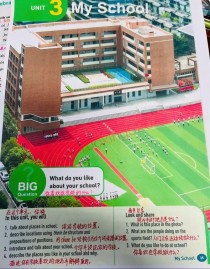
- 课文大意: 一篇关于北京阳光中学的介绍,文章描述了学校的大小、建筑(如图书馆、科学实验室)和美丽的花园。
- 经典片段:
"Beijing Sunshine Secondary School is a big and beautiful school. There are many classrooms and a big library. The science labs are new. There is also a nice garden behind the school. We can read books in the library and have lessons in the classrooms."
 (图片来源网络,侵删)
Module 4: Healthy food (健康的食物)
- Unit 1: Listening and Vocabulary
- 主题: 谈论食物,区分健康和不健康的食物。
- 重点词汇:
apple,banana,orange,meat,fish,rice,noodles,bread,egg,candy,cake,hamburger,cola,healthy,unhealthy,fruit,vegetable。 - 重点句型:
- Do you like apples? -- Yes, I do. / No, I don't.
- What's your favourite food? -- My favourite food is fish.
- Is it healthy? -- Yes, it is. / No, it isn't.
- Unit 2: Reading and Writing
- 课文大意: 一篇关于Betty和她的妈妈讨论健康饮食的对话,妈妈建议Betty多吃水果和蔬菜,少吃糖果和汉堡。
- 经典片段:
Betty: Mum, I'm hungry. Mum: What do you want to eat? Betty: I want some candy and a hamburger. Mum: No, Betty. Candy and hamburgers are unhealthy. Eat an apple or a banana. They are healthy.
Module 5: My school day (我的在校日)
- Unit 1: Listening and Vocabulary
- 主题: 描述一天的课程和活动。
- 重点词汇:
time,o'clock,half,past,to,morning,afternoon,lesson,start,finish,break,lunch,go home。 - 重点句型:
- What time is it? -- It's eight o'clock.
- When do you start school? -- We start school at 8:00 a.m.
- What lessons do you have in the morning? -- We have English, Maths and Science.
- Unit 2: Reading and Writing
- 课文大意: 托尼描述自己典型的在校日,从早上8点到校,到下午4点放学,包括课程、课间休息和午餐时间。
- 经典片段:
"I get up at 7:00 a.m. and go to school at 8:00 a.m. School starts at 8:30 a.m. In the morning, I have four lessons: English, Maths, Chinese and Science. I have lunch at 12:00 p.m. In the afternoon, I have two lessons. School finishes at 4:00 p.m. I go home at 4:30 p.m."
Module 6: A trip to the zoo (一次动物园之旅)
- Unit 1: Listening and Vocabulary
- 主题: 动物及其特征。
- 重点词汇:
tiger,lion,elephant,panda,monkey,bear,giraffe,zoo,big,small,tall,short,fat,thin,cute,dangerous。 - 重点句型:
- What animal is it? -- It's a tiger.
- What does it look like? -- It's big and dangerous.
- Do you like pandas? -- Yes, I do. They're cute.
- Unit 2: Reading and Writing
- 课文大意: 一篇关于参观北京动物园的日记,作者看到了各种动物,并描述了它们的样子,特别是喜欢的大熊猫。
- 经典片段:
"Today I went to the Beijing Zoo with my parents. I saw many animals. The lions are very big and scary. The tigers are beautiful but dangerous. I like pandas best. They are black and white. They are very cute and fat. They are eating bamboo. I had a great time."
Module 7: Computers (计算机)
- Unit 1: Listening and Vocabulary
- 主题: 计算机的基本操作和功能。
- 重点词汇:
computer,screen,keyboard,mouse,click,open,close,document,email,search,information,play games,send emails。 - 重点句型:
- What can you do with a computer? -- I can send emails and play games.
- How do you open a document? -- You click on the icon.
- Unit 2: Reading and Writing
- 课文大意: 介绍计算机的基本组成部分(屏幕、键盘、鼠标)以及它的用途,如学习、工作和娱乐。
- 经典片段:
"A computer is an useful machine. It has a screen, a keyboard and a mouse. We can use it to get information from the Internet. We can use it to send emails to our friends. We can also use it to learn English and play games."
Module 8: Choosing presents (挑选礼物)
- Unit 1: Listening and Vocabulary
- 主题: 讨论和挑选礼物。
- 重点词汇:
present,gift,birthday,choose,for,friend,T-shirt,scarf,book,CD,camera,watch。 - 重点句型:
- What's the special day? -- It's my mother's birthday.
- What should we get for her? -- Let's get her a scarf.
- Is this a good idea? -- Yes, it's a great idea.
- Unit 2: Reading and Writing
- 课文大意: 孩子们在为玲玲的妈妈挑选生日礼物,他们讨论了买围巾、书还是相机,最后决定买一条漂亮的围巾。
- 经典片段:
"Lingling's mother's birthday is coming. We want to buy her a present. Tony: Let's get her a camera. She likes taking photos. Betty: That's a good idea, but it's too expensive. Daming: How about a book? She likes reading. Lingling: I think a scarf is a good present. It's beautiful and not expensive."
Module 9: People and places (人与地方)
- Unit 1: Listening and Vocabulary
- 主题: 谈论地理位置和正在进行的动作。
- 重点词汇:
work,office,shop,restaurant,factory,hospital,shop assistant,doctor,waiter,visit,now,at the moment。 - 重点句型:
- Where is he? -- He's in the hospital.
- What is he doing? -- He's working.
- Is she shopping? -- Yes, she is. / No, she isn't.
- Unit 2: Reading and Writing
- 课文大意: 一篇关于不同职业的人在哪里以及他们在做什么的短文,医生在医院工作,服务员在餐厅工作。
- 经典片段:
"Look at this picture. This is a doctor. He is in the hospital. He is helping a patient. That is a waiter. He is in a restaurant. He is serving food. They are all working hard."
Module 10: Spring Festival (春节)
- Unit 1: Listening and Vocabulary
- 主题: 中国最重要的传统节日——春节。
- 重点词汇:
Spring Festival,Chinese New Year,family,dumpling,red,money,lucky,celebrate,get,eat,wear,say。 - 重点句型:
- What do you do at Spring Festival? -- We get red packets and eat dumplings.
- Do you wear new clothes? -- Yes, we do.
- Happy New Year! -- The same to you!
- Unit 2: Reading and Writing
- 课文大意: 介绍春节的习俗,包括大扫除、吃团圆饭、贴春联、放鞭炮、穿新衣服、拿红包等。
- 经典片段:
"Spring Festival is the most important festival in China. Before the festival, we clean our houses. On New Year's Eve, we have a big family dinner. We eat dumplings. We say 'Happy New Year' to each other. Children get lucky money in red packets. We all have a good time."
如何获取完整课文
如果您需要课文的完整原文,建议您通过以下途径获取:
- 教科书: 最直接、最准确的方式是查看您的英语课本。
- 教师用书: 如果您是老师,可以参考教师用书,里面有详细的课文内容和教学建议。
- 官方配套光盘/音频: 很多教材会附带光盘,里面有课文录音和电子版内容。
- 在线资源:
- 在百度、谷歌等搜索引擎搜索 “外研版七年级英语上册课文原文” 或 “外研版七年级上册英语电子课本”,可以找到一些网站或博客分享的文本。
- 访问外研社官网,有时会提供在线样章或资源。
希望这份详细的概览对您有帮助!