如何用英语生动描绘春节文化内涵?
作文示例 2026年1月11日 03:29:50 99ANYc3cd6
Of course! Here are a few versions of an English essay about the Spring Festival (Chinese New Year), ranging from a simple one for younger students to a more detailed one for older students or adults. I've also included some key vocabulary at the end.
Version 1: Simple and Sweet (For Younger Students)
My Favorite Festival: The Spring Festival
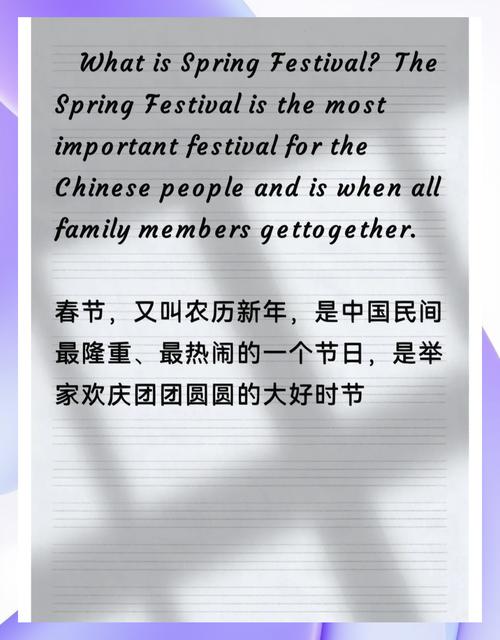
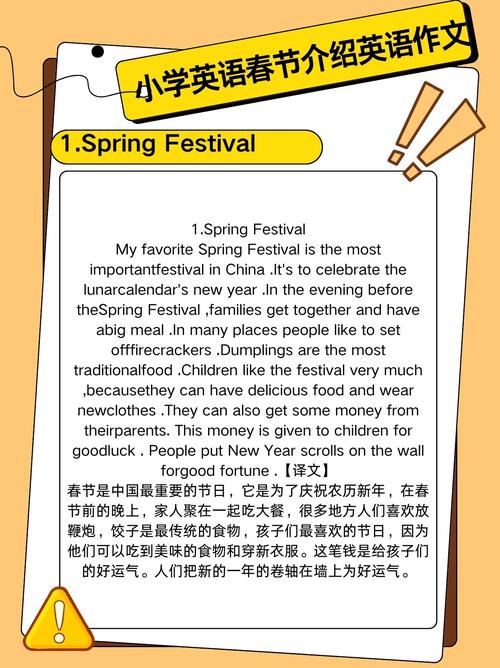
My favorite festival is the Spring Festival, also known as Chinese New Year. It is the most important holiday in China. It usually comes in January or February.
Before the festival, my family and I clean our house from top to bottom. This is to sweep away any bad luck. We also decorate our home with red lanterns and paper cuttings. Red is a lucky color in China.
On New Year's Eve, my whole family gets together for a big dinner. We eat dumplings, fish, and many other delicious dishes. After dinner, we watch the Spring Festival Gala on TV. At midnight, we set off fireworks to welcome the new year.
During the festival, I wear new clothes and get "lucky money" in red envelopes from my grandparents and parents. I use the money to buy books or toys. I also visit my relatives and friends to say "Happy New Year."
The Spring Festival is a time for family, happiness, and new beginnings. I love it!
Version 2: Standard and Detailed (For Older Students)
The Spring Festival: A Celebration of Family and Renewal
The Spring Festival, or Chinese New Year, stands as the most cherished and significant traditional holiday in China. More than just a celebration, it is a deep-rooted cultural phenomenon that marks the beginning of a new lunar year and serves as a vital occasion for family reunions. The festival, rich with customs and symbolism, unfolds over a period of fifteen days, culminating in the Lantern Festival.
The preparations for the Spring Festival begin weeks in advance. A crucial tradition is "sweeping the dust," where families thoroughly clean their homes. This act is symbolic of sweeping away the past year's bad luck and misfortune, making way for good fortune in the new year. Homes are then adorned with vibrant decorations. The color red dominates, symbolizing happiness, prosperity, and good luck. Families hang red lanterns, paste Spring Festival couplets with poetic blessings on their doorways, and buy beautiful flowers like peonies and narcissus.
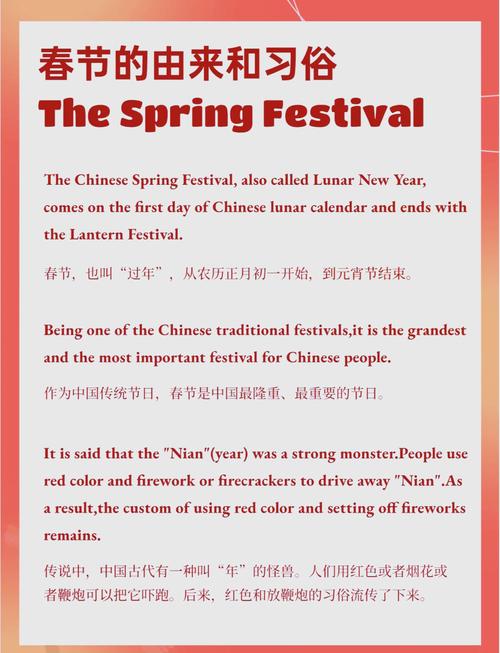
New Year's Eve, or "Chuxi," is the heart of the celebration. It is a night for the most important reunion dinner of the year. No matter how far away they are, family members travel back home to gather around a table laden with symbolic dishes. For instance, a whole fish is often served, representing a surplus of wealth and prosperity for the coming year. After the feast, many families watch the annual Spring Festival Gala on television, a national entertainment spectacle. As the clock strikes midnight, the sky erupts in a dazzling display of fireworks and firecrackers, believed to scare away evil spirits and welcome the arrival of the new year.
The first day of the lunar new year is dedicated to honoring elders. Children, dressed in their new clothes, visit their grandparents and parents to pay their respects and offer New Year's greetings. In return, they receive "hongbao" (red envelopes) containing money, which is a token of good luck and blessings. The following days are for visiting relatives and friends, exchanging gifts, and sharing festive meals.
In conclusion, the Spring Festival is much more than a holiday; it is a cornerstone of Chinese culture. It is a time to honor tradition, strengthen family bonds, and embrace hope for the future. The festival's enduring appeal lies in its powerful message of renewal, togetherness, and the promise of a fresh start.
Version 3: More Poetic and Reflective (For a more advanced level)
The Rhythm of Reunion: An Ode to the Spring Festival
As the last embers of winter fade, a different kind of fire begins to ignite across China—the warm, glowing anticipation of the Spring Festival. This ancient and magnificent festival, a tapestry woven from centuries of tradition, is the pulsating heart of Chinese culture. It is a time when the nation collectively pauses to honor its past, celebrate its present, and look forward to a future brimming with promise.
The prelude to the festival is a symphony of preparation. The air buzzes with the sound of sweeping brooms, not merely to clean homes, but to cleanse the soul of the old year's hardships. This ritual of "sweeping the dust" is a profound act of letting go. Then, the transformation begins. Windows are draped with red paper cuttings, doors are emblazoned with golden couplets, and the gentle glow of red lanterns casts a hopeful light on every street corner. Red, the color of life and joy, becomes the visual anthem of the season.
The climax arrives on New Year's Eve, a night dedicated to the sacred institution of family. The reunion dinner is a grand affair, a culinary map of hopes and dreams. Each dish carries a symbolic weight: the plump, whole fish for abundance, the sticky rice cakes for a higher position or greater prosperity, and the long noodles for a long life. Laughter and conversation flow as freely as the rice wine, weaving a tapestry of shared memories. As the world outside transitions from the old year to the new, the sky erupts in a symphony of light and sound, a breathtaking farewell to the old and a joyous welcome to the unknown.
The days that follow are a gentle continuation of this celebration, a time for visiting, sharing, and bestowing blessings. The act of giving "hongbao," the red envelopes, is a beautiful gesture of passing on good fortune and love to the younger generation. It is a tangible reminder that the strength of a community lies in its interconnectedness.
Ultimately, the Spring Festival is a masterful celebration of humanity. It transcends mere festivity to become a powerful reminder of our shared humanity, our enduring bonds, and our perpetual hope for renewal. It teaches us that no matter how far we roam, the path always leads back to family, to home, and to the timeless rhythm of a new beginning.
Key Vocabulary & Phrases (关键词汇和短语)
Nouns (名词):
- Spring Festival / Chinese New Year: 春节
- Lunar New Year: 农历新年
- Reunion: 团聚
- Tradition / Custom: 传统 / 习俗
- Celebration: 庆祝
- Symbolism: 象征意义
- Decoration: 装饰品
- Lantern: 灯笼
- Fireworks: 烟花
- Firecracker: 鞭炮
- Red Envelope (Hongbao): 红包
- Reunion Dinner: 团圆饭
- Dumpling: 饺子
- Prosperity: 繁荣,富裕
- Good Fortune: 好运
- Ancestor / Elder: 祖先 / 长辈
Verbs (动词):
- Celebrate: 庆祝
- Gather / Reunite: 聚集 / 团聚
- Decorate: 装饰
- Clean / Sweep: 打扫 / 清扫
- Set off (fireworks): 燃放 (烟花)
- Honor / Respect: 尊敬
- Visit (relatives): 拜访 (亲戚)
- Wish (someone) a Happy New Year: 祝 (某人) 新年快乐
Adjectives (形容词):
- Traditional: 传统的
- Festive: 节日的,喜庆的
- Vibrant / Colorful: 充满活力的 / 五彩缤纷的
- Lucky: 幸运的
- Joyful / Merry: 愉快的 / 快乐的
- Important / Significant: 重要的 / 意义重大的
- Symbolic: 有象征意义的
Useful Phrases (实用短语):
- A time for family reunion: 一个家庭团聚的时刻
- Sweep away bad luck: 扫去坏运气
- Wear new clothes: 穿新衣服
- Get lucky money: 拿到压岁钱
- Symbolize prosperity / good luck: 象征繁荣 / 好运
- Mark the beginning of a new year: 标志着新的一年的开始
- A cornerstone of Chinese culture: 中国文化的基石