八年级下册英语2b原文
校园之窗 2026年1月2日 04:06:29 99ANYc3cd6
Unit 1 What's the matter?
这篇课文是关于健康问题和提建议的。
原文:
A Lucky Escape
Last week, Da Ming and his classmate Xiao Liu were walking home from school. They were talking about the weekend. As they were crossing the street, they saw a dog with a sign on its neck. The sign said, "I'm blind. Please help me."
Da Ming felt sorry for the dog. He wanted to help it. He walked up to the dog and was about to touch it when Xiao Liu suddenly shouted, "Da Ming, look out! A car is coming!"
Da Ming turned around and saw a car coming quickly towards them. He jumped back just in time. The car missed him by only an inch. Xiao Liu pulled Da Ming back to the sidewalk.

"Thank you," said Da Ming. "You saved my life!"
"You're welcome," said Xiao Liu. "But that dog... it wasn't blind at all. It was a trick to get people's attention. And look, it ran away as soon as the car passed."
Da Ming was shocked. He realized that he almost fell for the trick. He was lucky that Xiao Liu was there to stop him. From that day on, Da Ming was more careful when helping strangers on the street.
Unit 2 I'll help to clean up the city parks.
这篇课文是关于志愿者工作的。
原文:
The Power of Volunteering
We all know that volunteering is good. It can make a difference in people's lives. But did you know that it can also change your own life? Here are two stories about the power of volunteering.
The first story is about Li Hu. He is a 15-year-old boy from Beijing. Last summer, he volunteered at a local animal shelter. He spent his weekends there, walking dogs and cleaning cages. At first, he thought it was just a way to spend his free time. But soon, he realized he was getting much more back than he was giving. "The dogs were so happy to see me," Li Hu said. "Their love made me feel happy and needed. I learned to be more patient and responsible."
The second story is about Mei Shan. She is a high school student in Shanghai. She started a volunteer club at her school. The club members visit an old people's home every Saturday. They sing songs, read newspapers, and just chat with the elderly people. Mei Shan said, "At first, I was a little nervous. I didn't know what to say. But the elderly people are so kind and friendly. They have so many interesting stories to tell. Now, I look forward to every Saturday. It's the best part of my week."
As you can see, volunteering is not just about giving your time to help others. It's also about learning new things, making new friends, and feeling good about yourself. So why not give it a try? You might be surprised at how much you get out of it.
Unit 3 Could you please clean your room?
这篇课文是关于家庭责任和代沟的。
原文:
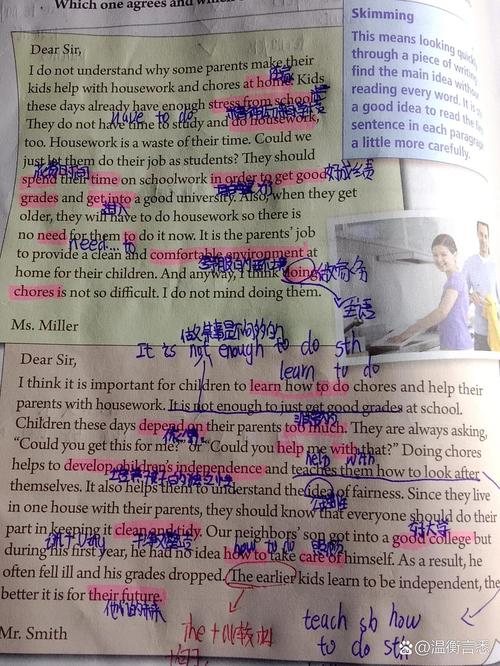
From Shouting to Talking
Many teenagers argue with their parents about housework. Ben's mother is one of them. She often gets angry because Ben never helps out around the house.
Last Saturday, Ben's mother was cleaning the house while Ben was watching TV. She found his dirty socks under the sofa and his video games all over the living room floor. She was so angry that she started shouting at him.
"Ben, your room is a mess! You never lift a finger to help me!" she shouted. "But Mom, I'm busy with my homework," Ben shouted back. "That's just an excuse! You're always watching TV or playing video games!" And so their argument went on. Finally, Ben's father came home. He saw what was happening and decided to do something about it.
He sat down with Ben and his mother separately. First, he talked to Ben. "Ben, I understand you have homework, but helping with housework is also part of being a family. Your mom works hard all day, and she needs your help." Then he talked to his wife. "Honey, shouting won't solve the problem. Ben is a teenager. He needs to learn responsibility, but we also need to communicate with him in a better way."
After that, they all sat down and had a calm talk. Ben agreed to help with the dishes and take out the trash every day. His mother agreed to give him more notice when she needed help with other things. They also agreed to have a family meeting once a week to talk about any problems.
Now, the shouting has stopped. They still have disagreements, but they are learning to talk to each other instead of shouting. And the house is much cleaner!
Unit 4 Why don't you talk to your parents?
这篇课文是关于应对问题和寻求建议的。
原文:
Robert's Problem
Robert is a 14-year-old boy. He loves playing computer games, and he plays them every day after school. However, his parents are worried about him. They think he spends too much time on the computer and not enough time on his studies.
Last week, Robert got a bad grade on his math test. His father was very angry. He took away the computer and told Robert he couldn't play games for a month. Robert was very upset. He felt that his father didn't understand him. He argued with his father and even refused to talk to him for a few days.
Robert didn't know what to do. He felt stressed and unhappy. So he decided to write to a magazine for advice. The magazine has a special column called "Teens Talk" where teenagers can write about their problems and get advice.
In his letter, Robert wrote about his problem with his father and asked for help. A few weeks later, his letter was published in the magazine. The advice columnist gave him some great suggestions.
First, the columnist advised Robert to talk to his father calmly. He suggested Robert find a good time to talk, not when his father was angry. He should tell his father how he feels and listen to his father's concerns.
Second, the columnist suggested that Robert try to manage his time better. He could make a schedule for his homework and his hobbies. This way, he could show his father that he was responsible.
Finally, the columnist advised Robert to prove that he could be a good student. He should work hard to improve his grades. This would help his father see that Robert was serious about his studies.
Robert read the advice carefully. He decided to follow it. He talked to his father and explained his feelings. His father was surprised to hear how Robert felt, and he agreed to give the computer back if Robert followed his schedule. Robert is now working hard on his studies, and he is also making sure to spend some time with his family. He feels much better now.
如何使用这些原文:
- 跟读模仿:播放课文录音,跟着录音大声朗读,注意模仿语音语调。
- 理解大意:先通读一遍,了解文章主要讲了什么故事或观点。
- 精读分析:逐句阅读,查找不认识的单词和短语,结合上下文猜测词义。
- 背诵重点句型:将文中出现的重要句型、短语或精彩句子摘抄下来并背诵,这对于写作和口语都非常有帮助。
- 复述故事:合上书本,用自己的话把故事的主要内容复述出来,这是检验是否真正理解的好方法。
希望这些原文能对您和您的孩子有所帮助!