七年级下册英语选择题怎么解?
校园之窗 2025年12月21日 06:23:56 99ANYc3cd6
第一部分:语法选择题
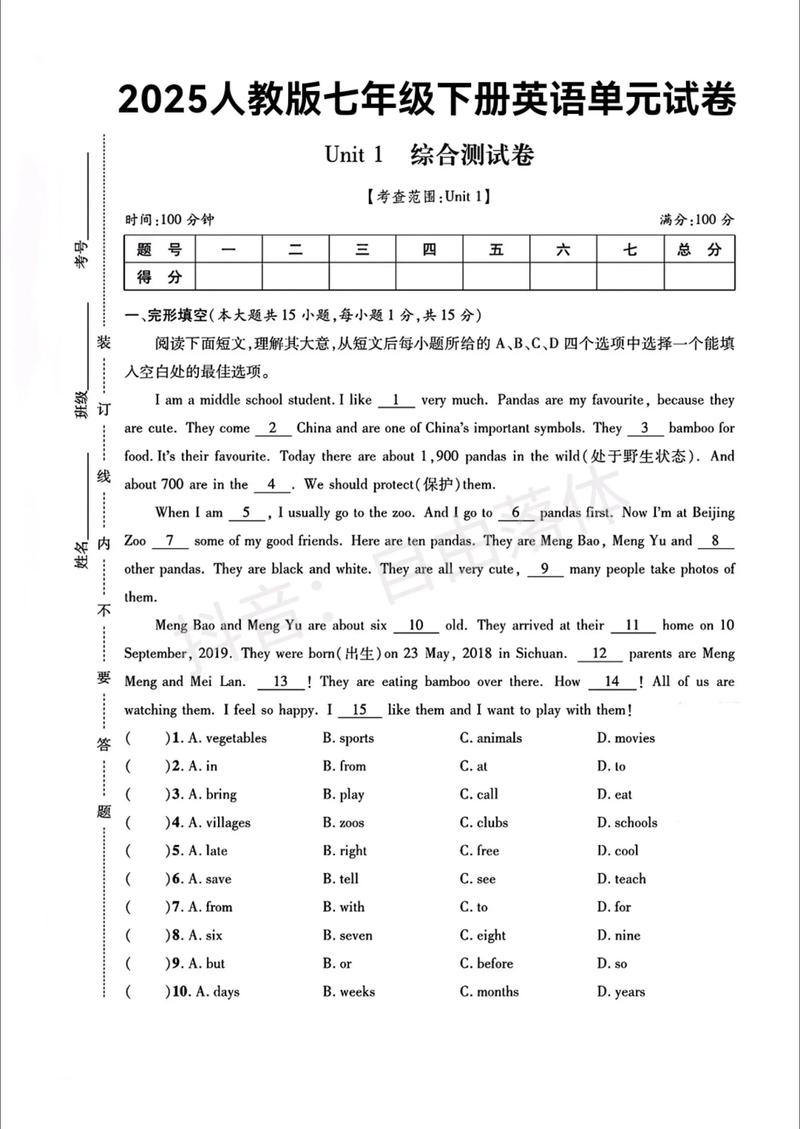
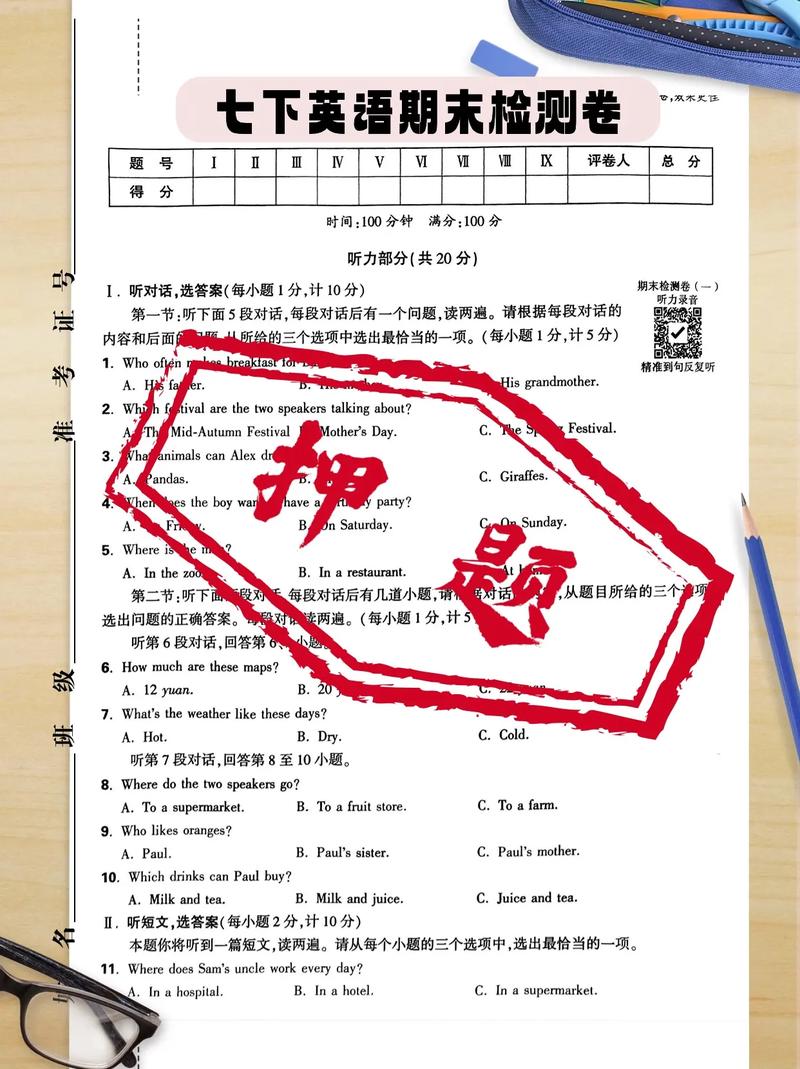
这部分主要考察七年级下册的核心语法点,如情态动词、方位介词、现在进行时、一般过去时等。
— __ I take some photos here? — No, you __. A. Can; can't B. May; may not C. Could; couldn't D. Must; mustn't
答案:A
解析:这是一个情态动词的用法题,第一个空用 Can 或 May 表示请求许可,意为“我可以……吗?”,回答时通常用 can't 或 may not 表示“不可以”。Could 语气更委婉,但回答时用 couldn't 不如 can't 常用。Must 表示“必须”,回答时用 needn't 或 don't have to 表示“不必”,与题意不符。
— Where is your father? — He isn't at home. He __ in the library now. A. reads B. read C. is reading D. was reading
答案:C
解析:这道题考察现在进行时,时间状语 now ( 提示我们动作正在发生,所以应该使用现在进行时,其结构是 is/are/am + 动词-ing,主语 He 是第三人称单数,所以用 is reading。
My grandparents __ in a small village ten years ago. A. live B. lived C. are living D. were living
答案:B
解析:这道题考察一般过去时,时间状语 ten years ago (十年前) 表明动作发生在过去,所以应该使用一般过去时,动词 live 的过去式是 lived。
— What's __ matter with you? — I have __ headache. A. a; the B. the; a C. a; a D. the; the
答案:B
解析:What's the matter with you? 是一个固定句型,意为“你怎么了?”,the matter 是固定搭配。have a headache 也是固定搭配,意为“头痛”,headache 是以辅音音素开头的单词,所以用 a。
Please turn __ the TV. The baby is sleeping. A. on B. off C. up D. down
答案:B
解析:turn on (打开), turn off (关闭), turn up (调大), turn down (调小),根据句意“宝宝在睡觉”,应该把电视关掉,所以用 turn off。
— __ did you go on vacation? — I went to the beach. A. What B. Where C. When D. Who
答案:B
解析:根据答语 I went to the beach. (我去了海滩),提问地点应该用疑问词 Where (在哪里)。
There is a big tree __ our house and the river. A. from B. between C. behind D. next to
答案:B
解析:between...and... 意为“在……和……之间”,表示在两者之间。from...to... (从……到……), behind (在……后面), next to (紧挨着) 都不符合句意“房子和河之间有一棵大树”。
— It's very hot. Why not __ off your coat? — Good idea. A. take B. to take C. taking D. takes
答案:A
解析:Why not do sth.? 是一个固定句型,意为“为什么不……呢?”,用来提出建议,do 是动词原形。
第二部分:词汇与情景交际选择题
这部分考察单词辨析、固定搭配以及在不同语境下的正确表达。
— I'm feeling tired. — You should __ a good rest. A. have B. make C. get D. take
答案:D
解析:take a rest 是固定搭配,意为“休息一下”。have a rest 也可以,但 take a rest 更为常用。
Don't __ too late, or you will feel tired in class. A. get up B. stay up C. put up D. set up
答案:B
解析:get up (起床), stay up (熬夜), put up (举起,张贴), set up (建立),根据句意“别熬夜太晚,否则上课会累”,所以用 stay up。
— Can you help me __ these books to the classroom? — Sure, no problem. A. bring B. take C. carry D. get
答案:B
解析:bring 指“带来”(从别处带到说话者这里),take 指“带走”(从说话者这里带到别处处),句意是“把这些书带到教室去”,所以用 take。carry 强调“搬运”这个动作,但 take 更符合语境。
— What do you think of the movie? — It's very __. I like it very much. A. boring B. difficult C. interesting D. terrible
答案:C
解析:根据答语 I like it very much. (我非常喜欢它),可以推断出电影是“有趣的”。interesting (有趣的),boring (无聊的),difficult (困难的),terrible (糟糕的)。
— __! There is a car coming. A. Look at B. Look out C. Look for D. Look after
答案:B
解析:Look at (看),Look out (小心,当心),Look for (寻找),Look after (照顾),句意是“小心!有车来了”,所以用 Look out!。
My mother is making dinner __ the kitchen. A. at B. on C. in D. to
答案:C
解析:在某个房间前面用介词 in。at 通常用于小地点或具体地点,如 at the door (在门口);on 通常在表面上,如 on the desk (在桌子上)。
— How was your weekend? — __. A. It's great B. I went hiking C. It was wonderful D. I played basketball
答案:C
解析:问句 How was your weekend? 是对周末的整体感受提问,应该用 It was... 来回答。It's great (现在时,错误),I went hiking 和 I played basketball 是具体活动,不能直接回答 How 提问。
第三部分:综合能力提升题
可能需要结合多个知识点进行判断。
— __ you swim? — Yes, I can. But I __ swim very well. A. Can; can't B. Can; couldn't C. Can; don't D. Can; can
答案:A
解析:第一空询问能力,用 Can,第二空表示“不能游得很好”,是客观事实,用 can't。couldn't 是过去式,与题意不符。don't 后面要跟动词原形 swim,但这里强调能力,用 can't 更准确。
Listen! Someone __ at the door. Please go and see who it is. A. knocks B. is knocking C. knocked D. will knock
答案:B
解析:Listen! (听!) 是现在进行时的典型标志,表示说话时正在进行的动作,所以用 is knocking。
It rained heavily yesterday, so we __ go to the park. A. can B. couldn't C. must D. shouldn't
答案:B
解析:yesterday (昨天) 表明是过去的事情。so ( 连接因果关系,因为“下大雨”,不能去公园”,用 couldn't (could not) 表示过去没有能力或没能做到。
— __ is the nearest hospital from here? — It's about 3 kilometers away. A. How long B. How far C. How often D. How soon
答案:B
解析:How far 询问距离,意为“多远”。How long 询问长度或时间,意为“多长;多久”。How often 询问频率,意为“多久一次”。How soon 询问将来多久之后,意为“还要多久”,根据答语“大约3公里远”,用 How far。
This is an __ story. I want to read it again. A. enough exciting B. excited C. exciting D. excitement
答案:C
解析:exciting 和 excited 都是形容词,但用法不同。exciting 指某物“令人兴奋的”,用来修饰事物。excited 指“感到兴奋的”,用来修饰人,故事是令人兴奋的,所以用 exciting。enough 修饰形容词时要后置,如 exciting enough。